#books, #museums, #history 7|29|2011 [Updated]

"Rebels in Paradise"

NEWS

[Updated at 7:25 a.m. The archives of civil rights pioneer Rosa Parks reveal an account of an attempted rape by a white neighbor who employed her as a housekeeper. Associated Press via Washington Post.]

Historian Barry Landau and assistant Jason Savedoff were indicted Thursday in the theft and sale of historic documents. AP via Washington Post.

ALSO

Historian denied bail in document thefts.

BOOKS

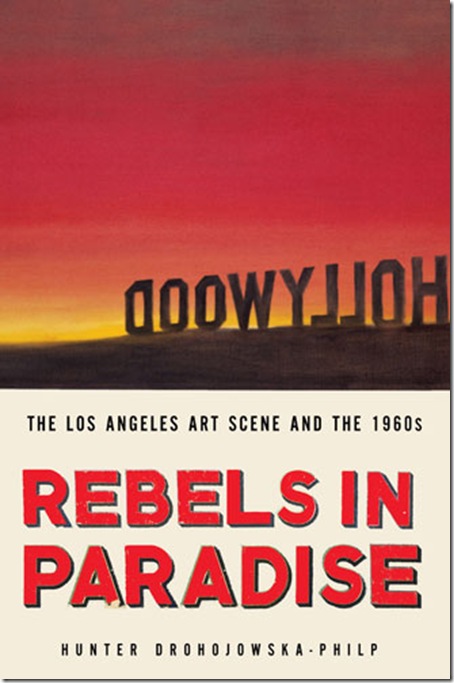
Hunter Drohojowska-Philp’s book on the Los Angeles art scene in the 1960s is reviewed by former Times art critic Suzanne Muchnic in the Los Angeles Times and by Michael S. Roth in the Washington Post.

Muchnic: “Rebels in Paradise” is an independent project — served up just in time to be savored as an appetizer for the upcoming feast. More Vanity Fair than standard art history, it’s an affectionate, deliciously gossipy account of the decade when a convergence of renegade artists, entrepreneurs, curators, collectors and writers put Los Angeles on the art world’s map. Hunter Drohojowska-Philp, a longtime observer of the scene and a biographer of artist Georgia O’Keeffe, calls her new book “a love letter to Los Angeles, still a place of perpetual possibility and infinite invention.”

Roth: She tells us just a little about their work: how Ed Moses busted the borders of the gallery format, how Ed Ruscha integrated words into his paintings, how Robert Irwin and James Turrell discovered light as their medium, and how Judy Chicago explored sexuality and gender in this macho atmosphere. But we learn more about who was sleeping with whom, about prices for art when it was cheap, and about how these West Coast artists came to understand their careers in relation to the entrenched interests in the other art scene they sought to supplant: New York’s.

MUSEUMS

Andrew Stern writes for Reuters about the Art Institute of Chicago’s exhibit of Soviet posters from World War II, “Windows on the War. Eve M. Kahn writes about the exhibit in the New York Times.

Linda Wheeler, in the Washington Post’s A House Divided blog on the Civil War, writes that an original Civil War banner was found in the attic of the Sandusky County Ohio Historical Society.

New York Times gallery listings.

The L.A. Daily Mirror  and L.A. Crime Beat lovingly prepared by bots from Twitter feeds at paper.li

Posted in Books and Authors, Chicago, Crime and Courts, History, Museums, New York | Tagged , , | Comments Off on #books, #museums, #history 7|29|2011 [Updated]

Marion Eisenmann: Artist’s Notebook – Third Street Promenade

Sept. 4, 2009, Third Street Promenade

Third Street Promenade by Marion Eisenmann, Sept. 4, 2009


Note: This is one of the sketches that Marion Eisenmann did for the Daily Mirror when it was at latimes.com. I’m reposting it just as it was in 2009.

Santa Monica’s Third Street Promenade awakens a bit at a time in the sweet coolness of a summer morning near the ocean. Along the darkened strip of gleaming glass and steel shops — Armani Exchange, Gap, Abercrombie & Fitch, Diesel, Urban Outfitters and Foot Locker — the Starbucks flickers to life. Men with long-handled push brooms sweep the gutters and people selling earrings and jewelry set up their kiosks along the street closed to cars.

Continue reading

Posted in 2009, Art & Artists, Artist's Notebook, Music | Tagged , , , , | Comments Off on Marion Eisenmann: Artist’s Notebook – Third Street Promenade

#history, #libraries, #museums 7|28|2011

battle_of_manila
Image: Battle of Manila Bay. Credit: Wikipedia

NEWS

Justin Jouvenal in the Washington Post’s Buzz, writes that the Patsy Cline Historic House is opening in Winchester, Va., on Aug. 2.

The Independence Seaport Museum has made an emergency patch on the hull of the Olympia, an 1892 cruiser from the Spanish-American war. The museum is seeking a new home for the craft,  which was Rear Adm. George Dewey’s flag ship during the Battle of Manila Bay. AP

Is there a place for art on the “Redneck Riviera?” Kim Severson of the New York Times takes a look at the struggles of the Ohr-O’Keefe Museum of Art in Biloxi, Miss.

The tombstone of Hinda Amchanitzky (d. 1910), who wrote what may be the first Yiddish cookbook, has been returned to her grave on Staten Island, according to Sam Roberts of the New York Times’ City Room blog.

Katie Zezima, writing in the New York Times, says that some homeowners love old windows — and we’re not talking Win95.

The creation of New York’s Central Park erased an African American community known as Seneca Village. Now archeologists are excavating to see what traces remain, according to Lisa W. Foderaro in the New York Times.

The Newberry Library in Chicago has found some rare items among the books donated for its annual fundraising sale, William Mullen writes in the Chicago Tribune.

Posted in Art & Artists, History, Libraries, Museums, Music, Preservation, Retro, Transportation | Tagged , , , | 3 Comments

Second Takes – ‘Naked City’

March 10, 1948, "Naked City"

March 10, 1948:
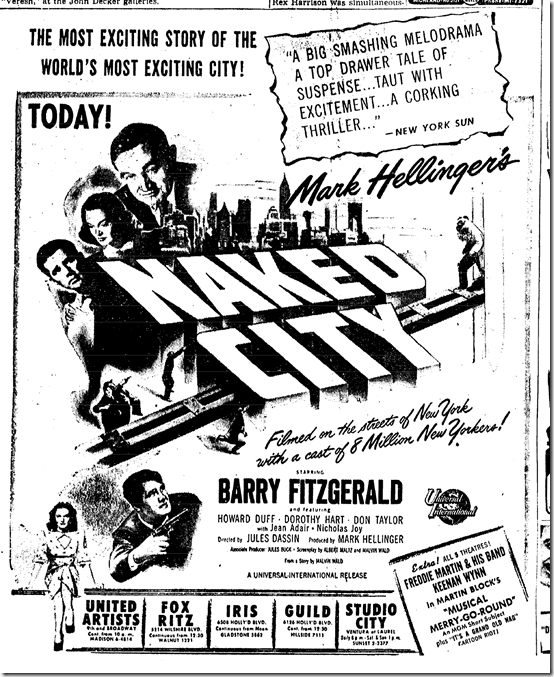
“Naked City” opens in Los Angeles. Credit: Los Angeles Times


Several years ago, when Kim Cooper of the 1947project and I were briefly discussing a book, I did some research on film noir, particularly “Naked City,” the last movie by producer Mark Hellinger, who died Dec. 21, 1947, at the age of 44. At one point, I went through microfilm of old issues of American Cinematographer to see how World War II had changed the movies.

Reading the 1947-48 Cinematographer articles was a profound experience because they strip away all the layers of over-intellectualized,  uber-aesthetic, DVD Web page claptrap that have been written about film noir over the years.

The motives and the causes were simple and easy to understand, and frankly most of them were workmanlike solutions to workmanlike problems: Crews had become accustomed to shooting on location — in combat or making training films — often with minimal lighting and small, 16-millimeter cameras.

There was also a strong emphasis on naturalism, with actual locations, real people and minimal makeup. One of the films that came out of this new perspective was “Naked City” for which William Daniels (d. 1970) won an Academy Award for black and white cinematography.

Here’s what I mean: The Cinematographer article on “Naked City” from 1948. Everything that Daniels (often described as “Garbo’s photographer”) did was for the simple reason of telling a story, with minimal lighting, real locations and crowds of actual New Yorkers. Even the majority of the cast had little previous exposure on film.

Notice one other hallmark of the film noir in “Naked City”: The movie is narrated, though not by one of the characters (like Walter Neff in “Double Indemnity” or Joe Gillis in “Sunset Boulevard”) but an external observer, Hellinger.

Continue reading

Posted in 1948, Film, Hollywood, New York, Obituaries, Photography, Second Takes | Tagged , , | 14 Comments

Found on EBay – Hotel Huntington

Hotel Huntington

Main and 8th St.

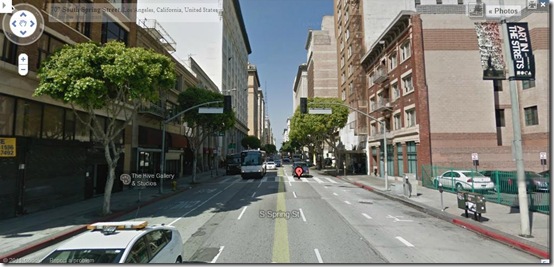
Main and 8th via Google maps’ street view.

A postcard of the Hotel Huntington at Main and 8th streets has been listed on EBay. Bidding starts at $3.

Posted in Architecture, Downtown, Found on EBay | Tagged , , , | 1 Comment

#art, #authors, #genealogy, #history, #museums 7|27|2011

1937 Mercedes

Photo: 1937 Mercedes-Benz 540 K Spezial Roadster. Credit: RM Auctions via the New York Times.


SPOTLIGHT

The University of Virginia has posted audio clips of William Faulkner recorded in 1957-58. The home page is here. If you have never heard Faulkner’s voice you will be surprised.

Jonathan Schultz of the New York Times has a feature on the upcoming auction of a 1937 540 K Spezial Roadster, which is expected to set a price record. Rob Myers, founder of RM Auctions, says the rare auto may go for as much as $15 million.

EXHIBITS

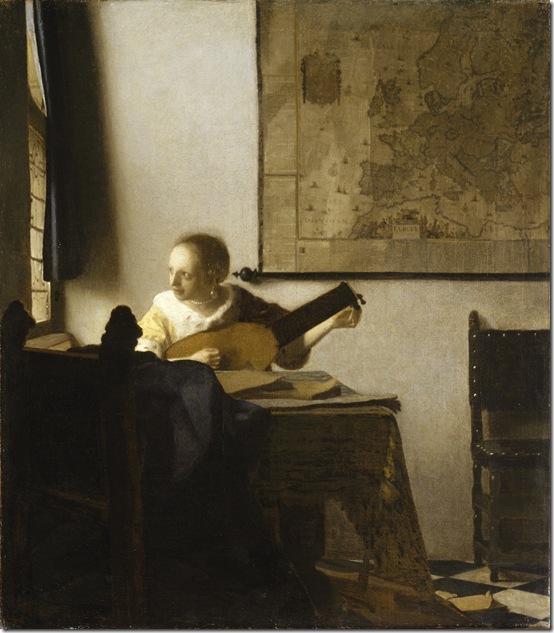
Vermeer "Woman With Lute"

“Woman With a Lute,” about 1662–63, Johannes Vermeer (Dutch, 1632–75). Oil on canvas.
Lent by the Metropolitan Museum of Art, bequest of Collis P. Huntington, 1900, via Los Angeles Times


Johannes Vermeer’s “Woman With a Lute” is on display at the Norton Simon through Sept. 26. Reviewed by Sharon Mizota in the  Los Angeles Times’ Culture Monster.

The National Museum of American History is putting some of Phyllis Diller’s gag file (donated in 2003) on display, according to Jacqueline Trescott of the Washington Post. I can’t say I have ever found Diller particularly funny, but she does have a place in entertainment history. I recall her from an early appearance on “You Bet Your Life” in which Groucho Marx interviewed her — and her immortal husband, Fang.

NEWS

The Los Angeles Conservancy has issued an action alert on the impending demolition of Richard Neutra’s Kronish House, which was also reported by Martha Groves in the Los Angeles Times. Given Beverly Hills’ que pasa attitude about multimillion-dollar teardowns (it has no preservation laws), I’d say activists haven’t a chance, but I would love to be wrong.  Everything is new in Beverly Hills – even the money.

Chad Bray, writing in the Wall Street Journal’s Law Blog, has the story of a large seizure of illegally imported ivory.

FEATURES

Barb Valentine writes in the Chicago Tribune about programs that introduce children to genealogy.

And the Galesburg, Ill., library is closed on Sundays, but admits genealogists and then locks them in!

The L.A. Daily Mirror and L.A. Crime Beat lovingly prepared by bots from Twitter feeds on paper.li

Posted in Architecture, Art & Artists, Books and Authors, Genealogy, Libraries, Museums, Nightclubs, Pasadena, Preservation, Television | Tagged , , , | Comments Off on #art, #authors, #genealogy, #history, #museums 7|27|2011

James Curtis: L.A. Voices – Dick Lane, Part 2


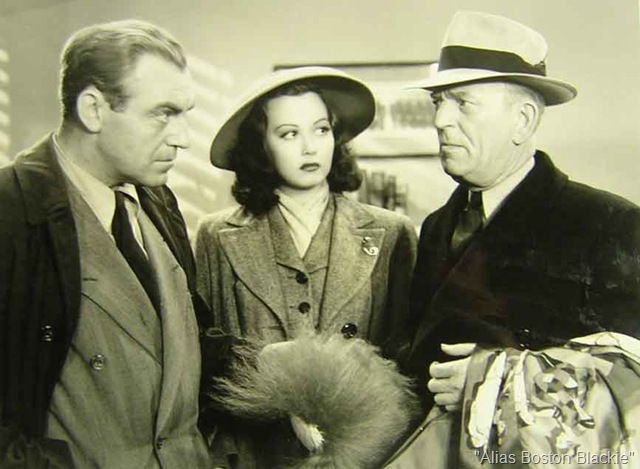
"Alias Boston Blackie"

This is Part 2 of James Curtis’ 1975 interview with Dick Lane. In this segment, Lane discusses his start in films in Los Angeles, making “Union Pacific” with Cecil B. De Mille, Howard Hughes’ takeover of RKO  and making “Boom Town” with Clark Gable and Spencer Tracy.
Part 1 is here.

Photo: Dick Lane, Adele Mara and George McKay in “Alias Boston Blackie,” listed on EBay for $10.

Continue reading

Posted in 1975, Brain Trust, Film, Hollywood, James Curtis, L.A. Voices | Tagged , , , | 1 Comment

Found on EBay – C.C. Pierce

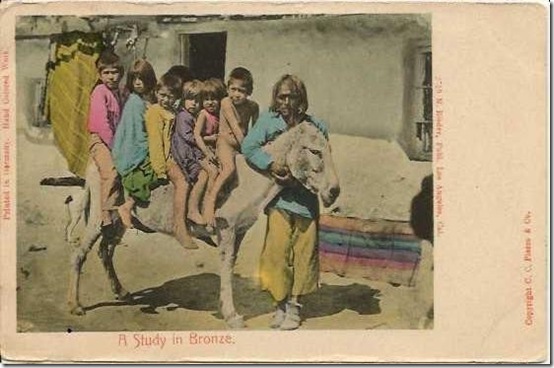
c_c_pierce_study_in_bronze_ebay

A hand-colored postcard published by M. Rieder of Los Angeles, based on a photograph by the studio of C.C. Pierce, has been listed on EBay. Pierce was an early photographer in Los Angeles who mostly specialized in buildings and atmospheric shots. I don’t recall seeing too many photos of people. The card is listed as Buy It Now for $7.95.

Posted in Found on EBay, Latinos, Photography | Tagged , , | Comments Off on Found on EBay – C.C. Pierce

#film, #history, #museums, 7|26|2011

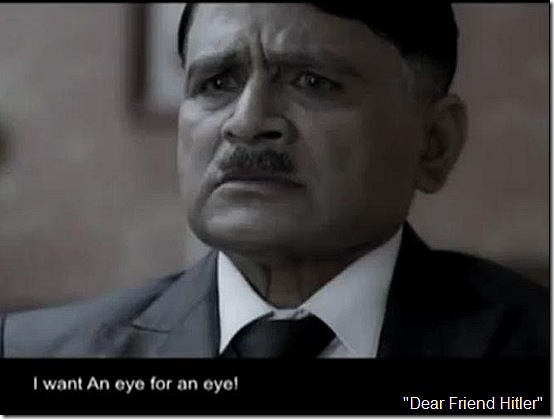
Photo: “Dear Friend Hitler.”


Tripti Lahiri writes in the Wall Street Journal about “Dear Friend Hitler.”

Based on the previews, the movie is “Gandhi” meets “Downfall“  meets “The Sound of Music,” in Hindi with an all-Indian cast. A less charitable view in the Hollywood Reporter is that Bollywood has unwittingly brought Mel Brooks’s play within a play, “Springtime for Hitler,” to the screen.

But will he rant about the iPad and Carmageddon?

John Markoff of the New York Times writes about an article by Steven M. Bellovin in Cryptologia on what may be the earliest description of an encryption technique known as the one-time pad, a method that is extremely secure because it is used once and discarded.

NEWS

Carol Vogel of the New York Times writes that attendance is the highest in 40 years at the Metropolitan Museum of Art, in part because of three blockbuster shows

Robert Samuels of the Washington Post says that George Washington University is building a 35,000-square-foot facility for the Textile Museum and a 20,000-square-foot center for storage and conservation.

OBITUARIES

Margaret Ramirez of the Chicago Tribune has a great obituary hat maker Raymond Hudd.

Reed Johnson of the Los Angeles Times has an obituary on artist Gilbert “Magú” Luján

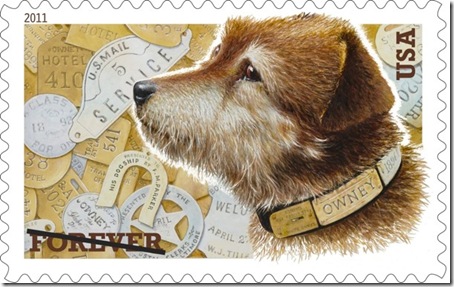
owney_stamp

Margaret Webb Pressler writes in the Washington Post’s Kids Post that Owney the Postal Service mascot is getting his own stamp.

The L.A. Daily Mirror and L.A. Crime Beat lovingly prepared by bots from Twitter feeds at paper.li

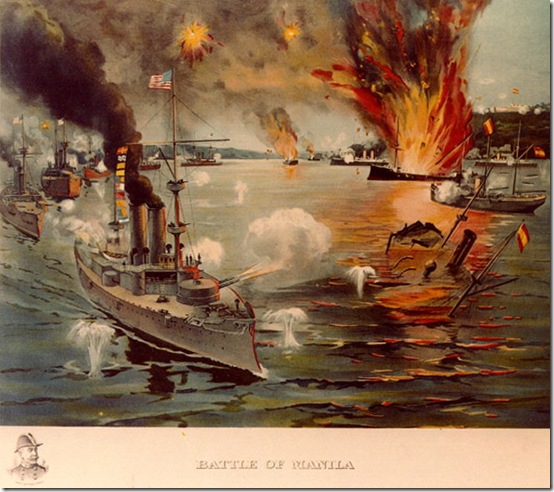
Photo: Owney the Postal Service dog. Credit: National Postal Museum

Posted in Art & Artists, Crime and Courts, Film, History, Hollywood, Museums, Obituaries | Tagged , , , | 1 Comment

‘Zoot Suit’ and History — Part 5

June 1, 1943, comics

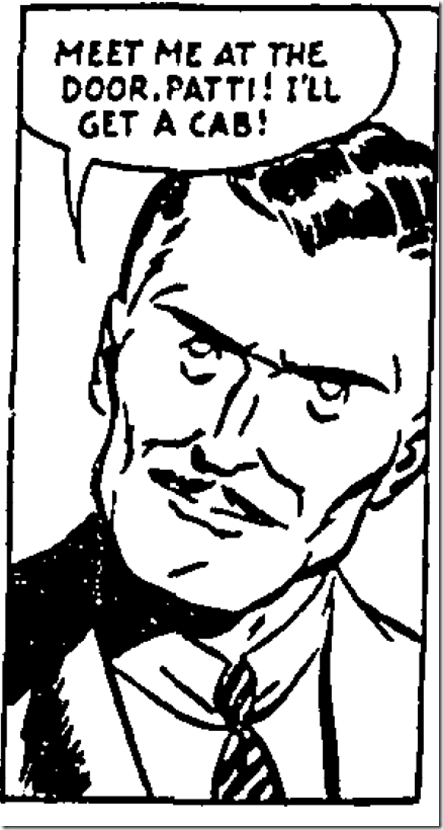
Cartoon: A troubling moment in “Mary Worth’s Family,” June 1, 1943. Credit: Los Angeles Times


June 1, 1943: It is impossible to accurately determine, so long after the fact, why a May 31, 1943, brawl between zoot-suiters and sailors wasn’t covered in The Times. But that’s only one mystery. The more immediate question is: who was Joe Dacy Coleman?

To recap: I decided to take a look at the historical background of the Zoot Suit Riots after seeing “Zoot Suit” in the Los Angeles Conservancy’s Last Remaining Seats series.

In Part 1, we saw that The Times initially treated the zoot suit as a youthful fad, but the attitude changed once zoot suits were outlawed by the War Production Board to conserve fabric.

In Part 2, Times columnist Timothy Turner provided some more sympathetic insight (zoot-suiters aren’t all criminals and delinquents) that was a surprising counterpoint to the mainstream opinion.

In Part 3, we looked at the events leading up to the Zoot Suit Riots of June 1943.

In Part 4, we found a “zoot zuit orgy” and other news accounts in The Times in early June 1943, until we hit a wall with Joe Dacy Coleman, which is where we pick up now.

Continue reading

Posted in 1943, Books and Authors, Fashion, LAPD, Latinos, Libraries, World War II, Zoot Suit | Tagged , , , | Comments Off on ‘Zoot Suit’ and History — Part 5

Found on EBay – Mullen & Bluett

Mullen & Bluett

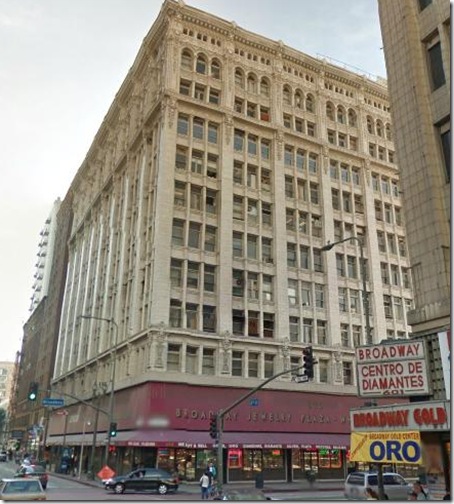
Broadway and 6th

This postcard showing the new building of Mullen & Bluett (d. 1969) which became Grodins (d. 1972) has been listed on EBay. And here’s the building as shown on Google map’s street view. Bidding on the postcard starts at 99 cents.

Posted in 1910, Architecture, Downtown, Fashion, Found on EBay | Tagged , , | Comments Off on Found on EBay – Mullen & Bluett

Robbers Kill LAPD Officer in Shootout, July 24, 1934

stanford_33rd
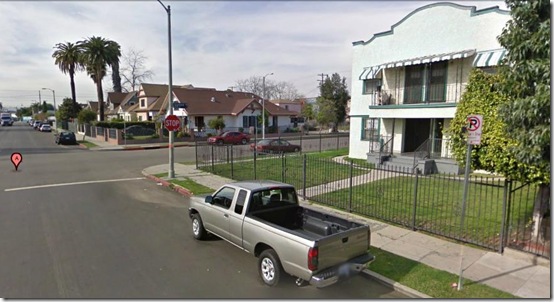
Stanford Avenue and 33rd Street via Google maps’ street view.


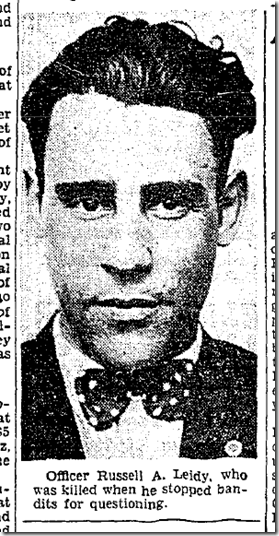
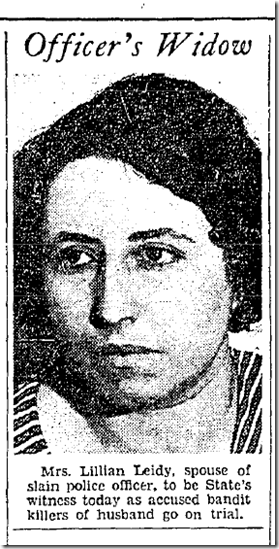
July 25, 1934, Officer Russell Leidy Lillian Leidy, Aug. 21, 1934

Stanford Avenue and 33rd Street is one of those little pockets of old houses in Los Angeles that looks like it hasn’t changed much since 1934, when two men in their 20s calling themselves “the new Dillingers” killed LAPD Officer Russell A. Leidy in a shootout.

Harry Wilson and Paul McDonald began the evening of July 24, 1934, by holding up a cafe at 5800 S. Broadway. They got $5.

Their next job was a cafe at 3316 S. San Pedro St. They got some money from the cafe owner and backed out of the door, warning the owner and a restaurant patron not to start anything: “We’re the new Dillingers and we’re plenty tough.”

Continue reading

Posted in 1934, Crime and Courts, Homicide, LAPD | Tagged , , | 4 Comments

#genealogy, #history, 7|25|2011

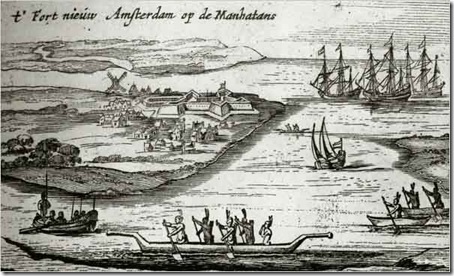
Amsterdam Map

Image: Manhattan c. 1626. Credit: New England Historic Genealogical Society via the New York Times.


SPOTLIGHT

Alison Leigh Cowan takes a look at the history of the Van Dusen family in Sunday’s New York Times.

Andrew Van Dusen learned that he was a 12th-generation descendant of one of Manhattan’s first few hundred settlers, the operator of a windmill where the Dutch ground grain, and he has been collecting anecdotes and artifacts about his sprawling family ever since. Inside his town house on a historic cul-de-sac in the Flatbush section of Brooklyn, ancestors gaze down from gilded frames: There is Andrew’s grandmother, Helen Campbell Van Dusen, along with the two men she married — consecutively — Bruce Buick Van Dusen and his older brother Theron. And there is Theron’s grandfather, Charles Theron Van Dusen, who faithfully kept a daily diary on the front lines of the Civil War.


William Yardley, writing in the New York Times, has a feature about Native Americans who renew their cultural traditions with an annual canoe trip.

For the 23rd summer in a row, a growing number of American Indians from tribes scattered across coastal regions of Washington State and British Columbia have climbed into traditionally designed cedar canoes and paddled as many as 40 miles a day, sometimes more, over two or three weeks, camping at a series of reservations until they converge at the home of a host tribe. There, several thousand people welcome them for a week of traditional dancing, singing and celebration.

Kyle Durrie brings her mobile printing presses to Redlands in the Moveable Type project. By Molly Davis in the Redlands Daily Facts.

Weird Al’s appearance tonight at the Grammy Museum is sold out.

The L.A. Daily Mirror and L.A. Crime Beat lovingly prepared by bots from Twitter feeds at paper.li
Posted in Crime and Courts, Genealogy, History | Tagged , | 1 Comment

Eve Golden: Queen of the Dead

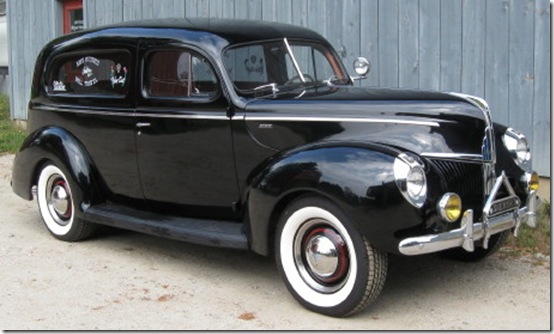
Ford hearse

Photo: 1940 Ford Siebert hearse converted to a delivery sedan, $49,000 on Hemmings.com


Queen of the Dead—dateline July 25, 2011


• July 22 saw the death of the first Bond Girl, Linda Christian, 87. Her career was pretty unremarkable; movies like Tarzan and the Mermaids, The Happy Time, Slaves of Babylon, Athena, The VIPs, and Meet Peter Voss. But in 1954, she played Valerie Mathis in a TV adaptation of Casino Royale, making her the first Bond Girl (to Barry Nelson’s James Bond). Christian was married to actors Tyrone Power (from 1949-56) and Edmond Purdom (from 1962-63).

• No one was surprised by the death on July 23 of poor Amy Winehouse, who joined what Kurt Cobain’s mother called “that stupid club,” of rock stars who died at 27. To me, the saddest part of this was her dad, Mitch Winehouse, who was just restarting his own singing career, on his daughter’s coattails. After giving up the show business to raise his family, Mitch was just now cutting his first album, and was appearing at New York’s Blue Note café. He told the Timeslast week, “she said: ‘You know what, Dad? You have to make an album.’ I said, ‘Are you crazy?’ And she said, ‘No, you have a great voice, this is terrific.’ We were thinking about it, and, as is well documented, she went through a very bad period, and we put it on the back burner. Then she got better, and we decided to give it a go.”

Borders, the 40-year-old book chain, announced on July 18 that it would be closing all 399 stores nationwide, putting 10,700 people out of work. Borders was always kind of the low-end K-Mart of bookstores, but any port in a storm. When I moved to New York 30 years ago, I had Scribner’s, Doubleday, the great Gotham Book Mart to choose from—all gone. Amazon, Barnes and Noble (itself with one foot in the grave) and now e-books have pretty much written the death certificate for bookstores.


Continue reading

Posted in Books and Authors, Brain Trust, Eve Golden, Film, Hollywood, Music, Nightclubs, Obituaries, Queen of the Dead | 1 Comment

Photos That Make Us Wonder

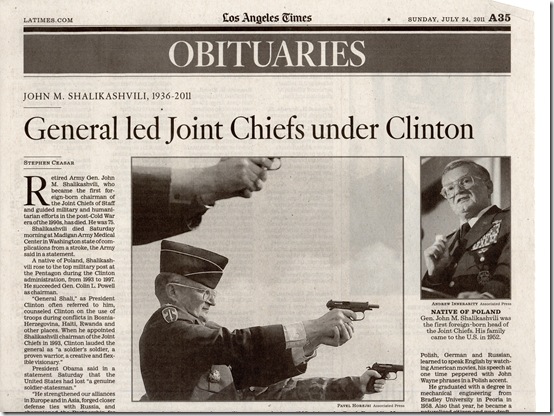
July 24, 2011, Shalikashvilli

OK, does anyone else wonder about the main picture in the Shalikashvili obituary in The Times?

Continue reading

Posted in Obituaries, Photography | Tagged , , | 2 Comments

#architecture, #books, #history, #museums, 7|23|2011 [Updated]

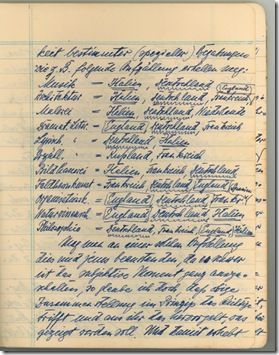
Mengele Notebook, Cover Mengele Notebook

Photos: Josef Mengele’s notebooks. Credit: Alexander Autographs.

RECOMMENDED

Randy Kennedy of the New York Times catches up with famous/notorious graffiti artist/tagger TAKI 183 at a book signing for “The History of American Graffiti.”

Rex Huppke’s ‘I Just Work Here’ Column in the Chicago Tribune takes a look at the reaction to Chicago’s Marilyn Monroe statue.

ARCHITECTURE

Scott Timberg of the Los Angeles Times visits John Lautner’s Chemosphere home and talks to owner Benedikt Taschen.

Frank Escher, who was brought in as restoration architect, vividly remembers the place’s condition.”I have to give Benedikt credit for seeing past the disrepair and sad state the house had fallen into,” he says. “It looked like a rundown motel. It had been rented out for 10 to 12 years; it was like the ultimate party house.”

In fact, during much of that decade, the place had been on the market. “It was for sale for so long,” says Taschen, “that it was even in a ‘Simpsons’ episode: a house with a for-sale sign.”

BOOKS

David Hackett Fisher reviews Gordon S. Wood’s “The Idea of America” in the New York Times.

Wood’s latest book is a collection of 11 essays, along with an introduction and conclusion, that encompass his entire career. It reveals more of the author than any of his other work and creates the opportunity for an overall assessment of his achievement.

Wood introduces himself with a familiar line from the poet Archilochus: “The fox knows many things, but the hedgehog knows one big thing.” He celebrates the foxes who flourish in his field, and adds in his modest way, “By contrast, as a historian I fear I am a simple hedgehog. . . . Nearly all of my publications have dealt with the American Revolution and its consequences.”

Writing in the New York Times, Sam Roberts takes a look at Peter Morton Coan’s “Toward a Better Life: America’s Immigrants in Their Own Words.”

NEWS

Alexander Autographs says it sold a collection of journals kept from 1960 to 1975 by Josef Mengele for $300,000. The material was sold to a anonymous Jewish buyer who is “building a private collection for a museum,” according to AP.

A sample of the Mengele material quoted by the auctioneer:

We cannot accept how our ‘natural, Germanic’ religion is being misrepresented. Our Germanic religion was directly connected to nature in which human beings feel logically at home…

The youth movement honored the traditions of our ancestors while remembering our primary cultural values. We had to remember our inner strength, and this was of utmost importance after World War I and the shameful peace that followed. This burden was designed to keep our people in a constant condition of decay. We had to find the deepest sources of German strength to make our restoration possible. We could not expect other people to help us, and we couldn’t rely on religion…What has the Catholic Church done to amend or get rid of the absurd Treaty of Versailles? They had a chance to influence the synods of the Protestant Churches, which make up two thirds of the German people. The new strength had to come from the Germans themselves, and this is exactly where it came from. The youth movement laid the spiritual foundation for the national uprising that was to follow World War I. Later on, the youth movement became part of the great political organization, the Hitlerjugend…We had to liberate Germanic history from Roman and Catholic influences.

The L.A. Daily Mirror and L.A. Crime Beat lovingly prepared by bots from Twitter feeds by paper.li.

[Correction: An earlier version of this post credited the Mengele notebook photos to Alexander Auctions. The firm is Alexander Autographs.]

Continue reading

Posted in Architecture, Books and Authors, History, Immigration, Museums, Religion, World War II | Tagged , , , | Comments Off on #architecture, #books, #history, #museums, 7|23|2011 [Updated]

El Segundo Revisited

1958_0714_gagnon

1958_0714_page Dropcap_n_nash26 orman Frederick Gagnon looks like an excellent suspect in the unsolved killing of two El Segundo police officers last year.

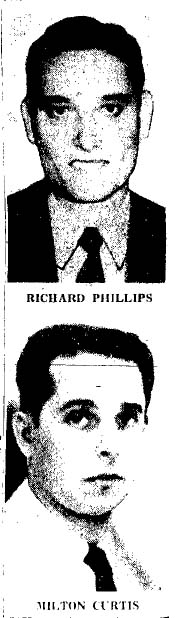
In an incident quite similar to the El Segundo case, Charles H. May and a female companion (The Times, fortunately, did not identify her) were kidnapped as they left a Lawndale restaurant at 2 a.m. on a Saturday. Gagnon drove them to Crystal Lake, where he pistol-whipped May and raped the woman while bragging that he had killed El Segundo Officers Richard Phillips and Milton Curtis. (Today, we know Gerald F. Mason was the killer).

Gagnon was convicted under the Little Lindbergh law and in 1959 was sentenced to prison without the possibility of parole. The Social Security Death Index lists a Norman F. Gagnon, born in 1927, dying March 25, 1997, in Sacramento.

Note: I originally wrote this post in 2008. I’m reposting it here.

Email me

Posted in 1958, Cold Cases, Crime and Courts, Homicide | Tagged , , | Comments Off on El Segundo Revisited

Found on EBay – Hoffman’s Cafe

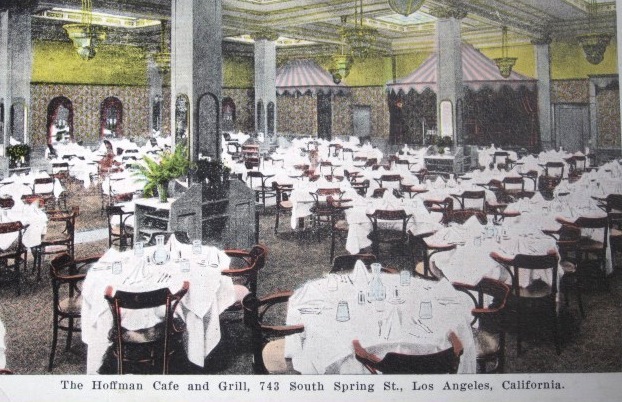
Hofman's Cafe

South Spring

The 700 block of South Spring Street via Google maps’ street view.

Levy's Cafe, Aug. 25, 1915 For years, 743 S. Spring was the home of Levy’s Cafe, but sometime in the early 1920s the address became Hoffman’s. It’s not clear from The Times’ clips as to what occurred. This is what fine dining looked like in downtown Los Angeles c. 1921. This postcard has been listed on EBay. Bidding starts at $9.99.
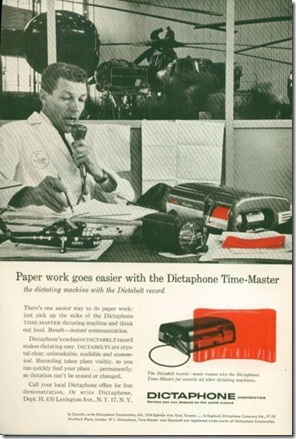
Image: Levy’s Cafe, Aug. 25, 1915. Credit: Los Angeles Times

Posted in Downtown, Food and Drink, Found on EBay, Interior Design | Tagged , , | Comments Off on Found on EBay – Hoffman’s Cafe

Nixon Library Releases New Recordings

Dictabelt EBay The Associated Press has filed a story on the Nixon Library and Museum’s release of more Nixon recordings. Of course, that’s not good enough for the Daily Mirror, so we tracked them down ourselves.
The library has released digital recordings of Dictabelts. If you’re too young to remember, the Dictabelt was a recording device that used a needle to transcribe audio signals into a revolving acetate belt. These were eventually replaced by cassettes and microcassettes.

The audio quality of the Nixon recordings varies from passable to ghastly. I’m not sure why the library hasn’t attempted to at least boost the volume, but it hasn’t.

The recordings are of memos and some phone conversations involving Nixon, H.R. “Bob” Haldeman, John Erlichman and others. One tape caught our interest: Erlichman and journalist Robert Novak regarding L. Patrick Gray’s nomination to head the FBI. Unfortunately, the volume is quite low and it’s ultra low-fi, so it would take a lot of tweaking to make it intelligible.

Here they are!

Photo: Dictaphone ad for sale on EBay at $5.99.

Posted in Libraries, Politics, Richard Nixon | Tagged , | Comments Off on Nixon Library Releases New Recordings

Death in El Segundo

July 22, 1957
Los Angeles

Note: This is a post from 2007.

We’re heading west on Rosecrans Avenue. It’s early Monday morning, a few moments after 1:30 a.m., and the streets are dark. There’s nobody out but a few drunks and some people heading home from the swing shift. It’s all quiet.

Maybe that’s what these two men on the graveyard shift thought.

Let’s pull over here, at Palm Avenue. North of us is the tank farm for the Standard Oil refinery and south of us are new homes. Up ahead is a police car, all lit up. I make it out to be 1957 Ford 300, four-door black and white. The only sound is the police radio. You can see the front passenger door is open. It says: “El Segundo Police.”

Before we get out, I need to say something: We’re going to find two dead–or dying–police officers up there. At home, there’s two widows who kissed their husbands goodbye and hoped they would see them in the morning. There are five kids who are going to grow up without their fathers. It’s a terrible tragedy and I don’t want to minimize that. But it would be another tragedy if one more police officer died because we didn’t learn a lesson from what happened here. These men can’t tell us, so we’ll never know exactly what went on. But let’s see what we can figure out about the shooting by picking it apart.

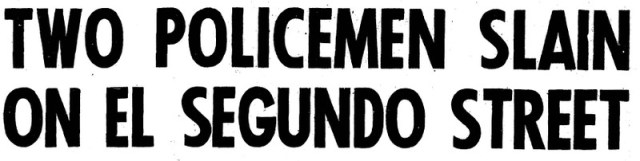
The officer in the driver’s seat is Milton Gus Curtis, 27. He’s fresh out of the academy in Riverside and has been on the El Segundo department for two months. Curtis has been shot in the upper right chest, right side and right forearm (or right wrist) with three .22-caliber short rounds. Continue reading

Posted in 1957, Cold Cases, Crime and Courts, Homicide | Tagged , , , | 4 Comments