Dec. 8, 1941: Pearl Harbor is about a month away, so I thought it would be illuminating to focus on the days leading up to the U.S. entry into World War II. Hope you like it. Ready for the swing shift?

Dec. 8, 1941: Pearl Harbor is about a month away, so I thought it would be illuminating to focus on the days leading up to the U.S. entry into World War II. Hope you like it. Ready for the swing shift?

Pier Angeli and friend remind Daily Mirror readers to switch to standard time on Sunday. Or as William Safire said: “Fall is the time of year that conservatives like best because they get to turn the clock back.”


Nov. 5, 1941: Pilot Ralph Virden dies after being trapped in the burning wreckage of his P-38, which lost its tail assembly as he was returning to the Lockheed Air Terminal after a test flight about noon, The Times reported.
Witnesses said the twin-engined, double fuselaged ship was booming westerward at near-maximum speed (unofficially reported to be between 400 and 500 mph) when the duralumin tail assembly “simply floated away.”
Homeowner Jack Jensen was awakened by the crash and tried to free Virden from the burning wreckage but was driven back by flames. The crash occurred during an outdoor luncheon for military officials and 25,000 employees, but they did not observe it, The Times said.
Virden was survived by his wife and son, Ralph Jr., who also worked at Lockheed. Fellow pilots said: “Ralph was the best we had, especially in power dives.”
Tom Treanor, who was killed covering World War II for The Times, says the Forum Theatre on Pico, the Warner Bros. Hollywood and the Roxie in downtown Los Angeles are experimenting with swing shift movies that start at 1:30 a.m.
Jimmie Fidler says: Sam Goldwyn doesn’t know it yet, but his ace cameraman Gregg Toland, an officer in the Naval Reserve, has been notified to stand by for active service.


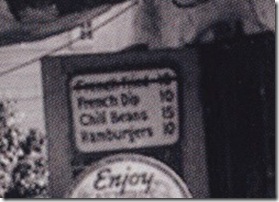
Photo: 618 S. Olive via Google’s Street View.
This postcard of Clifton’s Pacific Seas (d. 1960), postmarked 1947, has been listed on EBay. The Pacific Seas was at 618 S. Olive and was torn down to make – a parking lot. Bidding starts at $8.

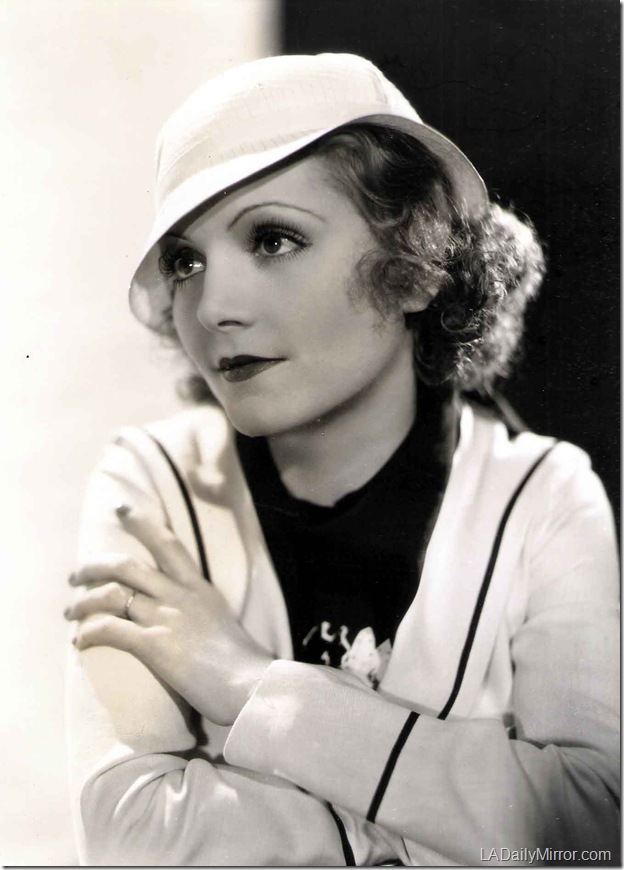
And for Thursday, here’s another mystery chap!
Update: This is Nils Asther (d. 1981) Continue reading

![]()
Nov. 3, 1941: Tom Treanor goes to a dance at the Glendale Civic Auditorium for swing shift workers, about 5,000 of them, from 1 a.m. to 5 a.m. on a Saturday morning. Most of the couples are married, he says, and the wives are 18 or 19.
One of the trombonists wasn’t playing because his instrument was broken at a Halloween job. Why did he show up? Because he still got paid, even without his instrument. Trumpeter Wingy Manone [often spelled Wingie and Mannone] (d. 1982) played left-handed because his right arm was missing. Manone wrote an autobiography titled “Trumpet on the Wing.”
Videos of Wingy Manone: Jukebox Joe’s | Tailgate Ramble | Vine Street Blues |
The Times also publishes a story about a woman who was “criminally assaulted” – one of those quaint terms newspapers used to use — by four men. One of them was a friend of her brother and wanted to kill her because she recognized him, but the others prevented him. And, as was customary in those days, The Times published her name and address.
Jimmy Fidler says: REPUBLIC’S “RED RIVER” SET AT A GLANCE: Cowboy extras using between scene leisure to shine already gleaming boots … “Gabby” Hayes displaying femme star temperament when a prop barber’s chair refuses to work … Sally Payne (industriously knitting a washcloth): “Other girls can keep the soldiers warm; I’m concentrating on keeping the Army clean” … The Sons of the Pioneers and Roy Rogers (who used to be one of them) blending voices for a sentimental rendition of “Sweet Adeline” … Veteran Henry Morris, greatest bulldogger in rodeo history, standing in for “Gabby” Hayes … Set visitors examining a bench carved with the initials B.C. as Billy Gilbert explains that Bing Crosby got his screen start on this very sound stage in Sennett shorts … Gale Storm (watching Mexican extras in a knife-throwing contest): “What a useful accomplishment in Hollywood society!”
[And yes, this was released as “Red River Valley.”]

A copy of “Quick Watson, the Camera,” a collection of news photos by the Watson brothers, has been listed on EBay. The book was edited by the late Delmar Watson, a former photographer for the Mirror – and a notorious player of practical jokes. This copy (note the ripped cover) has been autographed by George Watson. The book is listed as Buy It Now for $19.99.

Here’s today’s mystery chap, courtesy of Steven Bibb.
[Update: For some reason, WordPress isn’t allowing comments on this post. I’ll see if I can fix it.]
[Update 2: This is Cliff Danielson. Sorry for the delayed answer but the Daily Mirror HQ has been getting rewired.]
![]() |
This remarkably dazzling tie from Oviatt’s has been listed on EBay. Oviatt’s was one of the leading menswear stores in Los Angeles and is the subject of the 2008 documentary “The Oviatt Building” by Marc Chevalier and Seth Shulman. Bidding starts at $15.

[Update: This is Sandra Storme. Please congratulate Mike Hawks for identifying her.]
Here’s today’s mystery gal, courtesy of Steven Bibb!

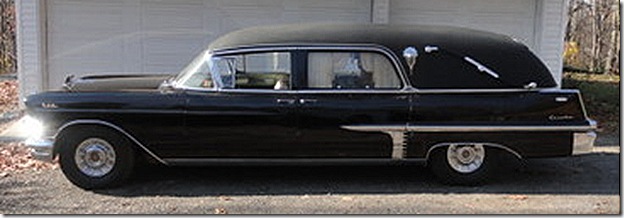
Photo: 1993 Cadillac Hearse for sale on EBay, listed as Buy It Now for $4,700.
Queen of the Dead—dateline October 31, 2011
• 105-year-old British stage actress Norrie Woodhall died on Oct. 25. She was the last surviving member of the long-forgotten Hardy Players, an early 1920s Dorset troupe who put on Thomas Hardy-based shows, with Hardy’s own blessing (he picked Woodhall to play Liza-Lu in Tess of the D’Urbervilles). “My mother was milking a cow when [Hardy] saw her,” said Woodhull of the character’s inspiration. “He said later on: ‘I must have seen your mother milking a cow and that put me in mind of Tess all those years ago.’” Actress Devina Symes noted the end of an era: “Thomas Hardy said that we have two deaths. The first is when we die, the second is when the last person who knew us dies. With the passing of Norrie Woodhall, Thomas Hardy has had his second death.”

A program from the 1925 showing of “The Gold Rush” at Grauman’s Egyptian Theatre has been listed on EBay. This item has been removed from a scrapbook and frankly we have mixed feelings about that. Antique dealers who cannibalize mementos make us uncomfortable, and yet it’s sometimes the only way a collector can obtain an item. It’s a pity when these things don’t remain in the family. Bidding on the program starts at $9.99.

Well? Any ideas?
This is the floor of the Bradbury Building. I took a picture of it during an art class given Saturday by Marion Eisenmann, known to Daily Mirror readers through the Artist’s Notebook. Marion asked me to make some brief remarks to her students on the history of the buildings they were sketching.
On Monday, Eve Golden will have her roundup of unusual obituaries in Queen of the Dead, and in Hollywood Heights, Mary Mallory will take a look at Photoplayers – mechanical instruments that smaller theaters used to accompany silent films.
Other posting will be iffy as the Daily Mirror HQ has lost its Internet connection until it is rewired early this week.

Photo: Stone chopping tool from Olduvai Gorge, Tanzania. Credit: “A History of the World in 100 Objects.”
Last year, BBC4 aired a program that tried to compress the history of the world into the stories of 100 artifacts from the British Museum. The series was so popular that it has been turned into a book titled “A History of the World in 100 Objects” that goes on sale in the U.S. on Monday. Carol Vogel of the New York Times takes a look at the objects that were used and the debates over which items to include.
The podcasts are here. This segment is on the Rosetta Stone. They are also on iTunes.
The National Cowgirl Museum and Hall of Fame in Fort Worth, Texas, is honoring former Supreme Court Justice Sandra Day O’Connor. “The Cowgirl Who Became a Justice: Sandra Day O’Connor” is on display through March 25, 2012.
Susan Whitall of the Detroit News writes that Paul McCartney is paying for the restoration of an 1877 Steinway used by Motown musicians. McCartney was visiting the Motown Historical Museum when he discovered that the piano was unplayable offered to fund its restoration by Steinway.
The L.A. Daily Mirror and L.A. Crime Beat curated by the bots at paper.li

I recently received a shipment of several issues of Haldeman-Julius Monthly wrapped in some pages torn from an old Look magazine. (Young persons: Look was a competitor with Life and was one of those big weekly magazines we had around the house in the 1950s and ‘60s, along with the Saturday Evening Post.)
The first thing to catch my eye was, yes, a Norman Rockwell painting. This one is titled “Uneasy Christmas in the Birthplace of Peace” and has a timelessness that was surely never intended by the artist.
What also caught my eye were several pages from an essay by Look editor William B. Arthur (d. 1997) titled “Whatever Happened to Mankind’s Dream of Peace?” At the time, the U.S. was fighting in Vietnam and antiwar protests were on the rise.
Here’s the conclusion to Arthur’s Dec. 29, 1970, essay, courtesy of the OCR software on the DM scanner. Are they enduring words, or merely scrap paper good for nothing but padding in packages?

[Update 2: This is Charles Dingle (d. 1956). He appeared in the 1941 stage and film versions of Lillian Hellman’s “The Little Foxes.”]
Here’s another photo, courtesy of Steven Bibb.


Oct. 28, 1941: Lee Shippey writes about Los Angeles’ congested streets (no, traffic is not a new problem – it’s a very old one that we are still trying to solve). Notice that Shippey says streetcars and automobiles do not play well together – something to consider for those who want to resurrect the streetcars:
Eastbound interurban traffic out of Los Angeles gets slower and slower and the Aliso Street viaduct will help very little. What is needed is a subway or elevated to get the cars as far as that viaduct.
Unless something is done soon, more and more business is going to bypass downtown Los Angeles. Both motorcar and streetcar traffic on Main and Los Angeles streets would be greatly speeded by a tunnel or El, as now the worst slow-ups are where the streetcars have to turn. They often have to wait for motorcars to get out of the way and always have to creep around those curves.
Did no one note the passing of the widow of once-famous star Harold Lockwood? She’d been working as a studio wardrobe woman, Jimmie Fidler says.

Here’s another mystery photo, courtesy of Steven Bibb.
[Update: After fifteen years, Esther Ralston, former Paramount star, stages a reunion with Adolph Zukor, chairman of the board of directors of Paramount Productions, the man who discovered her and put her in “Old Ironsides,” the epic production. She and 29 other silent stars and featured players have roles in “Hollywood Boulevard” (1936) story of the crisis in the life of a film star.
[Please congratulate Mary Mallory, Claire Lockhart in a rare Daily Mirror appearance (hurry back!) and Mike Hawks for identifying them and Nick Santa Maria (also making a rare appearance — hurry back!) Don Danard, Rick Scott and James Curtis for identifying Zukor.
[Most of all, the Daily Mirror thanks Steven Bibb for his continuing generosity in sharing his mystery photos. We couldn’t do it without him. (And Steven points out that Zukor was his relative). ]