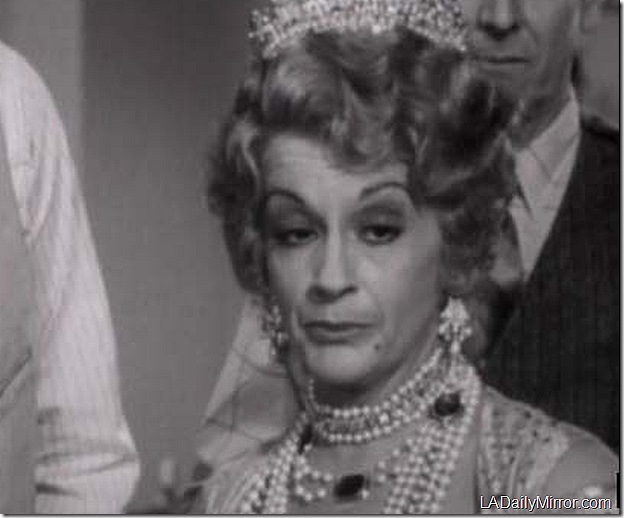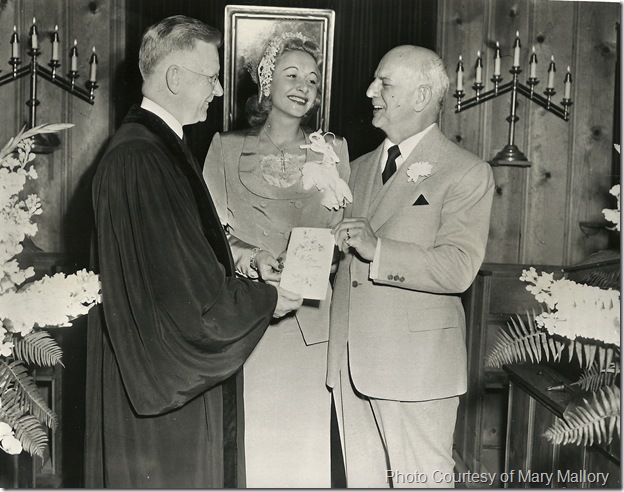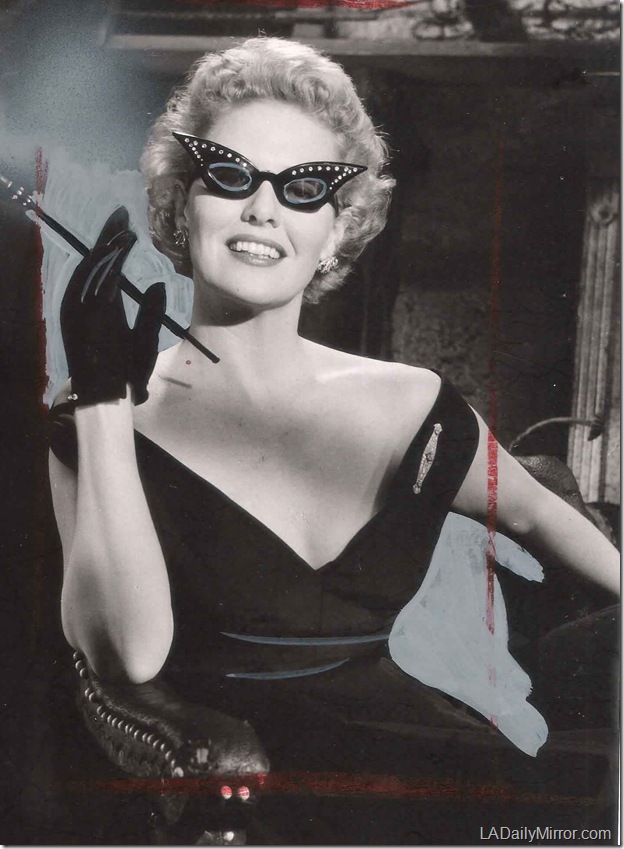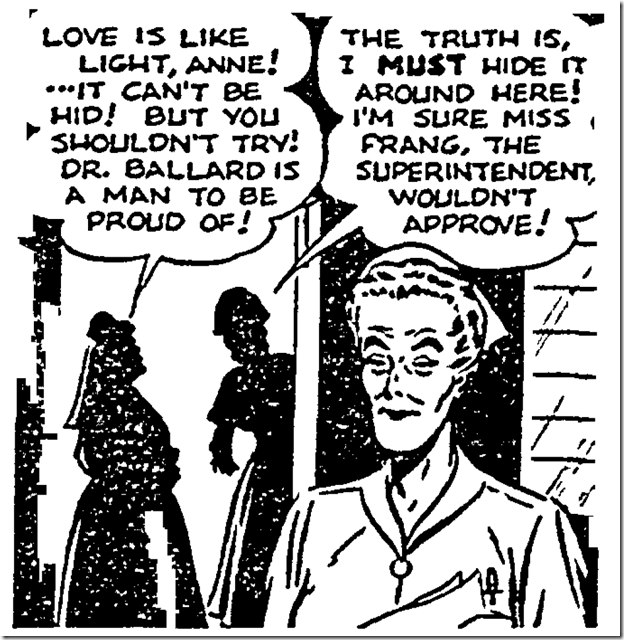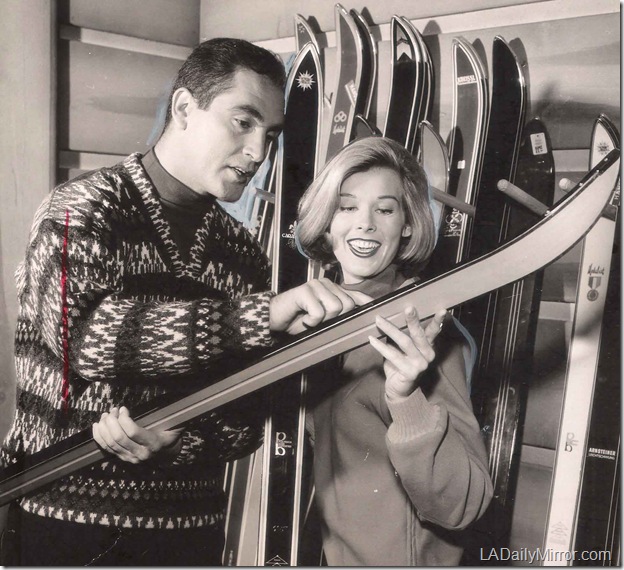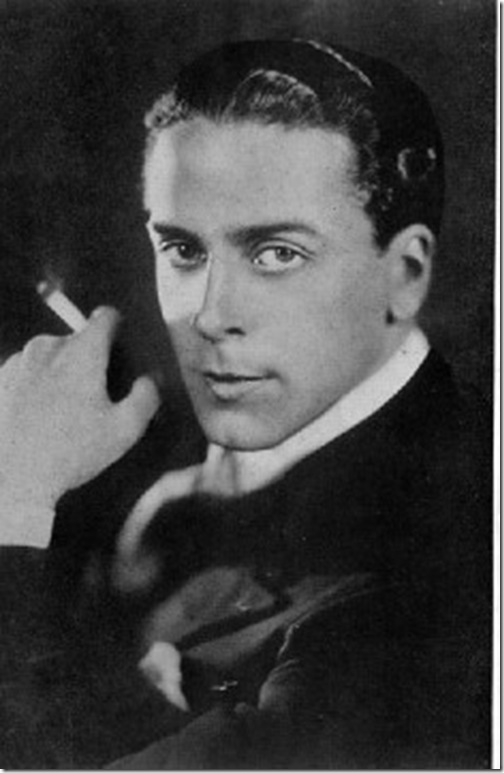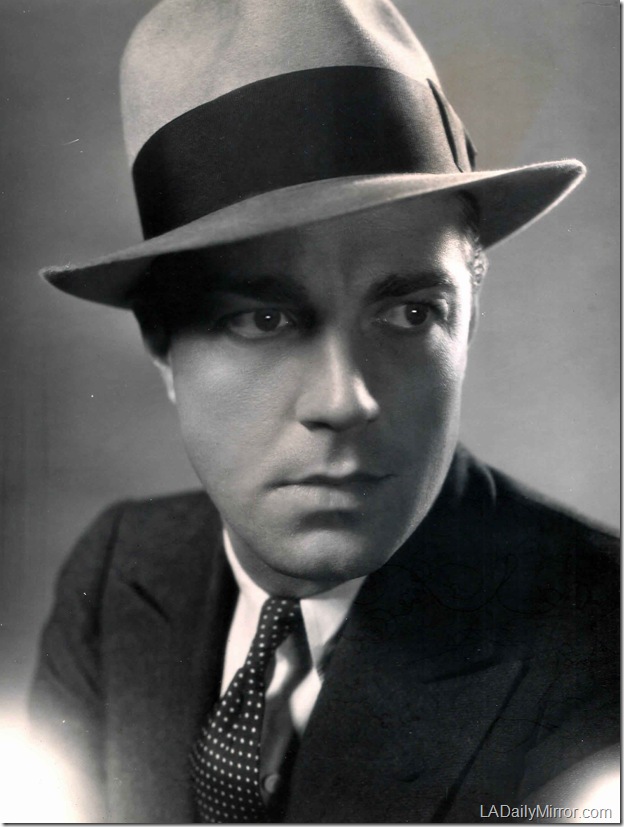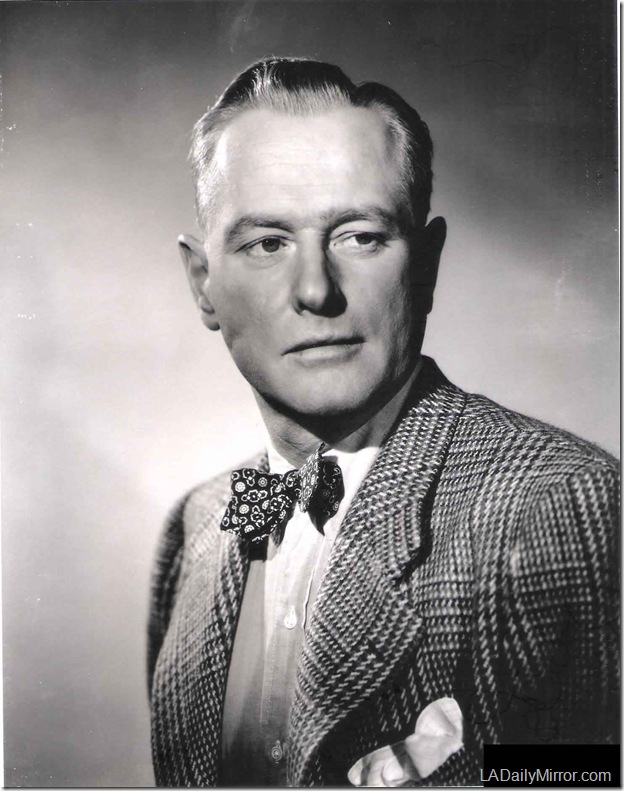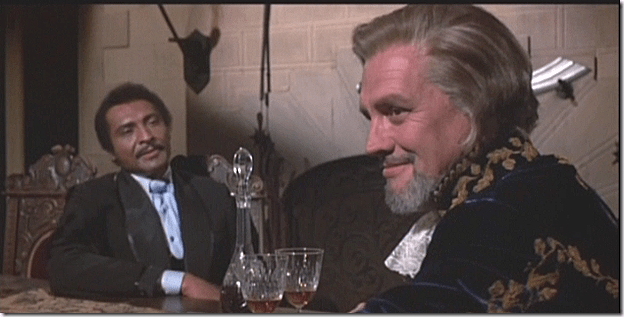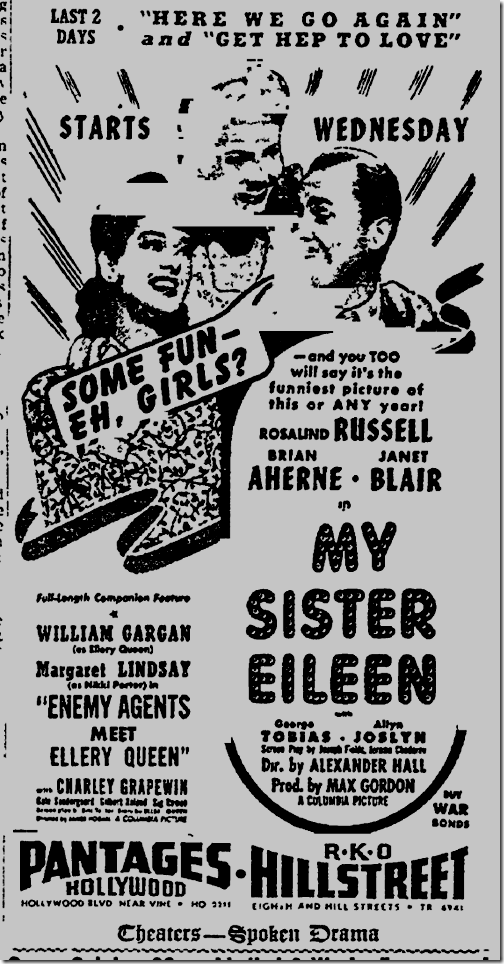
And here’s today’s mystery photo!

In case you just tuned in, I’m doing a little fact-checking as I go through Scotty Bowers’ “Full Service.” This will be fairly tedious except to a research drudge.
I have been examining what Scotty Bowers describes as his first Hollywood encounter, involving Walter Pidgeon and Jacques “Jack” Potts, presumably in 1946. The last few posts have examined the home on Benedict Canyon where the alleged tryst occurred.
Unfortunately, even for the research drudge, creating a timeline for Jacques “Jack” Potts makes the Pidgeon project seem easy. The mysterious Mr. Potts is lightly documented.
Fact-Checking “Full Service”: Part 1 | Part 2 | Part 3 | Part 4 | Part 5 | Part 6 | Part 7 | Part 8 | Part 9 | Part 10 | Part 11 | Part 12 | Part 13 | Part 14 | Part 15 | Part 16 | Part 17


March 20, 1942: A crew of 400 carpenters working 10-hour shifts is hurriedly building the internment camp at Manzanar for “10,000 alien and American-born Japanese from Los Angeles and other Southern California cities,” The Times says.
“Manzanar is the former site of a fruit-growing community of the era preceding acquisition of most of the Owens Valley by the city of Los Angeles in the ’20s. The reception center administration building occupies the site of the Manzanar apple packing plant which flourished before Los Angeles reached into the high Sierra for its water supply.””… The climate is bracing and is considered as healthful as could be desired.
“With these considerations in mind, the center will furnish the Japanese with every comfort except the bright lights of Little Tokyo, from which many of them come.
“If American citizens in Japan are accommodated just one-half as considerately, they should be able to sit out the war in comfortable circumstances.”
In other home front news, retired Army Maj. Gen. Paul B. Malone is organizing the Minutemen of ’42 to help defend America in case of an invasion. “The plan is hazardous for its members, for it demands that they operate as guerrillas within enemy lines,” The Times says.
Meanwhile, Brig. Gen. Joseph O. Donovan of the State Guard says hunters and other marksmen should join existing organizations and that “armed minutemen acting on their own would not be tolerated.”
Henry Methvin, who won a pardon for betraying Bonnie Parker and Clyde Barrow to authorities, is once again a free man after being paroled in the killing of Commerce, Okla., Police Officer Cal Campbell.
Edwin Schallert writes that two studios are fighting over the use of the movie title “Hot Rubber.”

This photo from the studio of Charles C. Pierce of Los Angeles, showing the relocation of Yaqui women by order of the Mexican government, has been listed on EBay. Pierce operated one of the most prolific studios in late 19th and early 20th century Los Angeles and documented many aspects of local life, including the bombing of The Times Building and the Aviation Meet, both in 1910. Pierce also acquired the works of other photographers, compiling an impressive resource of reference material.
As this photo demonstrates, Pierce’s subjects ranged far beyond Southern California. Although Pierce’s images are in several archives, the Huntington Library holds a particularly large collection, filling 63 boxes or 51.19 linear feet. The finding aid to Pierce’s photos is here.
Bidding on this photo starts at $195. As with anything on EBay, an item and vendor should be evaluated thoroughly before submitting a bid.

True confession: I always read signs in movies. So when I saw this name, I became suspicious….

Photo: A Johnny Lightning Santa Monica Maniacs Haulin’ Hearse listed on EBay with bids starting at $1.30.
Queen of the Dead – dateline March 19, 2012
• The Telegraph has come through with another corking portrait of a colorful scoundrel (really, Telegraph? If you are hiring, please call me!). Raymond Scott, 55, was found dead in his jail cell on March 14, from as-yet unknown causes. Scott had stolen a 1623 First Folio of Shakespeare from Durham University in 1998, then blithely waltzed into the Folger Shakespeare Library in Washington, D.C., in 2008 to sell it, “flipping through the pages like he was handling an airport novel,” according to a horrified historian. Caught red-handed, Scott “simply ignored the waves of reality lapping at his burlesque fantasy world,” writes the Telegraph (gosh I love those people). He arrived at court “in a horse-drawn carriage wearing a kilt of Royal Stewart tartan (claiming that Bonnie Prince Charlie was an ancestor); as the judge began the session, Scott answered each question with: ‘Aye, that I am.’ ” Seriously, I don’t know who I am more taken with: Raymond Scott, or his anonymous chronicler at the Telegraph.

In case you just tuned in, I’m doing a little fact-checking as I go through Scotty Bowers’ “Full Service.” This will be fairly tedious except to a research drudge.
Now this is interesting – at least to me.
In the last post, I was puzzled over the location of the “large house” of Jacques “Jack” Potts mentioned in “Full Service” opposite the gates to the Harold Lloyd estate. Today, the estate’s address is 1740 Green Acres Drive and I said that none of the homes on that street existed in 1946.
Fact-Checking “Full Service”: Part 1 | Part 2 | Part 3 | Part 4 | Part 5 | Part 6 | Part 7 | Part 8 | Part 9 | Part 10 | Part 11 | Part 12 | Part 13 | Part 14 | Part 15 | Part 16

I was watching this movie the other day and it made me think of the location shots for “The Caine Mutiny.”
Oddly enough, the location used in the opening credits looks nothing like those used in the film. Apparently continuity was not a concern. This sequence appears to be a set (note the lighting).

Unless sunlight comes from two directions….

In case you just tuned in, I’m doing a little fact-checking as I go through Scotty Bowers’ “Full Service.” This will be fairly tedious except to a research drudge.
Oh dear, oh dear, oh dear.
All those posts about the life of Walter Pidgeon in 1946, the location of gas stations on Wilshire Boulevard and it was in front of me all the time.
Scotty Bowers says:
He swung the car onto a paved drive that led to a large house. As he turned the wheel he pointed out the imposing gates on the other side of the street.
“You like movie stars?” he asked.
“Sure, why?” I replied.
He gestured toward the opposite driveway and told me that it was the home of Harold Lloyd, the famous silent movie actor.
Fact-Checking “Full Service”: Part 1 | Part 2 | Part 3 | Part 4 | Part 5 | Part 6 | Part 7 | Part 8 | Part 9 | Part 10 | Part 11 | Part 12 | Part 13 | Part 14 | Part 15

In case you just tuned in, I’m doing a little fact-checking as I go through Scotty Bowers’ “Full Service.” This will be fairly tedious except to a research drudge.
Let’s recall that it was 1946 and Scotty Bowers was working at a Union Oil gas station somewhere on Wilshire Boulevard (of course that’s not much help since Wilshire runs from downtown to the ocean). I identified five Union stations in Part 7: Wilshire and Flower; Wilshire and Highland; Wilshire and Hobart; Wilshire and Virgil; and Wilshire and Wilton.
A couple of minutes later I found myself on the passenger’s side of the comfortable leather bench seat of Walter Pidgeon’s vehicle. With neither of us saying anything he pulled out of the station and headed west on Wilshire Boulevard….. About twenty minutes later we were driving up Benedict Canyon in Beverly Hills…..
He gestured toward the opposite driveway and told me that it was the home of Harold Lloyd, the famous silent movie actor.
Fact-Checking “Full Service”: Part 1 | Part 2 | Part 3 | Part 4 | Part 5 | Part 6 | Part 7 | Part 8 | Part 9 | Part 10 | Part 11 | Part 12 | Part 13 | Part 14

[Update: Nope, it was real]. I suspect this neon sign is a prop because I can’t find a reference in The Times or the directories at the Los Angeles Public Library to a place called Stripp’s. Most of this film is interiors, but there’s a sequence that shows sidewalk dining in what I assume is vintage Los Angeles. I can’t quite make out the street number over the door – but I would imagine that with four numbers instead of five it’s not out in the Valley. Of course, the set designer could have taken any outdoor location and set up tables, chairs and an umbrella. Any ideas?

[Update: Nov. 14, 1943: This is one of the stories I got when I researched Stripp’s in ProQuest. Dewey Webb and Greg Clancey have sent me links to a photo of Stripp’s at hollywoodphotographs.com. Gosh, I wonder if it’s got a picture of a certain Richfield gas station? Hmmmm.]

In case you just tuned in, I’m doing a little fact-checking as I go through Scotty Bowers’ “Full Service.” This will be fairly tedious except to a research drudge.
On Page 2 (I warned you this would be tedious) Scotty Bowers begins the tale of his first Hollywood encounter – purportedly with Walter Pidgeon. I spent the last two posts gathering the raw material for a timeline of Pidgeon’s life in 1946, the year the encounter allegedly occurred.
This time I’m going to expand on the last post to add information from The Times on when the local beaches were crowded. Recall that Bowers says:
It was a lovely, clear sunny day and I wasn’t expecting much traffic. In that kind of weather folks usually headed for the beach; they weren’t going to spend much time riding around in hot, stifling automobiles. I resigned myself to a potential day of boredom.
Next, I’ll try to figure out what it all means and how the historical record compares to the account in “Full Service.”
Fact-Checking “Full Service”: Part 1 | Part 2 | Part 3 | Part 4 | Part 5 | Part 6 | Part 7 | Part 8 | Part 9 | Part 10 | Part 11 | Part 12 | Part 13

March 14, 1942: The FBI leads arrests of Buddhist priests, teachers, photographers, housewives, gardeners and businessmen in the continuing roundup of “enemy aliens.” Among the arrested was the Rev. Hiroshi Izumi of the Japanese Congregational Church in Santa Barbara.
“It is understood that most if not all of those arrested yesterday were either Japanese-language school instructors or were connected with them in some other capacity,” The Times said.
James Bartram sent away a “dazzling blond” who knocked at his door, angering the Hollywood producer who had arranged a date for him, according to testimony in his divorce case.
Chinese actor Keye Luke has been working on illustrations for a new edition of Donn Byrne’s “Messer Marco Polo.” He leaves for New York as soon as he finishes “Across the Pacific” to take the drawings to his publishers and will hold an exhibition of his work while there, Hedda Hopper says.

In case you just tuned in, I’m doing a little fact-checking as I go through Scotty Bowers’ “Full Service.” This will be fairly tedious except to a research drudge.
On Page 2 (I warned you this would be tedious) Scotty Bowers begins the tale of his first Hollywood encounter – purportedly with Walter Pidgeon. I spent the last two posts gathering the raw material for a timeline of Pidgeon’s life in 1946, the year the encounter allegedly occurred.
In this post, I’ll combine the timelines and add weather data, pointed out by regular reader Earl Boebert, plus movie production in formation noted by Steven Bibb.
Fact-Checking “Full Service”: Part 1 | Part 2 | Part 3 | Part 4 | Part 5 | Part 6 | Part 7 | Part 8 | Part 9 | Part 10 | Part 11 | Part 12

Photo: A 1957 side-loading Cadillac hearse listed on EBay, with bids starting at $15,900 (there is a reserve).
Queen of the Dead – dateline March 12, 2012
• Photographer Stan Stearns (who died on March 2, age 76) will always be known for one shot: little John-John saluting his father’s coffin at his November 25, 1963, funeral. Stearns was a UPI photog during the Kennedy, Johnson and Nixon years, also making a good living doing weddings, portraits, ads and (according to his website) “glamour and boudoir” photos. After snapping his shot of a lifetime, wrote Matt Flegenheimer in the New York Times, “he ignored orders to go to Arlington National Cemetery and instead walked the film to the UPI bureau himself, convinced he had secured the day’s indelible image.” Which leads me to one of my more startling tattoo sightings in New York, in the 1980s: a young man at an ATM, with a photorealistic tattoo on his arm of little John-John saluting the coffin. Mind you, this was New York, in the ’80s, so there is every chance that at some point, John F. Kennedy Jr., ran into this human canvas and saw himself, as a child, at his father’s funeral, on a total stranger’s arm.


I was watching this movie recently and got to wondering what ballparks were used as locations. In some scenes, the movie intercuts stock footage with shots that were presumably done in Los Angeles (and no, they don’t match at all. Continuity was obviously not a concern). The first one is a small field that I suspect was out in the San Fernando Valley. Some of the shots appear to show homes under construction.
[Update: This is the 1932 film “Fireman, Save My Child.” Thanks to everybody who contributed to the discussion!]

In case you just tuned in, I’m doing a little fact-checking as I go through Scotty Bowers’ “Full Service.” This will be fairly tedious except to a research drudge.
Bowers is about to describe his first Hollywood encounter – with Walter Pidgeon. So in Part 11, I began gathering information to compile a timeline on Pidgeon’s life in 1946.
Fact-Checking “Full Service”: Part 1 | Part 2 | Part 3 | Part 4 | Part 5 | Part 6 | Part 7 | Part 8 | Part 9 | Part 10 | Part 11

In case you just tuned in, I’m doing a little fact-checking as I go through Scotty Bowers’ “Full Service.” This will be fairly tedious except to a research drudge.
Before we go any further, we need to take a little detour. Scotty Bowers is about to describe his first Hollywood encounter – with Walter Pidgeon – so we ought to see what Pidgeon was up to at the time.
Unfortunately, no one appears to have written a book about Pidgeon, so we’re left with doing our own pick and shovel work. This may be all for the best, because the Hollywood biography/autobiography is a notoriously unreliable genre anyway. For example, anyone digging into the life of Carole Landis will only be badly misinformed by Rex Harrison’s autobiography,
Fact-Checking “Full Service”: Part 1 | Part 2 | Part 3 | Part 4 | Part 5 | Part 6 | Part 7 | Part 8 | Part 9 | Part 10

OK, I know this will be too easy. But there’s a bonanza of newsboy caps in this film.
How to Wear a Hat – Newsboy Cap Edition
How to Wear a Hat — ‘Grapes of Wrath’ Edition
Movieland Mystery Photo – Newsboy Cap Edition I
Movieland Mystery Photo – Newsboy Cap Edition II
How to Wear a Newsboy Cap – Marc Chevalier Edition