
October 22, 1957
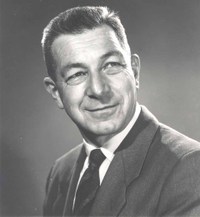 The men of the copy desk gloomily agreed the other day that another hallowed city room custom is just about gone–reporters and editors bellowing “Boy!” and getting an instant and spirited response.
Time was when this strident call created panic and havoc among the copy boys and they raced like genies to the point of origin, stood at attention and meekly awaited orders, no matter what.
Furthermore, it was the dream of these copy boys that some day they would reach the status of reporter or editor and yell “Boy!” at a succeeding generation of willing slaves. Continue reading
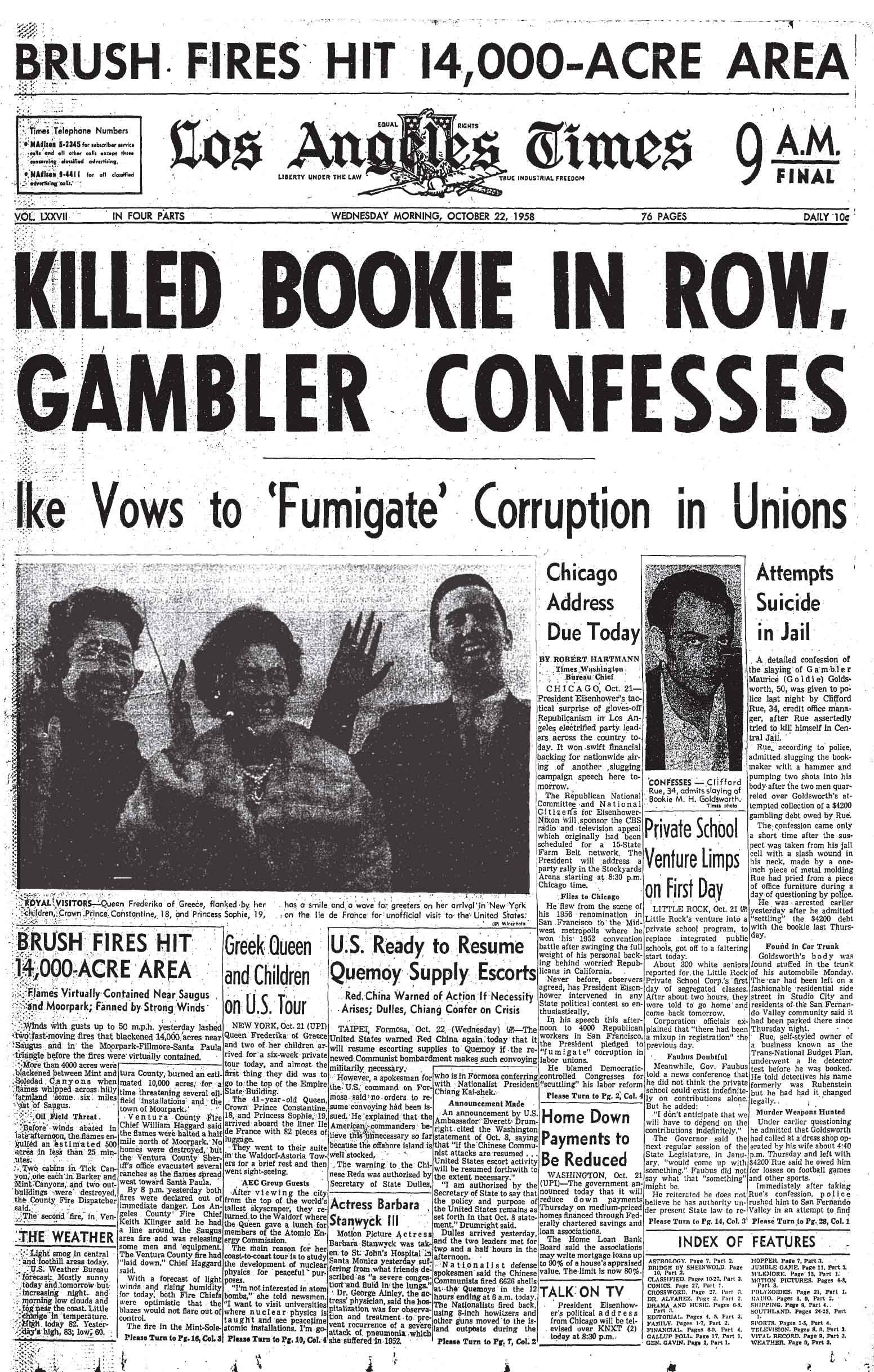
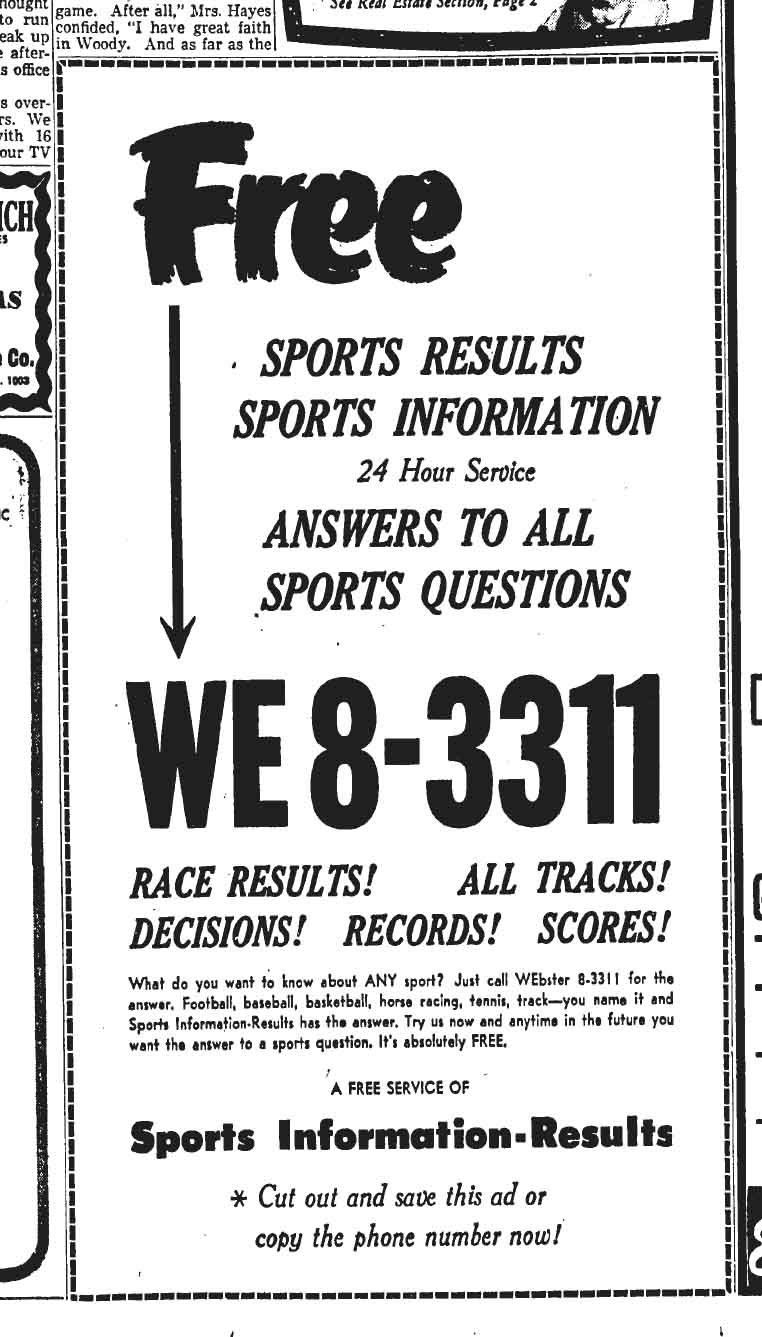 Clifford Rue was a man who was ahead of his time and behind on the payments to his bookie.
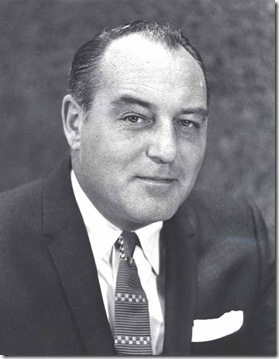 A man once made the comment about Tijuana:
 Memorable Speech
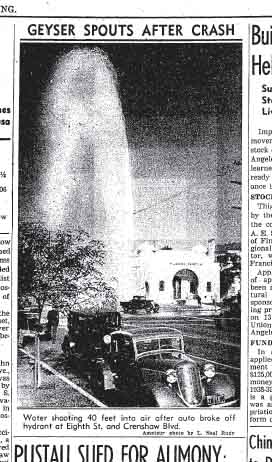 This appears to be just another photo of water spouting from a fire hydrant that was hit by a car. And indeed it is.
 Note: This is an encore post from 2005 and
  ladailymirror.com