
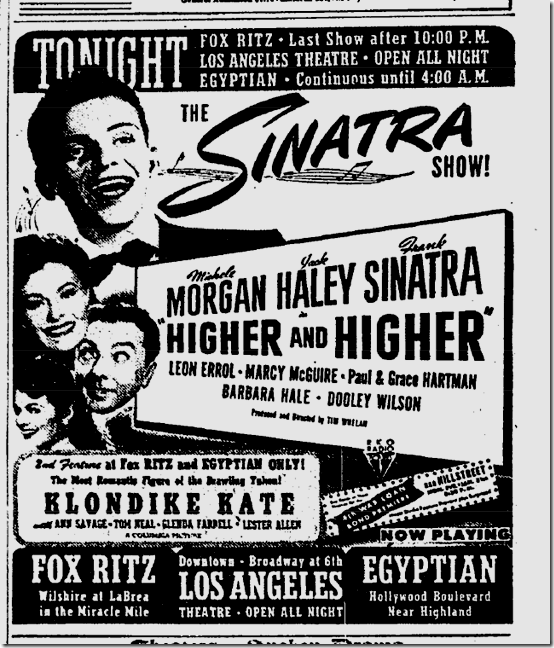
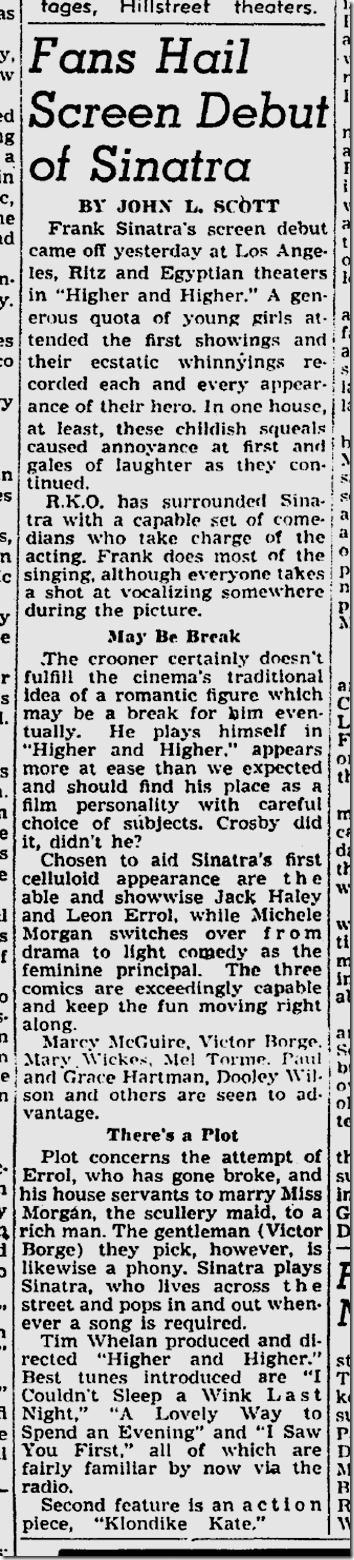
Jan. 29, 1944: The Times reports Frank Sinatra’s film debut in “Higher and Higher”:
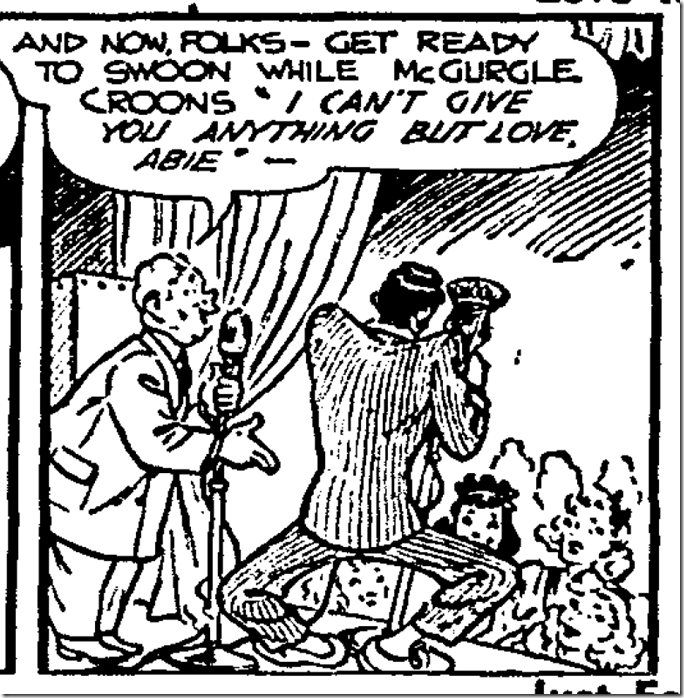
A generous quota of young girls attended the first showings and their ecstatic whinnyings recorded each and every appearance of their hero. In one house, at least, these childish squeals caused annoyance at first and gales of laughter as they continued.
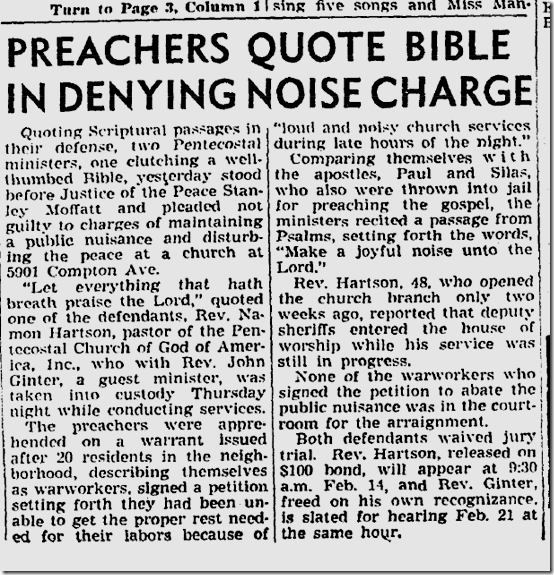
The Rev. Namon Hartson and the Rev. John Ginter of the Pentecostal Church of God of America, 5901 Compton Ave., plead not guilty to allegations by their war-working neighbors that their late-night services make too much noise.
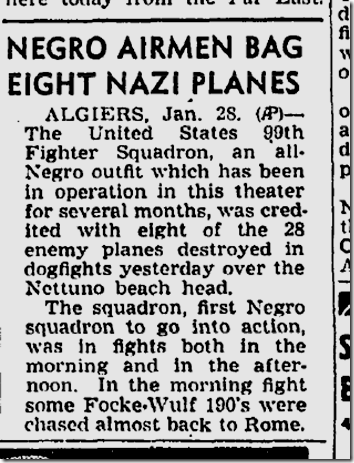
Fliers of the African American 99th Fighter Squadron are credited with shooting down eight Nazi planes.

 ladailymirror.com
Oddly enough, I am just now databasing a photo of Frankie in his film debut–in Las Vegas Nights, 1941. OK, not an “acting” role, I’ll admit . . . But it was just a odd coincidence that I had your column up on one screen and a photo of him in Las Vegas Nights on the other.
LikeLike
Sinatra is all over the 1944 radio shows. Either performing or being the subject of jokes.
LikeLike
So Sinatra was in the movies instead of the armed forces in 1944. Maybe he was 4F, but it was a pleasant way to skip D-Day.
LikeLike
Sinatra was 4F, although I don’t remember the reason which was quite valid. His pugnacious nature, I suspect, would have craved combat. He certainly created ample opportunity in civilian life.
LikeLike
Further to Benito’s comment, yup, Sinatra was 4-F (perforated eardrum, a cruel irony for a singer.) There was considerable resentment then and later about Sinatra and other stars having avoided service. Some other movie crooners of the time butched-up their images by playing tough guys (c.f. Dick Powell and John Payne.)
After the war, Los Angeles Times’s own Hedda Hopper pretty much demolished the career of Sinatra-rival Dick Haymes by implying (often) that he had dodged the draft.
LikeLike