- #courts 1907 1944 1947 Architecture art and artists Black Dahlia Books and Authors Cold Cases Columnists Comics Crime and Courts Downtown Film Front Pages Hollywood Hollywood Heights Homicide LAPD Mary Mallory Matt Weinstock Music Mystery Photo Paul Coates Photography Politics Sports Streetcars Transportation Uncategorized
Categories
- #courts
- #East L.A.
- #games
- #gays and lesbians
- #Jazz
- #Jim Murray
- #opera
- #video
- 1677
- 1781
- 1819
- 1823
- 1847
- 1852
- 1853
- 1855
- 1859
- 1862
- 1863
- 1864
- 1871
- 1872
- 1880
- 1881
- 1882
- 1883
- 1884
- 1885
- 1886
- 1887
- 1888
- 1889
- 1890
- 1891
- 1892
- 1893
- 1895
- 1897
- 1898
- 1899
- 1900
- 1901
- 1902
- 1903
- 1904
- 1905
- 1906
- 1907
- 1908
- 1909
- 1910
- 1910 L.A. Times bombing
- 1911
- 1912
- 1913
- 1914
- 1915
- 1916
- 1917
- 1918
- 1919
- 1920
- 1921
- 1922
- 1923
- 1924
- 1925
- 1926
- 1927
- 1928
- 1929
- 1930
- 1931
- 1932
- 1933
- 1934
- 1935
- 1936
- 1937
- 1938
- 1939
- 1940
- 1941
- 1942
- 1943
- 1944
- 1945
- 1946
- 1947
- 1948
- 1949
- 1950
- 1951
- 1952
- 1953
- 1954
- 1955
- 1956
- 1957
- 1958
- 1959
- 1960
- 1960 Democratic Convention
- 1960 Republican Convention
- 1961
- 1962
- 1963
- 1964
- 1965
- 1966
- 1967
- 1968
- 1969
- 1970
- 1971
- 1972
- 1973
- 1974
- 1975
- 1976
- 1977
- 1978
- 1979
- 1980
- 1981
- 1982
- 1983
- 1984
- 1985
- 1986
- 1987
- 1988
- 1989
- 1990
- 1991
- 1992
- 1993
- 1994
- 1996
- 1997
- 1998
- 2001
- 2003
- 2005
- 2006
- 2007
- 2008
- 2009
- 2010
- 2012
- 2013
- 2014
- 2015
- 2016
- 2017
- 2018
- 2019
- 2020
- 2021
- @news
- A Kinder, Simpler Time
- Abortion
- Adolf Eichmann
- Adoptions
- African Americans
- Animals
- anorexia
- Another Good Story Ruined
- Architecture
- Art & Artists
- art and artists
- Art Seidenbaum
- Artist's Notebook
- Asians
- Ask Me Anything
- Aviation
- Baseball
- Batchelder Tile
- Black Dahlia
- Black Dahlia Book Club
- Blue Dahlia
- Blues
- books
- Books and Authors
- boxing
- Brain Trust
- broadcasting
- Broadway
- Budd Schulberg
- Caryl Chessman
- Cemeteries
- Changeling
- Charles Hillinger
- Chicago
- Chinese Massacre
- Christine Collins
- City Hall
- Civil War
- classical music
- Cold Cases
- Columnists
- Comics
- Coming Attractions
- Countdown to Watts
- Courts
- Crime and Courts
- Current Affairs
- Dance
- Death Rays
- Dodgers
- Donald Wolfe
- Downtown
- Education
- Elections
- Environment
- Eurasians
- Eve Golden
- Fashion
- Fashions
- Film
- Fire Department
- Fires
- Food and Drink
- football
- Forest Lawn
- Found on EBay
- Freeways
- Frightening Food From the 1940s
- From the Reference Desk
- From the Stacks
- From the Vaults
- Front Pages
- Futurism
- Genealogy
- golf
- Grim Sleeper
- Harbor
- Harbor Division
- health
- Heaven Is Here!
- Hill Street
- History
- Hollywood
- Hollywood Division
- Hollywood Heights
- Homicide
- Horoscope
- Hot Stove League
- Howard Rosenberg
- Immigration
- Interior Design
- Jack Smith
- James Curtis
- JFK
- Jimmie Fidler
- Judith Mae Andersen
- Keith Thursby
- L.A. Voices
- Labor
- Lakers
- LAPD
- Latinos
- Lee Shippey
- Lesbian, Gay, Bisexual, Transgender
- Libraries
- Location Sleuth
- Long Beach
- Los Angeles Star
- Los Angeles Times Bombing
- Louis Adamic
- Main Street
- Maria Ridulph
- Marion Eisenmann
- Marion Parker
- Mary Mallory
- Matt Weinstock
- Medicine
- Mickey Cohen
- Middle East
- Millennial Moments
- Motor Sports
- Motorsports
- Museums
- Music
- Mystery Photo
- Native Americans
- New York
- Nightclubs
- Nuestro Pueblo
- Obituaries
- Olive
- One-Page Fact Check
- Pages of History
- Parker Center Cop Shop Files
- Parks
- Parks and Recreation
- Pasadena
- Paul Coates
- Pepe Arciga
- Philadelphia
- Photography
- Pico-Union
- Politics
- Preservation
- Queen of the Dead
- Radio
- Raymond Chandler
- Real Estate
- Religion
- Retro
- RFK
- Richard Nixon
- Robberies
- Rock 'n' Roll
- Roderick Mann
- Ronald Reagan
- San Diego
- San Fernando Valley
- San Francisco
- Science
- Seattle
- Second Takes
- Sports
- Spring Street
- Stage
- Streetcars
- Suicide
- Sunday Journal
- Sunset Strip
- Television
- Temple City
- Theaters
- Thelma Todd
- Tom Treanor
- Track and Field
- Transportation
- travel
- UFOs
- Uncategorized
- Venice Division
- Vietnam
- Walter Cronkite
- Washington
- Web/Tech
- Weblogs
- West Hollywood
- Wikipedia
- Witzel
- World War I
- World War II
- Zombie Reading List
- Zoom
- Zoot Suit
Archives
- October 2026
- September 2026
- August 2026
- July 2026
- June 2026
- May 2026
- April 2026
- March 2026
- February 2026
- January 2026
- December 2025
- November 2025
- October 2025
- September 2025
- August 2025
- July 2025
- June 2025
- May 2025
- April 2025
- March 2025
- February 2025
- January 2025
- December 2024
- November 2024
- October 2024
- September 2024
- August 2024
- July 2024
- June 2024
- May 2024
- April 2024
- March 2024
- February 2024
- January 2024
- December 2023
- November 2023
- October 2023
- September 2023
- August 2023
- July 2023
- June 2023
- May 2023
- April 2023
- March 2023
- February 2023
- January 2023
- December 2022
- November 2022
- October 2022
- September 2022
- August 2022
- July 2022
- June 2022
- May 2022
- April 2022
- March 2022
- February 2022
- January 2022
- December 2021
- November 2021
- October 2021
- September 2021
- August 2021
- July 2021
- June 2021
- May 2021
- April 2021
- March 2021
- February 2021
- January 2021
- December 2020
- November 2020
- October 2020
- September 2020
- August 2020
- July 2020
- June 2020
- May 2020
- April 2020
- March 2020
- February 2020
- January 2020
- December 2019
- November 2019
- October 2019
- September 2019
- August 2019
- July 2019
- June 2019
- May 2019
- April 2019
- March 2019
- February 2019
- January 2019
- December 2018
- November 2018
- October 2018
- September 2018
- August 2018
- July 2018
- June 2018
- May 2018
- April 2018
- March 2018
- February 2018
- January 2018
- December 2017
- November 2017
- October 2017
- September 2017
- August 2017
- July 2017
- June 2017
- May 2017
- April 2017
- March 2017
- February 2017
- January 2017
- December 2016
- November 2016
- October 2016
- September 2016
- August 2016
- July 2016
- June 2016
- May 2016
- April 2016
- March 2016
- February 2016
- January 2016
- December 2015
- November 2015
- October 2015
- September 2015
- August 2015
- July 2015
- June 2015
- May 2015
- April 2015
- March 2015
- February 2015
- January 2015
- December 2014
- November 2014
- October 2014
- September 2014
- August 2014
- July 2014
- June 2014
- May 2014
- April 2014
- March 2014
- February 2014
- January 2014
- December 2013
- November 2013
- October 2013
- September 2013
- August 2013
- July 2013
- June 2013
- May 2013
- April 2013
- March 2013
- February 2013
- January 2013
- December 2012
- November 2012
- October 2012
- September 2012
- August 2012
- July 2012
- June 2012
- May 2012
- April 2012
- March 2012
- February 2012
- January 2012
- December 2011
- November 2011
- October 2011
- September 2011
- August 2011
- July 2011
- June 2011
- May 2011
- April 2011
- March 2011
- February 2011
- January 2011
- December 2010
- November 2010
- October 2010
- September 2010
- August 2010
- July 2010
- June 2010
- May 2010
- April 2010
- March 2010
- February 2010
- January 2010
- December 2009
- November 2009
- October 2009
- September 2009
- August 2009
- July 2009
- June 2009
- May 2009
- April 2009
- March 2009
- February 2009
- January 2009
- December 2008
- November 2008
- October 2008
- September 2008
- August 2008
- July 2008
- June 2008
- May 2008
- April 2008
- March 2008
- February 2008
- January 2008
- December 2007
- November 2007
- October 2007
- September 2007
- August 2007
- July 2007
- June 2007
- May 2007
- April 2007
- March 2007
- February 2007
- January 2007
- December 2006
- November 2006
- October 2006
- September 2006
- August 2006
- July 2006
- June 2006
- May 2006
- April 2006
- March 2006
- February 2006
- June 2005
- May 2005
- April 2005
- March 2005
- February 2005
Blogging the Wolfe Book, Request Line XXI

I have ceased blogging in real time as I read Donald H. Wolfe’s “The Black Dahlia Files: The Mob, the Mogul and the Murder That Transfixed Los Angeles.” Wolfe uses the “Laura” format, in which the anonymous, butchered body is found and the narrative proceeds in flashbacks.
Now, I am taking a few requests before wrapping up the project. Today, we’ll look at Pages 345-357 at the request of Regular Anonymous Correspondent. Say your prayers, because I hope to conclude the Wolfe project this week.
Let’s recap a couple of things. Yesterday’s post dealt with the issue of plagiarism in Wolfe’s book. Someone suggested that Wolfe and I used a common source, John Douglas. When I pointed out the chronology, the person said, well, maybe Douglas used my story and Wolfe picked up the material.
Sadly, no.
Here’s the chronology: I interview John Douglas in 1996 for a Los Angeles Times story on the 50th anniversary of Elizabeth Short’s murder. In fact, I spent about six months in 1996 researching the story, which was published Jan. 6, 1997. (Trivia time: It was only the second time in 50 years that the Black Dahlia case appeared on Page 1 of the Los Angeles Times).
Douglas and Mark Olshaker write “The Cases That Haunt Us,” published in 2000. (My proof copy is dated November 2000, to be precise). Although Amazon.com’s “search inside” feature isn’t offered for the hardback, it is for the paperback.

Donald H. Wolfe writes “The Black Dahlia Files,” published in 2005. He quotes my material, citing Douglas’ “Cases That Haunt Us.”
Let’s search for the key phrase “comfortable wallowing in blood,” which occurs in my 1997 story and was subsequently posted on my website. Notice that this key phrase does not appear in “Cases That Haunt Us.” But we do find it in “Mogul.” Notice that Amazon’s search engine has a problem because “wallowing” is hyphenated as “wal-lowing.” So let’s check “Cases That Haunt Us for that. Oops. Not there.
How about “adept with a knife”? Nope, not in Douglas’ book either. But it’s in my 1997 L.A. Times story and “Mogul.”
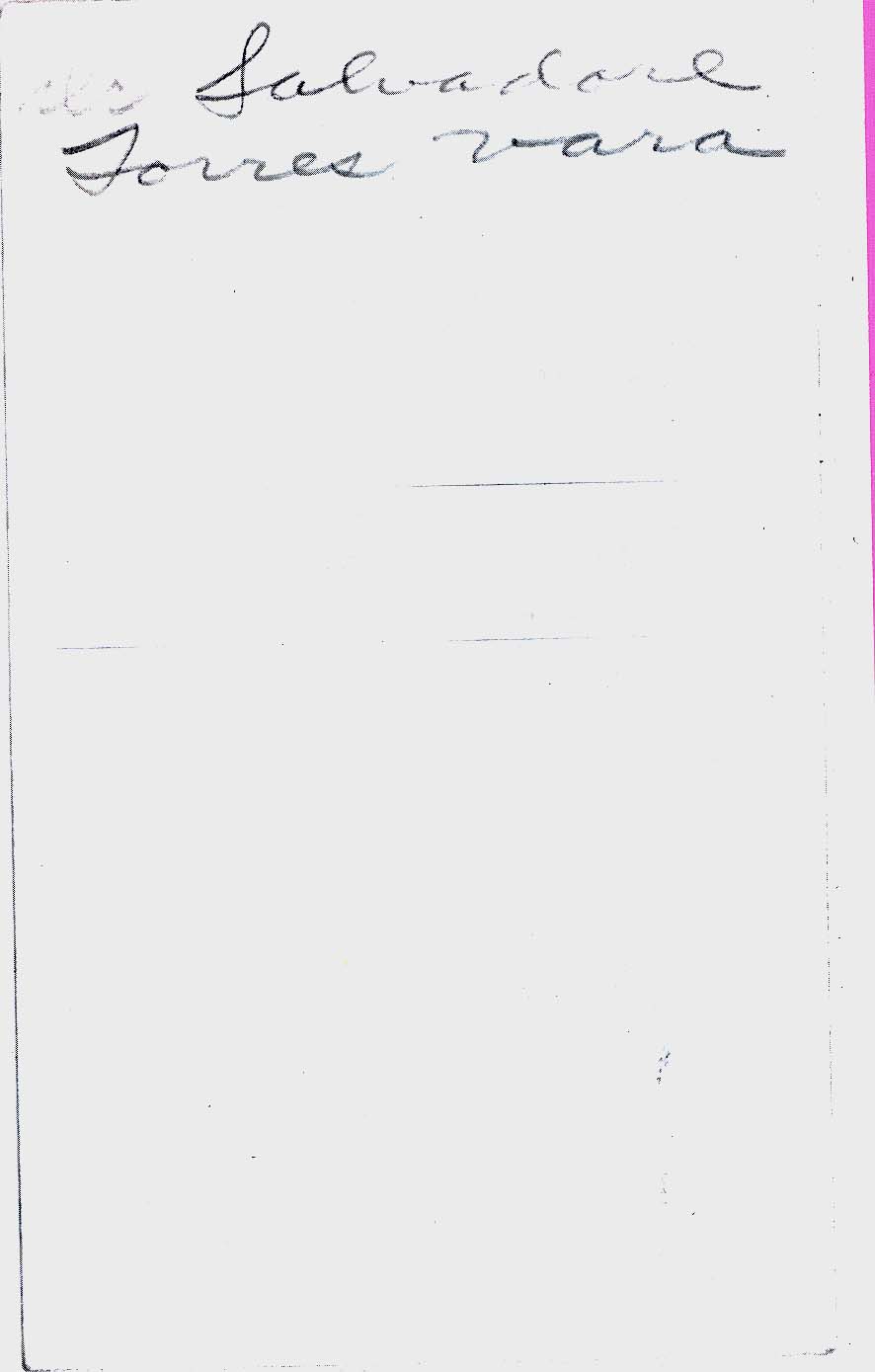
Here’s another little goody I keep bringing up: Wolfe’s alleged photograph of poor old Maurice Clement. Here’s the page from the book up top. Since most people haven’t had my access to the district attorney’s files, I’ll tell you that in fact the photograph in question isn’t identified in the Elizabeth Short material.
But it is in the Jeanne French material. Behold: Salvadore Torres Vara. Note that he is identified as a doctor. Whether he was actually a doctor is a little vague. Vara was apparently some kind of scam artist who was working at Brittingham’s restaurant in Columbia Square. He was arrested for reasons I forget and was found to have an address book loaded with information on celebrities.
As I recall, and my memory is a bit vague here, Mimi Boomhower (yet another of Dr. George “Evil Genius” Hodel’s purported victims according to Steve Hodel’s “Black Dahlia Avenger”) might have been in his book, along with folks like Jose Iturbi. It’s unclear whether Vara actually knew any of these people or if he was just a star-struck fan.
Oh! Here’s some more fun stuff.
Wolfe quotes the transcript of “Severed” author John Gilmore interviewing Jack Anderson Wilson on Page 316.
Now I happen to have a copy of this transcript (you knew I would, right?)
So Wolfe’s quote on Page 316 is actually on the last page of Gilmore’s transcript. Well sort of:
Wolfe version:
Gilmore: So it was willed
Wilson: In a matter of speaking. Everyone is entitled to go nuts. You said that yourself.
[Gilmore notes that Smith seems to go off into a trance-like state.]
Gilmore transcript:
Gilmore: So it was willed.
Anderson: In a matter of speaking
[page turn]
You know if you look at a map of the city, you see where she was put, where the body was placed, it is the only section in the city that is shaped like a woman’s pussy.
End of transcript.
Uhhhh. So where is “Everyone is entitled to go nuts. You said that yourself”?
Oh, that’s at the beginning of Page 13. The full quote is:
Anderson: He put rags in her mouth. He used her underpants and he knocked her out a few times. He had to do that when the spirit overtook him. But I told you this, and some of the rest of it I don’t know. It was so long ago. It’s only be [cq] chance that we’re talking now. You understand the trouble I could get into because of what he did, if he could somehow make it seem that he didn’t do it. You know what I mean. It’s like we’re talking about litigation and that sort of thing. Everyone is entitled to go nuts. You said that yourself. When was it?
Gilmore: I said that? Sounds like something I should’ve said.
And who on earth is “Smith” going into a trace-like state? Does Wolfe mean Anderson/Wilson?
Either way the trance-like state is all the way back on Page 1.
I can’t quote this entire thing. It’s too long. But I just have to share some of this:
Conversation with Arnold Smith first week in December 1981
Location: Harold’s 555 Main Street
A: You’ve been talking to me long enough to know what I’m talking about.
J: I don’t know. I mean I don’t exactly know what it is you’re saying.
A: The wood that was down in the back—boards this yea length like about this size here (showing width) and putting them goddamnit across the tub at this angle.
J: That’s what I told St. John. Arranged in such a way as to have the leverage or the space—supported in such a manner like you’re saying.
A: That was what I said.
J: There was the mention of the saw that was used—
A: There wasn’t a saw.
J: You said there was a meat saw that was used in the last part of the separation.
A: When did I say that?
J: You said that—when was it? Wasn’t it after Thanksgiving?
A: I said there was a saw?
J: Yeah, I wrote it down in the book.
A: I don’t remember…I don’t remember what he said about that. Maybe he said that. Is that right?
J: I don’t know. You’re the one telling me what he said about that. I know it was a long time ago.
(There is another round of drinks and we drink. He gets hazy like he’s in a trance).
Hm. And then Wolfe cuts to “Severed,” Pages 186-187 and then he goes back to Page 12 of the Gilmore transcript. Of course, Wolfe’s end notes don’t tell you he’s done that.
And how many rounds of drinks do they order? Hmmmm.
“Another round” is noted on Page 1, so I’m going to assume that’s at least the second. Another round on Page 3. Another round on Page 8. Another round on Page 9. That’s five rounds of drinks, folks.
I just love this part on Page 8.
J: I don’t know who you mean.
A: Let’s do it again, Johnny boy. (Another round of drinks.) So you’re going to give me the grand?
J: I said I would. We got the money back from the Santa Fe deal.
A: Don’t give me any fifties. Give it to me in tens.
J: Ten dollar bills?
A: Old money. I like old money.
J: I dig you. I said I would.
A: What’s that nigger looking at? You know that nigger?
J: No, I don’t. He’s just looking, I guess.
A: He said he was going to take her eyes out. You remember my telling you that?
J: Who, Morrison?
A: Who would’ve killed her? Who had a motive?
J: You meaning Al?
A: You’re not following the conversation.
J: Well that’s the part I’m trying to figure out, Al’s motive—But you said he didn’t have any motive. You told me that.
A: Except to know he couldn’t get his dick in her. And he lied. The fucker told me he did, and then I knew he was lying. What was it? A red bottle? Had a glass stopper you use for putting fancy perfume in. And he could’ve taken her eyes out with that. But you understand, that’s what he said. Because his mind was gone. You know, half those hoods had their mind eaten away because of syphilis. I swear to God, I know his mind was gone to have done what he did to her, and knowing he did it all along, but knowing it was just that he had to do it, you see what I am saying, so there was an excuse in part of this.
Got that?
Oh this is fun too: (Page 9)
A: What are we talking about? You’re the one doing the so called research into this? What do you think we’re sitting here talking about?
J: I just wish I had some idea as to why he cut the body in half.
A: That was the joke. You know how they said the surgical table and the hokus pokus rigmarole about cutting her in half? You think anyone can do that?
J: What do you mean?
A: What?
J: What do you mean do I think anyone can do that?
A: Actually do that?
J: Cut someone in half?
A: Isn’t that what our relationship is all about?
J: What’re you saying?
A: I’m empty here and we are in the Sahara Desert.
J: (Orders more drinks). Arnie, I’m not really clear right now. I just wish Al was here, was with us.
A: I haven’t seen him in years. I hope he’s dead.
Real smoking gun there, isn’t it?
And another of my favorite parts:
Transcript, Page 11
J: Listen, let’s go to that booth. I don’t want to sit here any more. I want to eat one of those. You want to go to the booth?
(at booth and drinking)
J: Here is two-hundred fifty dollars. I’m sorry one is a fifty but can you live with that? What I want to do is give you seventy-five Friday and it’ll be in ten dollar bills. Old ten dollar bills. I just got to clear up a couple of things.
A: What things?
J: What you said before. Down at the house.
A: What things in particular are you talking about, John?
J: Just the kind of view on it. It isn’t sitting right somehow, but just a few of the details, mind you, that’s what I’m talking about, so make the rest of it catawampus, if you know what I mean.
Gad. My head is spinning from all that.
And Detective John St. John wanted Gilmore to get MORE of this on tape?
I guess we’ll have to wait a day to get to Pages 345-357.
Ah well.
Hurry back!
Posted in 1947, Another Good Story Ruined, Black Dahlia, Books and Authors, Cold Cases, Crime and Courts, Donald Wolfe, History, Hollywood, Homicide, LAPD
Tagged #LAPD, black dahlia, cold cases, crime and courts, donald wolfe, lapd
Comments Off on Blogging the Wolfe Book, Request Line XXI
Runaway Flats

Water is not the only thing that flows downhill, as switchmen at the downtown Southern Pacific freight yard discovered when two runaway flatcars made a 13-mile trip from the San Fernando Valley in 10 minutes.
Although the runaway cars sent people scrambling as they crossed the tracks, there were no trains running at the time, so a serious accident was avoided.
The flatcars, part of a gravel-hauling operation in Roscoe [Sun Valley], inexplicably came loose and had a four-mile downhill start before blazing through the Burbank station. The Burbank operator sent warning ahead that he saw something rip past—he thought it was two flatcars but wasn’t sure—before the runaway cars sped through west Glendale. At this point, the cars reached an estimated 120 mph, covering the two miles from west Glendale to Tropico in a minute, The Times said. The operator in the Glendale switch tower said he saw nothing more than a cloud of dust as the cars passed.
“With wonderful tenacity, the runaways clung to the rails, though at some of the sharpest curves, the wheels on the outer side were in the air most of the time,” The Times said.
“Rattling across the river bridge near Elysian Park, the two flats, with journals smoking and platforms rocking like cradles, struck the maze of switches at the upper end of the Los Angeles yards and then beat it straight for the Buena Vista [Broadway] Street bridge and the tangle of tracks below,” The Times said.
“Just before the cars entered the yards a signalman who had been out on the line inspecting the semaphores was poking leisurely along on his railroad velocipede, which was moving east on the westbound track.
“He heard no warning from the oncoming runaways, but as was his custom at that point, he lifted his velocipede over to the eastbound track. An instant later the two flats whizzed by him. Had he remained on the westbound track half a minute longer he would have been dashed to death.”
Alerted by the Burbank operator, several switchmen in the downtown yard attempted to put the runaway cars onto other tracks. Although the first man didn’t act fast enough, the second man threw a switch in an attempt to send the runaways onto the sidetrack leading to Standard Oil’s warehouse. The front wheels of the first runaway car went onto the side track, but the rear wheels remained on the main track, crashing into a railroad car loaded with machinery.
The crash from the first runaway car cleared the way for the second runaway car to keep racing through the rail yards at 40 mph. A switch was thrown and it was diverted onto a side track, where it grazed a freight train pulling into the yard before crashing into a box car.
“At almost any other time yesterday the runaways would have encountered a heavy freight or a speeding passenger train, and no earthly power could have prevented a horrible crash with numerous fatalities for there was no time to hold trains after the alarm was given,” The Times said.
Posted in Black Dahlia, Books and Authors, Downtown, LAPD, San Fernando Valley, Streetcars
Comments Off on Runaway Flats
Blogging the Wolfe Book, Request Line XX
I have ceased blogging in real time as I read Donald H. Wolfe’s “The Black Dahlia Files: The Mob, the Mogul and the Murder That Transfixed Los Angeles.” Wolfe uses the “Laura” format, in which the anonymous, butchered body is found and the narrative proceeds in flashbacks.
Now, I am taking a few requests before wrapping up the project. Today, we’ll look at Pages 293-296 at the request of Mary Pacios and Regular Anonymous Correspondent. Say your prayers, because I hope to conclude the Wolfe project this week.
Let’s recap for a minute.
So far that we have seen that:
- Elizabeth Short did not know convicted forger Arthur Curtis/Curtiss James Jr., as he claimed in 1947, because she wasn’t in Los Angeles in 1944 and 1945 (“Movements of Elizabeth Short Prior to June 1, 1946” in the district attorney’s files). This has not stopped John Gilmore, in “Severed,” and Wolfe in “Black Dahlia Files” from claiming that they were the best of friends.
- Elizabeth Short also did not know Arthur Lake for the same reasons, despite claims in “Severed” (25% mistakes and 50% fiction) that were picked up in “Black Dahlia Files.”
- Elizabeth Short did know Maurice Clement, but there is nothing to link him to Brenda Allen except lots of wishful thinking. Note in addition, that Wolfe’s purported picture of Clement is actually Salvadore Torres Vara.
- Officer Fred Otash wasn’t “ensconced at the California Club” to keep track of Los Angeles’ powerbrokers because the historic record shows that he was a uniformed officer at the time.
- Dr. Leslie C. Audrian did not have any criminal record as an abortionist, despite claims in “Black Dahlia Files” that he did. Note that Wolfe’s claims about his office number are contradicted by the historic record.
- Elizabeth Short was not pregnant when she was killed, nor was her uterus removed by the killer. We know this from the LAPD summary of the case included in the district attorney’s files. Note that this book is titled “Black Dahlia Files” rather than “What I Pasted Together From the Black Dahlia Files” or the more appropriate “Severed: 2006.”
- Wolfe didn’t have a convenient 1962 conversation with Aggie Underwood of the Herald on the Queen Mary in the middle of the Atlantic. I typed that and just started laughing. It is amazing to me that anybody could say that with a straight face. Wolfe claims that at the time he was “on hiatus” from “The Loretta Young Show,” which had in reality gone off the air the previous year, and Underwood, as city editor, was fully occupied merging the staffs of the Examiner and the Herald-Express to form the Herald Examiner. And then there was the matter of contract negotiations with the Guild. And she received a presswomen’s award in Denver in late June. By that time, the cleverly titled “New Loretta Young Show” was in preproduction.
But wait. There’s more.
Wolfe is correct in stating that Benjamin “Bugsy” Siegel was in Los Angeles on Jan. 14, 1947, the day Elizabeth Short was presumably killed. But how do we know? Answer: Siegel’s enormous but heavily censored FBI file, which is available online. In fact, Siegel’s FBI file shows that he was not only in Los Angeles; Siegel was under surveillance in Los Angeles on the day in question. An agent watched him move out of Chateau Marmont and into the home in Beverly Hills where he was killed a few months later.

In other words, Wolfe wants to use just enough of the FBI files to show that Siegel was in Los Angeles but repress the essential information that agents were following Siegel, because that would squelch his theory.
Nasty work.
OK, Pages 293-296.
This section has to do with profiler John Douglas and I’m going to jump to the essence of this material, which is a beautifully written section on Page 295 that summarizes Douglas’ thoughts on who might have killed Elizabeth Short. Wolfe tends to be wordy, but this section is a model of clear, incisive thought.
Oh wait! I wrote this and Wolfe ripped me off.
What was I thinking?!
Here, side by side, are Page 295 compared with my website and my 1997 Los Angeles Times article.
When confronted during an appearance at the Los Angeles Press Club, Wolfe told intrepid partners in crime Kim Cooper and Nathan Marsak of the 1947 Project that he paid big bucks to Douglas’ publisher for use of that material. And indeed Wolfe credits Douglas’ “The Cases That Haunt Us.”
Except he didn’t get it there.
He got it from me. Word for stinking word.
But I won’t claim anything in the adjoining column about Bugsy Siegel. “Paroxysm” is not part of my vocabulary.
Let’s polish off Page 311 while we’re at it.
“There’s reason to believe that Det. Harry Hansen had deciphered the silent scream and solved the case long ago.”
Oh? How incredibly odd that Hansen didn’t mention that in his 1971 interview with Tod/Todd Faulkner for The Times. That’s the article, by the way, that erroneously gives Elizabeth Short the middle name Ann.
“Hansen knew the secret of the autopsy—that the victim was pregnant at the time she was murdered and a postmortem hysterectomy had been performed.”
But Holmes! The LAPD summary says that she wasn’t pregnant and her uterus was intact!
I know, Watson, I know.
“He also knew that the address of Dr. Leslie C. Audrain, leader of the Syndicate abortion ring, was in Elizabeth Short’s address book.”
Well no, you see, it wasn’t. Wolfe would really, really, really like for Audrain’s address to be in her address book. So much that he takes a completely different individual and different address and insists that it’s one of Audrain’s aliases. It’s a bit more complicated than that, since there are actually two names—so Wolfe has to claim that both of them are aliases of Dr. Audrain. Of course there’s absolutely nothing in the historic record to show that Audrain was an abortionist—just some flakey mumbo-jumbo in disgruntled former Officer Charles Stoker’s self-published book “Thicker ‘n’ Thieves.”
“According to Aggie Underwood and Finis Brown, Hansen believed an abortionist was involved in the crime and had been pushing for an indictment, which was blocked by Chief Horrall.”
Again, I refer to the 1971 interview in The Times. And as I said earlier today, Wolfe and Underwood never had the Black Dahlia chat on the high seas he keeps talking about.
What?!!!!!
I flipped the page just for the heck of this and holy smokes.
Page 312
“From his office at Warner Bros. Studios, he [Detective John St. John] was involved in the creation of Jack Web’s “Dragnet” television series, for which he served as technical director, and his reputation as the invincible Homicide investigator was enhanced by the TV series “Jigsaw John,” which was based on his mythological exploits that once again eulogized Parker and the LAPD.”
OK, let’s untangle this mess. St. John had no role in the creation of “Dragnet.” Zero. That credit belongs to Detective Marty Wynn and Capt. Jack Donahoe. And it was for the radio show. Recall that “Dragnet” first appeared on radio and then transferred to television.
“Jigsaw John” was the work of my friend Al Martinez, reporter and columnist at The Times, who wrote a book about St. John published in 1975. And when did William H. Parker die, students? 1966? And when did the TV show air? 1976?
And even if Wolfe means to say the show “eulogized” Parker, does he really mean to say it “eulogized” the LAPD? I don’t think it’s dead.
It’s almost impossible to untangle writing like this.
Oh this is even funnier!
Page 314
“Angry with Gilmore for leaking the story to the press, St. John told him, “I’m concerned. I want to keep a lid on this!” He then asked Gilmore to get more on tape before they brought Smith in for questioning. ‘What we’re going to have to do is have you try to pin him down,’ St. John said. ‘I want to bust this guy so bad it’s killing me!’ “
If this is from anywhere, it has to be from “Severed.”
Watson, the end notes!
Holmes, why are you never wrong?
Let me get this straight, the Los Angeles Police Department has any number of detectives available. But instead of using any of them, St. John wants a civilian to take on the job of getting a recorded interview. Gosh, that would so much stand up in court. Not!
Oh about this supposed “leak to the press.” The 1982 story in question is a feature on the Black Dahlia case when the Herald-Examiner was in its death throes. (It ceased publication in 1989).
I’ll quote just a bit of it:
“Even if Gilmore has succeeded in solving the crime, could anyone be convicted of a crime when so little evidence remains? Not easily.
”You’d have to have a lot of corroboration,” says LAPD’s St. John. “First, it would have to be proved to be true, and second, you’d have to have corroboration of it.”
St. John says the department continues to get information on the Black Dahlia “from time to time” and “as time permits, we look into all of it. You never know—it’s one of those things.”
Tomorrow, the last installment—I hope.
And if anybody has some final questions, send them in. The party is just about over.
Shout out to:
McGraw Hill Publishing (198.45.19.38)
Chi Bridged Circuits (66.93.254.34)
American Cast Iron Pipe Co. (198.210.13.200)
Regular visitor in Kerkira, Greece (213.80.115.71) 73 visits
Aol subscriber (207.200.116.65) 188 visits.
Rutgers (204.52.215.23) 68 visits
Allstream Corp. (216.123.180.34) 35 visits
Hurry back!
Posted in 1947, Another Good Story Ruined, Black Dahlia, Books and Authors, Cold Cases, Crime and Courts, Donald Wolfe, History, Hollywood, Homicide, LAPD
Tagged black dahlia, cold cases, crime and courts, donald wolfe, lapd
8 Comments
Pigs’ Feet
Anthony Kallan likes pigs’ feet more than he cares for his wife and proved it by kicking her out of the house because she refused to cook his favorite meal for dinner—a day before their baby was to be born.
Kallan, who lives at 66th St. and Figueroa, was charged with failing to provide for his family
PENALTY PAID
BY MOTORMAN
FLOURISHES REVOLVER AND
THREATENS CHAUFFEUR
Charles M. Fleming, a motorman in the employ of the Los Angeles Railway Company, was convicted of battery yesterday in Justice Rose’s court. Fleming was at the controller of a streetcar which collided with the automobile of W.H. Carlson at First Street and Broadway. Carlson’s three children were in the auto, which was driven by Fred Seigert.
When the chauffeur tried to get Fleming’s name, the motorman became angry and flourished a big revolver in the chauffeur’s face. He refused to tell his name and on the witness stand yesterday admitted that he had said:
“For two cents and a half I’d hit you over the head with this, you bastard.”
His threatening attitude and offensive manner startled passengers on the car, it was stated, and caused a commotion on the street. A “John Doe” warrant was issued for the arrest of Fleming and he was tried yesterday and fined $10 ($205.24 USD 2005) for his offense.
On the witness stand, Fleming showed a deputy sheriff’s star. His star may be taken from him, it is said.
HOROSCOPE FOR THIS DAY
Thursday, April 25, 1907
BY COZETTE
“This day portends success in love”
The 115th day of this year. Moon is in the first quarter; age 13 days. Jupiter is evening and Venus is morning star.
This is a most ideal day for festivities as well as for affairs of the heart. Give receptions, dinners, teas, dances, etc. Also post invitations today for other affairs to take place at some future date.
In courtship, utilize every opportunity to plead your cause, but do not fail to exercise discretion and good judgment as to the time and place. These will in every instance have a most significant bearing on the result of your efforts. Be diligent and sincere as well as gentle and success will crown thy wooing. Marriages contracted today have a most glowing prospect for happiness.
An unlucky birth date for women, but very lucky for men.
Those whose birth date this day is should avoid sudden changes and new enterprises but keep to regular business during this year. Children born today will be especially lucky in all undertakings, clever, persevering and of excellent judgment. Females will be afflicted in some way.
Posted in 1907, Black Dahlia, Books and Authors, LAPD, Streetcars
Comments Off on Pigs’ Feet
Blogging the Wolfe Book, Request Line XIX
I have ceased blogging in real time as I read Donald H. Wolfe’s “The Black Dahlia Files: The Mob, the Mogul and the Murder That Transfixed Los Angeles.” Wolfe uses the “Laura” format, in which the anonymous, butchered body is found and the narrative proceeds in flashbacks.
Now, I am taking a few requests before wrapping up the project. Today, we’ll look at Pages 277-281 at the request of Mary Pacios and then finish off Page 284. Say your prayers, because I hope to conclude the Wolfe project this week.
First: Note that the Los Angeles Police Department summary of the case, included in the district attorney’s files (recall, this book is titled “The Black Dahlia Files” rather than “What I Pasted Together From the Black Dahlia Files” or the more appropriate “Severed: 2006”) states that Elizabeth Short was:
- Not pregnant
- Her uterus was intact.
So, I’m not to spend much more time on junk like this:
Page 280
“Elizabeth may have been warned that she must submit to an abortion or else find herself in great peril. Apparently she was frightened to the degree that she didn’t want anyone to know where she was going.”
In fact, the real tragedy of Elizabeth Short was that her life was simply unraveling. She had no money, no place to stay and had worn out her welcome everywhere. It was only through the grace of Ann Toth that she had a $1 a night room with a bunk bed at the Chancellor and she said she didn’t like living there because her roommates were lesbians who were always after her. That’s why she was in tears. For the record, Toth told district attorney’s investigators that she didn’t think Elizabeth Short’s roommates were lesbians.
Page 281
Wolfe deals with Red Manley driving Elizabeth Short back to Los Angeles from San Diego. Except she lied to him too and said she had never been to Los Angeles. Unlike Wolfe’s description of being frightened and anxious, she was—according to Manley’s statement in the district attorney’s files—quiet and uncommunicative.
And Manley said he couldn’t wait to get rid of her.
Pay attention here. This is important. In fact people, have been pestering me about this. Wolfe refers to Elizabeth Short making a call from Laguna Beach. People have gone so far as to actually ask me where this pay phone was.
Wolfe claims the information is in the district attorney’s files. Another lie.
Here’s what Robert M. “Red” Manley actually told District Attorney’s Lt. Frank Jemison on Feb. 1, 1950:
Jemison: Well, she did make some telephone calls, didn’t she? Didn’t you see her make several telephone calls?
Manley: No, not one.
Jemison: In other words any calls she might have made to anyone from the motel you didn’t see her make those?
Manley: No, that’s right. I was out working after I left the motel and when I had made my calls I picked her up and I made a few calls in the way in, coming back to Los Angeles. As far as I knew she was just sitting there in the car waiting until I came back from my calls. She could have made calls and gotten back to the car before I came out of those offices but I don’t know if she did.
Jemison: It seems from investigation she did make a lot of telephone calls. I think you would remember if she made any telephone calls that you saw? Did you see her make any?
Manley: Not one, while I was with her.
Jemison: Did she ever say at any time she would like to get in touch with someone and wanted to make a telephone call?
Manley: No, she never did. She told me she was going to meet her sister from Berkeley at the Biltmore Hotel.
This is where Perry Mason smiles and says: “No further questions.”
Page 284
“Reason dictates that she was abducted at some point shortly after she walked out of the Biltmore and was then held captive during the interim week at a location that Harry Hansen believed to be not far from Pico and Crenshaw–where her shoes and handbag had been found in an incinerator.”
Oh, this is like Steve Hodel’s “We can speculate with confidence” in “Black Dahlia Avenger.”
And again, Wolfe shows a dismal knowledge of Los Angeles geography. The purse and shoes were found at 1136 S. Crenshaw. Note the distance to Pico and Crenshaw.
And for the record, Harry Hansen had no idea where Elizabeth Short was killed. Nobody has ever conclusively determined the murder scene.
And again, her uterus was found to be intact during the autopsy. It was not removed, as Wolfe claims. And she was not pregnant.
Oh, you want to know about “the letter D carved into the pubic area of her flesh.” Gad isn’t Wolfe wordy? He is so desperate to claim this that he actually faked a document, shown on Page 198.
OK. Let’s look at the fake document for a minute. The stuff about the “D” is taken from Pages 13-14 of the Nov. 23, 1949, report “Evidence and Declarations Tending to Connect or Disconnect Leslie Dillon to the Murders of Elizabeth Short, Jeanne French and Gladys Kern.”
In other words, this document was prepared to explore the possibility that Leslie Dillon killed Elizabeth Short, hence the “D.”
Now Wolfe seizes this and dresses it up with the claim that pictures in the district attorney’s files clearly show a “D.” He does this knowing that the district attorney forbids copying the photographs.
Of course, that means I couldn’t copy the district attorney’s photos either. But I can describe the manner of slashing shown in them. According to my notes, there are about five deep, vertical slashes, then about five diagonal slashes ascending from left to right (or descending from right to left) that cross them. No letters whatsoever.
That’s it for today with this stupid book. With luck we’ll be done this week. Thank heavens.
Shout out to:
Scottsdale, Ariz. (68.98.1.46)
Santa Monica College (207.233.32.16)
State of Georgia Board of Regents (I missed the ISP on this one)
Taylor, Mich. (69.14.41.15)
Fairlawn, N.J. (4.250.153.106) Windows 98? Upgrade!
Mt. Laurel, N.J. (71.199.107.188) Netscape 7.2 user. 1 hour, 3 minutes.
Hurry back! With luck, there are four installments left!
Able Was I Ere I Saw Elba
Posted in Black Dahlia, Books and Authors, LAPD, Streetcars
Comments Off on Able Was I Ere I Saw Elba
Blogging the Wolfe Book, Request Line XVIII
I have ceased blogging in real time as I read Donald H. Wolfe’s “The Black Dahlia Files: The Mob, the Mogul and the Murder That Transfixed Los Angeles.” Wolfe uses the “Laura” format, in which the anonymous, butchered body is found and the narrative proceeds in flashbacks.Now, I am taking a few requests before wrapping up the project. Today, we’ll look at Pages 277-281 at the request of Mary Pacios.
The two-minute executive summary:
Wolfe claims he had an insightful 1962 conversation with Herald City Editor Aggie Underwood during a cruise on the Queen Mary. The only problem is that Wolfe says he was “on hiatus” from “The Loretta Young Show,” which went off the air the year before. And 1962 happens to be the year the Herald-Express merged with the Examiner, so as city editor, Underwood had to deal with joining the two reporting staffs and a threatened Guild strike. And she received an award in Denver in June of that year. Unless I see ticket stubs and pictures of them together, I won’t believe it.
And Wolfe goes into some mumbo-jumbo about how Norman Chandler of The Times was best friends with Arthur Lake (you’ll recall Lake has a major role in John Gilmore’s “Severed,” although in reality he didn’t know Elizabeth Short because—as we find in the district attorney’s files—Elizabeth Short wasn’t in Los Angeles in 1944 or 1945). And that Norman Chandler was the best man at the wedding of Lake at—Hearst Castle. I would love to see pictures of Chandler hanging with rival publisher William Randolph Hearst.
Don’t miss the rehash of the fake story about Mickey Cohen’s weapons for Israel scam. Or the Leslie Dillon affair. And then another slam on Dr. Leslie Audrain.
In fact, let’s revisit the Leslie Audrain saga.
Now our only source for Audrain being an abortionist is the self-published book “Thicker ‘n’ Thieves” by disgruntled former Police Sgt. Charles F. Stoker. Recall that Stoker was accused of trying to shake down a convicted abortionist (Eric Kirk, a chiropractor). Recall that he had an affair with Policewoman Audre Davis, his decoy who is the only source for any claim whatsoever that Audrain was offering abortions. Davis said she went to Audrain’s office and talked to a nurse (she never came within a mile of Audrain, apparently).
Stoker says that an unidentified supervisor of the medical board’s investigators unexpectedly came back from vacation and learned about Stoker’s sting operation.
Stoker says that when he and Davis went back for the appointment, Audrain’s office was….
Locked!
In fact it was locked all week!
The locked office, therefore, is conclusive proof that the medical board supervisor tipped off Audrain. And proof that Audrain was an abortionist.
And let me interject a little something about the local investigators for the state medical board in the 1940s. They are not anonymous. Their names were Maynard Youngs, Sterling W. Brooks and Walter Anderson. Brooks was accused—and cleared—of taking a bribe from an abortionist so he could stay in business (Brooks claimed the abortionist stuffed district attorney’s investigators’ marked money in his pocket) and Youngs’ widow was accused of performing an abortion on a 13-year-old girl. (The charges were later dropped for lack of evidence, by the way).
Nice folks.
Now, let’s turn to Page 257
“Operated by a group of MD’s who were paying protection money, Stoker told the Grand Jury that the leader of the abortion ring was Dr. Leslie C. Audrain, whose office was in Room 417 at 1052 W. 6th St. in Los Angeles. Stoker found that Audrain had a criminal record as an abortionist and worked under a number of aliases—including Dr. C.J. Morris and Dr. Scott. The designated LAPD unit responsible for apprehending and arresting abortionists was the Gangster Squad but Stoker had discovered that they only arrested abortionists outside Audrain’s abortion ring who were not paying protection money.”
Whew!
The Wolfe says: Page 258
Dr. Leslie C. Audrain allegedly committed suicide at his home in Pasadena on May 19, 1949.
Now, how does Wolfe know that Audrain was in Room 417? Because that’s not in Stoker’s book.
Well he’s going to try to attribute it to this note by Lt. Frank Jemison of the district attorney’s office, and reproduced on Page 274. Apparently we’re only supposed to notice the room number (417) and not the address, 3122 W. 6th St.
I swear, the man can’t read what’s in front of him. Take a good look at Jemison’s note. Notice that he has written “3123? And “311” That’s because 3122 W. 6th St. doesn’t exist.
Oops.
But let’s have some more fun (fun being a relative term for a total research drudge).
I got out my 1942 Los Angeles city directory and looked up Dr. Audrain. You know what his office number was?
Go up to the top of the page and check the scan.
What’s this? He lived in Santa Monica?
But Wolfe keeps saying he committed suicide at his home in Pasadena.
Incroyable.
Now while I had the 1942 city directory out, I looked up a couple of other people.
Like Wolfe’s father, Sailing Wolfe, who is never mentioned in “The Black Dahlia Files.” Gosh, looks like he had a radio shop at 547 S. Western Ave. Why that’s less than three miles from what Donald H. Wolfe portrays as Dr. A.E. Brix’s abortion emporium at 125 S. Lake St. And since Sailing Wolfe lived in Beverly Hills, he’d have to go right past it…. Looks like Sailing Wolfe was 3.8 miles from the Biltmore. And 2.9 miles from the Florentine Gardens? Say you don’t suppose….
If I were a different kind of human being, I could get really nasty.
And here’s somebody else I looked up. Robert T. Gilmore Jr., father of “Severed” author John Gilmore. Your eyes aren’t fooling you, he’s a crime-busting stenographer.
Take a look at that long list of abortion arrests I posted yesterday. That is literally every one I could find over a 10-year period. Notice that Dr. Leslie C. Audrain does not appear on the list, despite Wolfe’s contention that Audrain had a criminal record for performing abortions. Note further that the vast majority of those who were arrested were chiropractors and osteopaths, with a telephone operator, laborer and haberdasher thrown in for good measure.
Did you note the arresting officers in the 1948 and 1949 cases? Detectives Ed Jokisch and Lloyd Burton? Wouldn’t it be great it we could talk to them? Well we can. Ed Jokish is a friend of mine and is still going strong in his 90s. I sent him a copy of Wolfe’s book to get his opinion. Without using Ed’s exact words—he was a sailor in World War II, don’t you know—he’s furious about it and says the book is totally false. And he doesn’t have anything good to say about Steve Hodel, author of “Black Dahlia Avenger” or Vincent A. Carter, author of the self-published book “Rogue Cops.”
Oh this book. I could just throw it against the wall except it would leave a grease mark.
Page 279
“Because there was no ecchymosis in the surgical procedures, and Elizabeth Short had died from the bludgeoning and knife cuts to the face prior to the abdominal incision, we know, therefore, that the uterus, along with the fetus, were removed after Elizabeth’s death. The abortion was post-mortem.”
Well, there’s only one problem with all of this. Wolfe knows what it is because he got access to the district attorney’s files. Recall that this book is titled “The Black Dahlia Files” rather than the more appropriate “What I Pasted Together From the Black Dahlia Files” or the more appropriate “Severed: 2006.”
Because Page 4 of the LAPD summary of the case—in the district attorney’s files—says:
“There is a square pattern of superficial criss-cross lacerations in the skin of the right hip. The organs of the abdomen are entirely exposed. There are lacerations of the intestine and into both kidneys. The uterus is small and no pregnancy is apparent. The tubes, ovaries and cul de sac are intact.”
Got that?
The uterus is small.
No pregnancy is apparent.
Wolfe is lying and knows he is lying.
That’s it for this stupid book today.
Shout out to:
Singapore (220.255.168.252)
Romania (82.76.28.95)
Canada (216.123.180.34)
France (80.124.192.14)
Malaysia (202.133.101.83)
Argentina (200.82.24.119)
Unknown (208.104.74.172)
My old pal in Kerkira, Greece (213.80.115.71)
Sweden (212.73.174.180)
Lake Forest, Calif. (66.18.154.210) 12 hours!
Hurry back!
Posted in 1947, Another Good Story Ruined, Black Dahlia, Books and Authors, Cold Cases, Crime and Courts, Donald Wolfe, History, Hollywood, Homicide, LAPD
Tagged black dahlia, Books and Authors, cold cases, crime and courts, donald wolfe, lapd
Comments Off on Blogging the Wolfe Book, Request Line XVIII
Blogging the Wolfe Book, Notes on L.A. Abortions in the 1940s
Let’s have some fun, shall we?
Since we’re talking about abortion and abortion rings, protection, etc., here are all the news stories involving arrests or patients’ deaths in Los Angeles between 1940 and 1949 for abortions listed in the Los Angeles Times.
- Dr. Samuel D. Barnes, 71, 7416 Rosewood, March 10, 1940. Dorothy Lee Jones, 17, died.
- Mrs. Maria Lopez Gomez, March 23, 1940. Placed body of patient Jovita Ochoa on railroad tracks to conceal death from abortion.
- Lucille Johnson, 26, 1418 Las Palmas, March 28, 1940. Doris Cheslin, 23-year-old theater usher and mother of two children, died.
- Amanda I. Lowe, 52, osteopath, March 29, 1940. Implicated in death of Doris Cheslin. Cheslin reportedly told Lowe that she would “throw herself in front of a streetcar” if they didn’t perform an operation on her.
- Dr. David Greenwood, 1604 S. 9th St., Alhambra, June 12, 1940. Verna Marie Hendrix, 18, died.
- May/Mae Ramsey, 57; William Chrissman, 50; Claude Ramsey; Esther Ramsey; Grace Balch; Lillian Foster; Stanley Watson and Antone Jackson, 32, Dec. 27, 1940, accused in abortion ring.
- Dr. Eugene C. Nelson, 53, March 5, 1941. Accused of performing an abortion by Tillie D. Urazzo, 26, who was in critical condition at General Hospital. Note that The Times identifies Nelson as being black.
- Dr. Walter R. Amlin, 39, chiropractor, 2458 E. Villa St., Pasadena, Oct. 5, 1941. Louisina Olga Bowers, 22, died. The Times identified her as black.
- Dr. Edmund Marineau, 38, and Mabel Wilson, 38, 6233 Hollywood Blvd, Oct. 7, 1941. They charged $55. Named by unidentified patient who was taken to the hospital.
- Al Mathis and Dr. James F. Petrie, chiropractor, Nov. 20, 1941. Angelika Gogich, 18, a dancer who performed as Rose Ann Rae, died. Ah, now this is interesting. One of the witnesses in the case is Dr. Patrick S. O’Reilley (a man of many spellings) who was investigated in the Black Dahlia case. O’Reilley said Gogich had given him a fake name, told him she was married to a solider. He testified that she stayed at his Glendale sanitarium for a time, left, and returned to die from an abortion.
- Dr. William H. Kanner, 34, osteopath, 6636 Hollywood Blvd., March 28, 1942.
- Dr. Phillip Murphy, 50, 617 S. Olive, Sept. 3, 1942. Reported by patient who went to hospital for treatment.
- Dr. Arthur M. Tweedie, 61, 3326 W. 54th St., Sept. 18, 1942. Patient Leona Tarleton, 35, died.
- Peggy La Rue Satterlee, 16, who accused Errol Flynn of statutory rape reveals that she had an abortion, Jan. 21, 1943. “The operation was the result of an indiscretion with a man other than Flynn, although the man’s name was not brought out in questioning,” The Times said.
- Dr. Heinrich von Mullendorf, 47, 1680 N. Vine, June 16, 1943. Mabel Lois Kohny, 22, died. Interestingly enough, she lived at 1043 W. 6th St., a stone’s throw from what was abortion central, according to Wolfe and Steve Hodel.
- Dr. Karl Weberg, 69, Pasadena chiropractor, dies under suspicious circumstances shortly before he is to face trial in the death of an abortion patient, Jan. 14, 1944. Unidentified patient died.
- Dr. Amos Clapp, 38, Long Beach chiropractor, Jan. 22, 1944. Doris J. Branch, 18, died.
- Dr. William J. Ross, 30, 2239 Moreno Drive, Feb. 19, 1944. Isabell Leona Jenkins, 25, died.
- Dr. Roland K. Harris, Long Beach chiropractor. Aug. 15, 1944. Julia Zubillaga, 26, died.
- Dr. Mae Wilson, 53, osteopath, 357 S. Hill, Oct. 24, 1944. Patient Frances Drapier, 33, reveals name before dying.
- Dr. Frank Webb, March 27, 1945. Rita Louise Brown, 18, dies. Possibly Dr. Faye E. Cramer, 48, 134 W. Broadway, Hawthorne, April 3, 1945. Rita Brown, 18, dies.
- Hm. Sterling W. Brooks, an agent for the State Board of Medical Examiners, was freed on charges of accepting a $100 bribe to permit a chiropractor accused of performing illegal operations to continue practicing, March 18, 1945.
- Dr. Samuel D. Collins, 42, chiropractor, 516 S. Commonwealth, May 23, 1945. Patient in critical condition.
- Margie F. Wilson, 22, dies from abortion, July 28, 1945.
- Hester Ann Hesketh pleads guilty to performing an abortion, Aug. 24, 1945. Thelma Reeves, 19, died.
- Ex-Police Officer William Malone held for performing abortions, 1501 S. Grand, Oct. 18, 1946.
- May/Mae Ramsey (again), Oct. 30, 1946.
- Dr. Ralph W. Dorn, chiropractor, 3041 W. 7th St., freed of murder charges, Dec. 3, 1946. Marjorie Jean Busley, 22, died.
- Ethel Louise Gandy, 23, telephone operator. Performed an abortion at her home, 3124 Wynwood Lane, for $25, July 23, 1947. Violet C. Pagnusat, 38, died.
- Vera McDowell Boswell and Dolores Youngs accused of performing abortion on 13-year-old girl, June 30, 1948. Youngs is the widow of Medical Board investigator Maynard Youngs.
- Dr. Cecil R. Pollom, chiropractor, Dr. Leland Guy, chiropractor, 356 S. Broadway. Dr. Eric Kirk, chiropractor, Sept. 30, 1948. Kirk later claimed that Charles Stoker and Audre Davis tried to extort money from him.
- Dr. James Stratford Allen, 51, osteopath, 13733 Sylvan St., Van Nuys, Feb. 16, 1949. This arrest, like Pollom’s, was by Ed Jokisch and his partner Lloyd Burton.
- Harold J. Blake, 29, laborer, and Ralph H. Owen, haberdasher, 6404 Selma, Feb. 17, 1949. They charged $250.
- Dr. Felix Spector, 32, osteopath, 922 S. Atlantic; Dr. Arthur E. Pike, 62, osteopath, 1833 American Ave., Long Beach. March 26, 1949.
- Dr. Leonard Maxwell Arons, 44, 3170 Lake Hollywood Drive, May 31, 1949. Dr. Frank Bunker and Mary Jensen also arrested. Billie Burke, 17, of 2114 Rockledge, died. Another arrest by Jokisch and Burton.
- Dr. Francis E. Ballard, 36, 9421 Wilshire Blvd., Beverly Hills. Charles Smith, employee. Oct. 18, 1949.
- Dr. Benno Z. Reinard, 50, 858 S. Fairfax Ave., Dec. 17, 1949. Ruth West, 33, died.
Blogging the Wolfe Book, Request Line XVII
I have ceased blogging in real time as I read Donald H. Wolfe’s “The Black Dahlia Files: The Mob, the Mogul and the Murder That Transfixed Los Angeles.” Wolfe uses the “Laura” format, in which the anonymous, butchered body is found and the narrative proceeds in flashbacks.
Now, I am taking a few requests before wrapping up the project. Today, we’ll look at Pages 277-281 at the request of Mary Pacios.
Pages 277-281
Oh, thanks a lot, Mary!
This section is titled “…Inside an Enigma” and the chapter is “Connected.”
Oh, let’s back up a couple pages for some nasty work.
Page 274
Wolfe is talking about some scrawled notes in the district attorney’s files. For the record, I have copies of them, too. So it’ll be interesting to see what Wolfe does with them. After him faking a memo on Page 198, I expect the worst.
Wolfe first says that the notes by Lt. Frank Jemison of the district attorney’s office (written on a Christmas party invitation) list names from Elizabeth Short’s address book. True.
He says that the first name is Red Morris, or Red Manley. Again, this is true. Red Manley, being a married man, gave Elizabeth Short a phony name.
Another name we find is Dr. A.E. Brix of 125 S. Lake St. in Los Angeles. Wolfe claims that Brix was another abortionist, without the slightest proof. I’ve made a fairly thorough study of old Doc Brix and have learned quite a bit about soccer as a result. You see, Brix was on the first U.S. Olympic soccer team and quite a bit was written about him, at least in terms of athletics. But I’ve never found a trace of him involved in anything illicit, and believe me I’ve looked.
Now does Wolfe give any citation for his claim that Brix was an abortionist?
Are you kidding? Of course not. He can’t.
And in going through the end notes, I found another absolute howler.
Dr. Leslie C. Audrain, whom everybody has unfairly tarred as an abortionist thanks to Charles Stoker’s “Thicker ‘n’ Thieves” died in May 1949. In fact, Dr. Leslie Carl Audrain, born Nov. 3, 1875, died May 20, 1949, at the age of 73. Check it for yourself at Net Detective.
Why is this so darn funny? Because Wolfe cites this:
Page 273 Dr. Audrain had died suddenly, obit, Pasadena Star News, September 12, 1949.
In other words, the Pasadena paper allegedly ran Audrain’s obituary four months after he died. To be blunt, this is a fake entry (and not the first) that’s window dressing for a lie.
Remind me again how well this book is researched. I keep forgetting.
What remains are names that Wolfe can’t explain, so he passes them off as Audrain’s aliases (my isn’t Audrain the busy fellow for being 71 years old!):
Dr. Morris 3122 W. 6th St. Room 417.
And Dr. Richard Scott or Stott, 6330 Afton Place, Apt. 309. GL 5977
Let’s do Dr. Morris. Ready? First of all, 3122 W. 6th St. is a nonexistent address. If we look at 3123 W. 8th St., we do indeed find a Dr. Morris. And yes, he was a doctor. But not a medical doctor. He had a doctorate in science.
Oops!
How about Richard Scott/Stott? In fact, 6330 Afton is a fake address in Hollywood, as anybody can discover if by cruising the neighborhood. Which Wolfe obviously never did. Or check Google Earth.
Oh, let’s fast-forward through this debris. I’ll just mention in passing that Maurice Clement and Michael Anthony Otero didn’t know each other. Clement worked at Columbia and Otero was a Spanish teacher at Santa Monica High School. What’s amusing is that when Wolfe doesn’t get the results he wants from the Ann Toth’s statement, he turns Otero into Clement. Nasty work.
Page 277
Oh, here’s Wolfe’s “smoking gun” on poor old Maurice.
- He drove a car that matched the description of one found at the crime scene. Note that it’s hard to imagine a well-placed mobster and procurer for Brenda Allen driving a 10-year-old Ford sedan.
- He was identified by the clerk at the Hawthorne as a frequent visitor who often paid Elizabeth Short’s rent. Somewhat true. The clerk said she was always late on her rent and that a man paid it for her.
- He was identified as the person who transported Elizabeth to Mark Hansen’s residence on Carlos Street. False. And it’s really Carlos AVENUE.
- Ann Toth stated that he was a frequent caller at the Carlos Street [Avenue] residence and offered to set Elizabeth up in a Beverly Hills apartment. Well, he didn’t call frequently because Mark Hansen didn’t like men coming around looking for Elizabeth Short.
Now according to the Herald-Express, Toth said Elizabeth claimed “Maurice the voice teacher” offered to set her up in Beverly Hills, but that Elizabeth turned him down. Also recall that Elizabeth said many things that weren’t truthful: That she had a job, that she had a husband and that she had a child that died. It is entirely possible that this was another one of her stories.
- He was identified by Elizabeth’s roommate at the Chancellor as someone who frequently called her. Fairly true.
- He was identified as someone who was seen with her at Brittingham’s on at least four separate occasions in the days before she suddenly left Los Angeles. Well, she didn’t suddenly leave. But Maurice and Elizabeth were seen together, true.
- He lied to the police in stating he had only met Elizabeth in December 1946. It certainly sounds as though Maurice knew her before then, true.
- Ann Toth said she had driven Elizabeth down to the vicinity of the Biltmore Hotel in mid-November, where she thought Elizabeth was meeting Maurice Clement. False. Wolfe intentionally distorts Toth’s comments; Toth clearly means Otero.
So now Wolfe pulls out the stops on how poor old Maurice Clement was “the procurer who often drove around the Brenda Allen call girls for the Columbia Studio brass, Clement was connected to one of the major Syndicate prostitution rings within the vice-map of the city controlled by Bugsy Siegel—a vice-ring known to pay generously for police protection.”
Every word of that is false. There is absolutely zero to show any connection between Maurice Clement and Brenda Allen.
Wolfe’s source: Interview with Al Nolan, 2004.
Who on earth is Al Nolan?
Hm. Al Nolan is only identified as a former Columbia Studio employee. Well, was he an executive or a janitor? I mean, was he in a position to know anything or did he just hear it sitting around the cafeteria?
Page 278
Man, Wolfe’s inability to distinguish between local government agencies is incredibly exasperating. He keeps saying that the LAPD had custody of the district attorney’s files. OK, students, here’s our civics lesson once again. The Los Angeles Police Department is a CITY agency. The district attorney’s office is a COUNTY agency.
Oh get this:
“As with Dr. Audrain, investigative scrutiny of Clement was a peril to the upper echelons of the LAPD, who were receiving lucrative payoffs and had been successful in covering up the motive and nature of the crime—and its connective link to the Syndicate.”
Is there any source for this whatsoever?
Nope.
“Elizabeth Short’s friend, Arthur James, said he had learned of Elizabeth’s pregnancy shortly before she left for San Diego.”
Oh please! As we have seen, Arthur James couldn’t have known Elizabeth Short (despite what you read in John Gilmore’s “Severed) because she wasn’t in Los Angeles in 1944 or 1945. This is a particularly funny passage because Wolfe mixes up which set of prominent people named Murphy owned this restaurant where this key conversation occurred.
“And Examiner reporter Will Fowler, the first reporter on the scene at Norton Avenue, observed that there was an incision on the victim’s abdomen that appeared to be from a hysterectomy, and the uterus had been removed.”
WHAT?
I mean I sat through Will Fowler’s Black Dahlia stories many times and never heard that one. Oh, Wolfe cites an interview with Will in 2003, shortly before his death in 2004. By 2003, I had very little contact with Will as the few times I did speak with him by phone he was barely lucid.
What does Will say in “Reporters”? (and mind you, three of the most frightening words in the English language are “Will Fowler recalls.”)
“Reporters,” Page 74
“There was as vertical incision (about 13 millimeters) in imitation of a hysterectomy scar between her navel and her “Mount of Venus” directly above the exit of her urinary duct.”
Got that: Imitation.
Does he say anything about the uterus being removed?
Nope.
Oh, time to haul in Michael Keller from—what’s this? Steve Hodel’s “Black Dahlia Avenger?” Pages 506-507.
This is really amazing. Wolfe goes out of his way to demolish Hodel’s book. But here he’s quoting it? You have got to be kidding me!
Sorry, I’ve had it with this stupid book for the day. This stuff is just ridiculous. How many holes do I have to punch in this thing before it sinks? I’ll be so glad when I am done with this dumb thing.
Hurry back!
Posted in 1947, Another Good Story Ruined, Black Dahlia, Books and Authors, Cold Cases, Crime and Courts, Donald Wolfe, History, Hollywood, Homicide, LAPD
Tagged black dahlia, books, cold cases, crime and courts, donald wolfe, lapd
Comments Off on Blogging the Wolfe Book, Request Line XVII
Blogging the Wolfe Book, Request Line XVI
I have ceased blogging in real time as I read Donald H. Wolfe’s “The Black Dahlia Files: The Mob, the Mogul and the Murder That Transfixed Los Angeles.” Wolfe uses the “Laura” format, in which the anonymous, butchered body is found and the narrative proceeds in flashbacks.Now, I am taking a few requests before wrapping up the project. Today, we’ll look at Pages 239-258 at the request of ColScott.
Wow, almost 20 pages. I won’t be able to do all 20, but let’s crack open “Mogul” and see what we’ve got. I believe this is the Leslie Dillon fiasco.
Let’s recall that the reason the Los Angeles County district attorney’s office became involved in the Black Dahlia case is because of the LAPD’s treatment of Leslie Duane Dillon. Recall that although Dillon had lived in Los Angeles before Elizabeth Short’s murder, he was living in San Francisco when she was killed and in Florida when he read a True Detective article on the case. He wrote a letter to the LAPD that was forwarded to Police Psychiatrist Joseph Paul de River, who began a separate and competing investigation, bypassing Detectives Harry Hansen and Finis Brown.
This is not a career-enhancing move, folks. As you might expect, homicide detectives tend to be protective of their turf and take a dim view of a parallel investigation, no matter how sincere and well-intentioned.
To be brief, the result was a complicated, confusing mess. De River sincerely believed that Dillon had a split personality and that under another personality—Jeff Connors—killed Elizabeth Short. While in De River’s custody, after being lured to California—via Las Vegas—on the pretext of being De River’s secretary, Dillon sailed a postcard out the window of his hotel room saying that he was being held prisoner and wanted a lawyer.
Then police found the real Jeff Connors and everything fell apart. The resulting disaster propelled the case before the 1949 Los Angeles County Grand Jury, which called De River (in real life, an ear, nose and throat doctor with the VA), members of the Gangster Squad and Detectives Harry Hansen and Finis Brown. Much of the district attorney’s files deals with the Dillon fiasco.
Pages 239-258
Yep, Leslie Dillon.
Page 240
Well, it’s true De River was a civilian employee. I don’t know that he was close friends with Chief Clemence Horrall, but he certainly remained friends with Deputy Chief Joseph Reed. By the way, De River’s daughter, Jacque Daniel, a very nice woman, has written a self-published book on the Black Dahlia case. I’m not sure if it is generally available, although she has had book signings in Southern California.
Oh no!
No!!
NO!!!!!!!!!!
“According to Dillon, the charges brought against him started when he wrote a letter to Dr. De River in October 1946.”
OK, who can see the mistake in this sentence?
Well, I can tell you who didn’t see it: Book agent Alan Nevins, and editors Cal Morgan and Anna Bliss.
Now then, students, when does Wolfe says Dillon wrote this letter?
October 1946.
And when was Elizabeth Short killed?
January 1947.
It is beyond belief that anybody could get 240 pages into this book and not remember the year the murder occurred. I could quit here and be a happy man.
Page 241
Aha. Now recall that Wolfe had access to the district attorney’s files, which include extensive testimony from members of the Gangster Squad. And for the benefit of those without access to the files, here are the officers’ names and lengths of their transcripts.
- Officer Loren K. Waggoner. 31 pages.
- Officer John J. O’Mara. 31 pages.
- Officer Archie B. Case. 19 pages.
- Officer John H. Ahern. 44 pages.
- Officer Conwell L. Keller. 9 pages.
- Officer Garth L. Ward. 6 Pages.
- Officer William L. Burns. [Head of the Gangster Squad] 20 Pages.
In other words, 160 pages of sworn testimony before the grand jury. So does Wolfe actually use Waggoner, O’Mara, Case, Ahern, Keller, Ward or Burns as his source?
No!
He uses….
Ready?
Sgt. Stephan Bailey from John Gilmore’s “Severed,” Page 163.
In fact, you know how often Wolfe cites the 160 pages of the Gangster Squad officers’ sworn testimony in this section of the book?
Once.
Case and Ahern on Page 261, which doesn’t deal with Leslie Dillon.
OK, let’s look at the purported Detective Bailey in “Severed.” As we have seen in exhaustive detail, “Severed” is full of people who do not exist, most notably “Detective Herman Willis,” who is Gilmore’s alleged source for details of Elizabeth Short’s autopsy. In reality, there was no Detective Willis. We know because, among many other reasons, the LAPD summary lists everyone in attendance at the autopsy and there’s no mention of Willis. In fact there is no mention of Willis anywhere in LAPD records. I’ve never met a retired LAPD officer who worked in the 1940s who ever heard of him.
In short, he does not exist.
How about Bailey? Well, Gilmore introduces him on Page 160 of “Severed,” saying:
“The new team member, Detective Sergeant Stephen [I know, Wolfe calls him Stephan—I swear the man can’t read what’s in front of him] Bailey had transferred from robbery and resented his new assignment—as had other officers before him—a kind of caretaker duty, dealing with crazies and chasing leads going nowhere. ‘Hansen and Henry Hudson [that’s another name I don’t recognize that sends up warning flags] were puttering around with the Dahlia case,’ Bailey says, ‘keeping themselves busy by putting together a file on Mark Hansen as a suspect, as though they didn’t have anything else to do. Harry claimed he was actually going to go for an indictment against the guy.’ ”
How does Wolfe use this?
Page 241
“Former Homicide detective, Sgt. Stephan Bailey, who was working the Dahlia case, recalled that Dillon had written De River at about the time the 1949 Grand Jury was considering looking into the Black Dahlia murder.”
Uh…. No. The grand jury looked into the Black Dahlia case because of the Leslie Dillon fiasco. In other words, Leslie Dillon triggered the grand jury investigation.
And as far as I can tell, Detective Bailey is another nonexistent person in “Severed,” which is 25% mistakes and 50% fiction. I’ve never seen his name in any of the original newspaper reports on the case. He certainly never appeared before the grand jury and his name isn’t in the district attorney’s files on Elizabeth Short’s murder.
Let’s skip ahead. There’s so much nonsense I could spend weeks on this section.
Page 248
Oh, here’s a couple of nasty lies:
“[Finis Brown’s] brother Thad Brown, who had become chief of the Detective Division, was a protege of Norman Chandler and was known to be Chandler’s choice for the next police chief. In his Gangster Squad assignments, Finis had to be cautious and avoid casting shadows on his brother’s good name. Early on, Harry Hansen had discovered that Finis was a member of the Gangster Squad and concluded that Chief Horrall, ‘Big Jack’ Donahoe and the Gangster Squad were deliberately misdirecting the Black Dahlia investigation and when he learned that Horrall had assigned Finis as the liaison to Jemison, Hansen wanted little to do with the predictable Grand Jury inquiry.”
First the easy stuff. I already dispensed with Finis Brown and the Gangster Squad and Harry Hansen suspecting him of revealing sensitive material.
How about Thad Brown and Norman Chandler?
Now recall that Clemence Horrall resigned June 28, 1949, and William Worton, a civilian, became police chief July 1, 1949. Worton gave notice that he would step down July 1, 1950. Thad Brown and William H. Parker pursued the chief’s job, as did a number of other senior LAPD officers, including Lee German, head of personnel; Inspectors R.W. Bolling and Hugh Farnham; and Capts. Floyd Hays, Benjamin Stein, Harold Sullivan, Lynn White and William H. Wingard.
Thad Brown was such a Norman Chandler protege that when Brown was turned down for the chief’s job in favor of William H. Parker, The Times wrote an editorial headlined: “Los Angeles Has a Promising Police Chief” (Los Angeles Times, Aug. 4, 1950).
Oh, what an interesting little nugget. In the 1950s and before, the police reserves consisted of private individuals who furnished their own uniforms, guns and cars. (“This Killing Is More Than Just ‘Unfortunate,’ Los Angeles Times, Oct. 11, 1950) Please note Vincent Carter, author of “Rogue Cops” was working as a reserve officer during the Black Dahlia investigation.
And let me hammer home this point: The Gangster Squad’s involvement in the Dillon affair was sincere and well-intentioned. De River really believed Dillon was the killer. He was ultimately proved wrong when investigators—who spent forever on this aspect of the investigation—recovered a receipt for a mattress that Dillon and his wife sold in San Francisco within close proximity to the time of the murder.
Hm. This doesn’t look good either:
“Assigned to the case in October 1949, [Frank] Jemison was assured by Chief Horrall and Assistant Chief Joe Reed that he would have their total cooperation in supplying the Grand Jury with whatever information they might need from police files.”
Now as I just said, Horrall retired in June 1949. (Reed retired in November 1949). And in fact Jemison’s Oct. 28, 1949, memo refers to Chief Worton. We know Wolfe has this document because he used the top of it in faking his “D Memorandum.”
I swear, the man simply cannot read what’s in front of him.
Page 257
Ouch. This is a real hodge-podge of mistakes and fiction.
Charles Stoker’s “Thicker ‘n’ Thieves.” Poor old Leslie Audrain, a CDP (conveniently dead person, who died in May 1949) accused of being an abortionist.
Stoker talked to the grand jury? That’s sure not in the district attorney’s files on the Dahlia case.
To the end notes, Watson!
Holmes!
You’re right, Watson. Wolfe doesn’t cite the district attorney’s files. He can’t. Although this book is titled “The Black Dahlia Files” Wolfe refers to “Thicker ‘n’ Thieves.”
OK, to the haz-mat pile. This book is so bad. Steve Hodel’s “Black Dahlia Avenger” paints it as the story of an honest cop, but again, it is a self-published book and an extremely problematic one.
Aha. Angel City Abortion ring, Pages 150-162 of “Thicker ‘n’ Thieves.”
Here’s Stoker’s smoking gun. And this guy calls himself an investigator.
Ready?
Pages 150-151. Stoker says he was enlisted to help with an investigation by the California State Medical Board. A couple of investigators told him about an abortion ring allegedly headed by Dr. Audrain (who was dead by the time the book was published and incapable of filing a libel suit).
Stoker says that if the medical board received a complaint about someone performing abortions, it forwarded the information to the LAPD homicide bureau. He claims that the medical board investigators thought their information was being used to tip off abortionists who were part of a protection ring while allowing arrest and prosecution of those who weren’t part of the ring.
Stoker got Policewoman Audre Davis to pose as a pregnant woman and try to get an appointment for an abortion.
Stoker says Davis made an appointment for an abortion.
Stoker says that in the meantime, the supervisor of medical board’s inspectors returned and they apparently told him of their plan. They thought Audrain had been tipped off, Stoker claims.
Stoker says he took Davis to her appointment and then followed her into the building.
But Audrain’s office was locked. At 7:30 a.m.!
And all the next week, Audrain’s office was: locked.
Therefore Audrain was not only an abortionist but had been tipped off by inside informants in the medical board office.
Case closed, book him Dano, read him his rights, if you can’t pay the time don’t do the crime.
Oh please.
Now did Davis ever actually talk to Audrain?
No.
Did Davis ever actually meet Audrain?
No.
Was Davis ever within a mile of Audrain as far as we know?
Nope.
The most Stoker says is that Davis talked to Audrain’s nurse. Conveniently unidentified.
This case is beyond flimsy. And I’m leaving out lots of stuff about what a head case Audre Davis was.
And that they were accused of trying to shake down a convicted abortionist for $2,500 so he could avoid being arrested. (Los Angeles Times, Aug. 23, 1949) Oh my, there seems to be a wire recording of the shakedown. How awkward.
And that Davis and Stoker had an affair.
And that Davis got busted for being a bookie.
Now what surprises me the most about the way history has tarred Audrain as an abortionist is the fact that he went to federal authorities in the 1930s and filed an extortion complaint against Frank John Thomas Boyle. And I’m especially surprised when someone who is allegedly the head of an illicit ring is called to testify before a federal grand jury about receiving threatening letters that someone was going to blow up his gas tank. People who do illegal things usually stay away from law enforcement, rather than seeking out the law.
Oh. Did I mention that Dr. Leslie C. Audrain was Aimee Semple McPherson’s personal physician? Kind of unusual for an abortionist to be a religious leader’s personal doctor, no? I wonder if Wolfe mentions that. Nope.
I could go on and on with this stupid section but some accommodations have to be made for the brevity of human life.
Good grief: Case and Ahern are not only blamed in the Black Dahlia case. They covered up the death of Marilyn Monroe! (Page 256)
My head hurts from this stupid book!
Hurry back!
Posted in 1947, Another Good Story Ruined, Black Dahlia, Books and Authors, Cold Cases, Crime and Courts, Donald Wolfe, History, Hollywood, Homicide, LAPD
Tagged black dahlia, Books and Authors, cold cases, crime and courts, donald wolfe, lapd
Comments Off on Blogging the Wolfe Book, Request Line XVI
Blogging the Wolfe Book, Request Line XV
I have ceased blogging in real time as I read Donald H. Wolfe’s “The Black Dahlia Files: The Mob, the Mogul and the Murder That Transfixed Los Angeles.” Wolfe uses the “Laura” format, in which the anonymous, butchered body is found and the narrative proceeds in flashbacks.
Now, I am taking a few requests before wrapping up the project. Today, we’ll look at Pages 226-227 at the request of Regular Anonymous Correspondent.
This is about what’s left and with luck I’ll finish in the next week or so:
Pages 239-258 ColScott
Page 277-281 Mary Pacios
Page 284 Mary Pacios
Pages 293-296 Regular Anonymous Correspondent
Page 296 Mary Pacios
Page 311 Mary Pacios
Pages 345-357 Regular Anonymous Correspondent
Hold on here. “Mogul” fell open to Page 210 and I just can’t believe it. Wolfe cites a key source of information.
Are you ready for this??
His barber.
“Why did they kill Benny Siegel?” I politely inquired.
“Because he was crazy,” [Harry] Drucker replied.
“But wasn’t he always crazy?”
“Not like those last months,” Drucker said.
Explosive stuff, you’ll have to agree.
Now as a researcher, I’d love to know how Wolfe cites this material in his end notes. Like the date his barber delivered this particular bombshell about the mob in Los Angeles.
Guess what.
Nothing.
Remind me again how well-researched this book is. I keep forgetting.
Pages 226-227
Oh, we kind of did this.
Let me recap: Wolfe is dealing with the bogus cruise on the Queen Mary he allegedly took in 1962 while he was “on hiatus” from “The Loretta Young Show.”
Except “The Loretta Young Show” went off the air in January 1961.
Oops.
Wolfe claims he ran into Herald City Editor Aggie Underwood on the ship and grilled her about the Black Dahlia case. Except in 1962 Underwood was helping resolve the demise of the morning Los Angeles Examiner and its merger with the Herald-Express to form the afternoon Herald Examiner. And then she was involved with the threat of a Guild strike and contract negotiations that lasted until May (she talks about this in her interview with Will Fowler, which is in the Fowler archives at Cal State Northridge’s Urban Archives. Don’t take my word for it. Check it yourself and see if I’m not right). And then she won a presswomen’s award in June in Denver.
And in the summer of 1962 Loretta Young began work on “The New Loretta Young Show” (clever name, eh?) for the fall season.
OK, so this conversation didn’t even occur.
Now if I were Perry Mason, this is where I would smile and say “no further questions.” Because there is no point in addressing the content of a conversation that didn’t occur.
But just for fun (and fun is a relative term for a total research drudge), let’s look at exactly what Wolfe is claiming here. Remember, the conversation couldn’t have taken place because we have accounted for Underwood’s time from January through June 1962. And if Wolfe was working with Loretta Young, as he says, then her show was in preproduction by the summer of 1962 for the fall season.
Page 226
“Did you ever hear that Elizabeth Short was pregnant” Joe Friday asked.
“That was something I heard from the beginning down in the squad room,” Aggie said.
“Was that the control question?”
“It could have been. I knew Harry Hansen pretty well, but he wouldn’t talk about it. That was a ‘Yes’ as far as I was concerned.”
“Aggie recalled that another officer involved in the case told her there was a crazy underworld abortionist involved and Hansen brought him in for questioning several times and was pressing for an indictment, but Chief Horrall wanted to squash it. According to Aggie, the doctor died suddenly at his home in Pasadena.
“His death was said to be a suicide,” Aggie recalled.
“Do you think the cops killed him?” Joe Friday asked.
“I’m going to stick to my knitting on that one,” Aggie replied.
Now isn’t that putrid little pile of fiction?
Let’s rewind the tape.
“Did you ever hear that Elizabeth Short was pregnant” Joe Friday asked.
Real answer: No.
How do we know that? First of all, it’s not in her autobiography, “Newspaperwoman.” Or her letter about the case in the Medford, Mass., Historical Society.
Then there’s Underwood’s audiotaped interview with Will Fowler. She talks about being at the crime scene and many other details of the investigation. She even repeats the mistaken notion that Red Manley killed himself in an insane asylum.
But there’s not a word about Elizabeth Short being pregnant.
If you’re not wondering why Will taped his interview, you should be. The answer is simple. He did everything in his power to ensure that his phony story about being the first reporter at the crime scene would be preserved in as many places as possible. So on the tape, Will tells Aggie that he was the first one there. Of course, she was actually at the crime scene, so she knows better and argues with him about it.
OK, how about the crazy underworld abortionist? Who committed suicide in Pasadena. Or was maybe killed by the cops. (Yeah, right, like the LOS ANGELES police are going to a neighboring jurisdiction where they have no authority, the CITY of PASADENA, and bump off some guy). Wolfe really hasn’t a clue about local government in Southern California, does he? Nor do his editors, Cal Morgan and Anna Bliss.
And Harry Hansen was pressing for an indictment of this guy? So who handles indictments? The Los Angeles County district attorney. And how do we get an indictment? The police bring their case to the prosecutor, who takes it to the grand jury, which returns the indictment. And guess what, all of that generates paperwork. Which—if it existed—would be in the Los Angeles County district attorney’s files. Recall that this book is titled “The Black Dahlia Files.”
Do you think there’s anything in the district attorney’s files about a “crazy underworld abortionist.”
Uhhhh. Nope.
Total fiction by Wolfe.
Coming up next, Pages 239-258 a long section on poor old Leslie Dillon.
Shout out to:
City of Whittier (4.38.41.75)
The Hague (80.127.0.8)
Sweden (212.73.174.180)
Tucson, Ariz. (68.0.143.203)
Mac User (71.156.33.232) 1 hour and 19 seconds.
Hurry back!
Blogging the Wolfe Book, Request Line XIV
I have ceased blogging in real time as I read Donald H. Wolfe’s “The Black Dahlia Files: The Mob, the Mogul and the Murder That Transfixed Los Angeles.” Wolfe uses the “Laura” format, in which the anonymous, butchered body is found and the narrative proceeds in flashbacks. Now, I am taking a few requests before wrapping up the project. Today, we’ll continue with Page 219 at the request of Regular Anonymous Correspondent.
Interested parties have made inquiry as to whether I’ve heard from Wolfe regarding my little note about the faked document on Page 198. Well, “faked” is such an ugly, loaded term. Maybe I should say it has submaximized factuality. No, I haven’t.
Page 219
Let’s see. Wolfe is talking about his stepfather Jeffrey Bernerd, finally mentioning that he died in 1950. Oddly, Wolfe goes on about Bernerd’s many friends—Winston Churchill, Lowell Thomas and Charlie Chaplin—but leaves out his dad, Sailing Wolfe, and his great-uncle Bernard Baruch. I’m baffled that in a book full of name-dropping, Baruch is one name that is never mentioned.
Wolfe’s mother meets Ben Williamson, who is identified as being charge of the Time-Life office in Beverly Hills. Wolfe says Williamson got Howard Hughes’ last public interview, regarding the “Spruce Goose,” a nickname that Hughes hated as I recall.
Wolfe says Williamson played poker with Ben Hecht, Jack Warner, Sam Goldwyn, Joe Schenck, Harry Cohn and Mark Hellinger. Wolfe also claims Hecht was tight with the mob from covering gangsters during his days as a reporter in Chicago.
Wolfe says Hecht socialized with Bugsy Siegel, Alan Smiley and Mickey Cohen and that in 1950, Hecht and Cohen held a charity gala at Slapsy Maxie’s to raise money for Jews in Palestine.
“Hecht gave an impassioned speech to the crowd of bookies and Hollywood dignitaries and more than $200,000 was raised that evening for the cause—but somehow the money never arrived in Palestine. Mickey Cohen explained that the boat carrying the cash was torpedoed and sunk, but Ben Williamson and Hecht always suspected that the money went down in one of the big game pots up at Hecht’s Angelo Drive castle.”
Hm. Well, frankly, I’d be perfectly happy to take a pass on this one since it has absolutely nothing to do with the Black Dahlia. Still, it presents some juicy targets for a total research drudge.
Even without the end notes, I recognize one familiar story and that’s the old chestnut about the fake fund-raiser for Israel. I can’t recall exactly where I read this story, but I believe it’s in Mickey Cohen’s autobiography. The idea is that Cohen would stage a fake benefit, plant an item with Aggie Underwood at the Herald-Express, and pocket the money. It could be in another mob memoir. I’m thinking the one by Jimmy “The Weasel” Fratianno.
Let’s see where Wolfe got this stuff. Only one source: Ben Hecht’s “Child of the Century,” Pages 610-613. Not one of the books in the haz-mat pile.
Well, let’s put this through the standard fact-checking torture test.
Ready for some ugly research?
Let’s start with Ben Williamson. I expect this material to be true or mostly true. Of course with Wolfe, one never knows. He claimed to be on hiatus from “The Loretta Young Show” during 18 months when it was off the air.
OK, we can confirm Ben Williamson was Time-Life bureau chief in Los Angeles in 1951 (Los Angeles Times, June 15, 1951). Appears to have been in Los Angeles in 1953, based on a search of the Time website. So there was a person named Ben Williamson and he was actually Time-Life bureau chief in Los Angeles. This puts Wolfe way ahead of John Gilmore’s “Severed,” which is loaded with people who don’t exist. I’m not going to chase this any more unless it starts looking fishy.
Ooohh. Howard Hughes on the cover of Time? We can check that on Time’s website. Shall we? Oh lets! Well, Time had Hughes on the cover July 19, 1948. Hm. Seems to be about Hughes at RKO. Now I would love to be able to bring you the entire article, but it costs money to subscribe. Here’s the link if anybody cares to pursue it.
Uh-oh. Hughes gave his last interview in 1958 to Frank McCulloch of Time Life? I guess that’s if you don’t count the 1972 conference call Hughes staged to rebut Clifford Irving’s book. For sale on EBay?
So much for that. Just a little old Hollywood resume padding. Let’s check on Hecht and Angelo Drive. Hm. Beverly Hills. That’s going to be a little hard to confirm with my limited time and it’s really unrelated to the Black Dahlia. I’ll pass.
How about this 1950 bash at Slapsy Maxie’s? Golly. Guess when Van de Kamp’s bakeries took over Slapsy Maxie’s and turned it into a coffee shop? (Los Angeles Times, March 10, 1950). This little fete doesn’t seem to have gotten any ink in The Times. Isn’t that just so peculiar?
AHA! Now this is what makes research so rewarding. I refer to Robert Rockaway’s “American Jews and Crime: An Annotated Bibliography,” found in American Studies International, February 2000, Vol. 38, No. 1.
Oh I like this. Rockaway does my kind of research:
“Mickey Cohen’s book, ‘In My Own Words,’ while something of a
classic, must be used with caution. Although Cohen presents useful
insights and reminiscences about his life in crime and his Jewish
underworld associates — among them, Benjamin “Bugsy” Siegel —
a number of his assertions must be treated with a healthy dose of
skepticism.
“This is good practice with regard to all criminal memoirs, since mobsters tend to justify their actions, distort their motives, and lie. For example, Cohen writes that he always believed that “Jews should behave differently and more correctly.” Yet he threatened, extorted, and beat Jews when it suited his purposes.
“Another example involves Cohen’s activities on behalf of the Irgun,
the underground Jewish organization in Palestine led by Menachem
Begin. According to Cohen, he “would do anything for a cause that
was right, especially Jewish causes.” Cohen became especially enthusiastic about helping the Irgun when he learned that “these guys actually fight like racket guys would. They didn’t ask for a quarter and they gave no quarter.”
“Accordingly, Cohen helped stage fund-raising affairs that raised thousands of dollars to purchase weapons and had them shipped to Israel. Cohen’s account remained the generally accepted version until the publication, in 1984, of the memoirs of Jimmy “the Weasel” Fratianno, a self-confessed Mafia killer turned government informer.
“Fratianno knew Cohen well. When he was not trying to kill Cohen, Fratianno socialized and worked with him. Cohen invited Fratianno to one of his fund-raisers, which was held at Slapsy Maxie’s restaurant in Los Angeles. Fratianno admitted being awed by the affair. “The place is packed. I’ve never seen so many Jewish bookmakers in one place in my life,” he remembers. “They’re all there. Famous actors, producers, big shots in the community. It’s a full house.” Fratianno claimed that nearly $800,000 was raised that evening.
“Because he distrusted Cohen, Fratianno remained suspicious of his motives. Fratianno asserted that Cohen would never let hundreds of thousands of dollars slip through his fingers. His doubts increased when he read a story in the Los Angeles Herald that reported that an unnamed ship carrying arms for the Jews in Israel sank in the Atlantic Ocean during a storm. These were the weapons supposedly purchased by Mickey Cohen.
“According to Fratianno, Cohen had a girlfriend who worked at the Herald. “This broad would walk on hot coals for Mickey,” he claims. Consequently, she printed anything Cohen gave her. “The way I see it,” says Fratianno, “Mickey called her and made up a story about buying guns and ammunition
for the Jews with the million raised at the benefits and then told her
the boat sank. A few unknown people died, some were saved, and
she prints it on his say-so.”
“Other sources disparage both men’s claims. Yitzhak Ben-Ami
headed the Irgun’s European-based illegal immigration operations.
In 1947, the Irgun sent him to the United States and he helped organize the fund-raising affairs Cohen and Fratianno spoke about.
“Ben-Ami claims that “between $50,000 and $60,000 was raised,” not
the hundreds of thousands that Cohen and Fratianno refer to. “The
Jewish underworld contributed all together about $120,000 for the
Irgun,” says Ben-Ami.”
This is worth repeating:
“His assertions must be treated with a healthy dose of skepticism. This is good practice with regard to all criminal memoirs, since mobsters tend to justify their actions, distort their motives, and lie.”
Time for my walk
Shout out to:
Pollo Loco? (64.164.183.65)
Hearst (65.212.0.194)
Department of Defense Information Center, Olongapo, Philippines (214.1.3.248)
Hurry back!
Blogging the Wolfe Book, Request Line XIII
I have ceased blogging in real time as I read Donald H. Wolfe’s “The Black Dahlia Files: The Mob, the Mogul and the Murder That Transfixed Los Angeles.” Wolfe uses the “Laura” format, in which the anonymous, butchered body is found and the narrative proceeds in flashbacks. Now, I am taking a few requests before wrapping up the project. Today, we’ll continue with our examination of Page 218 at the request of Mary Pacios.
Recall that we were dissecting this paragraph. (I notice that blogger renumbered the paragraphs in transferring it from Microsoft Word. How weird. There are times when Word’s automatic formatting causes more trouble than it’s worth when it can’t guess what you want to do).
1. Otash “had been ensconced at the California Club, where he kept the distinguished residents and power brokers of the city under surveillance for Ray Pinker and the Gangster Squad. According to Otash, it was at his California Club suite that Norman Chandler rendezvoused with women who were often brought there by his playboy friend, actor Arthur Lake, who was on Brenda Allen’s “A” list. Although Dorothy Chandler did not care for Lake because of his licentious lifestyle, Lake was one of the few people Norman was close to. They had been best friends for many years, and Norman had been best man at Arthur Lake’s wedding to Patricia Davies Van Clive [Cleve], who was said to be the niece of actress Marion Davies.
2. Arthur Lake had first met Elizabeth Short in 1944 at the Hollywood Canteen. Both their names had been found in the Bauerdorf diary, and Lake admitted that he knew Elizabeth when he was brought in by the Sheriff’s Department for questioning.
3. If Arthur James was correct—that Elizabeth Short had been pregnant when she was murdered, and the father of the unborn child was Norman Chandler—it would explain the extraordinary efforts by the Chandler faction at City Hall to cover up the secret circumstances of the horrendous crime
Recall that we dumped Paragraph 3, because we have already dealt with James’ claims. We also dumped Paragraph 2 because Elizabeth Short wasn’t in Los Angeles in 1944.
That leaves us with:
Private detective Fred Otash “had been ensconced at the California Club, where he kept the distinguished residents and power brokers of the city under surveillance for Ray Pinker and the Gangster Squad. According to Otash, it was at his California Club suite that Norman Chandler rendezvoused with women who were often brought there by his playboy friend, actor Arthur Lake, who was on Brenda Allen’s “A” list. Although Dorothy Chandler did not care for Lake because of his licentious lifestyle, Lake was one of the few people Norman was close to. They had been best friends for many years, and Norman had been best man at Arthur Lake’s wedding to Patricia Davies Van Clive [Cleve], who was said to be the niece of actress Marion Davies.
Let’s break this down to sentences. This is what I’m talking about when I say this book has to be checked at the molecular level.
1. Private detective Fred Otash “had been ensconced at the California Club, where he kept the distinguished residents and power brokers of the city under surveillance for Ray Pinker and the Gangster Squad.
2. According to Otash, it was at his California Club suite that Norman Chandler rendezvoused with women who were often brought there by his playboy friend, actor Arthur Lake, who was on Brenda Allen’s “A” list.
3. Although Dorothy Chandler did not care for Lake because of his licentious lifestyle, Lake was one of the few people Norman was close to.
4. They had been best friends for many years, and Norman had been best man at Arthur Lake’s wedding to Patricia Davies Van Clive [Cleve], who was said to be the niece of actress Marion Davies.
All right.
Sentence 1, Otash was ensconced at the California Club. I think Wolfe’s favorite adjectives are “illustrious” (which is how he describes Otash) or “prominent,” which is how he describes everybody else). Well, no. Otash was still in uniform. How do we know?
The Times refers to Patrolman F. Otash and his partner H.A. Clark on Nov. 23, 1945, “Penny Fishing in Wishing Well Turns Out All Wet.”
A Feb. 16, 1946, story headlined “Attorney Killed by Bludgeon in Terrific Fight” refers to Otash and partner E.R. Barrett. This is a famous case, by the way, involving the vicious murder of a gay attorney named William H. Bonsall, who was found naked in his driveway, beaten to death with a six-foot pipe and a brass desk calendar.
And on June 17, 1947, The Times reported that Officer Otash recognized a neighbor’s pistol as one that had been stolen after he gave it to a friend. At that time, Otash was not ensconced at the California Club, but near Patricia Cox’s home at 1617 N. Cahuenga. Note, Dahlia fans, that this is after the murder of Elizabeth Short.
Finally, on Sept. 1, 1949, The Times reports that Officer Otash arrested a man after seeing him shoplift a spoon in Hollywood and discovered the man was a heroin addict.
So much for any truthfulness about Officer Otash. And Otash’s claim that he and a partner beat up Johnny Stompanato, took his clothes and dumped him in the Hollywood Hills? Show me the pictures, Freddy. I don’t believe a word of it.
But we’re not done with Sentence 1. This mumbo-jumbo about Ray Pinker and the Gangster Squad is nonsense. Ray Pinker was head of the crime lab and wouldn’t be assigning anybody to perform surveillance and he certainly wouldn’t have been working with the Gangster Squad unless they called him out for some reason on a case.
Well, if Otash wasn’t doing surveillance at the California Club, I don’t suppose he could have seen Arthur Lake bringing Brenda Allen’s finest to rendezvous with Norman Chandler. So much for Sentence 2.
But wait. Where exactly does Wolfe get this purported connection between Norman Chandler and Arthur Lake?
Note Sentence 3: Although Dorothy Chandler did not care for Lake because of his licentious lifestyle, Lake was one of the few people Norman was close to.
To the end notes, Watson, and hurry!
Holmes! An interview with Fred Otash in 1990.
Well, Watson, the California Death Index says he was still alive, so theoretically possible, at least. Although given Otash’s track record and his claim that he beat up Johnny Stompanato, I wouldn’t take anything he said without a fair amount of checking.
Just for fun (fun being a relative term for a total research drudge), let’s pull two of the main secondary sources on The Times and the Chandlers: David Halberstam’s “The Powers That Be” and “Thinking Big,” by Robert Gottlieb and Irene Wolf.
How much do you want to bet Halberstam doesn’t say a word about Norman Chandler’s best amigo and skirt-chasing compadre Arthur Lake?
Gosh. Somehow Halberstam, no slouch as an investigative reporter, seems to have missed this goodie. I know, let’s see if Halberstam mentions Elizabeth Short and how she was carrying Norman Chandler’s love child.
You want to guess how much Halberstam says about the Black Dahlia?
Zero.
OK, Let’s go to “Thinking Big.” I would expect this to be a little more fertile territory, since it’s fairly antagonistic toward The Times. This 603-page book is a little hard to find—in fact Wolfe didn’t consult it, oddly enough—but it is exhaustively researched. The bibliography runs 33 pages, and the authors say that it’s abridged!
Want to bet how much they say about Arthur Lake?
Nada.
Elizabeth Short?
Nada.
Black Dahlia?
Nada.
Fred Otash?
Nada.
OK, now I’ll really get into really dicey territory, William G. Bonelli’s “Billion-Dollar Blackjack.” Bonelli was the Vincent A. Carter of the 1950s, with this self-published (note: the Civic Research Press) attack on the Los Angeles Times. Wolfe at least lists this book in his bibliography, unlike “Thinking Big.”
In turning through “Blackjack” at random, we find on Page 206 that Bonelli is complaining that the Chandlers hated Fletcher Bowron, the mayor from 1938 to 1953, because they couldn’t control him. Quite the opposite view of the grand Chandler conspiracy outlined in “Black Dahlia Files,” isn’t it?
Oh my! We find the Bonelli book most unhelpful in Wolfe’s attempt to tar the Chandlers and the LAPD with corruption. Get this:
Page 208:
“Bowron put an end to police-hoodlum deals. The bookies went to jail or out of business. The gambling houses were closed. The slot machines were driven beyond the city limits. The brothels disappeared.
“Bowron reformed the civil service administration which had been turned into a job-selling agency by the previous administration. He put an end to the sale of zoning exceptions and variations.
“In fifteen years in office, Bowron met the day-to-day problems that arose. He kept the city government clean. He increased city services to meet the needs of a constantly growing city.”
I have to say, most authors would find it a challenge to make a portrait of pervasive vice and corruption out of that.
Let’s dig through this some more to see if there’s anything about Brenda Allen. Or Elizabeth Short. Or Arthur Lake.
Any bets on what’s in Bonelli’s index?
On Arthur Lake?
Nothing.
On Elizabeth Short?
Nothing.
On Brenda Allen?
Zilch.
Now I just took a few minutes and scanned every page of Bonelli’s book. There is no shortage of derogatory material about the Chandlers and an abundance of attacks on Norman Chandler. But as far as womanizing? Knowing Arthur Lake? Brenda Allen? Elizabeth Short?
Not a single word.
As far as I know, this is the most vicious, personal and vindictive attack ever made on The Times, And yes, it’s terribly biased, in a league with Carter’s “Rogue Cops” or Charles Stoker’s “Thicker ‘n’ Thieves.” But there’s nothing about the Black Dahlia, Arthur Lake, Brenda Allen, etc. etc. Believe me, Bonelli wouldn’t have held it back, either.
Let me wrap up by contrasting this
Page 218
“If Arthur James was correct—that Elizabeth Short had been pregnant when she was murdered, and the father of the unborn child was Norman Chandler—it would explain the extraordinary efforts by the Chandler faction at City Hall to cover up the secret circumstances of the horrendous crime.”
With this, by the Chandlers’ most ardent enemy in print:
“Blackjack,” Page 208
“In fifteen years in office, Bowron met the day-to-day problems that arose. He kept the city government clean. He increased city services to meet the needs of a constantly growing city.”
“They [the Chandlers] wanted Bowron to act in their interest. He was congenitally unable to do so.”
Time for my walk.
Shout out to:
Softbank bb Corp. of Japan (219.13.121.103)
Jones Day Reavis & Pogue (168.98.32.42)
Bartlesville, Okla., Public Library (164.58.98.14)
I’ll bet you thought I forgot about Sentence 4, Norman Chandler being best man at Arthur Lake’s wedding.
What’s this? Arthur Lake married Patricia Van Cleve at Hearst Castle? Gee, I’m sure rival publisher Norman Chandler felt so welcome there!
Oops!
Hurry back!
Posted in 1947, Another Good Story Ruined, Black Dahlia, Books and Authors, Cold Cases, Crime and Courts, Donald Wolfe, History, Hollywood, Homicide, LAPD, Uncategorized
Tagged black dahlia, cold cases, crime and courts, donald wolfe, lapd
Comments Off on Blogging the Wolfe Book, Request Line XIII
Hammer
Posted in Black Dahlia, Books and Authors, LAPD, Streetcars
Comments Off on Hammer
Blogging the Wolfe Book, Request Line XII
I have ceased blogging in real time as I read Donald H. Wolfe’s “The Black Dahlia Files: The Mob, the Mogul and the Murder That Transfixed Los Angeles.” Wolfe uses the “Laura” format, in which the anonymous, butchered body is found and the narrative proceeds in flashbacks.Now, I am taking a few requests before wrapping up the project. Today, we’ll continue with our examination of Page 218 at the request of Mary Pacios.
I hope Wolfe doesn’t lean so heavily on Vincent A. Carter’s “Rogue Cops” today. Yesterday’s go-round was quite time-consuming. Poking holes in one bad book is hard enough; poking holes in two bad books is even worse.
Page 218
Oh, thanks a lot, Mary!
We have a whole cast of characters to untangle today. And there’s no way to make this short or easy. It’s going to be tedious.
Now before we get started, let me emphasize yet again that according to the district attorney’s files, Elizabeth Short wasn’t in Los Angeles in 1944 or 1945 (recall that this book is titled “The Black Dahlia Files” rather than the more appropriate “What I Pasted Together From the Black Dahlia Files” or the shorter “Severed: 2006”).
First, our cast of characters, in order of their appearance:
- Fred Otash, a disgraced former LAPD officer, referred to by James Ellroy as “The Late, Great Freddy Otash.” Ellroy says Otash was a snoop for various scandal magazines of the 1950s and there has always been speculation that he had knowledge of—if not participation in—one of the famous Mickey Cohen attacks. What’s certain is that Otash was accused of brutality in the 1940s for roughing up a street preacher at Pershing Square. I know, because it’s in the minutes of the Police Commission in the city of Los Angeles archives.
- Ray Pinker, head of the LAPD crime lab.
- Norman Chandler, Wolfe’s target of choice in his scenario that Elizabeth Short was pregnant with Chandler’s love child.
- Arthur Lake, a CDP (conveniently dead person) who played Dagwood in a string of 1940s movies and is a key figure in John Gilmore’s “Severed” (25% mistakes and 50% fiction) involving the Hollywood Canteen and murdered socialite Georgette Bauerdorf. “Severed” goes into a long, fictitious tale of Elizabeth Short knowing Bauerdorf, having them work together as junior hostesses at the Hollywood Canteen, etc. Recall that Elizabeth Short wasn’t in Los Angeles when Bauerdorf was killed in October 1944. Oops.
- Brenda Allen, a notorious madam of the 1940s who was implicated in a huge scandal involving the Los Angeles Police Department.
- Dorothy Chandler, wife of Norman Chandler.
- Patricia Davies Van Clive—boy, you got me on that one. Wolfe identifies her as Lake’s wife, but after he mixed up the Murphys, I’m just not sure he can keep track of anybody. Ah, no wonder I can’t find her in Proquest. Her name was Van Cleve. Oops. Well this is odd. Wolfe identifies her as “said to be the niece of actress Marion Davies.” But the Jan. 26, 1928, Times obituary on Marion Davies’ mother, Rose C. Douras, refers to Patricia Van Cleve as a granddaughter. Doesn’t seem to be much question about it, eh? And when Marion Davies’ father died, Patricia Van Cleve is listed in the April 27, 1935, Times obituary as a granddaughter. A July 6, 1937, Times story refers to Lake and Van Cleve, so presumably they were married by then.
- Arthur James, a convicted forger who served two years for violating the Mann Act. James came forward after Elizabeth Short was killed, claimed he met her in 1944 (remember, Elizabeth Short wasn’t in Los Angeles in 1944-1945) and took her to Arizona, where he was arrested. James is a prominent figure in “Severed” (25% mistakes and 50% fiction).
- G.K. Chesteron. Wow, I hope Wolfe doesn’t accuse him of killing the Black Dahlia! As soon as I see the name of a CDP (conveniently dead person) I start to worry.
Oh, whew. Wolfe just says he was a fan of the Father Brown books and says his stepfather knew Chesterton. Odd, isn’t it, that Wolfe never mentions his father, Sailing Wolfe, or his great-uncle Bernard Baruch?
This is funny, Wolfe (Page 217) describes Otash as an “illustrious private eye.” Well, I suppose if you consider it illustrious to work for Confidential magazine, be convicted of doping a race horse (The Times, May 12, 1960), and being called along with Mickey Cohen to testify on racketeering (The Times, March 14, 1959) then Otash fills the bill. In a Nov. 27, 1981, Times article, Otash claims he and his partner beat up Johnny Stompanto and dumped him in the Hollywood Hills without his clothes.
Right.
Got everybody straight? OK, here we go:
Wolfe says:
1. Otash “had been ensconced at the California Club, where he kept the distinguished residents and power brokers of the city under surveillance for Ray Pinker and the Gangster Squad. According to Otash, it was at his California Club suite that Norman Chandler rendezvoused with women who were often brought there by his playboy friend, actor Arthur Lake, who was on Brenda Allen’s “A” list. Although Dorothy Chandler did not care for Lake because of his licentious lifestyle, Lake was one of the few people Norman was close to. They had been best friends for many years, and Norman had been best man at Arthur Lake’s wedding to Patricia Davies Van Clive [Cleve], who was said to be the niece of actress Marion Davies.
2. Arthur Lake had first met Elizabeth Short in 1944 at the Hollywood Canteen. Both their names had been found in the Bauerdorf diary, and Lake admitted that he knew Elizabeth when he was brought in by the Sheriff’s Department for questioning.
3. If Arthur James was correct—that Elizabeth Short had been pregnant when she was murdered, and the father of the unborn child was Norman Chandler—it would explain the extraordinary efforts by the Chandler faction at City Hall to cover up the secret circumstances of the horrendous crime.
It will be interesting to see how Wolfe attempts to pull this off; like watching slow-motion video of a card cheat.
Let’s dispense with the easy things first.
We can dump Paragraph 3, because we dealt with James’ claims yesterday. I’ll simply add that there is nothing to show The Times didn’t do its best to compete with the Examiner on the Black Dahlia story. I would say, without getting out a pica stick to measure them, that The Times and the Examiner devoted roughly the same number of column inches to the story, although The Times did play the story inside. Again, The Times considered itself the city’s family paper, contrasted with the more sensational Hearst publications.
Paragraph 2 is false because Elizabeth Short wasn’t in Los Angeles in 1944. Therefore, her name wasn’t found in Georgette Bauerdorf’s diary and Arthur Lake couldn’t possibly have admitted knowing Elizabeth Short. He couldn’t have known her. For the record, when Bauerdorf was killed, authorities interviewed every single person who worked at the Hollywood Canteen. If Elizabeth Short had been a junior hostess there, she would have been interviewed.
I imagine Wolfe’s source is “Severed.”
To the end notes, Watson!
Holmes!
My, aren’t we lightly sourced on this page? Especially considering the allegations involved.
OK, Paragraph 2 is hung on “Severed,” Page 154, just as we surmised. Except the material is really on Page 155.
But then, incredibly, Wolfe says he interviewed Aggie Underwood, former city editor of the Herald-Examiner, in 1962. That, folks, is a neat trick. Let’s dig a bit, using amazon.com’s “search inside” feature.
What’s this?
Page 225
“By 1962, Ben Williamson had become the national news editor for Time magazine and he and my mother moved to New York City. I had been working at Samuel Goldwyn Studios on the ‘Loretta Young Television Show’ and during the show’s hiatus, I was on my way to Europe for a holiday. I had a ticket for a bunk in Tourist Class on the Queen Mary, and Ben and my mother were putting me up at their Fifth Avenue apartment until the sailing date.
“My Black Dahlia puzzle box had been stored away for years, until my mother gave one of her parties during my stay—and Aggie Underwood was one of the guests. I didn’t remind Aggie of the appointments she had failed to keep almost a decade earlier, but I discovered that she, too, was sailing on the Queen Mary on her way to a holiday in Europe and the Greek Islands. When the boat sailed, I spotted Aggie on the passenger list, but decided I wasn’t going to bother her-besides, she was in Cabin Class and I was down in the bowels of the ship in Tourist. However, in the mid-Atlantic, I felt Joe Friday coming on, and I snuck into Cabin Class and found Aggie in the Mermaid Bar. While engaging her in holiday chitchat, I slowly steered the conversation into the Dahlia latitudes. Perhaps it was because Hearst had died and she was safely in the mid-Atlantic that Aggie felt free to talk about the Black Dahlia case.
“Aggie said that she had always believed there was a connection between the murder of Georgette Bauerdorf and Elizabeth Short and she had been totally mystified when ‘the Boss’ ordered her off both the Bauerdorf and the Dahlia case. She said she sat at her desk in the city room and did her knitting for several days, neither answering the phone nor speaking to anyone, in a silent protest. She said she had intended to leave the Herald when she was suddenly bumped upstairs to the city editor’s desk.
“Later, she learned that it had to do with the Arthur Lake connection. Aggie recalled that she had heard from contacts in the Sheriff’s Department that both Arthur Lake and Elizabeth Short had been mentioned in the Bauerdorf girl’s diary, and Lake had been brought in for questioning. After the Black Dahlia murder and the mailing of the contents of Elizabeth Short’s purse to the Examiner, she learned that Arthur Lake’s phone number had been found in Elizabeth Short’s address book.”
Now this is a foul bit of work, folks. A long-ago voyage on the Queen Mary, a convenient encounter that’s impossible to check.
Well almost.
You see, Will Fowler, author of “Reporters,” interviewed Aggie Underwood about the Black Dahlia case. Luckily, he recorded it. And it’s in the Urban Archives at Cal State Northridge. I’ve listened to the tape.
Do you know what Aggie says about Elizabeth Short and Georgette Bauerdorf?
Nada.
Aggie Underwood’s archives are also there. I’ve been through them. Guess what, there’s zero about Georgette Bauerdorf and Elizabeth Short. Not a single word.
I’ve also read a letter by Aggie Underwood on the Black Dahlia case at the Medford, Mass., Historical Society. You know what she says about Georgette Bauerdorf?
Zilch.
And you’ll never guess who received an award as most outstanding woman in journalism in June 1962. In Denver. Make that late June 1962 (Times, June 29, 1962).
“Mrs. Underwood was presented the award at the [National Federation of Press Women’s] 26th annual convention at the Cosmopolitan Hotel here.”
Guess who was honored at a presswomen’s party in September 1962, in Toluca Lake.
And Los Angeles history buffs, what happened in 1962? That’s right. In January, the Examiner ceased publication as a morning paper and merged with the afternoon Herald-Express.
What’s this? The Guild recommended a strike at the Herald in April 1962? Contract not settled in May 1962?
So 1962 would be sort of a bad year for the city editor of the newly constituted paper to be taking a cruise, wouldn’t you say?
And this stuff about “Perhaps it was because Hearst had died…”
William Randolph Hearst had died, all right. On Aug. 14, 1951. Eleven years earlier.
Oh, but it gets better. “The Loretta Young Show” wasn’t on hiatus in 1962. It had tanked the year before, with the last show airing in January 1961. In the summer of 1962, Young was in the news for being an absolutely harridan on the set of her new show, firing people left and right, and getting sued by actress Portland Mason. Attention TV buffs: “The New Loretta Young Show” replaced “Hennessey” on CBS and was on the air from September 1962 to February 1963. Then it, too, tanked.
In other words, Wolfe couldn’t have been on hiatus from “The Loretta Young Show” in 1962 because it was canceled a year earlier. And Aggie Underwood was in Denver in the summer of 1962 after going through the merger and then dealing with negotiations on a Guild contract. And she never mentions Georgette Bauerdorf in her tape at Cal State Northridge.
I’d sure like to see Wolfe’s ticket stubs from the Queen Mary right now. How many times do you need to catch someone in a lie before their entire story collapses?
Let’s wrap up a couple of loose ends. It is true that Underwood was taken off the Black Dahlia case for a short while in 1947 and put on the city desk. However, as she mentions in her autobiography, “Newspaperwoman,” she was put back on reporting. The Black Dahlia case was her last big story before moving to the Herald’s city desk, where she became the first woman city editor of a major metropolitan daily.
I’ll give you one hint about Paragraph 1. Otash was a uniformed patrol officer in 1946 when Wolfe claims he was staked out at the California Club.
Oops!
That’s it for today. It’s too nice outside for this.
Shout out to:
Judicial Council of California (208.239.204.208)
CBS (170.20.96.118)
Peabody, Mass. (64.48.71.210)
Firefox 1.0.4 (216.123.180.34)? Upgrade!
Blogging the Wolfe Book, Request Line XI
I have ceased blogging in real time as I read Donald H. Wolfe’s “The Black Dahlia Files: The Mob, the Mogul and the Murder That Transfixed Los Angeles.” Wolfe uses the “Laura” format, in which the anonymous, butchered body is found and the narrative proceeds in flashbacks.
Now, I am taking a few requests before wrapping up the project. Today, we’ll continue our examination of Pages 213-215 at the request of Regular Anonymous Correspondent.
Here’s the two-minute executive summary. We caught Wolfe in a nasty bit of business, in which he faked a crucial document. In fairness, I e-mailed him and asked if he cared to defend himself. So far, he hasn’t responded. We also discovered a rather bad distortion of Los Angeles geography, and what should be an embarrassing confusion between two sets of prominent people named Murphy. Even worse, Wolfe presents himself as knowing these folks.
In all, a pretty ripe week.
Let’s wrap up Page 215, shall we?
Wolfe is going through a long rigmarole involving a convicted forger named Arthur Curtis James Jr., who claimed he was a struggling artist when he met Elizabeth Short in 1944 and conned her into posing for paintings.
As the district attorney’s files show (recall the title of this book is “The Black Dahlia Files”), Elizabeth Short was nowhere near Los Angeles in 1944. Of course, this hasn’t stopped the claims that appear in John Gilmore’s “Severed,” (25% mistakes and 50% fiction), Steve Hodel’s “Black Dahlia Avenger (a ruthlessly distorted work reverse-engineered to prove Hodel’s original assumption that his father was an evil genius) and “Black Dahlia Files.”
James’ critical role in the Wolfe book is to prove that Elizabeth Short was pregnant with Norman Chandler’s love child.
No, seriously!
Now Wolfe moves from James to Vincent A. Carter, author of the self-published book “LAPD’s Rogue Cops.” Let’s cover something important at the outset. Carter says:
“Rogue Cops,” Page 11
“…although I never worked directly on the Black Dahlia murder, I never lost interest in it.”
My point is this: Carter never worked on the case, so the only material he can provide is locker room scuttlebutt. And indeed, that’s what “Rogue Cops” presents about Capt. Jack Donahoe, one of the most admired men in the Police Department of his day. “Rogue Cops” commits a vicious smear of Donahoe, completely ignoring his actual accomplishments and the high regard in which he was held. Especially this nonsense about courtesy cards. Did I mention that “Rogue Cops” claims Donahoe killed lots of people, but according to one of his best friends, retired Capt. Ed Jokisch, Donahoe never killed anybody?
Well, not only does “Rogue Cops” have a grudge against Donahoe, but it goes to town on the Chandler family:
“Black Dahlia Files,” Page 215:
“According to Administrative Vice officer Vince Carter, it was common knowledge within the upper echelons of the LAPD that Norman Chandler was a womanizer, who carefully guarded his private life from public scrutiny. As publisher of the Los Angeles Times, one of the things Norman Chandler insisted on was that the Chandler name and the Chandler activities be kept out of the paper. Vince Carter stated, ‘a lot of what was not printed about Chandler was common knowledge in Administrative Vice and the upper echelons of the Los Angeles Police Department—a department of city government in which Chandler always had an intense and close, if usually covert, working relationship.’ ”
Here we have another attack on a CDP (conveniently dead person). [Full disclosure: I work for The Times but everything you read here is done on my own as a private individual, using my personal resources and archives, and in no way reflects the newspaper].
Let’s check the old end notes, shall we, Watson?
By all means, Holmes!
Hum! This is interesting. Wolfe says he interviewed Carter in 1998 and 2004. Also cites “Rogue Cops,” Page 47-48.
Notice, Watson. “Rogue Cops” only addresses Norman Chandler as a newspaper executive on these pages. See for yourself:
“A lot of what was not printed about Norman Chandler was common knowledge in the upper echelons of the Los Angeles Police Department, a department of the city government in which Norman always had an intense interest and close, if usually covert, working relationships. He was a man who one biographer thought of as ‘shy,’ an assessment which may have been based on Norman’s habitual personal reticence, his privacy, and the barriers he erected which could not be crossed by personal friends or even by members of his family. His wife, Buff, who became something of a power in her own right in politics, society and the arts, thought that ‘everyone loved him and no one knew him.’ Buff is said to have remarked to a friend after Norman Chandler’s death that in all the years they had been married, she had never really reached him. No doubt this is true. It may even have been an understatement.”
Now Wolfe does pick up a bit more of this on Page 216:
“After Norman Chandler died in October 1973, his wife Dorothy ‘Buff’ Chandler remarked to a friend that, in all the years of their marriage, she had never really reached him. She stated, ‘Everyone loved him and no one knew him.’ ”
OK, Wolfe hangs all of this on Carter. But Carter doesn’t say beans about Norman Chandler womanizing on the pages Wolfe cites. And Carter is incredibly unreliable to begin with.
In fact.
I’ve caught Carter is a doozy.
Pay close attention to this, folks, because this is the kind of source we’re dealing with. This is long, but worth addressing.
“Rogue Cops,” Page 56
“Late in the evening, two homicide detectives came upstairs into the Reserve Unit at Hollenbeck, where I was on duty. They had just killed a man and wanted to find a place where they could come down off their high. They had been drinking. Detectives Henry Crammer and Bob Quella spent about an hour with me. (Both of these detectives were assigned to the Black Dahlia case).
“On Thursday morning, February 27, the newspapers carried stories about the shooting, accompanied by photographs.
“OFFICER SHOT, GUNMAN SLAIN: A policeman was wounded chasing a suspect in an assertedly stolen car.
“Swift and deadly retribution in the shape of three police bullets had struck down a 21-year-old transient as he was being taken from Georgia Street Receiving Hospital in custody for shooting a policeman at Fifth and Main Streets. This happened less than an hour before.
“As his asserted victim lay on the operating table three floors above in the Central Receiving Hospital fighting for his life with a .38-calibre bullet in his spine, John Green fell mortally wounded under the guns of Detective Sergeants Henry Crammer and Bob Quella.
“The youth, who came here from Helena, Montana three days ago, attempted to flee from the two officers as they walked down the hospital’s ramp on the main floor. Quella said the suspect asked for a cigarette as they neared the ramp, then pushed him aside and ran. Green dropped with three heavy-calibre bullets in his body after taking less than ten steps.
“The youthful suspect was under arrest for the shooting of policeman Art Fraide, 26, of 833 W. 82nd Street, who attempted to stop Green in an assertedly stolen car at Fifth and Main Streets.
“In the exchange of shots, witnessed by scores of persons on the busy downtown corner, Fraide was wounded seriously by a bullet that ranged through his chest and lodged in his spine.”
“Detectives Crammer and Quella were working Central Homicide when this shooting took place. Later Quella left the LAPD and Crammer transferred into uniform. A short time after his transfer he was promoted to Lieutenant.”
Did you get through all of that? Because this is where Vincent A. Carter shows his true colors.
This is a notorious incident in LAPD history, and it’s true there was an officer named Arthur Fraide who was wounded and John Green or Greene, the man suspected of shooting him, was killed at Georgia Street Receiving Hospital.
But wait.
First of all, the detectives. Not Henry Crammer and Bob Quella. They were Harry Fremont and Ray Varela. Harry Fremont, who indeed worked the Black Dahlia case, did end up in uniform, but it wasn’t as a reward. He was punished for being involved in “Bloody Christmas” and was busted from detective and sent as a uniform officer to the Highland Park Division. You can read more about his exploits in Daryl Gates’ book “Chief: My Life in the LAPD.”
Let’s dig out the clips.
Oh, this is even funnier. Guess what paper Carter quotes for this story.
Go ahead.
Hint: Not the Los Angeles Examiner.
Hint: Not the Herald-Express.
Hint: Not the Daily News a.k.a. the Illustrated Daily News.
Hint: Not the Hollywood Citizen-News.
Yep. He quotes evil Norman Chandler’s Los Angeles Times, almost verbatim, except Carter only uses the first few paragraphs. Now why is Carter quoting The Times if he hates it so much? I hope that makes sense to you, because it makes no sense to little old me.
Of course, what Carter doesn’t tell you is that Green stole a car from a parking lot at 753 S. Spring St. in downtown Los Angeles. Carter doesn’t tell you that off-duty Officer Charles S. Wyatt saw Green sideswipe a car and chased him. Carter doesn’t tell you that since Wyatt was unarmed, he yelled to Fraide, a traffic officer at 7th Street and Main, to pick up the chase.
Carter doesn’t tell you that Fraide commandeered a car and chased Green, who was trapped in traffic. Carter doesn’t tell you that Green shot Fraide as he approached the stolen car. Carter doesn’t tell you that even though Fraide was shot in the spine, he returned fire and hit Green in the arm, which is why Green was at the hospital. Carter doesn’t tell you that Green was finally caught in heavy traffic and surrendered to two officers who had drawn their guns.
Carter doesn’t tell you that Fraide received last rites because doctors expected him to die, and be paralyzed if he survived.
And Carter doesn’t tell you that Green was a suspect in a string of bank robberies. Or that his partner, Sidney R. Deegan, had just gotten out of San Quentin after serving four years for manslaughter.
Now what does the Herald-Express say?
Oh, I like this:
“Dead was John Green, 21, identified as an auto thief who came here three days ago from Helena, Mont., because he heard Los Angeles was easy picking for holdup men.”
And this in the Examiner:
“After being treated Greene [cq] was taken down to the south portico of the hospital by Detective Sergeants Harry Fremont and R.E. Varela.
“Shoving Fremont, Greene made a dash for the street.
“Fremont and Varela both fired, dropping him before he could take a dozen steps.”
The Hearst papers really knew how to write about crime, didn’t they?
And speaking of Hearst, the Examiner had pictures of Green, first being identified by Fraide, who was on a gurney, and then lying dead in the hospital parking lot with Fremont and Varela a few feet away. And you know what? Fremont and Varela don’t look a bit sorry about it, either.
Man. If there’s anything worse than poking holes in one bad book, it’s poking holes in two bad books.
And I can’t say this too often: Beware of authors who change people’s names without informing the reader. You can’t trust anything they write.
For the record, Office Fraide, that’s Arturo Fraide, by the way, survived being shot. I don’t know whether he was paralyzed, however.
And it’s a beautiful day out. Time for my walk.
Shout out to:
Los Nettos of San Marino? (206.117.237.56)
Union Bank of California? (216.52.215.232)
North Dakota State University Computer Center (134.129.70.113) Fargo North, Decoder!
What’s this?
City of Los Angeles uses Windows 98? (161.149.63.110)
Upgrade!!!
Hurry back!
Blogging the Wolfe Book, Request Line X
I have ceased blogging in real time as I read Donald H. Wolfe’s “The Black Dahlia Files: The Mob, the Mogul and the Murder That Transfixed Los Angeles.” Wolfe uses the “Laura” format, in which the anonymous, butchered body is found and the narrative proceeds in flashbacks.Now, I am taking a few requests before wrapping up the project. Today, we’ll continue our examination of Pages 213-215 at the request of Regular Anonymous Correspondent (who e-mailed me with some more pages. I hope I haven’t lost track of them).
You won’t believe this.
Trust me, you won’t.
Is it worse than faking documents?
Well no. But it’s close.
Remember all that stuff yesterday about Gerald and Sara Murphy?
Here’s the quote:
“It was through Manny [Edward G. Robinson Jr.] that I met Arthur James at the Holiday House in Malibu. Owned by prominent artist Gerald Murphy and his wife Sara, the Holiday House stood on the cliffs overlooking the Pacific Ocean and became a hideaway for Hollywood celebrities who didn’t want to be seen in public with the wrong woman—or the wrong man. Lana Turner and Johnny Stompanato used to stay there, as did Marilyn Monroe, upon occasion, with a young congressman from Boston named Jack Kennedy.”
Note: “Prominent artist Gerald Murphy and his wife Sara.”
So I went through all this research on their house in the Hamptons and how they were the inspiration for “Tender Is the Night.”
Are you ready?
Grab hold of something and hang on tight.
Those were the wrong Murphys.
No, really! I heard from Regular Anonymous Correspondent yesterday, who pointed me in the right direction.
Wolfe isn’t talking about prominent artist Gerald and Sara Murphy. He means prominent film director DUDLEY Murphy and his wife, Virginia. Or as The Times would have referred to him at one point: Film director Dudley “Emperor Jones” Murphy. And the Holiday House was a restaurant and motel at 27400 W. Pacific Coast Highway.
And it must have been some secret hideaway, Murphy wanted to do a TV series based on his guests’ experiences. (Los Angeles Times, Aug. 25, 1950). Hm. Times gossip columnist James Copp paid a visit and overheard John Garfield telling the dieting Shelley Winters not to eat that filet mignon.
Looks like Copp was a regular out there. He wrote about it all the time. Although he never seemed to mention Edward G. Robinson Jr., Arthur James or Donald H. Wolfe.
Well this is interesting. Richard Neutra designed the apartments in 1949 but he and Murphy didn’t get along so Murphy designed the restaurant himself. (Lois Dwan, Los Angeles Times, Oct. 8, 1978).
Apartments apparently demolished in 1986. Used as film location for “Rockford Files” and “$6-Million Man.”
Let me put it this way…..
We’ve already seen that Elizabeth Short wasn’t in Los Angeles in 1944.
That’s when Arthur Curtis James Jr. said he met her. In fact James said he took her to Tucson in 1944, when he got arrested for violating the Mann Act. He drew two years in prison for that little number.
Then in 1947 he confessed to writing bad checks in September 1946, claiming they were to buy luggage for Elizabeth Short. Again, not true, although this story appeared in the Herald-Examiner and John Gilmore’s “Severed,” which is 25% mistakes and 50% fiction.
And Wolfe says James ran some rooming houses for Florentine Gardens business manager Mark Hansen, which is also false. “Severed” doesn’t make this claim, however. This is a new one.
And then Wolfe botches the facts about where the conversation supposedly took place between him and one—if not two—CDPs (conveniently dead people). Just a little matter of the wrong prominent Murphys.
So we’re supposed to believe:
“James said some ‘big shot’ had taken a fancy to Elizabeth and gotten her pregnant, and Hansen had tried to set her up with an abortionist. Instead, she fled to San Diego. The last time James said he saw her was several days before she left the city, and he had heard that the ‘big shot’ was Norman Chandler, heir to the Chandler dynasty. James recalled that he hadn’t heard from Elizabeth again or known what had happened to her until he recognized her picture in the paper and read the gruesome stories.”
Is Wolfe kidding or what?
Time for my walk.
Shout out to:
Malmo, Sweden (212.73.174.180) 6 hours?
Japan (219.110.229.241)
City of Los Angeles (161.149.63.203)
Note: Nobody using Windows 98. I’m very proud of you. I was starting to worry.
Hurry back.
Blogging the Wolfe Book, The Old Spuriousity Shoppe
I have ceased blogging in real time as I read Donald H. Wolfe’s “The Black Dahlia Files: The Mob, the Mogul and the Murder That Transfixed Los Angeles.” Wolfe uses the “Laura” format, in which the anonymous, butchered body is found and the narrative proceeds in flashbacks.
Now, I am taking a few requests before wrapping up the project. Yesterday, we examined how the document on Page 198 was faked. Today, we’ll examine Pages 213-215 at the request of Regular Anonymous Correspondent (who e-mailed me with some more pages. I hope I haven’t lost track of them).
About yesterday—faking documents is a serious charge and I did e-mail Wolfe to see if he’d care to comment. Well, I haven’t heard from him as yet and that e-mail address is the only way I have to contact him. So I rooted around ReganBooks’ website to see if I might contact someone there for a response.
And you know, I’m starting to feel sorry for them. I mean here’s a big company and they can’t even spell the name of their own senior vice president in his own press release. I mean, it’s sad, don’t you think?
I’m going to give Wolfe a few more days to respond and then I’ll see if someone at ReganBooks cares to comment.
I mean, it’s not like these pages cut themselves apart and pasted themselves together all on their own. They had to get a little help from somebody, don’t you know.
Pages 213-215
The title of this chapter is “The Control Question” and I haven’t a clue what it means. Maybe I’ll find out.
Hm. Margaret Hamilton handed out diplomas at Beverly Hills High. Gosh I hope Wolfe isn’t going to accuse HER of killing the Black Dahlia.
Ah no. Time to dredge up another CDP (conveniently dead person) or two.
Wolfe is talking about his old amigo Manny Robinson, son of actor Edward G. Robinson.
“It was through Manny that I met Arthur James at the Holiday House in Malibu. Owned by prominent artist Gerald Murphy and his wife Sara, the Holiday House stood on the cliffs overlooking the Pacific Ocean and became a hideaway for Hollywood celebrities who didn’t want to be seen in public with the wrong woman—or the wrong man. Lana Turner and Johnny Stompanato used to stay there, as did Marilyn Monroe, upon occasion, with a young congressman from Boston named Jack Kennedy.
“One evening in the early fifties, at a Murphy Holiday House party, Manny Robinson, Arthur James and I were discussing ephemeral Hollywood lore, when James casually mentioned that he had known Elizabeth Short. What James had to say brought back flash-frames of ‘Werewolf Killer’ headlines, Uncle Vern and Bugsy’s trunk.”
Let’s get rid of some easy stuff. I dispense with Uncle Vern and Bugsy Siegel’s trunk way back near the beginning. I won’t rehash it all now. I’ll just mention that records show Wolfe wasn’t even living near Bugsy Siegel when he says he was. If you really want to get into all the Uncle Vern nonsense, use the freefind search feature on my blog. There’s more than you’ll ever want to know about Uncle Vern, the prosecutor who never was.
Oops!
I wonder if the Murphys’ romantic little getaway ever got written up in The Times. Oh let’s check just for fun. (Fun being a relative term for a total research drudge).
Hm. Poor old Edward G. Robinson Jr. died in 1974 at the age of 40 after a very messy life. His poor dad. But nothing about the Murphys’ celebrity crash pad and tryst joint in The Times.
Let’s try Google.
Hmmmm. Gerald and Sara Murphy seem to be the couple that inspired “Tender Is the Night,” well at least if you can believe anything on the Internet.
Hmmmmmmmm. Well, there is this New York Times review of a joint biography. What’s this? “In 1937 the Murphys returned to New York for good.”
“As an elderly man he lived the life he had fled as a youth, going to an office and lunching every day at Schrafft’s. He never spoke about his painting or about his dead sons. Sara threw herself into volunteer work with children.”
Is this the same Gerald and Sara Murphy whom Wolfe is talking about? The ones with tryst central in Malibu? Except they returned to New York? Because I’m a simple man and I’m starting to get a headache.
Let’s keep digging. Apparently the Murphys lived at 1737 Angelo Drive in Beverly Hills, but it was when their children were still alive (they died quite young, sadly, in the 1930s). Not the 1950s.
OK, Amazon.com’s “search inside” feature for “Everybody Was So Young: Gerald and Sara Murphy” turns up nothing for Edward G. Robinson Jr. Just someone’s dog named Robinson. Hm. Don’t find any reference to “Holiday House” either. No Wolfe except “Elsie De Wolfe.” Nothing about Malibu, except the Murphys going to a party given by Marion Davies.
And nothing about Arthur James.
Now my head is really starting to hurt. Apparently the Murphys bought a home in Rockland County, N.Y., that had been built in 1700 by the mayor of New York. Looks like they called it Cheer Hall.
A summer home in the Hamptons?!
Where is the stupid Malibu party pad Wolfe is talking about!? I’m getting annoyed!
You think it gets better?
Nope.
The next two pages have to do with crackpot Arthur James, who came forward after Elizabeth Short was killed and claimed she posed for a couple of his paintings. He was featured in a Page 1 story in Herald-Express on Jan. 27, 1947, and was never heard from again. He never appeared in any other newspapers, just the Herald.
James, who was 56 and awaiting sentencing on a forgery charge, told the Herald he knew Elizabeth Short for three months after meeting her in a Hollywood cocktail lounge in 1944. Recall that in truth, Elizabeth Short wasn’t even in Los Angeles in 1944, so we know none of this is true.
The Herald notes: “Their friendship ended abruptly in November 1944 when he was arrested in Tucson, Ariz., for violation of the Mann act under the name of Charles B. Smith, James said.”
“For this offense, James commented, he drew a two-year sentence to Leavenworth.
“His present difficulty grows out of a bad check cashed in November 1944 to purchase luggage for ‘the Black Dahlia,’ the artist admitted. He was arrested in September 1946 and later convicted.”
What’s this?
Page 215
“In John Gilmore’s book, “Severed: The True Story of the Black Dahlia Murder (Amok Books, CA, 1998), Gilmore discusses Arthur James’s relationship with Elizabeth Short and his trip to Phoenix, Arizona, with her in November 1944, where he was arrested for transporting a minor across the border and spent time in jail. Elizabeth avoided arrest and briefly returned to Hollywood before heading back to Medford in mid-November.”
As I say with tedious regularity: Proof once again that “Severed” is 25% mistakes and 50% fiction.
And note that James was in Tucson not Phoenix. I swear Wolfe can’t read what’s in front of him.
Oh it gets much, much worse.
Wolfe says Arthur James, the struggling artist, managed rooming houses for Florentine Gardens business manager Mark Hansen. And where does Wolfe get that nugget of information? Because it certainly isn’t in the district attorney’s files.
To the end notes, Watson!
My dear Holmes! No attribution whatsoever!
What else do you expect? Wolfe also claims Hansen had some downtown dance halls. False—he just owned movie theaters.
Aha. Now here’s what Regular Anonymous Commenter had in mind:
“Recalling that Elizabeth had suddenly left town toward the end of 1944, James said that he totally lost track of her until the summer of 1946, when she returned to Hollywood and stayed at Hansen’s place on Carlos.”
OK, now remember, James’ story is completely false because Elizabeth Short wasn’t in Los Angeles.
But according to his story, he and Elizabeth Short were in Arizona in November 1944, because that’s where he got arrested. Not Los Angeles.
Also according to his story, he didn’t lose track of her—he was in prison for two years.
Gosh, isn’t it hard to keep track of stories when they’re not true?
And then we get:
“James said some ‘big shot’ had taken a fancy to Elizabeth and gotten her pregnant, and Hansen had tried to set her up with an abortionist. Instead, she fled to San Diego. The last time James said he saw her was several days before she left the city, and he had heard that the ‘big shot’ was Norman Chandler, heir to the Chandler dynasty. James recalled that he hadn’t heard from Elizabeth again or known what had happened to her until he recognized her picture in the paper and read the gruesome stories.”
Now here is Arthur James, the soul of veracity: a convicted check forger whom we’ve caught lying that he knows Elizabeth Short and further caught in a lie that he bought her luggage. Now we’re to believe that he knows about Norman Chandler?
Please.
I may take another crack at the second part of this tomorrow, as it’s a rather foul bit of work.
Time for my walk. I need to air out my poor brain cells after this one.
Shout out to:
Hewlett Packard (15.252.74.250)
Paramount Pictures
Jones Day Reavis & Pogue
O’Melveny & Myers
USC
Casper Star-Tribune
Hurry back!
Posted in 1947, Another Good Story Ruined, Black Dahlia, Books and Authors, Cold Cases, Crime and Courts, Donald Wolfe, History, Hollywood, Homicide, LAPD, Uncategorized
Tagged black dahlia, cold cases, crime and courts, donald wolfe, lapd
Comments Off on Blogging the Wolfe Book, The Old Spuriousity Shoppe
Blogging the Wolfe Book, The Mailbox
—– Forwarded Message —-
From: Larry Harnisch
To: DHWolfe1213@aol.com
Sent: Friday, April 14, 2006 8:51:13 AM
Subject: The “D” Memorandum
Hi Don old pal,
Long time no see….
Say, the “D” memorandum on Page 198 of your book appears to be a fake that was pasted together from two other reports. Would you care to defend yourself?
Have a great day,
Larry Harnisch
Posted in 1947, Another Good Story Ruined, Black Dahlia, Books and Authors, Cold Cases, Crime and Courts, Donald Wolfe, Homicide, LAPD, Uncategorized
Tagged black dahlia, cold cases, crime and courts, donald wolfe, lapd
Comments Off on Blogging the Wolfe Book, The Mailbox