Who Poisoned Baby?


June 18, 1907
Los Angeles

The victim: A collie named Baby

The plaintiff: Hazel G. (or Ella M.) Schurger, 1156 S. Flower.

The suspect: J.J. Brady of the Immigration Bureau, a next-door neighbor.

Baby’s agonizing death scandalized residents of the fashionable homes around 12th Street and South Flower, because everyone—except for J.J. Brady—loved the dog.

In May, Schurger found Baby in convulsions on the front lawn. Analysis determined that it was given strychnine. She suspected Brady because he had threatened the dog and thrown rocks at it. Schurger said that shortly before the death, she saw Brady throw some meat to Baby over the back fence. Schurger said: “I will not let the man who killed my pet go free if I can help it.”

Brady said: “I had a grudge against the dog because she barked at me, but I didn’t poison her.”

Brady was freed after a chemist testified that Baby had been given strychnine, but in such a small dose that it would have taken hours for the dog to die, not immediately, as Schurger said.

Lmharnisch.com


Lmharnisch.blogspot.com


Posted in 1907, Black Dahlia, Books and Authors, Fashions, Immigration, LAPD, Streetcars | Comments Off on Who Poisoned Baby?

Her Own Client

June 16, 1907
Los Angeles

Despite the old saying—a lawyer who represents himself has a fool for a client—Edith Foulkes is a smart woman, at least in the courtroom. She can’t make the same claim about her trip to the altar, however, which is what brings before Judge Bordwell.

Although she had known her husband, Ralph, for eight years, they were only engaged for a week before they got married in 1905. His family was coming to visit and he wanted to be married when they arrived, he said.

A member of the California bar who had practiced law in San Francisco and Tulare County, Edith had previously worked as a proofreader in Los Angeles and presumably that’s how she met Ralph, who had been the foreman of a printing shop on Los Angeles Street.

Edith had spent a fair amount of time in Mexico and Porterville, Calif., so most of what she knew about Ralph was by correspondence. If she had spent more time with him, she might have known that he had a tendency to steal and pawn whatever he got his hands on. And he drank all the time.

In fact, once he lost his job, Ralph drank constantly, Edith and a pressman from the print shop told the judge. The rest of the time, he was in a bad mood, they said.

“Suspecting that his wife was beginning to consider her marriage a failure, he had talked in melancholy fashion of murder and suicide, somewhat to the martial discomfort of Mrs. Foulkes,” The Times said.

The judge ruled in her favor.

Lmharnisch.com


Lmharnisch.blogspot.com


Posted in 1907, Black Dahlia, Books and Authors, Fashions, Homicide, LAPD, Streetcars | Comments Off on Her Own Client

For Her Husbands Soul

June 15, 1907
Los Angeles

Helen Hurley paused at the doors of St. Vibiana’s Cathedral. In pain, she shoved her left wrist inside her dress so that it wouldn’t show as she went in to pray during Mass.

But the pain was too great and she fled the cathedral for her room at the Ramona lodging house on South Spring Street.

While struggling with her at the rooming house, police officers discovered that she had cut off her left hand with a butcher knife. They took her to the Receiving Hospital and after treatment she was taken to County Hospital.

For the last year, Hurley had worked as a cook at several Los Angeles restaurants. Her husband died, leaving her broke and grieving. “It is said that for days at a time she would lie in her room, under the influence of liquor, and brood,” The Times said.

The night before she was taken into custody, lodgers heard her walking around her room, moaning.

The Times said: “In her frenzied condition, the woman became possessed of the idea that her husband’s soul was held in the chains of purgatory and demanded a sacrifice. She was willing to give that sacrifice. The gleam of her wedding ring on one of the fingers of her left hand attracted her attention. She seized a butcher knife and sharpened it. Then she hacked away at the soft flesh. The knife caught in the heavy tissue and she used it in the manner of an ax and beat against the flesh with it until the hand fell from her wrist. Then she tossed it behind a trunk in her room and hurried to church for morning Mass.”

Hospital officials were keeping close watch on Hurley and said that if she didn’t improve she would be sent to an insane asylum.

Lmharnisch.com


Lmharnisch.blogspot.com

Posted in 1907, Black Dahlia, Books and Authors, LAPD, Streetcars | Comments Off on For Her Husbands Soul

Home From School


June 14, 1907
Los Angeles

Like many young men, Stuart, Sayre and Maynard decided to walk home from school—but it was a bit farther for these college friends because they were going to Berkeley.

It was apparently an uneventful trip aside from the distance—the three friends covered more than 500 miles in 27 days, leaving the morning after commencement. The traveled lightly, wearing sombreros, khaki and hobnailed boots, carrying water and packs weighing about 8 pounds, while shipping a heavier trunk ahead of them.

The began in San Francisco to San Mateo, Half Moon Bay, then a detour to Santa Cruz, then Watsonville. They followed the Southern Pacific tracks from Salinas to King City. The next stop was Jolon, then Paso Robles, San Luis Obispo, Pismo Beach (then known as El Pizmo), Santa Maria, Santa Ynez, San Marcos Pass, Santa Barbara, Ventura, Calabasas, through the Cahuenga Pass to Hollywood and then Los Angeles, where they walked to their homes.

“We did not attempt to rough it by camping along the way,” Stuart told The Times. “The tramp itself was rough enough, although extremely pleasant after the stiffness of the first few days had worn off. We stayed overnight at hotels and farm houses, had good beds and excellent fare. The water at some points was poor, but bottled water helped us over this difficulty.

“We made no attempt to make a record. Our only idea was recreation and we had that a-plenty.”

Along the way, the friends were frequently offered rides, which they always declined, and were mistaken for forest rangers, railroad inspectors and soldiers on leave. Many they met “could not understand why young men apparently well able to pay their fare should chose to walk so far for the fun of the thing,” The Times said.

You might wonder what became of these three young friends.

Maynard McFie died in 1958 at the age of 72, having been the director of Security-First National Bank and president of the Chamber of Commerce. Sayre Macneil died in 1961, having been a law professor at Harvard and dean of Loyola Law School.

Stuart O’Melveny, who said, “We wanted a change into the open air and we thought this would be the best way to get it,” died in 1974 at the age of 85. He was president of Title Insurance and Trust Co., which was begun by his father, Henry, who founded a little law firm now known as O’Melveny and Myers.

Lmharnisch.com


Lmharnisch.blogspot.com


Posted in 1907, Black Dahlia, Books and Authors, Education, Hollywood, LAPD, Streetcars | Comments Off on Home From School

Now Thats a Headline


June 13, 1907
Los Angeles

Voters approved a $23-million bond issue ($472,042,116.32 USD 2005) for the Owens River Aqueduct, 21,923-2,128. The Times helped mount a turnout campaign in which automobile owners volunteered to ferry voters to the polls.

Interestingly enough, The Times put the story on the first page of the second section rather than the front page.

Lmharnisch.com


Lmharnisch.blogspot.com


Posted in 1907, Black Dahlia, Books and Authors, LAPD, Streetcars | Comments Off on Now Thats a Headline

Who Is This Man?


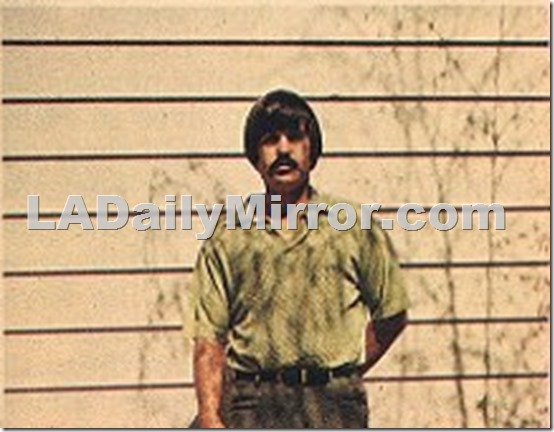
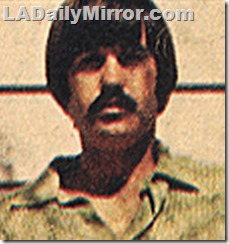
I recently obtained an original copy of The Times’ March 28, 1971, story “Farewell, My Black Dahlia,” which includes the account of the “Boy on the Bicycle.” Here’s a color picture of the purported “Bobby Jones.”


Here’s a better look:
Continue reading →

Posted in 1947, Another Good Story Ruined, Black Dahlia, Books and Authors, Cold Cases, Crime and Courts, Donald Wolfe, Homicide, LAPD | Tagged , , , , , | Comments Off on Who Is This Man?

A Dying Girls Last Words


June 12, 1907
Los Angeles

At 19, Florence Grover was old enough to be in love and living with a man, and at 19, she was old enough to become a mother. Her boyfriend, L.C. Lutzen of the National Messenger Service, with whom she lived at 120 N. Broadway, testified that he had made preparations to raise their child as his own.

Instead Florence sought out Dr. C. Van Peter Watson. On May 28, she took a streetcar to his home at 2652 W. Pico. When she left 30 minutes or an hour later, she was so weak that she couldn’t walk and someone sent for a carriage.

“Before her death, she tried to sign a statement, prepared by the physicians attending her, after it had been read to her: ‘Realizing that I am about to die, I certify that an abortion was to be performed and was performed on me by Dr. C.V.P. Watson,’ ” The Times said. “She became too weak to finish her signature.”

Watson was brought to trial—in fact he was also charged with a variety of offenses regarding land swindles involving Ollie J. Watkins. The Times described him as walking with a cane because he was handicapped and said he wore a Masonic pin and another badge showing that he was a Civil War veteran.

But the judge regretfully ruled that Florence’s statement was inadmissible.

“There is nothing in the statement partly signed by that poor, dying girl to show just what this defendant did. For some incomprehensible reason the statement was not even prepared in the presence of the girl. The physicians, not realizing what constitutes legal evidence, or swayed by professional ethics, failed to comply with the requirements of the law,” the judge said.

“The court regrets very much that the evidence is not conclusive, as to who was the perpetrator of that crime, that it might be legally fastened upon him and justice be done.

“With the infirmities of the testimony and in view of all the painful and abhorrent features of the case, I do not believe there is a court in the state that would permit the question to go to a jury.

“The defendant is discharged and the bail will be released.”

Lmharnisch.com

Lmharnisch.blogspot.com

Posted in 1907, Black Dahlia, Books and Authors, Crime and Courts, LAPD, Streetcars | Comments Off on A Dying Girls Last Words

Sandow Returns

http://www.ifilm.com/efp

Posted in Black Dahlia, Books and Authors, LAPD, Streetcars | Comments Off on Sandow Returns

A Family’s Curse


June 9, 1907
Los Angeles

Olga Miller was a comely young thing who worked at the Hotel Rosslyn and was considered quite attractive despite the scar on her temple from shooting herself in the head.

One day she fell ill and was taken to County Hospital, where she went into convulsions and died after a visit from Richard Hardy, who forced his way into her room and made her drink a glass of milk that police suspected was poisoned.

But her death was only the beginning of the complicated story, a morbidly Victorian tale that includes murder, insanity, false identities, suicides and fears of body snatching.

Shortly after Miller died, officials learned that she was actually Bertha Beilstein, the daughter of John Frederick Beilstein, a wealthy Allegheny, Pa., businessman and politician. Before his mysterious death in 1897 (some people suspected Bertha of poisoning him in a fit of insanity), he wrote a will putting all his money in a trust for his heirs as long as she was alive.


Then “on the night of Oct. 2, 1898, she shot her mother three times and took a hatchet and hacked the body almost to pieces,” The Times said.

“Afterward she walked the floor for hours, when a cloud seemed to leave her mind and she saw what she had wrought. She seized the same revolver and sent a bullet crashing into her skull just to the left of the temple. She fell to the floor and struck her head on the point of a piece of furniture.

“She lay there for hours—her murdered mother on the bed and the daughter unconscious on the floor. Then she regained consciousness and, raising herself, saw the bloody body of her parent on the bed. She seized the revolver again and sent a bullet into her breast over her heart.”

But still, she did not die and the neighbors found her the next day. She said: “I was tired of life. It had no pleasure for me. I wanted to die and did not want my mother to live and fret over my death. For that reason I killed her.”

At the trial for her mother’s murder, Bertha was declared utterly mad and imprisoned at the Dixon Asylum for the Criminally Insane outside Pittsburgh, where she became a model prisoner and was given free reign.

In the meantime, her brother Edward, apparently unable to live with the family scandal, killed himself by drinking prussic acid at the Voegtly Cemetery, where his body laid undiscovered for days. Shamed by the scandal, her uncle David Reich “threw himself in front of an express train and was ground to death,” The Times said.

Then in 1906, Bertha escaped from Dixon, and here is where the story becomes almost impenetrably complex. It may have been that her lover in Los Angeles, Richard L. Hardin (or Hardy or Harding), was also an attendant at Dixon and disappeared when Bertha escaped from the asylum. Or it may have been, as he said, that he only met her in California. Or maybe her brother Frederick Beilstein of Chicago sent her to Los Angeles under the name Olga Miller.

Whatever the cause, Bertha arrived in Los Angeles and moved into the Royal Hotel on South Main Street. Hardin said he met her at the hotel three weeks before her death. He said that they quickly became friends because they were both Easterners and when she got sick, he brought meals up to her room and had a doctor prescribe medicine for her.

Hardin said that although he helped get her admitted to County Hospital, he was distressed by her treatment there. “It wrung my nerves to see her tied down and her hands tied, so that is why I asked the doctor to unloosen her hands and the waist bandages,” said Hardin, who was freed when it was determined that Bertha died of brain tumors rather than poisoning.

Then the various factions of her family began fighting over the body. Some, to preserve the trust set up by her father, claimed that Bertha had gone to England and that the deceased was merely some unfortunate woman.

Her brother Frederick, however, insisted that the body was hers and warned officials of Evergreen Cemetery to protect her remains as some members of the family might try to steal it. As a result, police officers were stationed outside her crypt, allowing access only to the series of people sent to identify the body.

Trying to view Bertha’s remains became a popular pastime in Los Angeles as cemetery officials noted that more than 40 women had attempted to get a look by claiming to be a friend or relative. Cemetery superintendent Olneyman told The Times “that all are simply morbidly curious and always depart when their names and addresses are asked.”

After six weeks, Bertha’s body was conclusively identified and sent to Pittsburgh. Later that year, her brother Charles died when he fell from a ladder at his hotel in Vandergrift, Pa.

The Times said: “Charles was a firm believer in Bertha Beilstein’s declaration years ago that an avenging hand followed every member of the family. Less than a month ago the hotel keeper declared to a friend that he fully expected to die a violent death.”

Lmharnisch.com


Lmharnisch.blogspot.com

Posted in 1907, Black Dahlia, Books and Authors, Homicide, LAPD, Streetcars | Comments Off on A Family’s Curse

Judge Wins Black Eye in Pasadena’s First Dog Show

June 7, 1907
Pasadena

After a hard day of judging Boston terriers, English bulldogs and foxhounds, John Bradshaw went to a local restaurant with two exhibitors, William J. Morris and James Ewins.

Over dinner, and apparently many drinks, Bradshaw told Ewins at great length what was wrong with his prize bulldog, Moston Barnone. Although Ewins had owned several great bulldogs, including one named Moston Monarch, he took Bradshaw’s remarks in stride.

After they left the restaurant, however, Bradshaw continued his lengthy critique, telling Morris exactly what was wrong with his setters. Morris defended his prize pets and the men began arguing.

“Bradshaw became indiscreet enough to let drive a hard right swing at Morris,” The Times said. “The latter ducked cleverly and encountered with a terrific right to the eye, which in the parlance of the pugs, immediately erected a substantial ‘roof’ over the optic.”

Ewins helped Bradshaw to his hotel, where they tried to reduce the swelling so that Bradshaw could see well enough to judge that night’s competition. However, he failed to return by 10 p.m. and the event was postponed until the next day.

Lmharnisch.com

Lmharnisch.blogspot.com

Posted in 1907, Black Dahlia, Books and Authors, LAPD, Pasadena, Streetcars | Comments Off on Judge Wins Black Eye in Pasadena’s First Dog Show

Shout Out

General Motors (198.208.251.24) Windows 2000? Upgrade!

The Netherlands (212.127.246.72)

E! Entertainment (12.46.6.69) “E! Mysteries and Scandals,” my first TV interview, by the guy who did “Real Chases of the Highway Patrol.”

Department of Veterans Affairs (152.130.6.194)

My pal in Kerkira, Greece (213.80.115.71)

Simpson Thacher and Bartlett llp (64.167.72.50)

And no, I still haven’t heard from Donald H. Wolfe about his bogus document. Something tells me I’m not going to.

Here’s a factoid for you: Olga Rutterschmidt, who is being held on suspicion of an insurance fraud scheme involving the deaths of two homeless men, lives at 1776 N. Sycamore in Hollywood, the site of Bobby Fuller’s mysterious death in 1966. A building with seriously bad mojo!

Hurry back!

Lmharnisch.com

Posted in 1947, Another Good Story Ruined, Black Dahlia, Books and Authors, Cold Cases, Crime and Courts, Donald Wolfe, History, Hollywood, Homicide, LAPD, Uncategorized | Tagged , | Comments Off on Shout Out

A Horse Avenged


June 6, 1907
San Bernardino

The miners of the Silver Lake camp out in San Bernardino didn’t take the tenderfoot too seriously. His name was Fred Myton and he presented himself as the son of a wealthy Salt Lake City family, come fully outfitted to strike it rich in the gold fields.

One of the miners’ amusements in the remote desert was Bobbie, a horse owned by contractor Sidney Barber but belonging to almost everyone in the camp as he was treated like a pet. Allowed to roam untethered, Bobbie would forage from one miner to the next looking for some kind words, maybe a pat or two and whatever the men could spare from their meals.

“One day when Myton was absent, skirmishing for a bonanza, Bobbie dropped around for 5 o’clock tea. But there was no host to welcome him in the style he had been used to, and after knocking around the tent for a time, Bobbie stuck his head inside and investigated. There, right in plain sight, evidently for his special benefit, was a plate of baked beans with tomato sauce,” The Times said.

“Bobbie lost no time in getting inside of the tent and outside of the beans and during these two interesting operations [he] stepped in the frying pan and knocked over a few articles of furniture which he was not in the habit of seeing in the desert. In fact, by the time Bobbie had turned around and made his way out again, the tent looked as if a Texas zephyr had got loose in the kitchen.”

Myton was furious and the miners got a good laugh out of the tenderfoot’s predicament. Later that day, Myton caught Bobbie with a rope, led the horse out in the desert and shot him in the head with his brand-new Winchester.

Men have been lynched for less than this and The Times pointedly remarked that the fact the miners didn’t string Myton up reflected a new civility in the desert.

Instead, Barber came to Los Angeles and filed a legal claim against Myton seeking $300 for Bobbie, $400 damages for loss of time to his freighting business and $5,000 in punitive damages, a total of $116,984.35 USD 2005.

“Thus does the law avenge Bobbie, once the pet of Silver Lake,” The Times said.

Lmharnisch.com


Lmharnisch.blogspot.com


Posted in 1907, Black Dahlia, Books and Authors, LAPD, Streetcars | Comments Off on A Horse Avenged

Down She Goes

http://www.ifilm.com/efp

Posted in Black Dahlia, Books and Authors, LAPD, Streetcars | Comments Off on Down She Goes

A Tough Case


June 4, 1907
Los Angeles

After months of inquiries that involved undercover investigators posing as patients, the State Board of Medical Examiners has taken action against Chinese herbalists in Los Angeles. In addition to arresting the doctors in question, authorities charged everyone involved as investors in the companies, issuing warrants for some of the most prominent members of the Chinese community.

“It is alleged that in one case a patient who was charged high prices for Chinese treatment received a bottle that contained simply the juice boiled from alfalfa,” The Times said. “It was contained in a fancy bottle that looked as if anything it held might be good for what was the matter with almost anybody. It was a fine piece of glass with Chinese hieroglyphics up and down the sides and there was an odor about the fluid different from … anything else sold in a pharmacy or doled out by the ordinary physician.”

Although it was sold as an exotic potion, a chemist who analyzed the liquid said it had never been “nearer to China than the corner of Sunset Boulevard and Alvarado Street.”

“Most of these places are beautifully furnished with Oriental draperies, teakwood furniture, Chinese porcelains and other fittings calculated to create an impression of culture and wealth,” The Times said.

In a subsequent story, the newspaper catalogued the treatments to which the investigators subjected themselves. Deputy Nicholas Harris received “vital sparks” from one herbalist, “tiger fat” from another and “nerve balls” from a third.

Still, Harris, who survived the experience, had praise for the dealers.

“These Chinese herb sellers are the most thorough gentlemen I have ever met,” he said. “I never met one in all my rounds who did not treat me in a kindly, courteous manner. This is so different from the crusade we conducted against the white fakers. With those fellows we had to be constantly on guard, but with the Chinese it is different. That is, with the exception of one case.

“At the Wong company on South Main Street, I met Drs. Chan and Young. Both treated me well. They behaved like princes and it is really hard to prosecute such people. We have not the slightest enmity against them. In fact, we find that it really hurts to prosecute them because they are such gentlemen, but we simply want to find out whether the state will permit them to practice their form of medicine without first security a license.”

One of the arrested men, Dr. Tom Leung, was described as a millionaire with offices at 9th Street and Olive who accompanied the emperor of China during a U.S. tour.

Leung died in 1931 at his home at 1619 W. Pico Blvd., at the age of 57. His obituary noted that he was in business for 30 years and was survived by wife; five sons, whom he named for U.S. presidents; and three daughters.

Lmharnisch.com


Lmharnisch.blogspot.com

Posted in 1907, Black Dahlia, Books and Authors, LAPD, Obituaries, Parks, Streetcars | Comments Off on A Tough Case

Nooooo!

June 3, 1907
Los Angeles

It was to be one of the grandest society weddings of the season: An orchestra was hired, a caterer had been selected after lengthy interviews, gowns for the bride and bridesmaids had been sewn and the Hotel Lankershim had been hired for the occasion.

In preparation for the grand event, Dr. Harris C. Garcelon and his fiancee, Genevieve Smith, attended the wedding rehearsal at Christ Episcopal Church performed by the Rev. Baker P. Lee.

Lee said: “While the young people were talking with me, one of them asked if they could not get married right away. No, I will not say which suggested it first. I told them a license was really all that was necessary. I believe both dreaded the big formal affair and wished to avoid it. They were of sufficient age to decide for themselves. Members of my household acted as witnesses. Miss Smith’s engagement ring was used in the ceremony. I married them and Dr. and Mrs. Garcelon went away.”

Dr. Garcelon managed to spirit his wife’s luggage out of the Hotel Lankershim, under the watchful eyes of her parents, and off they fled for Salt Lake City, leaving Rev. Lee to break the news to her mother.

The Times said: “It is hinted that a function will be arranged at the hotel which Dr. and Mrs. Garcelon will be actually forced to attend.”

Dr. Garcelon died Aug. 2, 1935, in San Bernardino at the age of 65. At his request, his ashes were scattered over the Mojave Desert. The former police surgeon and assistant health officer was survived by his wife, Genevieve, who died in 1958 at the age of 81.

Lmharnisch.com


Lmharnisch.blogspot.com

Posted in 1907, Black Dahlia, Books and Authors, LAPD, Religion, Streetcars | Comments Off on Nooooo!

A Theater Rises on Broadway


June 2, 1907
Los Angeles

The Hamburger Department Store announces plans for a theater just south of its new building on South Broadway at 8th Street, designed by the architecture firm of Edelman and Barnett.

According to plans, the horseshoe-shaped theater is to seat 1,600 people, with a balcony and a gallery. The stage is to be 40 feet by 80 feet, with a proscenium 36 feet wide and 32 feet high.

“The interior of the arch will be finished in ‘Art Nouveau’ as a suggestion of the beautiful effect given by the arch of the New Amsterdam Theater in New York City,” The Times said.

The facade of the eight-story building is to be pressed brick and terra cotta with inlaid colored glazed tile. The marquee of hammered copper is to measure 14 feet by 23 feet, extending from the building to the curb.

A June 14, 1908, Times story says the interior was designed by Antoon Molkenboer. The panel over the proscenium will portray 16 larger-than-life figures titled “The Cast of Characters.”

Ramon Novarro began as an usher at Hambuger’s Majestic (later the Majestic) and kept as mementos a pair of ticket stubs given to him by Charlie Chaplin. Edward Everett Horton, Lewis Stone and Franklin Pangborn also performed at the theater. In its final years, it was a burlesque house and figured in an obscenity case before it was torn down in 1933 to make way for parking.

Lmharnisch.com


Lmharnisch.blogspot.com


Posted in 1907, 1908, Black Dahlia, Books and Authors, LAPD, Streetcars, Theaters | Comments Off on A Theater Rises on Broadway

Hard Questions


June 1, 1907
Los Angeles

Voir dire, in which lawyers question prospective jurors, is a rough and tumble affair, especially when the case involves prostitution.

The matter at hand involves Tom Savage, boss of the 8th Ward, known as the “Bloody Eighth,” on charges of running a disorderly house, the Arlington Hotel, in the Tenderloin.

Savage’s unidentified defense attorney interrogated prospective panelists closely about their familiarity with bordellos and prostitutes. One man tucked his long, white beard into the waistband of his pants before entering the jury box and when asked about the Red Light district looked at the accused prostitutes in court and said: “Well, young feller, I ain’t much on sparkin’, but them there do sure seem to be likely gals.”

The first question asked of each prospective juror—what church they belonged to—caused The Times to remark: “From the number who answered in the negative there seems to be considerable missionary work yet to be done in Los Angeles.”

One man replied: “I ain’t been to no church for 10 years, but I ain’t missed a chance to vote the Democratic ticket for the past 30 and that oughter qualify me some.”

Several men were accompanied by their wives and became increasingly nervous during questioning about whether they had ever been to a house a prostitution.

“Once,” one man said nervously. “I was showing a friend about the city.”

“I’ll show you about the city when I get you home,” his wife exclaimed from the back of the courtroom.

The jury deadlocked and Savage’s case was dropped. The onetime newspaper pressman, who was elected to the council in 1894, died of a morphine overdose in his room at 111½ Commercial St., in what was then the 8th Ward. The man who once boasted “I’ve got all the votes you need right here in my vest pocket” was 47.

Lmharnisch.com


Lmharnisch.blogspot.com


Posted in 1907, Black Dahlia, Books and Authors, LAPD, Streetcars | Comments Off on Hard Questions

Memorial Day

May 31, 1907
Los Angeles

In one Memorial Day observance, Col. James H. Davidson of Pasadena addresses the crowd at Memorial Hall.

He says, in part: “Another decade or two and taps will have sounded and lights will be out for the entire muster roll of Civil War veterans. Let us see who made possible the perpetuity of the Union, who fought its battles and upheld the flag, who filled the ranks, who rushed to the rescue, who died on sea and land that our great nation might survive.

“It was the men behind the guns, the private soldiers and sailors of the Civil War. Their valor, their heroism, their endurance, made possible those brilliant names of generals and admirals that blaze on the pages of our country’s history.”

Lmharnisch.com

Lmharnisch.blogspot.com

Posted in 1907, Black Dahlia, Books and Authors, LAPD, Pasadena, Streetcars | Comments Off on Memorial Day

Hop Chung–In Trouble Again

May 30, 1907
Los Angeles

Hop Chung is in trouble again.

Chung, it seems, is no stranger to the legal system, with a police record going back to 1883. Ten years later, he and customer D.E. Dorsey were arrested at Chung’s laundry at 1st and San Pedro for fighting over a bill.

The next year, he was arrested on a charge of battery when he got into an argument with Mrs. D.W. Diaz, operator of a Spring Street rooming house, who refused to pay him because he lost some of her laundry. Also in 1894, he and Ah Sing were fined $1 for not hitching their horses as they plied the streets of Los Angeles.

But all of that was a mere prelude to the current problem. In 1907, Chung opened a new laundry on Thompson between West Adams and 23rd Street, much to neighbors’ dismay, for the council had designated the area a residential district, banning laundries, livery stables, undertaking parlors and coal yards.

Chung was arrested once more, but because he wasn’t a U.S. citizen, he took the case to federal court rather than the state, claiming that the city had no authority to create what we know as zoning. Chung’s lawyer maintained that as long as the laundry was sanitary, the city had no authority to force him out.

Taking the case under advisement because there were few legal precedents, the federal court ruled in June against Chung and in favor of the city.

Chung remained out of the news until 1932, when the health department refused to renew his license because he had a connecting hallway between his living quarters and laundry.

No obituary appeared on Chung and he isn’t listed in the California death records, so there’s no easy way to find out what became of him. As for the laundry, Thompson doesn’t appear on any of my historic maps and the Sanborn Maps website doesn’t recognize my firefox browser.

Here’s the link in case you want to check
.

Lmharnisch.com


Lmharnisch.blogspot.com

Posted in 1907, Black Dahlia, Books and Authors, City Hall, LAPD, Obituaries, Streetcars | Comments Off on Hop Chung–In Trouble Again

Shorthand

Posted in Black Dahlia, Books and Authors, LAPD, Streetcars | Comments Off on Shorthand