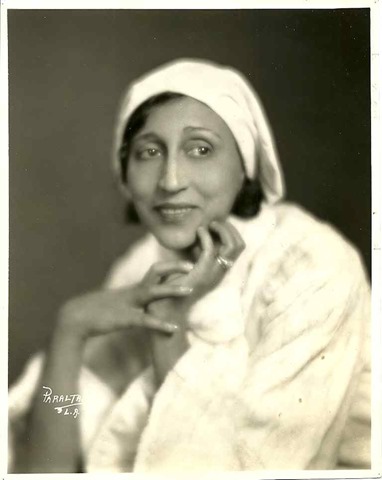
Marco, left, and Fanchon, courtesy of Mary Mallory.
Movie-going experiences today offer little bang for the buck, offering mostly commercials, advertisements and loud trailers before the films. In the 1920s and 1930s however, moviegoers enjoyed a smorgasbord of entertainment before they even saw the movie: cartoon, newsreel, serial and in larger houses, an elaborate musical presentation that sometimes was the draw itself. While they did not originate the concept of prologues before films, Fanchon Simon and Marco Wolff popularized and energized their form, becoming a household name in the process.
The team, known as Fanchon and Marco professionally, were native Angelenos, born on Sept. 14, 1892, (Fanchon) and April 21, 1894, (Marco) respectively. The children of Russian immigrants, Fanny and Marco helped support the family of seven from a young age. Marco delivered the Los Angeles Times, and Fanchon sold subscriptions to The Times door to door in order to afford to attend dramatic lessons. She quickly discovered she preferred dancing and singing, and switched to those lessons instead. Marco possessed excellent violin skills, and by 1902 they were performing together, Fanchon sitting on his shoulders while he played. Marco worked his way through high school performing the violin in a tearoom, while Fanchon served as an assistant dance instructor and worked as a dancer providing “atmosphere” for Oliver Morosco’s shows at the Burbank Theatre. Working in the theater and seeing the development of shows planted an idea that the team would later embroider into something more elaborate.
Mary Mallory’s “Hollywoodland: Tales Lost and Found” is available for the Kindle.
Continue reading →













 ladailymirror.com