Black Dahlia: Blogging ‘Black Dahlia Files’ Part 35 — Paint by Numbers


Note: This is an encore post from 2006.

I’m blogging in real time as I read Donald H. Wolfe’s “The Black Dahlia Files: The Mob, the Mogul and the Murder That Transfixed Los Angeles.”

Page 52

Wolfe is using the “Laura” format and we’re at the point in the story where we learn about Elizabeth Short’s childhood. Wolfe has dispensed with her father, Cleo Short, at least for now, and is dealing with Elizabeth Short’s childhood illnesses. The narrative about the murder investigation has gone into hibernation as the book introduces buckets of background material.

Continue reading

Posted in Uncategorized | 1 Comment

March 7, 1907: Veterinarian Goes on Violent Rampage

Note: This is an encore post from 2007.
March 7, 1907
Los Angeles

A dreadful disease called acute glanders has been discovered in a horse and veterinarian R.J. Ramage ordered that the animal be destroyed immediately.

In addition to rapidly causing death, acute glanders can be spread from horses to humans and there is no known cure, at least in 1907. Apparently several men in Los Angeles County died of acute glanders in 1893.

Continue reading

Posted in 1907, 1908, 1909, 1911, Black Dahlia, Books and Authors, LAPD, Pasadena, Streetcars | Tagged | Comments Off on March 7, 1907: Veterinarian Goes on Violent Rampage

Black L.A., 1947: Onyx Club Opens in Pasadena; Cafe Was Site of Sensational 1950 Killing

L.A. Sentinel, 1947

March 6, 1947: The Onyx Club opens at 109 S. Fair Oaks in Pasadena.


image
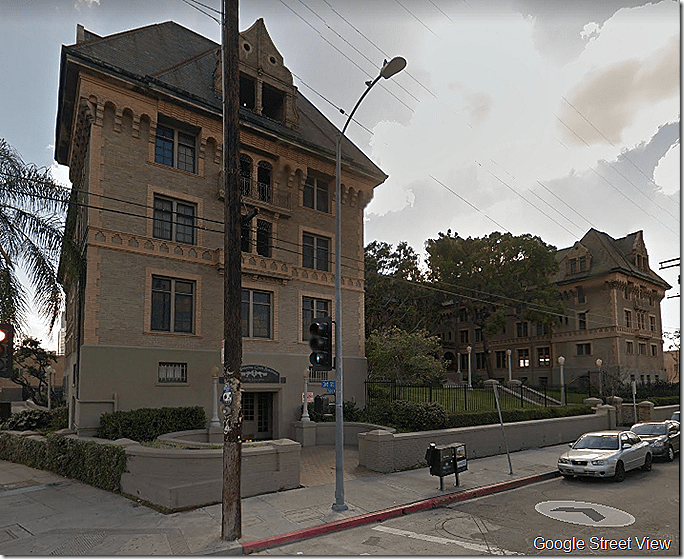
The former site of what was variously called the Onyx Club, Onyx Cafe or Onyx Bar on South Fair Oaks in Pasadena, via Google Street View.


L.A. Sentinel, 1950 June 1950, L.A. Sentinel

June 1950: Vivienne Miles-El is charged with fatally stabbing her boyfriend Clinton E. “Smiling Jack” Jackson, a well-known gambling figure along Central Avenue.

The Sentinel said: “Jackson, who at the time of his death was married and living at 617 1/2 E. Santa Barbara [now Martin Luther King Jr. Boulevard] but who intimates say was ‘running around’ with the willowy Miss Miles-El, was allegedly stabbed to death by the woman in the Onyx Bar, 109 Fair Oaks Avenue, Pasadena, following what witnesses say was a quarrel.”

The quarrel began when Jackson said he didn’t want Miles-El driving other people around in his Cadillac. Jackson slapped Miles-El “many times” a witness testified at the inquest.

Miles-El told friends to “forget” the slapping, the Sentinel said. But 10 minutes later, Miles-El plunged a paring knife into his chest “as she sat facing him on a bar stool,” the Sentinel said.

A cabdriver took Jackson to a hospital and then to Huntington Memorial Hospital, where he was pronounced dead.

Miles-El was found not guilty.

Continue reading

Posted in 1947, 1950, African Americans, Crime and Courts, Food and Drink, Music, Nightclubs, Pasadena | Tagged , , , , , , , | 1 Comment

Black Dahlia: Blogging ‘Black Dahlia Files’ Part 34 — Limbo

Note: This is an encore post from 2006.

I’m blogging in real time as I read Donald H. Wolfe’s “The Black Dahlia Files: The Mob, the Mogul and the Murder That Transfixed Los Angeles.” At the moment we’re enmeshed in the backstory on 1940s newspapers that hasn’t transfixed anyone.

The two-minute executive summary:

After spending several days slogging through Elizabeth Short’s autopsy and pondering the absence of John Gilmore’s key source on the Black Dahlia’s purported “infantile genitalia,” the nonexistent Detective Herman Willis, we’ve found the late Will Fowler, former Examiner reporter and Dahlia source, played several tricks on Wolfe. We also discovered some more ties between Wolfe’s stepfather and Joseph P. Kennedy, but a troubling disinterest in saying anything about Wolfe’s Great-Uncle Bernard Baruch, one of Kennedy’s close associates.

Continue reading

Posted in 1947, Black Dahlia, Books and Authors, Cold Cases, LAPD, Uncategorized | Tagged , , , , | Comments Off on Black Dahlia: Blogging ‘Black Dahlia Files’ Part 34 — Limbo

March 6, 1907: Actress Drinks Beer in S.F. Play; Irish Besiege Theater


Note: This is an encore post from 2007.
March 6, 1907
San Francisco (VIA Associated Press)

The Irish of San Francisco are furious over a play at the Davis Theater called “The Belle of Avenue A,” which features a character named Mrs. McCluskey who drinks a glass of beer in the first act.

“Three times, about 40 people charged the stage and the actors and actresses feared they were about to be attacked,” The Times says.

Continue reading

Posted in 1907, Black Dahlia, Books and Authors, LAPD, Streetcars, Theaters | Tagged | Comments Off on March 6, 1907: Actress Drinks Beer in S.F. Play; Irish Besiege Theater

Movieland Mystery Photo (Updated + + + +)

March 10, 2018, Mystery Photo

This week’s mystery movie has been the 1944 Paramount film “And Now Tomorrow,” with Alan Ladd, Loretta Young, Susan Hayward, Barry Sullivan, Beulah Bondi, Cecil Kellaway, Grant Mitchell and Helen Mack. The screenplay was by Frank Partos and Raymond Chandler, from a novel by Rachel Field. Music was by Victor Young, photography by Daniel L. Fapp, art direction by Hans Dreier and Hal Pereira, costumes by Edith Head, makeup by Wally Westmore and set decoration by Ted von Hemert. The associate producer was Fred Kohlmar and the director was Irving Pichel.

The DVD is available in the Universal Vault Series.


Continue reading

Posted in Film, Hollywood, Mystery Photo | Tagged , , | 60 Comments

Mary Mallory / Hollywood Heights – 1938 Floods Wreak Havoc on Los Angeles Area

 North Hollywood Flood House Collapse

Flooding in North Hollywood, courtesy of Mary Mallory.


Note: This is an encore post from 2013.

Seventy-five years ago, a deluge of rain hit Los Angeles and the surrounding area, leading to massive floods and causing millions of dollars in damage and a devastating loss of life. Many factors led to this destruction: too much rain, inadequate construction of bridges and roads, and homes and businesses located in flood-prone areas. One of the unfortunate consequences of the floods was the eventual concreting of the Los Angeles River, ruining its beauty.

Although other areas of the country suffered through droughts and dust storms in the 1930s, Los Angeles and Southern California endured large amounts of rainfall. Most years saw higher than normal annual rain levels. 1937 saw 17.85 inches fall by March 1, while 1934 saw the largest amount of rain since the 1860s.

1938 started out with heavy rains, growing worse through February. Small patches of flooding caused concerns throughout the city. On Feb. 28, a severe storm hit the area, leading to five days of disaster.

The March 1, 1938, Los Angeles Times noted that gale winds hit the coast, and more than 2.5 inches of rain fell on Feb. 28. Seasonal rain totals reached 14.43 inches, more than 4 inches above average.

Mary Mallory will present “Washed Away:  The Great 1938 Flood and Its Effects on Studio City” at 3:30 p.m. on March 24 at the Studio City branch of the Los Angeles Public Library, 12511 Moorpark St. Admission is free.

Continue reading

Posted in 1938, Mary Mallory, Pasadena, San Fernando Valley | Tagged , , , , | 1 Comment

Black Dahlia: Blogging ‘Black Dahlia Files’ Part 33 — Pied Type

Note: This is an encore post from 2006.
I’m blogging in real time as I read Donald H. Wolfe’s “The Black Dahlia Files: The Mob, the Mogul and the Murder That Transfixed Los Angeles.”

At this point in the story, Elizabeth Short’s body has been discovered in Leimert Park, and it has been taken to the morgue and identified. However Elizabeth Short has virtually disappeared as Wolfe bogs down in an explanation of competition between the Los Angeles newspapers in the 1940s.

Continue reading

Posted in Uncategorized | Comments Off on Black Dahlia: Blogging ‘Black Dahlia Files’ Part 33 — Pied Type

March 5, 1907: Monrovia Woman Defies Family, Marries Chinese Man and Moves to Hong Kong


Note: This is an encore post from 2007.
March 5, 1907
Los Angeles

What shall we do with Emma? She’s gone off to New Mexico and married a Chinaman. Her horrified mother hopes to get the marriage annulled, but Emma is an independent-minded young lady.

Emma’s mother, Mary Culver of Monrovia, says she will do everything she can to undo her daughter’s marriage to Frank Chew, which The Times describes as “a sort of missionary revivalist,” noting that “Miss Emma had longings to help the heathen herself.”
Continue reading

Posted in 1907, Black Dahlia, Books and Authors, Education, Immigration, LAPD, Photography, Streetcars | Tagged | Comments Off on March 5, 1907: Monrovia Woman Defies Family, Marries Chinese Man and Moves to Hong Kong

Black Dahlia: Blogging ‘Black Dahlia Files’ Part 32 — Foxy Grandpa


Note: This is an encore post from 2006.

I’m blogging in real time as I read Donald H. Wolfe’s “The Black Dahlia Files: The Mob, the Mogul and the Murder That Transfixed Los Angeles.”

We’re at the part of the story, being told in flashback, where Elizabeth Short has been identified, her mother has learned about the murder from the Examiner, and now there’s bruising competition among the newspapers to find out everything about the murder victim. I’m guessing the yarn of Bevo Means and the Black Dahlia nickname should be next or at least soon.

Continue reading

Posted in 1947, 2006, Black Dahlia, Books and Authors, Cold Cases, LAPD | Tagged , , , | 1 Comment

Black Dahlia: Blogging ‘Black Dahlia Files’ Part 31 — Phoning It In


Note: This is an encore post from 2006.

I’m blogging in real time as I read Donald H. Wolfe’s “The Black Dahlia Files: The Mob, the Mogul and the Murder That Transfixed Los Angeles.” So far we have seen very little of “The Mob” and nothing at all of “The Mogul.” There has been a murder but Los Angeles has yet to be transfixed.

This is tediously slow work and all I can say is that what I’m doing is absolutely the worst way to read a book; most shouldn’t be read at the molecular level, but “Mogul” demands nothing less. In fact, as I looked down Page 42, I saw an incredible whopper. It’s stupefying that someone could run all the Black Dahlia books through a blender, toss in some outright fabrication and come up with such a mishmash covered with a veneer of “research,” but Wolfe has done it.

Continue reading

Posted in 1947, Black Dahlia, Books and Authors, Cold Cases, Donald Wolfe, LAPD, Uncategorized | Comments Off on Black Dahlia: Blogging ‘Black Dahlia Files’ Part 31 — Phoning It In

March 3, 1907: L.A. Public Library Welcomes Young Readers

Note: This is an encore post from 2007.
March 3, 1907
Los Angeles

Stroll into the Los Angeles Public Library on Central Avenue with me for a moment, over to the children’s section. The librarian says there are about 15,000 to 16,000 books, only half of what is needed, because about third of them are checked out every month.

The most popular titles are “Little Women,” “Little Men” and “Old-Fashioned Girl,” The Times says. Although the library has 25 copies of each book, it’s rare to find them on the shelves.

Continue reading

Posted in 1907, Black Dahlia, Books and Authors, Education, Fashions, LAPD, Streetcars | Tagged | Comments Off on March 3, 1907: L.A. Public Library Welcomes Young Readers

Black Dahlia: Blogging ‘Black Dahlia Files’ Part 30 — Tick, Tick, Tick

Note: This is an encore post from 2006.
Page 39

We’re blogging Donald H. Wolfe’s “The Black Dahlia Files: The Mob, the Mogul and the Murder That Transfixed Los Angeles.” Yesterday, one sentence. Today, let’s try to double that, eh?

“The Examiner headline story of Friday, January 17, included the Santa Barbara police photos and an interview with Santa Barbara policewoman, Mary H. Unkefer. Juvenile Officer Unkefer had been called into the 1943 case when Elizabeth Short was arrested for drunk and disorderly and was identified as a minor.”

Continue reading

Posted in 1947, Black Dahlia, Books and Authors, Cold Cases, Donald Wolfe, LAPD, Uncategorized | Comments Off on Black Dahlia: Blogging ‘Black Dahlia Files’ Part 30 — Tick, Tick, Tick

Page 1 News

Note: This is an encore post from 2007.
March 2, 1907
Los Angeles

Posted in 1907, Black Dahlia, Books and Authors, LAPD, Streetcars | Tagged , | Comments Off on Page 1 News

Black Dahlia: Blogging ‘Black Dahlia Files’ Part 29 — Wreck of the Old 97


Note: This is an encore post from 2006.
Uh-Oh. All I had to do was read the opening line in this section of Donald H. Wolfe’s “The Black Dahlia Files: The Mob, the Mogul and the Murder That Transfixed Los Angeles” to know…

This is not going to be pretty.

Continue reading

Posted in 1947, Black Dahlia, Books and Authors, Donald Wolfe, LAPD | Comments Off on Black Dahlia: Blogging ‘Black Dahlia Files’ Part 29 — Wreck of the Old 97

March 1, 1907: L.A. Businesses Running Out of Space to Dump Garbage


Note: This is an encore post from 2007.
March 1, 1907
Los Angeles

Downtown businessmen are at a complete loss over what to do with the garbage from their operations and want the city to either take it or designate a dump they can use.

“They declare that the Board of Health has refused to let further deposits of garbage or refuse be made at the old dumping ground to the southeast of the city and state that if the city does not come forward with a proposition to locate a new dump, or to cremate the stuff, they will be helpless to get rid of the accumulations of each day’s business,” The Times says.

Continue reading

Posted in 1907, Black Dahlia, Books and Authors, Downtown, LAPD, Streetcars | Tagged | Comments Off on March 1, 1907: L.A. Businesses Running Out of Space to Dump Garbage

Black L.A., 1947: Animator George Pal Sponsors Youth Basketball Team

Feb. 27, 1947

Feb. 27, 1947: The Sentinel never wrote anything further about the Newton Pals basketball team. The team members were listed as Charles Ward, Louis Augistine, Marion Person, Charles Davis, Henry Morrison, Aroyce Robinson, Ralph Swere, Roland Bundice and James Howard.


Posted in 1947, African Americans, Film, Hollywood, Sports | Tagged , , , , , | Comments Off on Black L.A., 1947: Animator George Pal Sponsors Youth Basketball Team

Black Dahlia: Blogging ‘Black Dahlia Files’ Part 28 — A Rain Check


Note: This is an encore post from 2006.
After spending so much time on Elizabeth Short’s autopsy, Wolfe is heading into autobiographical material. Given all the nonsense surrounding our last foray into the Wolfe household (remember “Uncle Vern
” who used to house-sit for neighbor Bugsy Siegel, except Siegel moved in three years after the Wolfes moved out?) I may take a rain check and come back if this proves to be significant regarding the Black Dahlia case.

Page 36

Wolfe is going to talk about his stepfather, studio executive Jeffrey Bernerd, who died in 1950, although we don’t seem to get that little factual bonbon.
Continue reading

Posted in Uncategorized | Comments Off on Black Dahlia: Blogging ‘Black Dahlia Files’ Part 28 — A Rain Check

Feb. 28, 1907: Edison Crew Cuts Down 300-Year-Old Oak to Keep Power Line Straight

Note: This is an encore post from 2007.
Feb. 28, 1907
Los Angeles

An old and massive California live oak used to mark the division between three Spanish land grants lies in pieces on the ground because an Edison foreman refused to run a transmission line around it.

“The tree was a full hundred feet in its spread,” The Times says,” and stood on the end of a little plateau, all alone in its greatness. The massive trunk could not be circled by three men stretching their arms and touching their fingertips—hardly by four men. Above, it split into four great branches that spread out and out and then again downward, containing with an evergreen shield a refuge where two full companies of soldiers might have bivouacked in comfort.”

Continue reading

Posted in 1907, Black Dahlia, Books and Authors, Freeways, LAPD, San Fernando Valley, Streetcars | Tagged , , , | Comments Off on Feb. 28, 1907: Edison Crew Cuts Down 300-Year-Old Oak to Keep Power Line Straight

Black L.A. 1947: Huge Blast Kills 17, Show Dangers of Industry Moving Into Black Neighborhoods

O'Connor Electroplating
Feb. 20, 1947: An aerial view of the devastation from the explosion at the O’Connor Electroplating Corp.,  926 E. Pico Blvd.  Los Angeles Public Library Herald Examiner collection.

oconnor_electroplating_site_2018
The site of the O’Connor Electroplating explosion via Google Satellite View.

Feb. 27, 1947, O'Connor Electroplating Blast

The Sentinel reports that five African Americans were among the 17 people killed by the Feb. 20, 1947, explosion at the O’Connor Electroplating Corp., 926 E. Pico Blvd. The explosion injured 128 people and wiped out most of the block.

The blast, the Sentinel said, reflected the hazards of industry encroaching into a residential neighborhood, especially when the city of Los Angeles was segregated by deed covenants.

Blacks “are hemmed in by these ghetto agreements and the city fathers, busy protecting lily-white suburban communities, tend to shoo all business establishments off to Negro residential areas,” the paper said.

The Sentinel criticized the district’s councilman, the Rev. Carl C. Rasmussen, for failing to protect his constituents.

According to the Sentinel, Rasmussen dismissed an effort to prevent rezoning of an area on East 28th Street near the YMCA and St. Phillips Church. “After all, this is a business community. Why don’t you people buy a church somewhere else? You can get a big price for your property now,” Rasmussen said.

Continue reading

Posted in 1947, African Americans, Fires | Tagged , , , , , , , | Comments Off on Black L.A. 1947: Huge Blast Kills 17, Show Dangers of Industry Moving Into Black Neighborhoods