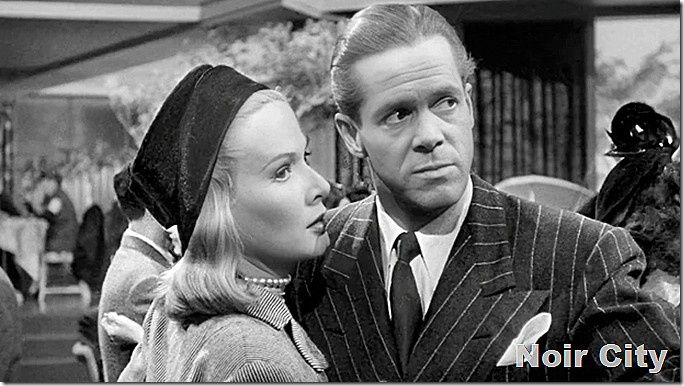
June Vincent and Dan Duryea in Black Angel (1946), shown at Noir City Hollywood.
Noir City Hollywood soared to new heights as it “Faced the Music” by celebrating links between noir and jazz with fascinating film pairings and live performance, raising the roof for double doses of passion, darkness and mayhem. Czar of Noir Eddie Muller and Noirmaster Alan K. Rode’s snappy introductions and Brian Light’s eye-popping posters added well-placed high notes to crown off weekends.
Each of the carefully curated double features focused on the dark undersides of crime and jazz, comingling sensuality and depravity, sizzling heights and gutter-dwelling lows. Music often played both savior and sinner to protagonists, shaping the arc, tone, and rhythm of the story often more than the dialogue itself.
While I couldn’t attend the entire festival, what I saw was red hot, telling, and timely. Most highlighted the scathing, nasty underbelly of fame and celebrity, a cesspool of slime and duplicity. Such noir regulars as Dan Duryea, Wallace Ford, Broderick Crawford, Howard Da Silva, Lloyd Nolan, Steve Brodie, Steven Geray, and Paul Stewart provide their usual stalwart performances and heat, complemented by fine performances of neophytes as Frank Sinatra Jr., Elvis Presley, Peggy Lee, and Cicely Tyson.
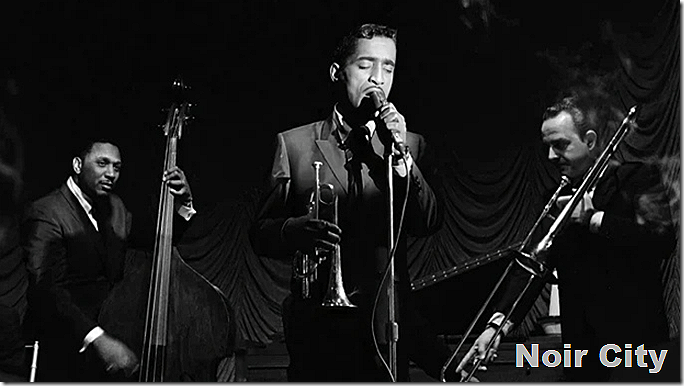
Sammy Davis Jr. in A Man Called Adam (1966), shown at Noir City Hollywood.
Opening night paired the well-known “Black Angel” (1946) with the little seen “Blues in the Night,” (1941) blending well crafted screen ballads with actual sultry standards. In one of his few leading roles, Dan Duryea steals “Black Angel” as Marty Blair, an alcoholic but ultimately sympathetic composer/pianist assisting blonde songbird Catherine Bennett (June Vincent) in trying to prove her jailbird husband innocent of murder. The performing duo go undercover in the lush Sunset Strip nightclub of slick shyster Marko (Peter Lorre), spinning a web of romance and deception with an unexpected twist. Besides Duryea, Lorre, Constance Dowling, Broderick Crawford, and Wallace Ford find scene-stealing moments. Real Los Angeles locations from the Gaylord to skidrow bring authenticity, while evocative set decorating of sleek nightclubs, lavish pied-a-terres, and threadbare saloons by Martin Obzina and add panache.
“Blues in the Night” offered a smorgasbord of music and entertainment, throwing in everything but the kitchen sink in a story of a struggling blues band rising and falling on the emotions of its talented but troubled leader Jigger Pine (Richard Whorf). Zigzagging between arthouse drama and B-movie escapades, the film featured outstanding lighting and avant garde camerawork with scattershot bland back projection and over-the-top scene chewing. Betty Field provides scalding sensuality as the caustic chanteuse Kay Grant and future director Eliia Kazan adds manic overdrive as bandmate Nickie Haroyan, with Wallace Ford, Howard Da Silva, Lloyd Nolan, and Whorf adding dramatic touches. The renowned Jimmie Lunceford and his band provide a bluesy jailhouse number.
Saturday night saw the presentation of two rare and barely known film noirs, “The Yellow Canary” and the 1945 “The Crimson Canary,” featuring unlikely casts. The Film Noir Foundation restored the 1963 “The Yellow Canary,” produced by strait-laced Pat Boone and co-starring bubbly Barbara Eden, soon to be TV’s “I Dream of Jeannie” genie. The two unlikely stars displayed fine chemistry in a story of sordid underdealings of a duplicitous singer in which his life is turned upside down. Featuring a loopy little bit of everything in a script by the the famed Rod Serling and directed by Buzz Kulik, the film showcased such locations as the Huntington Hartford Theatre (now the Montalban Theatre) and the Hollywood Police Station. A tad TV formulaic and strange by the end, it featured strong performances by the leads as well as future TV stars Jack Klugman, Steve Forrest, Jesse White, Harold Gould, and former supporting actor Jeff Corey.
The bird evening concluded with the unrolling of “The Crimson Canary,” another rare noir of the definite B variety. Formulaic but fun, it features such stalwart character actors as Steven Geray, Steve Brodie, and John Kellogg, pre Mickey Mouse Club Jimmy Dodd, and veterans Noah Beery Jr. and John Litel as an increasingly popular jazz band finds one of its members accused of murdering a torchy Club singer. So totally low budget it shot almost entirely on sets, the movie features the only film appearances of folk singer Josh white and stupendous saxophone player Coleman Hawkins and his band.
Sammy Davis Jr. starred in Sunday night’s standout, “A Man Called Adam.” (1966) He gives a searing performance as a talented, arrogant , but self-loathing cornetist hell bent on self-destruction. Devastated at causing a car accident while driving drunk and causing the death of his wife and child, and blinding of fellow band member, he strikes out at everyone and himself, bringing havoc wherever he goes. Honest and tragic, it highlights the passion and drama of musical performers and their messy lives. The film showcases such jazz greats as Louis Armstrong, Benny Carter, and George Rhodes, with Mel Torme stealing the show with a great scatting performance. Davis and fellow Peter Lawford throw verbal darts and and insults as troubled musician and demeaning agent in a great scene, setting the road for disaster. Frank Sinatra Jr. impresses as Davis’ protege, and Ossie Davis, Cicely Tyson, and Lola Falana give nice turns.
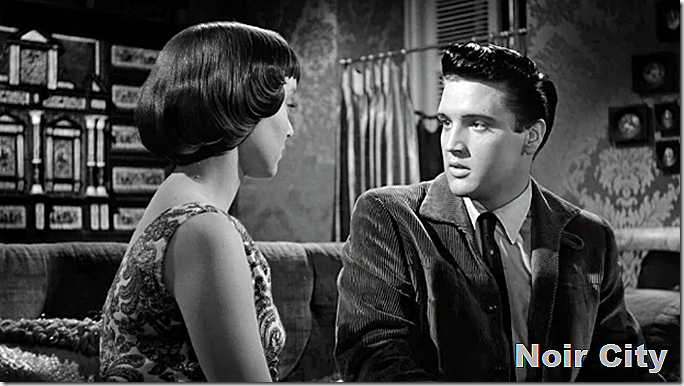
Carolyn Jones and Elvis Presley in King Creole (1958), Shown at Noir City Hollywood.
Great performances and intensity dominated the penultimate evening screenings. Elvis Presley gave arguably the best performance of his career as a headstrong, troubled singer determined to succeed in spite of his depressed father in the Michael Curtiz-directed “King Creole.” (1958) Evocatively shot and edited, Presley demonstrated a dramatic toughness little seen in his other screen or even stage performances, and offered a few hip thrusts in his musical performance as well. Curtiz drew fine performances from the full cast, including Paul Stewart, pre-nunnery Dolores Hart, mob boss Walter Matthau, and spirited Carolyn Jones.
Filling out the double feature was a second movie directed by the legendary Curtiz, the intense and energetic “Young Man with a Horn.”(1950) Inspired by the career of cornetist Bix Beiderbecke, the lush film stars an energetic Kirk Douglas as a supremely talented but overly arrogant jazzman who falls in love with jazz and singing his passion on his horn. Beautifully staged, the movie takes a strange but romantic turn at the end from out of left field. Music scenes are first rate, featuring such performers as Hoagy Carmichael and Harry James as the musical voice of Douglas. Performances are first rate, including a wistful Carmichael, bitchy Lauren Bacall, sympathetic Doris Day, and an expressive, touching Juano Hernandez. Though set around the mid-west, many locations around Los Angeles are easily discernible, as well as ones in New York City.
The concluding program heavily spotlighted the threatening hand of organized crime behind the scenes of nightclubs. Robert Altman’s “Kansas City” (1996) provides a dynamic cinema verite-style play off between rival 1930s jazz bands in a joyous celebration of renowned performers and riffs. Recreations are spot-on in costumes, cars, look, and even music, in a city overflowing with great period buildings. Timely in its depictions of corruption, political machines, and despair, the film contains fine performances from Harry Belafonte as the venal, intense “Seldom Seen” and Miranda Richardson in a sympathetic turn as a depressed, lonely politician’s wife.
Jack Webb shows more intensity as a director than he did as Joe Friday in “Dragnet” as director of the 1955 film “Pete Kelly’s Blues.” Shot in eye-popping Technicolor, the movie focuses on Webb’s steely-eyed, Prohibition-era bandleader who goes his own way in defiance of gang kingpin (Edmond O’Brien), blending mob violence and Prohibition-era jazz. Dynamic musical numbers and strong performances from the likes of O’Brien, Lee Marvin, Ella Fitzgerald, and Academy Award-nominated Peggy Lee highlight the production.
San Franciscan Nick Rossi and his jazz trio provided hot jazz and steamy blues pre-show and accompanied female vocalists before every program, setting the stage for drama and desire. Rossi and Muller delivered telling background and detail for music, musicians, and ghost performers before each program, a thoughtful touch. The rich music and detailed history strengthened the emotional pulse and flow of the festival.
The 26th Noir City Hollywood’s heady trip down lurid back alleys and byways provided a provocative examination and celebration of the sinister, shadowy world of noir and jazz.


