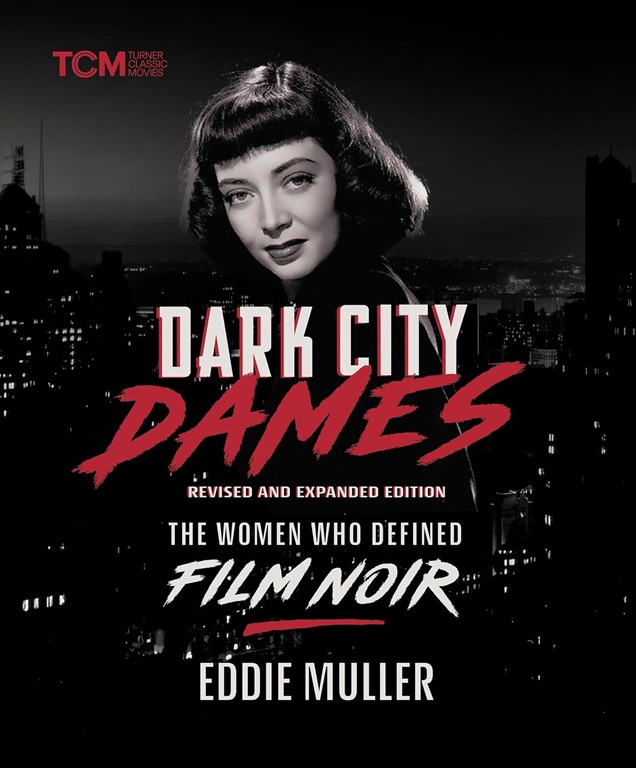
Eddie Muller’s Dark City Dames, available from Amazon.
Women have been integral to the history and creation of the American film industry. Their attendance at films by 1910 gave the fledgling business respectability, exploding its popularity. Female participation in its workforce allowed it to keep the production line flowing as women created new fields like casting and costume design, while remaining a potent force in each of its major creative professions. The popularity of women behind and in front of the camera turned moving pictures from middling studios into major factories.
Moviemaking attracted women for the same reasons it lured men: higher salaries, more creative possibilities, and especially leadership and power opportunities. Both sexes turned to the new field looking to support family, earn a living, find adventure. Over the decades, many determined, dramatic dames left their marks on moviemaking and acting, luring intrepid writers to tell their riveting stories. In the last few years, several biographies have documented the achievements and eccentricities of some of these accomplished women, who fought the system to bring dynamism and strong characters to the screen. Most of these females were more daring, dishy, and strong than the characters they sometimes portrayed onscreen, fighting the system and society mores to demonstrate true courage, smarts, and balls.
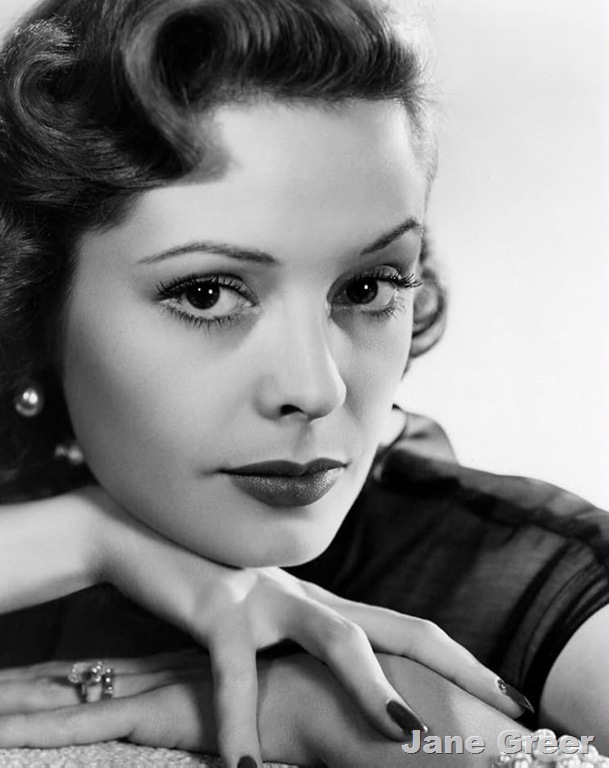
Jane Greer, featured in Dark City Dames.
Czar of noir Eddie Muller’s revised “Dark City Dames: The Women Who Defined Film Noir,” goes deeper and richer into the intimate lives of some of Hollywood’s greatest femme fatales, revealing how many of these noir grande dames battled typecasting, politics, and ruthless Hollywood studios to achieve hard fought wisdom and success and survival on their own terms. Their sizzling power and eroticism enticed shadowy men and exploded off screens, leading to what Muller calls, “Film noir is where Pollyanna went after payback, in spades.” Filled with delicious prose and hard won triumphs, the book gives these glamorous, gifted gals their place at the head of the table.
Muller focuses on the stories of six major film noir femmes – Jane Greer, Audrey Totter, Marie Windsor, Evelyn Keyes, Coleen Gray, and Ann Savage – and their triumph over Hollywood’s meat grinder culture. Each fighting their own battles with sordid Hollywood backroom deals, the industry’s overpowering focus on youthful sensuality, and studio infighting and sleaze, they also competed against each other for roles and attention during film noir’s heyday. Fifty years later, each woman recounted her amazing tale of survival and triumph, finally gaining the recognition and respect so richly deserved. Muller combines in-depth research with thorough interviews, providing a well-rounded journey through Hollywood’s dark byways and eerie shadows. These are truly in depth and insightful, at times oral history and others therapy, as the women dig deep into themselves to examine their frailties, strengths, and journeys.
He also provides thoughtful essays of some of noir’s other sizzling stars such as Ella Raines, Gail Russell, Claire Trevor, and Helen Walker, examining the strengths each brought to the screen and the sometimes depressing struggles they fought off it. Sadly, the passage of time prevented his interviewing many of these talented but deeply sensitive women. Glamorous portraits and eyecatching one-sheets add color and beauty to the printed page.
Professor Hilary A. Hallett’s upper class English writer Elinor Glyn waltzes into an energetic 1920s Hollywood, bringing it class and respectability along with her highly sensual stories, taking the town by storm, in her engrossing biography, “Inventing the It Girl: How Elinor Glyn Created the Modern Romance and Conquered Early Hollywood.” Creative and ambitious from a young age, Elinor Sutherland climbs into English society after marrying English gentleman Clayton Glyn, a dashing though inveterate gambler, who throws away the family fortune.
Looking for a way to support the family, she turns to writing scandalous roman a clefs, erotic tales of unhappily married women earning sexual education at the hands of younger lovers. Ostracized from British aristocracy, she takes the world by storm, becoming the world’s first social influencer and helps Hollywood invent the “It” girl. Accessible and deeply researched, this energetic tale shows a woman coming to life through her imagination and determination, ready to take on the world, a predecessor to noir’s quick thinking dames.
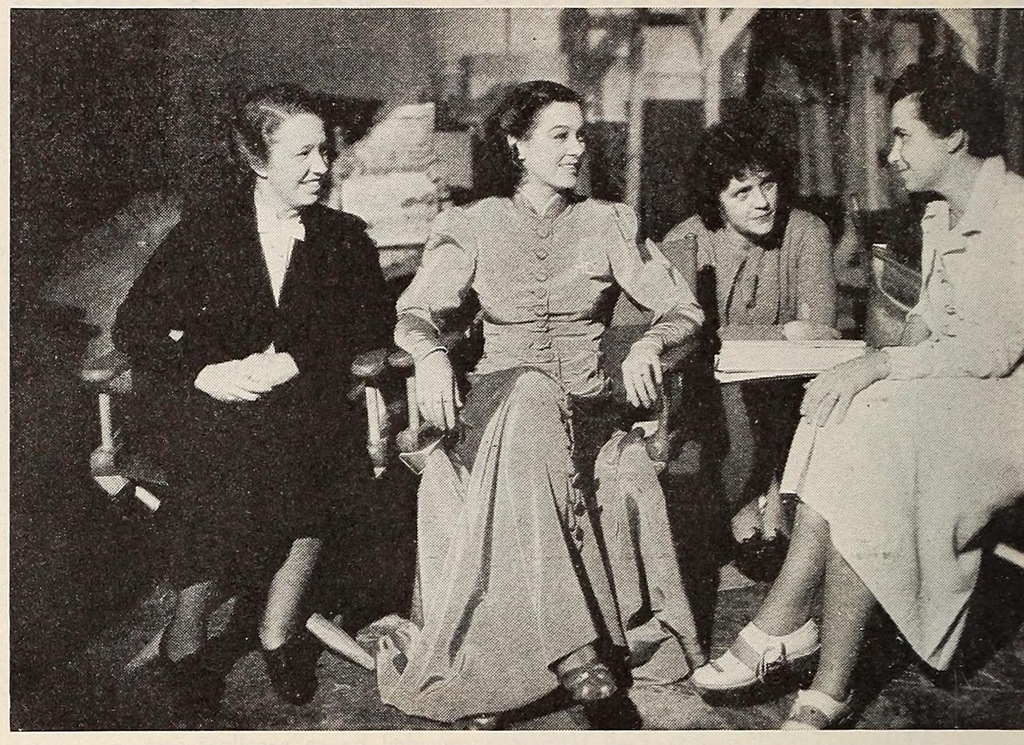
Mary C. McCall, third from left, with Viola Lawrence, left, Rosalind Russell, center, and director Dorothy Arzner.
Mostly forgotten today, screenwriter and first woman president of the Screen Writers Guild Mary C. McCall Jr. lived by her own rules and fought the system, earning the nickname “the meanest bitch in town.” As scrappy and ambitious as any femme fatale, McCall scripted the successful series of Maisie movies, about a brassy, take no prisoners showgirl who always gets her man. English professor J. E. Smyth does a fine job connecting past and present in her prescient biography, “Mary C. McCall Jr.: The Rise and Fall of Hollywood’s Most Powerful Screenwriter,” showing how McCall’s principled fight to reward labor, overcome sexism, and fight censorship and the blacklist still echoes today as women struggle to break through the glass ceiling and creatives pursue freedom of speech as the censorship curtain descends. Smyth successfully captures a smart woman whose sometimes pugnacious approach almost put her down for the count.
While she reintroduces Helen Gibson, a mostly forgotten female pioneer who served as Hollywood’s first trailblazing stuntwoman, Mallory O’Meara’s sarcastic prose in her new book, “Daughter of Daring: The Trick-Riding, Train-Leaping, Road-Racing Life of Helen Gibson, Hollywood’s First Stuntwoman,” threatens to turn her into haughty hipster, taking readers out of the story. She does demonstrate how talented, confident young women conquered Hollywood in the 1910s as they helped create an industry, but glosses over the story she claims to be telling, stating she found little information though plenty exists if you read between the lines and dig through journals and newspapers, as I found when writing my own book. Gibson’s life story and accomplishments deserve praise and respect rather than snark, which sadly seems the only attitude young people are supposed to have in this day and age.
Intelligent and talented women like the women documented above have often seen their stories forgotten or glossed over as they challenged society’s norms and elites. Their strength, fight, and courage to confront injustice are beacons of hope guiding the way, then and now. Without these daring, driven ladies pushing boundaries and outdated attitudes, the film industry and society itself would remain bland, stodgy, and formulaic, stuck in demeaning and despicable attitudes that threaten to erode freedom and creativity.

 ladailymirror.com