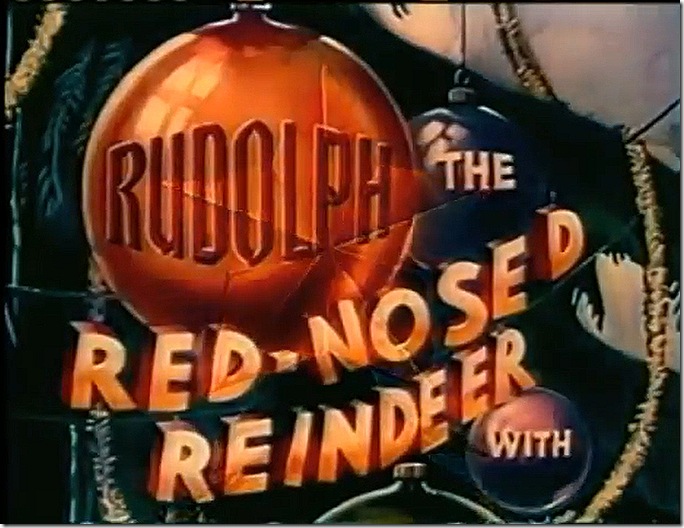
 The title of the Max Fleischer cartoon of Rudolph the Red-Nosed Reindeer (1948)
Many beloved Christmas-themed movies and songs bring out the holiday spirit in audiences and listeners, highlighting fun-filled, family and friendly times sharing generosity, kindness, and joy, the true gifts of a holiday supposed to honor the birth of baby Jesus. Several, instead, grew out of money-making, advertising opportunities for companies or even parades, like “Here Comes Santa Claus” from the Hollywood Christmas Parade, “How the Grinch Stole Christmas,” and even “Frosty the Snowman.” Another well-loved holiday song, “Rudolph the Red-Nosed Reindeer,” the story of “an ugly duckling who made good,” developed as advertising for Montgomery Ward reaching out to families and children in 1938.
While doing fine in the late 1930s, department store Montgomery Ward looked to amp up their Christmas shopping in 1939, hoping to increase sales by doing more than just their regular holiday booklet with something of higher value. They hired author Robert L. May to draft a child-sized fairy tale, one that became the story of an awkward, out-of-place reindeer and how he saves the day for Santa and Christmas. Thus, “Rudolph the Red-Nosed Reindeer” was born.
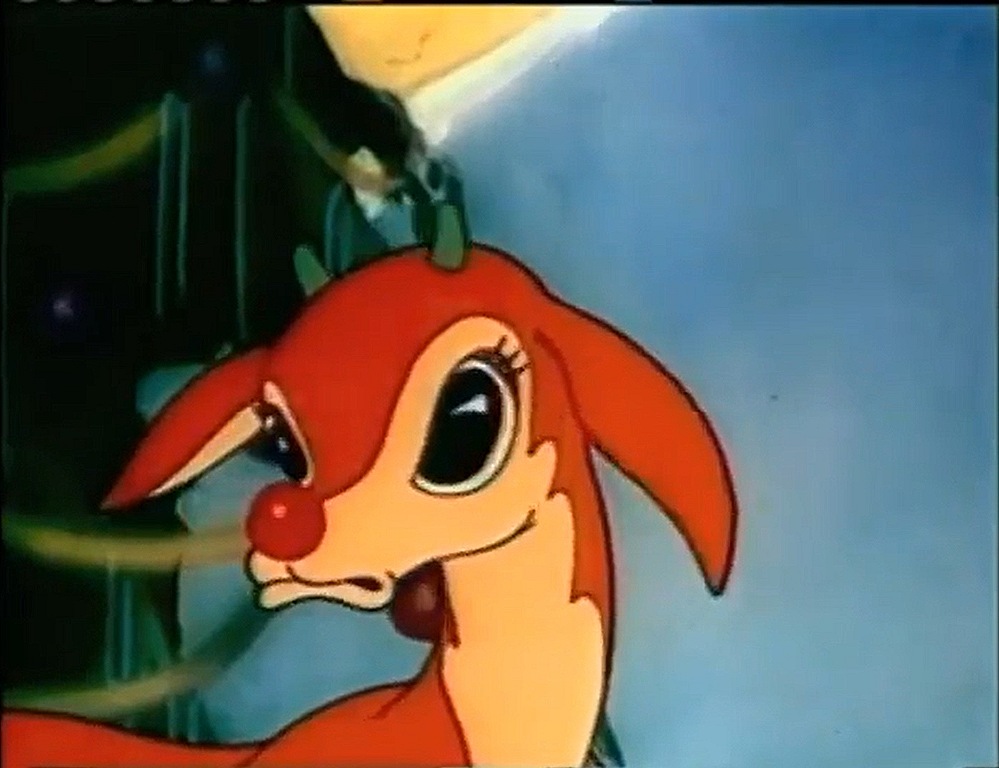
Rudolph in the 1948 Max Fleischer cartoon.
Montgomery Ward turned to copywriter May to write a children’s Christmas story about an animal, and in verse, thanks to his popular parodies of songs that enlivened work holiday parties. As the Albuquerque Journal reported in 1948, May decided to give him the red shiny nose to make him a freak, to be shunned by the other deer. “Children, being the little people of the world, would identify themselves with the underdog. With a happy ending, it would be a sure-fire formula.”
May ran into difficulties while trying to write the book, nursing his wife through a two-year bout with cancer before she died. Depressed and low on funds, the boss offered to turn it over to another employee, but the writer soldiered on. He composed verse at home and around his other duties at work, reading each finished part to his four-year-old daughter Barbara for approval. Upon completion, the company rushed printing to get it out for the holiday shopping season. They first sent sample copies to stores to buy at cost, and virtually every one jumped at the opportunity.
The massive conglomerate freely doled out the festive red-covered, 32-page books filled with colorful holiday illustrations to kids in its 620 retail stores and 185 catalog satellites in more than 800 towns across the country. Spokesman John A. Martin noted in 1939 that over 2 million books had been given out, featuring the catchy new song, a parody of “Twas the Night Before Christmas.” A story in the December 9, 1939 Hickory Daily Record claimed, “Teachers and psychologists are declared to be hailing it as the perfect Christmas book for children, with the result that many schools are requesting sufficient copies for their entire enrollment.”
Rudolph helped with the war effort during World War II before returning in 1946, when over 3.6 million copies were given away. Store chairman Sewell Avery awarded May copyright in 1947, and books went on sale, along with a musical version through Victor Rec. Soon, puzzles, toys, and clothing featured the story of the sweet little deer and his exploits, selling like hotcakes. By 1948, 24 Rudolph items appeared on store shelves, and performers like Perry Como narrated Rudolph’s tale on the radio show “Supper Club,” sponsored by Chesterfield cigarettes.
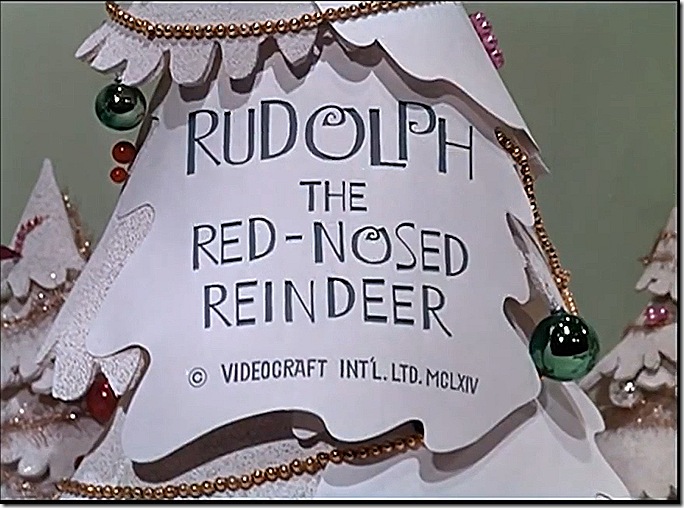
Rudolph the Red-Nosed Reindeer in the 1964 stop-motion animation with narration by Burl Ives.
Just like with the book, the immensely popular ditty of the same name richly rewarded its composer. Johnny Marks, a struggling composer, found pay dirt with his catchy song. A former Army captain and Phi Beta Kappa, Marks took inspiration from May’s sweet little book, remarking to the United Press in 1948 that “Until Rudolph came along, I wasn’t doing too well writing songs. Everybody took me to dinner but no one bought my work.” Things changed with his hummable melody, which he called “a perfect wedding of words and music.”
Marks recognized the song could explode in popularity just like the book. Instead of approaching a music publisher, he established his own company, St. Nicholas Music Publishing Company, to release the work in 1949. The Tin Pan Alley writer plugged it around to singers and distributors for months before sending copies to western crooner Gene Autry and Columbia Records, who sagely concluded it would dominate music charts.
At the end of the second week of the Christmas season, Autry’s version of “Rudolph the Red-Nosed Reindeer” had already sold more than 1 million records, supposedly hitting 10,000 to 15,000 a day by the end of the second week. Music industry analysts predicted over 2 million sales by January 1. Many expected the composer to earn about $85,000 during this time.
Thanks to the story and song’s popularity, a film cartoon short would be released in 1948 produced by Max Fleischer for the Jm Handy Corporation. before the creation of the popular 1964 stop motion animation TV show which aired on NBC. Little Rudolph continues making money for content creators today, be it in books, sequels, and products.
Though created totally as a way to lure potential customers into stores, “Rudolph the Red-Nosed Reindeer” continues to capture the hearts and emotions of audiences with its simple story of overcoming adversity, believing in yourself, and doing good for others while sharing your gifts. As we approach the Christmas holiday, may we all take to heart its’ message of generosity, goodness, and unselfishness.

 ladailymirror.com