
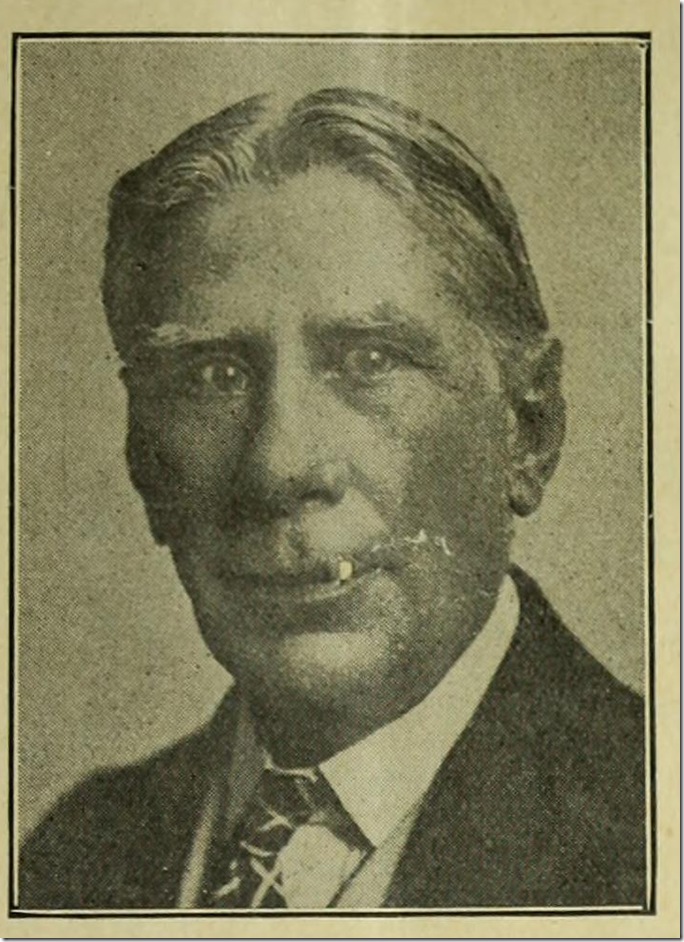
 Tote DuCrow in Camera, 1922.
The early decades of cinema brought many enterprising, colorful character actors to the screen, those looking and appearing real on film. Not as physically attractive or full of charisma, they brought striking personas and authenticity to their small but important parts. One such character actor, Tote Du Crow, endowed his small roles with dignity and grace, often playing Native Americans though not one in real life. Often misidentified as Native, the actor added gentle touches that brought honor and respect to his characters.
Little is known of the actor’s early life, as conflicting reports differ on his upbringing. Some stories claim he was born George Skyrock in Watsonville, California in 1858; a 1921 Boston newspaper states he was born as Du Crow, but the 1920 census reveals he was born in Barcelona, Spain to a Spanish father and French mother, with him listing himself in the record as Tote Du Crow. Other records show him brought to the US as a very small child. Perhaps he was raised as Skyrock in the United States, as the performer married actress Florence Ashbrooke in Pittsburgh, Pennsylvania in 1898 under that name after meeting her on the stage circuit. The San Francisco Daily Review also identified the jokester as Skyrock in a blurb mentioning his divorce from Ashbrooke.
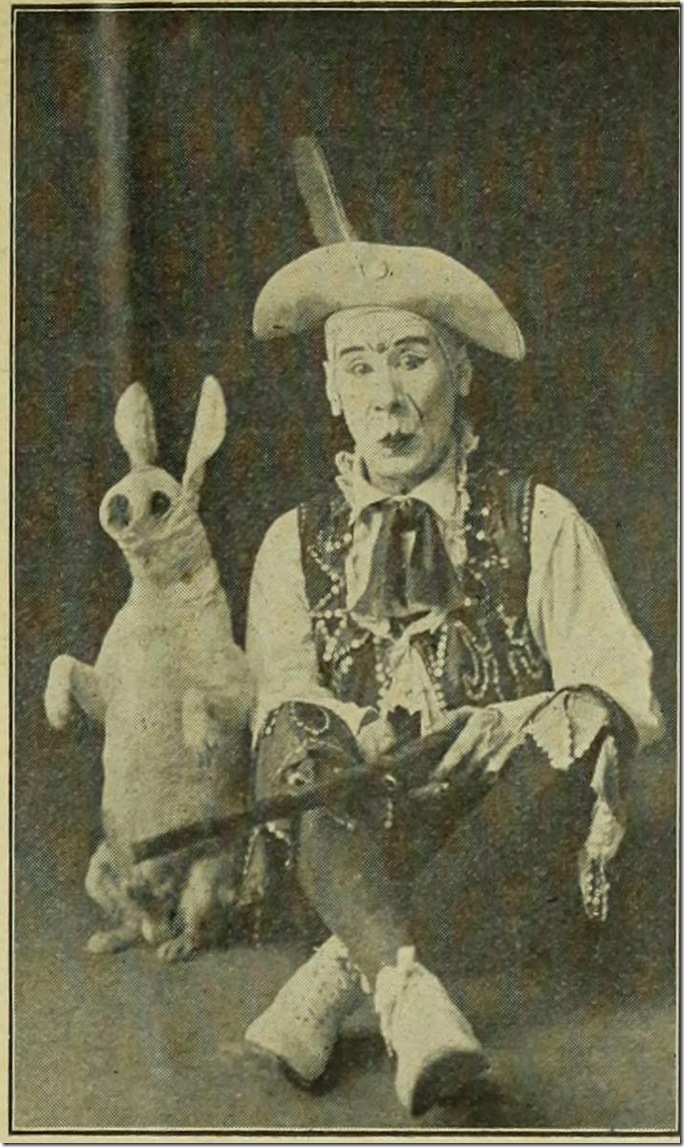
DuCrow with his trained dog Spot.
Early reports appear to show Du Crow first appearing onstage at age six and continuing as a contortionist and acrobat as a young man. One newspaper story after his death states he was born into a family of circus performers, with his father an acrobat and his mother a rider and trapeze performer. His younger brother Dan would also later join the family act. Du Crow began appearing onstage in various comic parts in musicals, operettas, and plays after he suffered injuries and became stiff after performances. He mostly acted onstage as Tote DuCrow, or variously DuCro before taking on the persona of Toto the Clown in touring circuses, with some publicity stating Spain as his place of birth. No story explains the use of the stage name “Tote DuCrow,” and what led to its use. By the early 1900s, various newspapers described him as the world famous Toto the Clown, with the Canon City Record calling him “the famous fun-maker.”
While working for the Norris and Rowe Circus in 1906, Du Crow and partner Billy Scott devised ingenious props like a breakaway trolley car and an automobile called “the Red Devil,” each of which appeared to run over the clowns before they jumped up and down on them and the cars exploded into separate parts. Inventive and industrious, the performer continually updated his act and persona, staying fresh and gaining new fans.
During an interview with the Oakland Tribune in 1912, he revealed the process of creating a character and the process of clowning. DuCrow stated, “It takes brains to play the part of a fool and and the hardest work in the world is to get a laugh out of people. Clowning is a science, just as medicine. It must be studied just as the ministry or law. Some people have have the idea that a grotesque makeup and a few silly actions will take you through. Well, not much. A clown has to work and work hard. He must be an originator, one quick to grasp a new point. Each act of a clown is a little act in itself. A sort of pantomime.”
The story also proclaimed he was the first to introduce Shakespearean clowning, devising puns for punchlines. DuCrow took his craft seriously, studying and practicing with teachers and performers, learning the important art of pantomiming as he went, unknowinglly preparing himself for filmmaking. Like a later employer, the larger than life Douglas Fairbanks, he recognized the importance of honing his skills, demonstrating physicality, and connecting with audiences. As a comic performer, Du Crow learned the value of an ironically arched eyebrow, split timing, and how to play off the energy of other performers.
The clown obviously enjoyed playing straight man, or second banana, as he mostly appeared opposite animals who would have stolen the show starting in 1907. He teamed with his dog “Spot” in a bit called “Hunting Rabbits,” with the dog wearing a bunny outfit, perhaps a model for later Elmer Fudd in Bugs Bunny. It took Spot six months to learn his role, with newspapers finding the skit hilarious. Papers called Du Crow one of the last “old school” clowns with his act, which he also produced.
DuCrow also actively practiced his faith while touring with the circus. While visiting Oxnard in 1912, the local paper noted he attended the local Catholic church, and devoutly attended services most weeks.
Not long after Spot’s death in 1915, Du Crow turned to movies. In the beginning, he mostly served in comic relief, usually in typically deadpan fashion as Native Americans or Hispanics, but occasionaly impersonating Asian characters as well. Perhaps due to his early career combining physical dexterity and comic timing, Du Crow found connection with human jumping bean Douglas Fairbanks, who would cast him in four of his films, including “The Thief of Bagdad,” as well as “The Mark of Zorro” and its sequel, “Don Q, Son of Zorro.” The actor gave one of his best performances in Fairbanks “The Mark of Zorro,” adding wry humor to his part as the understated, mute manservant Bernardo. According to the Valley Times in 1955, Fairbanks once praised him, stating, “He’s the funniest little man I ever saw, A Chaplin with a sombrero and a zarape.”
Playing Native American parts in comic films and westerns as well as his stage name perhaps led many to consider him Native American, as that mistaken assumption fills many current biographies of Du Crow. Listings for him in Motion Picture Directories state wide experience in stage, vaudeville, circus, and film work, and newspaper stories report his wide background in the circus. Trying to stay active in old age, Du Crow attempted to demonstrate his versatility and adaptability for the small parts in often landed in silent films.
Active and energetic to the end, Du Crow died in 1927, and was buried at Hollywood Forever Cemetery. Just three years later, his brother Dan died, leaving little trail of the family’s circus history. Du Crow himself remained virtually forgotten as a performer for decades, until some enterprising types began crafting small blurbs filled with misleading information on his life. Though not Native American in real life, he portrayed many such characters onscreen, lending a dash of honesty and gravitas to these parts. Tote Du Crow should be remembered for understated, finely crafted performances that subtly add character and color to stories.

 ladailymirror.com
Mary – what a wonderful in-depth dive into one of the many forgotten entertainers who gave so many people pleasure through their hard work and skill.
LikeLike