
In an age when most of the mainstream media shills for ratings, spectacle, and train wrecks, taking a look back at vintage films can often provide a sad window into how little history changes unless a determined, freedom-loving press like that which existed decades ago boldly acknowledges manipulative subversion and sedition when they see it. The 1943 B-movie “Power of the Press,” based on an original story by future legendary writer-director Sam Fuller, must decide how to confront fake news, isolationism, and win, as the country fought dictatorship and depravity in World War II, with timely echoes to today.
Like much of Fuller’s work, the film considers the role of the individual in overcoming adversity and treachery in fighting for freedom, conflicted if the fight is even worth it. Torn between cynicism and morality, the hero must weigh his independent values and the dream of an evenhanded society to overcome injustice and the threat of totalitarianism. While at this time Fuller mostly produced stories for B-unit films, he worked to introduce timely, hard hitting subjects into his work, giving viewers a kernel for thought in a swift 60-70 minute film.
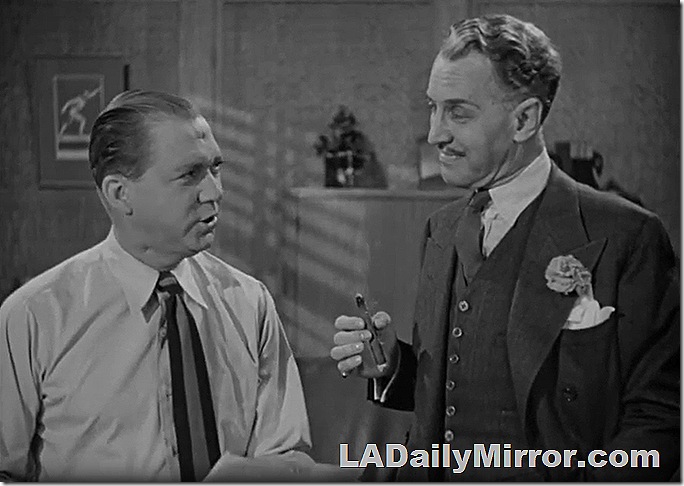
Lee Tracy, left, and Otto Kruger in “Power of the Press.”
Born August 12,1912 in Worcester, Massachusetts, Samuel Fuller dropped out of high school to become a New York City tabloid crime reporter, absorbing the pulp cadence and bold style of the genre. Once in Hollywood, his blunt, in-your-face stories and films echoed this often hard-hitting style.
The story of a small town newspaper publisher who inherits a half interest in the a large New York City paper, the 1943 film “Power of the Press” confronts how fake news, rabble rousing, and conspiracy can give rise to seditious activities regarding wartime security, and how the power of a strong, independent press to confront, challenge, and correct these lies gives rise to informed readers. The story can be summed up in character Edwina Stephens statement, “Freedom of the press means freedom to tell the truth. It doesn’t mean freedom to twist the truth.”
Fuller submitted his story to Columbia Pictures in August 1942 as he prepared for to join the 26th Regiment, Third Battalion, Company K, the Big Red One, shipping out to Algeria in November 1942. Delegated to B-unit director Lew Landers, the film employed second unit stalwarts like John Stumar as Cinematographer, Mel Thorson as editor, and Lionel Banks as production designer.
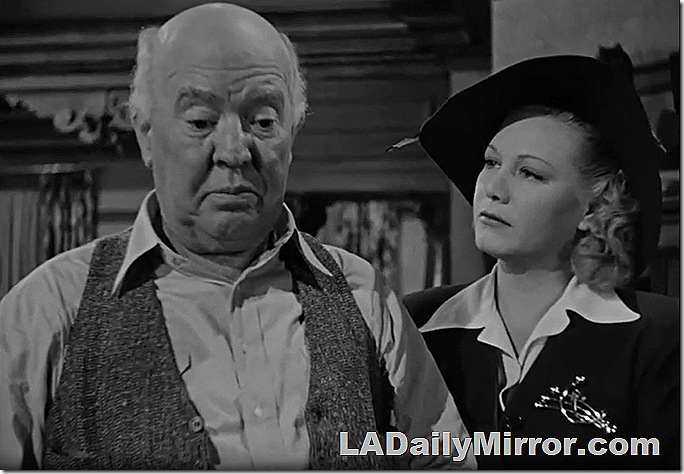
Guy Kibbee and Gloria Dickson in “Power of the Press.”
Beloved character actor Guy Kibbee landed the part of do-gooder newspaperman Ulysses Bradford, with intense leading man Lee Tracy cast in another of his cynical, tough-skinned newspaper editor roles as Griff Thompson. The studio employed urbane performer Otto Kruger as the slick snake in the grass Howard Rankin, and rising young actor Larry Parks earned the pivotal role of young employee Jerry Purvis. The production also endured casting indecisions, with tough actress Virginia Field originally cast as romantic interest before being replaced by the softer Gloria Dickson.
The studio rushed production, starting on September 16, 1942, and completing shooting October 1. Just three months later, it was released January 28, 1943.
In a day when the legitimate, mainstream press mostly played even handed and fair, offering insight and thoughtfulness, The New York Daily News found the film’s story unbelievable and ludicrous. Who would believe a tale of a newspaper publisher who failed at politics and “buys part interest in a newspaper to air his views and to influence the readers with his destructive criticism of the Government”? The Philadelphia Inquirer called it “foggy fiction… and even foggier propaganda,” for “Going all-out for freedom of the press to tell, not twist, the truth… .” Others like Harrison Reports found its subject “timely and interesting, and “performances..generally good.”
Many reviews praised the performances of Lee Tracy, the paper’s cynical managing editor, and Guy Kibbee, the new part owner trying to actually inform his readers. The Brooklyn Citizen described Tracy as offering “his usual dynamis (sic) self,” and Kibbee’s “honest and convincing performance.”
The movie played as the second half of double bills, thus seeing little publicity or promotion in local newspapers and magazines. It received mixed reviews from exhibitors, with some praising the patriotic nature of the quick film, while others described it attracting few paying customers.
While out on DVD and one of Fuller’s early screenwriting efforts, the timely “Power of the Press” has been mostly forgotten, only showing up occasionally at film festivals. It’s an intriguing movie to watch and consider today’s alternative fact media establishment.


