

Image: The Las Vegas Mob Experience.
Nancy Trejos of the Washington Post visits the Las Vegas Mob Experience, an interactive museum/theme park, (tickets $30) at the Tropicana.
As I bought my ticket, the young lady behind the counter said, in an accent I would have expected to hear in Queens, “Sign your lives away. If you’re whacked, it’s not my fault.”
The L.A. Daily Mirror and L.A. Crime Beat assembled with soft Corinthian leather by the bots at paper.li.
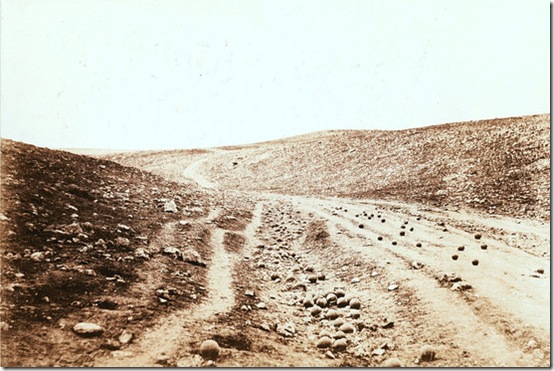
Image: With cannonballs. Credit: Gernsheim Collection, Harry Ransom Center, The University of Texas at Austin
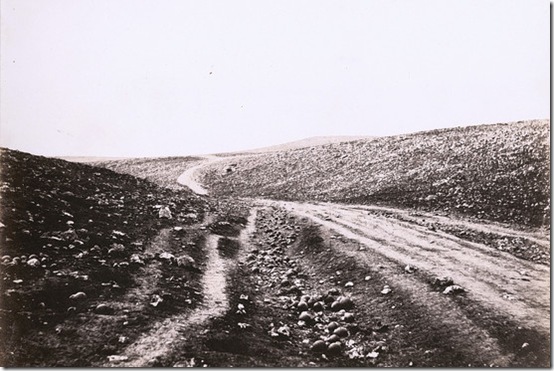
Image: Without cannonballs. Credit: Gernsheim Collection, Harry Ransom Center, The University of Texas at Austin
Writing in the Wall Street Journal, William Meyersreviews Errol Morris’ “Seeing Is Believing,” an inquiry into photographic truth.
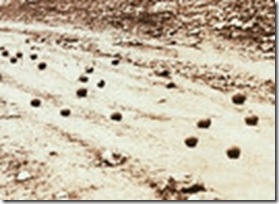
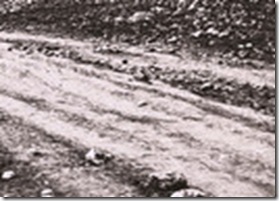
Among the photographs that Morris examines are two taken by Roger Fenton in 1855 during the Crimean War titled “The Valley of the Shadow of Death.” The photographs were taken from precisely the same position but one shows the road full of cannonballs and the other doesn’t. The question arises as to whether Fenton moved the cannonballs, and Morris argues with Susan Sontag’s unsubstantiated (tsk tsk) statement that Fenton “oversaw the scattering of the cannonballs on the road itself.”
 |
 |
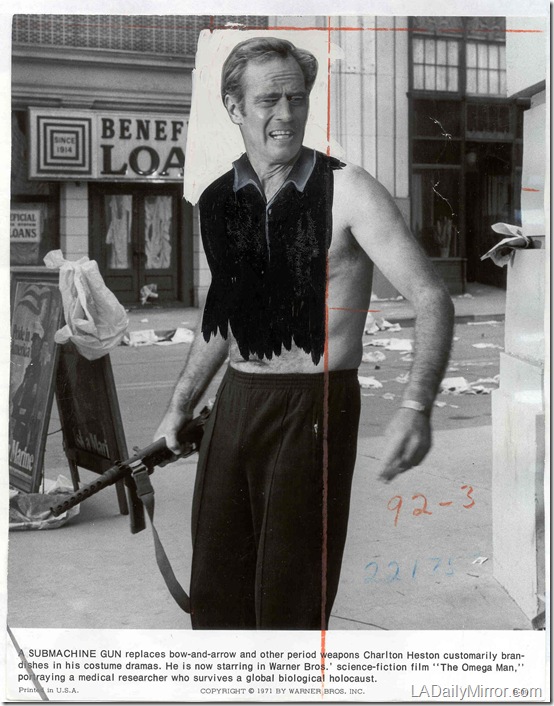
Maybe he just made two copies of a single photograph and painted over the cannonballs in one version. Of course, that never happens.

 ladailymirror.com