Model homes


Feb. 20, 1938
Los Angeles

1938_0220_westwood

Adjusted for inflation, the price on the first home ($18,750) is $268,116.31 USD 2007. Zillow lists it at $1.7 million. The last home ($28,800) is $411,826.66 USD 2007. Zillow lists it at $3.6 million. I guess this would be an appropriate time to mention deed restrictions. At this time, people of color were barred from owning or renting homes in many neighborhoods of the city. The legal battles over these restrictive covenants gathered momentum after World War II.

Email me

Posted in Uncategorized | Tagged , | 1 Comment

Raymond bombing


Feb. 20, 1938
Los Angeles


1938_0220

Yes, the AP actually wrote the above story and The Times actually published it. Below, one of the most backward sentences I have read in a long while: "Not guilty will be the plea of Earle Kynette, suspended acting captain of the police intelligence unit, indicted Friday on charges of attempted assassination in the bombing of Harry Raymond, private detective."   This reminds me of Wolcott Gibb’s satire of Time magazine’s writing: "Backward ran the sentences until reeled the mind. Where it will end, knows God." Prisoners give Kynette and his co-defendants a warm welcome at the jail … And heavy snow isolates residents of Lake Tahoe.

1938_0220_raymond

Email me

Continue reading →

Posted in Front Pages | Tagged , , , , | Comments Off on Raymond bombing

Feb. 20, 1908

1908_0220_buggy_2

1908_0220_lutoslawski

At top, notice that the buggy dealer was not too far from the auto painting shop. Above, czarist agents in Los Angeles? How cool is that? Reminds me of the Mexican revolutionaries who were arrested in 1907. (Note the arrest of socialists in the same clipping).  Below, a malicious valentine triggers a nasty dispute in the city’s French colony … Orpheum executives deny rumors that a new theater will be built at 5th and Main … And a rare gold coin takes the sting out of being arrested for going 70 mph.

1908_0220_cover


Email me


Posted in Front Pages | Tagged , , , , | Comments Off on Feb. 20, 1908

Matt Weinstock

Feb. 19, 1958

Matt_weinstockd_2
Popular music can be a fragile commodity. good tunes die at birth if
they don’t have popular appeal, whatever that is. Bad ones make the top
80 without a hitch if the right guy with a guitar sings them and the
disc jockeys play them every 20 minutes, in itself a suspicious
procedure.

Consider then the plight of Jerry Leshey of CBS-TV. He wrote a song,
"The Sands of Time." Teddy Wilson recorded a haunting, moody
interpretation of it. Johnny Desmond also made a record, as yet
unreleased. And tomorrow the tune will be heard as background music on
"Climax!"

But last Friday, Peter Potter served up Johnny Desmond’s platter of it
on "Juke Box Jury" and the panel sentenced it to be a "miss." The
consensus, voiced by panelist Steve Allen, was, "It’s too good to be a
hit."

NEXT DAY, Jerry was brooding around the house, wondering if the verdict would send his beloved brainchild to an inglorious death.


1958_0606_jukebox

Fred Hancock, a painter who was knocking out a small wall in the dining
room, noticed Jerry’s dispirited manner and asked what was the trouble.

"Juke Box Jury" said my song was too good to be a hit," moaned Jerry. "What do you do about that?"

Fred puffed on his cigar, asked, "Why don’t you worsen it up a little bit?"

1958_0228_jukebox
YOU’D BE
surprised
how many people believe the big freeze, the excessive rains and other
phenomena are the results of atomic explosions upsetting the balance of
nature. As one gal in a beauty parlor put it, "We better stop monkeying
around with things we don’t know anything about."

Me, I’m going to consult my friendly witchdoctor.

ONLY IN L.A.–A
couple of weeks ago the city desk got a flash that a man was pinned
under a streetcar at 7th and Broadway. Photog Delmar Watson and
reporter Jack Tobin rushed there but found no streetcar, only a truck
with a flat tire.

They asked the driver, who was working on the tire, what about the man
supposed to be trapped. "Oh that’s the fellow over there," he said,
pointing. "The jack wouldn’t work so he got under and tried to lift the
truck with his feet. I made him stop after the first try. I was afraid
my insurance wouldn’t cover it if he got hurt."

The husky young man came over and said, "The reason I couldn’t lift it
was that I couldn’t get leverage. I usually lift elephants."

The newsmen gave him a disdainful look that said, "That’s all, brother!" and departed, pictureless and storyless.

And then Saturday night, on Art Linkletter’s "People Are Funny," there was the guy. Elephant lifter Mark Evans, performing.

I DON’T HAVE NO papers
left, said Alfonso Cardenas, an A-11 at Belmont High, as he finished a
pile he’d been folding for Frances Hov, journalism teacher.

"You’ll never get into college if you talk like that," she said.

Alfonso nodded, then said, "I’m in a spot. If I talk like you want me
to, the kids wouldn’t understand me. If I talk my way the teachers
glare at me."

Come to think of it, you don’t hear anyone say, "It is I," any more.

FROM A Hollywood paper: "Police said the men, Bart James Blackburn, 22, and Ronnie David Rhonemus,
20, who sawed their way out of the jail Tuesday with a third man, were
driving a white 1957 Thunderbird." To which Gil Krause murmurs, "A
sharp character, no doubt."


AT RANDOM —
The news
story about the L.A. Dodgers opening spring training in Vero Beach,
Fla., Thursday reminded James K. Hyde of the old one about the
restaurant owner going out to lunch … Since being momentarily blinded
by the car ahead the other night, Herb Stinson has a new safety slogan,
"Please dim your taillights" … An obituary, in another paper, had an
ironic typo. Stated a deceased gentleman would "live" in state at a
certain funeral parlor … Death of Joe Frisco reminded Tom Mannix of
the time Joe stuttered to a friend, "I got a doctor who’s curing me of
betting on the horses." The friend said he never heard of such a thing
and asked where the doc was. "Oh, about six furlongs from here," said
Joe.


Posted in Columnists, Matt Weinstock | Tagged , | Comments Off on Matt Weinstock

Paul Coates

Paul_coates
Feb. 19, 1958

May 14, 1954–Three workers were critically burned in a foundry explosion at 1651 S. Compton Ave., Compton, late today.

The men, whose bodies were turned into flaming torches when a pot of
molten magnesium exploded, were rushed to Georgia Street Receiving
Hospital. Doctors offered little hope that any of the trio would live.

Witnesses reported that one of the victims, Cipriano Torres, 31, ran
from the foundry room, stripped off his flaming shirt and ran back into
the rain of liquid fire to rescue his foreman….

As doctors predicted, two of the three victims died within 10 days after the explosion.

But the third–with more than 70% of his body burned–defied all laws of fatality. He lived.

His name is Cipriano Torres. He was, on May 14, 1954, the man who ran
back into the spewing, burning liquid metal to carry his boss out of
the foundry.

I visited Cipirano Torres yesterday–to see how he was getting along. I
met his wife, Mildred, and his four children, Christine, 11; James, 9;
Linda, 8; and Robert, 7.

The kids had just come from school, but they looked more like they had
just dressed up for church. Even 7-year-old Robert, who was preoccupied
outside chasing his sisters with a dead mouse, looked immaculate.

I was surprised, because I had heard through a church organization that things weren’t too well with the Torres family.

As I talked with Torres, I learned that 29 months passed after the
accident before he left the hospital to rejoin his family. The first
seven of those months were a blank nightmare.

In the past year and a half, he said, he’s been back in the hospital seven or eight times for additional operations and grafts.

1958_0219_spanish_2
"But I’m improving all the time," he told me. "I can drive the car a
little now." With his good right arm, he pointed to the small patch of
lawn in front of the house. "I cut the lawn…."

Torres’ wife got a word in here. "To cut that little patch, it took him five hours and had him aching all over."

"But," she added, with unhidden pride, "he insisted on doing it."

There was some talk then about the kids, about friends who had done so
much, about the Rev. Arthur Herries of the Vermont Avenue Presbyterian
Church, who supplied the faith, and about matters more general.

Torres told me that he had done foundry work for eight years before the
accident. "It paid well," he said. "As a matter of fact, we had just
started looking for a home when the accident happened."

Then I asked him the rather personal question about his current financial status.

He confirmed what I had heard before. His compensation benefits of $35
a week were cut off a week before last Christmas, when he was
"officially" released from hospital care.

"About last August, I reached a point where I could start doing a few
things," he said. "So I took over in the house and my wife went to
work. She’d cook the meals before going. All I’d have to do was serve
them."

She was laid off once last fall and again six weeks ago.

"Do you have any income now?" I said.

Torres said that as a veteran, he received a small monthly pension from
the government for nonservice-connected disability. he was also drawing
$20 a week against a final insurance settlement for his disability.

"But with a little luck, I’ll be working again pretty soon," he told
me. "Pensions don’t buy the kind of things I want my kids to have."

He’s already been out, looking …

"But when I take a physical exam, they look at me like I was nuts."

Mrs. Torres broke into one of her frequent smiles about then. "They
said he wouldn’t live," she said. "But he did. They said he wouldn’t
walk. He’s walking. Now the say he can’t work, but I don’t believe
them."

Then a more sober thought changed her expression.

"One day at the hospital," she told me, "about a year after the
accident, one of the insurance representatives came up to me and told
me, ‘Frankly, Mrs. Torres, your husband would be a lot better off dead.’

"So I told him, ‘As far as you’re concerned, mister, maybe yes. But as
far as he’s concerned, and as far as I’m concerned, and as far as our
children are concerned, no, mister. No, never."

And this is the hero and his family today.
   

Posted in Columnists, Paul Coates | Tagged , | Comments Off on Paul Coates

Fidel!


May 24, 1959

1959_0524_fidel


Posted in Uncategorized | Tagged , , | Comments Off on Fidel!

Mass transit

1958_0216_merritt_bruce_h_cox02

Photograph by Bruce H. Cox / Los Angeles Times

I went down into the archives last night and pulled the original photo of Ralph P. Merritt, head of the Metropolitan Transit Authority, and our 1958 rapid transit plan. The map is labeled "Mass Rapid Transit Projection for Los Angeles Metropolitan Area."

1958_0216_map_detail

I made a large scan of the map so everyone can try to read it. The original isn’t terribly clear (after all, this photo was only a graphic element and never meant to be used as a map) so I’ll interpret the labeling:

This map is broken down into "Major Radial Service" and "Major Circumferal Service." In other words, the entire transportation plan is seen as a wheel with spokes radiating from a central hub, which is–as you might expect for 1958–downtown Los Angeles. The circumferal route describes the rim of the wheel and the radial routes constitute the spokes. This design, by the way, is how the origin and growth of the city’s streetcar system was described in 1923: Spokes of a wheel radiating from downtown Los Angeles. The only difference then was that the "wheel" had no rim.

The radial routes are:

1. Hollywood and the San Fernando Valley

2. Pasadena, Pomona, San Bernardino and Riverside

3. Fullerton, Santa Ana and Whittier

4. Long Beach and San Pedro

5. Santa Monica

The circumferal routes are:

A. Airport, Coliseum and Beach Cities

B. Burbank and Glendale

C. Lakewood and Santa Ana

D. Santa Ana and San Bernardino

E. Downtown Los Angeles / Central Transit System

F. Fullerton and Santa Ana

Comments, insights? Let me know. Surely there must be some transportation experts who’d like to venture an opinion.

Email me

Posted in Downtown, Transportation | Tagged , , | 2 Comments

Feb. 19, 1958

1958_0219_copier

1958_0219_cover

 Email me

Posted in Front Pages | Tagged , , , , | Comments Off on Feb. 19, 1958

Raymond bombing


Feb. 19, 1938
Los Angeles

1938_0219

Antisemitism in Austria … Earle Kynette is indicted in the Harry Raymond bombing … Unrest in the Mideast … On the jump, two men are executed at San Quentin in a double hanging.

1938_0219_raymond


Email me

Continue reading →

Posted in #courts, Downtown, Front Pages, LAPD, Politics | Tagged , , , | Comments Off on Raymond bombing

Feb. 19, 1908

1908_0219_paint

Plans for a rail route from the city limits at Sunset Boulevard to Griffith Park (remember, this is 1908) … A tourist is robbed … A domestic is hit by a streetcar … A "training school" in San Fernando is to get 10 boys and two girls … And a patient at County Hospital has a curious sleeping malady …

1908_0219_cover

Email me

Posted in Front Pages | Tagged | 1 Comment

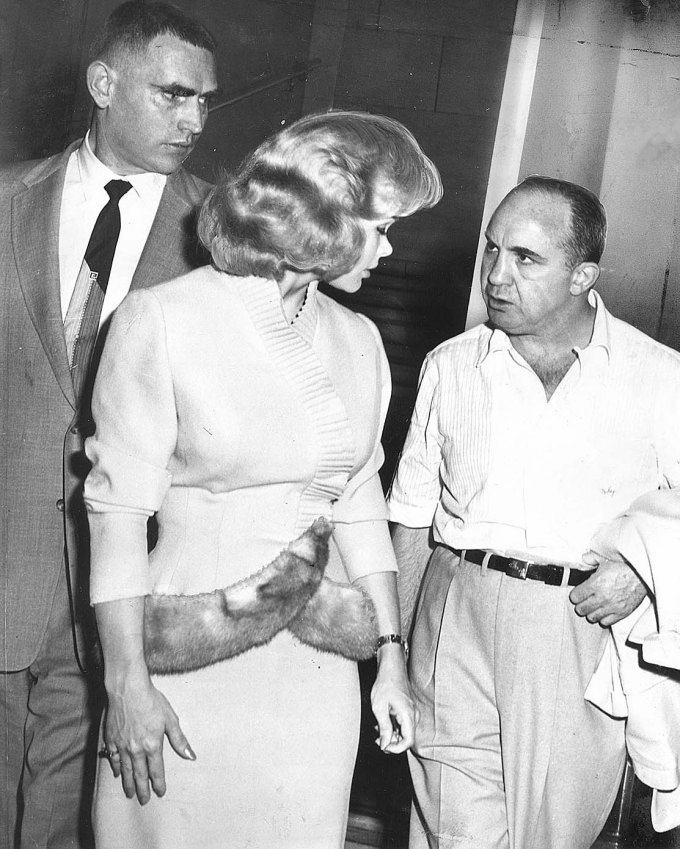
Mystery photo

Photograph by Fred Tschantre / Los Angeles Times

OK, who’s the blond with Mickey Cohen? (Hint: No, it’s not Walter O’Malley). Continue reading →

Posted in #courts, Mickey Cohen | Tagged | 5 Comments

Feb. 18, 1958

1958_0218_love_slave

Above, I’m a sucker for any story that has "love slave" in the headline. This was buried in the back pages of The Times for some reason … The Academy of Motion Picture Arts and Sciences announces the nominations for the 1958 Academy Awards … And Los Angeles is warned to prepare for a siege of smog. On the jump, more Academy Award information.

1958_0218_cover


Email me

Continue reading →

Posted in #courts, Film, Hollywood | Tagged , | Comments Off on Feb. 18, 1958

Raymond bombing


Feb. 18, 1938
Los Angeles

1938_0218_movie

Talk about a big news day … The grand jury, infuriated when most of the subpoenaed police officers refuse to testify in the Harry Raymond case, seizes intelligence files and discovers the unit was spying on prominent Los Angeles residents … Austria virtually surrenders to Hitler … An African American kills two officers serving an eviction notice … And a Tijuana firing squad executes a man for killing an 8-year-old girl. Even more goodies on the jump.

1938_0218_cover

Email me

Continue reading →

Posted in @news, City Hall, Downtown, Homicide, LAPD, Politics | Tagged , | Comments Off on Raymond bombing

February 18, 1908

February 18, 1908: Streetcar crashIn terms of quirky human drama, it’s hard to beat the early 20th century issues of The Times. Today we have two people who passed themselves off as someone else.

The first is the woman who claimed to be a famous author … the second is a man with delusions of great wealth … Also note that hundreds of men are at work laying streetcar tracks to the ocean so the city can welcome the Great White Fleet …

People are upset about an increase in phone rates from $5 ($109.94 USD 2007) a month to $7 ($153.91 USD 2007) for businesses and  $3 ($65.96 USD 2007) to $3.50 ($76.95 USD 2007) a month for residences … Finally, note the plan to improve the county’s roads. The paved highways will be 16 feet wide, The Times says.

Continue reading →

Posted in #courts, 1908, Front Pages, Transportation | 1 Comment

Mass transit


Feb. 17, 1958
Los Angeles

Here’s Part 2 of Ray Hebert’s look at the consolidation of Los Angeles’ mass-transportation system under the MTA. Note the photograph of the streetcar, No. 312, heading from 6th and Main to Bellflower.  As far as I can determine, this is a  "blimp"-style car, which means it was built about 1913, when Woodrow Wilson was president. By 1958, this streetcar was about 45 years old. Now tell me: Would you honestly want to depend on a 45-year-old car for daily transportation? Or a 45-year-old bus? Or a 45-year-old train? No matter how well-maintained it was? Let’s put it even more graphically: In an era when the U.S. and the Soviets were making their first successful space shots, people in Los Angeles were riding streetcars built 10 years after the Wright Bros.’ first flight at Kitty Hawk.


1958_0217_hebert01


Continue reading →

Posted in Transportation | Tagged , , | 4 Comments

Raymond bombing


Feb. 17, 1938
Los Angeles

1938_0217_baby

Los Angeles County, founded Feb. 18, 1850, prepares to celebrate its 88th anniversary … Irving Berlin’s daughter is out of the hospital … The City Council prepares to give the Navy 4 1/2 acres in Chavez Ravine that was once a smallpox hospital … Police complicity in the Harry Raymond bombing seems even more evident … On the jump, the city’s traffic engineer talks about his plan to ease congestion in downtown Los Angeles by removing most of the streetcar tracks. My, this certainly complicates our myth about the shadowy postwar conspiracy of bus companies and automobile manufacturers plotting to get rid of our sainted transportation system, doesn’t it?

1938_0217_raymond01_3

Continue reading →

Posted in #courts, City Hall, Downtown, Film, Front Pages, Hollywood, LAPD, Transportation | Comments Off on Raymond bombing

Feb. 17, 1908

1908_0217_bijou

1908_0217_streetcar


Email me

Posted in Downtown, Film, Religion, Sports, Transportation | Tagged , , , , | Comments Off on Feb. 17, 1908

Mass transit

1958_0216_elevated

Hey look, it’s the Gold Line pulling into Union Station! Oops, I’m about 50 years ahead of myself. Does this elevated train look familiar? Or maybe you remember this artist’s conception of an elevated train, below, from January 1907.


1907_0127_detail

And why would we need elevated trains in 1907? Because of the congestion. For example, this traffic jam on Main Street in January 1907. Now there are people in this world who don’t believe streetcars caused congestion in the early 1900s. I know, because I hear from them whenever I refer to our "sainted" transportation system. As difficult as it may be to accept in 2008, the people living in the early 1900s complained bitterly about the streetcars. In fact, the Los Angeles Times said the streetcars caused "a daily blockade on Main Street."


1907_0127_traffic

And no, the elevated trains didn’t get built in 1907 nor in 1958. We
just talked about them. Nor did we follow through on the plan to put
light rail down the middle of the Hollywood Freeway when it was being
built in 1947. Because one thing we like to do in Los Angeles is talk
about the terrible traffic. We talk about it, we study it, we draft
plans and then we put them on the shelf. The transportation plans that have
been performed for Los Angeles over the last century would fill a
library.


1958_0216_merritt

Yes, it’s another transportation map. Note the big loop circling downtown Los Angeles–obviously this never got built. I hope I can find the original as it’s a bit difficult to make out what they had in mind.


1958_0216_1923_map

Speaking of transportation plans that never got built, here’s one from 1923. Again, all roads lead to downtown Los Angeles. And in February 1958, Times reporter Ray Hebert took a look at the latest transportation plans being advocated by the MTA. By the late 1960s or early ’70s, everything would be running smoothly, he said.


1958_0216_hebert_clip

Click below to read Ray Hebert’s full story

Page 1:  Download 1958_0216_hebert1.jpg

Page 2:  Download 1958_0216_hebert2.jpg

Email me

Posted in Transportation | Tagged , , | Comments Off on Mass transit

Dream home

1958_0216_monterey

Honestly, if you’ve seen one 1950s suburban tract home you have seen them all–Everything shiny, new and safely banal with no more soul than an empty shoe box! Of course now they have mature landscaping and burglar bars. I wasted an hour going out to find a model home only to discover that it looked nothing like the drawing. So here’s the consolation prize. Note that this neighborhood (unlike Rigoletto Village) is close to downtown Los Angeles.

Email me

Posted in Uncategorized | Tagged , | Comments Off on Dream home

Feb. 16, 1968

1968_0216

Posted in @news | Tagged , | Comments Off on Feb. 16, 1968