Voices — Christine Collins, April 18, 1931


1931_0418_warden_01

Posted in #courts, Changeling, Film, Hollywood, LAPD | Comments Off on Voices — Christine Collins, April 18, 1931

Stolen statue returns


Miner_statue_02

Photograph by Ricardo DeAratanha / Los Angeles Times

The 1920s statue, shrouded in plastic, will be reinstalled at San Vicente Boulevard and McCarthy Vista.

The 6-foot bronze miner statue stolen
last February from the Carthay Circle area and later recovered from a
Los Angeles scrapyard is back on familiar ground, where it will be
fully installed in the next two weeks, city officials said today.

For decades, the gold miner stood in plain view at the busy
intersection of San Vicente Boulevard and McCarthy Vista. But sky-high
prices for such metals as bronze, brass and copper made the statue too
tempting a target to thieves.

Then
in February, thieves cut the miner free from its mooring to a boulder
and made off with the 512-pound sculpture, valued at $125,000.

Detectives with the Los Angeles Police Department’s art theft detail
tracked down the statue — which had been sliced in two — at a local
scrapyard, where it was purchased for $900.

Sebastian Espana, 22, and Jessie Hernandez, 23, were later arrested
on suspicion of grand theft  in connection with a string of thefts of
bronze statues and sculptures in the Wilshire area and in Beverly
Hills.

Each pleaded no contest to two counts of felony grand theft and were
sentenced in July to 16 months in state prison. They were also ordered
to pay $31,700 each in restitution.

Sculpted by Henry Lion in 1924 and 1925, the miner, along with a
fountain, commemorated 19th century settlers in California. Its
reinstallation, nearly a year in the making, is expected to take a week
to 10 days.

It was one of three public statues stolen over nine months in 2007
and 2008, including a 6-foot-tall, 4-foot-wide bronze sculpture taken
from its concrete stand in front of a business in Brea.

Authorities across the country say the high price of metals — which have since come back to earth — prompted the thefts.

Even then, police said, the art thieves ended up with pennies on the dollar for often irreplaceable works of art.

–Andrew Blankstein


Posted in art and artists, LAPD, Real Estate | Comments Off on Stolen statue returns

Stocks suffer worst day in 19 months; Rams rehire Allen, January 7, 1969

1969_0107_cover

A 15-point drop in the Dow is Page 1 news in 1969. I wonder what
they would think of today’s economic meltdown.

1969_0107_hilburn_2

Today in Baby Boomer nostalgia: Gordon Lightfoot makes
his debut in Los Angeles.


1969_0107_sports It took the Rams 12 days to decide they really didn’t want to fire Coach George Allen.

Owner Dan Reeves, who fired Allen over what he called a personality conflict, took it all back. Allen had been supported by many of his players, who held a news conference to claim they would retire if someone else was coaching the Rams. That’s an unusual step, but Reeves said he wasn’t swayed by unhappy players or fans.

The Times ran daily updates on the coaching search. As it became clear that Allen was still in the picture, the stories got a little strange. There was a planned meeting between the players and Reeves, there was a four-hour meeting between Allen and Reeves and there was speculation over Allen’s replacement. USC Coach John McKay and former Green Bay Coach Vince Lombardi were two names mentioned. Even when Allen was rehired, Reeves said two other coaches had been considered along with the former/current Ram coach.

On Jan. 5, Bob Oates wrote a thorough analysis of the problems between coach and owner: "Quite unintentionally, Allen has been destroying what Reeves built–and therefore what Reeves is."

Leave it to Jim Murray to capture the weirdness of it all. Here’s part of his column on the day after Allen was rehired/unfired.

"The announcement ceremony had all the warmth of the surrender signing on the battleship Missouri. The whole thing was as dignified as an axe murder. I have seen more smiles in a police lineup."

–Keith Thursby

Posted in @news, Columnists, Current Affairs, Front Pages, Music, Politics, Sports | 1 Comment

Found on EBay — 1945 Thomas Guide.

Thomas_guide_ebay_1945
A 1945 Thomas Bros. Guide has turned up on EBay. These vintage maps are always useful for people interested in Los Angeles history and there’s a motley collection of them at the Daily Mirror HQ. Bidding starts at $9.99.
Posted in books, Downtown, Freeways | Comments Off on Found on EBay — 1945 Thomas Guide.

Matt Weinstock — January 6, 1959


Law Is Upheld

Matt_weinstockd_2
A very upsetting ruling came down recently from Appellate Justice Paul Vallee.

Shocked
by the discovery that three men were held in jail for five days before
being arraigned, he stated in an opinion, "It appears the police are
permitted to flout, defy and violate the law they are sworn to uphold."

Asked for a ruling on Justice Vallee’s opinion, City Atty. Arnebergh
advised Chief Parker that prisoners must be arraigned within two days
after being arrested, to be taken before a magistrate without delay. It
also raises the question whether it’s legal to arrest a person on
"suspicion."

That hollow laughter you hear is from those who weren’t so lucky.

1959_0106_galaxie_2

LAST WEEK was
a nightmare of embarrassment and frustration for a lady in South
Bel-Air. Fourteen of her checks, mostly for household expenses,
including a $33 item for a supermarket were returned NSF by her bank.

She
couldn’t understand it. Neither her husband, who insisted he’d
deposited her allowance, as he does the first of every month. In fact
he hinted she’d overspent for Christmas.

Then he checked his stubs and found he’d absent-mindedly deposited her allowance into his account instead of hers.

Worst part was that the lady couldn’t explain the mistake to the stores. They were closed because of the strike and New Year’s.

Yesterday,
she timidly faced the world, sustained only by a rising anger. There is
a $1.50 charge for a check that bounces. Fourteen times $1.50 is $21.

* *

CRYSTAL BALL
You wonder how the world will be
In the year 2000, you say?
They’ll just be showing on TV
The movies they’re making today.
– MARTHA MANHEIM

* *

1958_1230_suicide
NOW THAT
the
experts have finished with theirs, I would like to nominate as the most
sobering story of 1958 the one about the woman who jumped off a
downtown building and struck a passerby, killing him, and pinpointing
the transience of life. It was the talk of year’s end parties.

* *

CAUGHT IN TRAFFIC
— A women motorist stopped mid-block in Pasadena to let a man cross
the street and he said. "Thank you, mam"  — the letters on her license
plate . . . KeithHomeiel of Whittier blinked when a Cadillac came by
with a little Nash Rambler on its tail. Then he saw the Rambler was a
pickup car, hitched to the Cad’s bumper . . . While waiting to enter a
drive-in theater Mrs. AHoft of Van Nuys heard a beautifully dressed
young lady alone in the car ahead tell the attendant, "I’ve been stood
up and I don’t want him to find me anywhere in case he changes his
mind!"

* *

AROUND TOWN — A panhandler on a
downtown street asked a phone girl named Dorothy for a nickel to buy a
sandwich and now that she has had time to think it over she wishes
she’d asked him where one can buy a sandwich for a nickel . . . The
metered postage imprint on envelopes from ABC-TV proclaims that this is
Rin Tin Tin’s 40th anniversary. Ah, life is just one big milestone after another.

* *

LOOSE ENDS
— No truth to the rumor that lady contestants on quiz shows are chosen
for their virtuosity as screamers. It just seems so . . . Everyone who
uses a typewriter should be happy about 1959. It’s easier to type than
1958. You can keep your finger on the nine . . . That sign on Highway
80 near ElCajon , "Dig this crazy road. It will be cool when Hazard’s
done," is a deliberate play on words, three subscribers advise. R. E.
Hazard of San Diego is the contractor . . . It’s only a matter of time,
Harry Cimring feels, until someone comes out with that Chihuahua cha cha, the Kamchatka cha cha and, inevitably, the Chattanooga Choo Choo cha cha. 

Posted in @news, Columnists, Matt Weinstock, Suicide | 1 Comment

Paul Coates — Confidential File, January 6, 1959


CONFIDENTIAL FILE

My Responsibilities as Your Reporter

Paul_coates_2Marie
Torre, a New York newspaper columnist, is sitting in prison today.
She’s paying a 10-day "debt to society" for refusing to divulge the
source of a news story.

And personally, I’m sorry to hear it.

Newspaper reporters aren’t special people. This, I’m realistic enough to admit.

But
I’ll never admit that the news we cover isn’t something special. And to
cover it right, we’ve got to have the trust of the people who give it
to us.

Maybe, to people outside the profession, this sounds like
a petty grievance — sour grapes from a body of working stiffs who got
their toes trampled by the courts.

I wish it were that simple.

But it’s not.

It’s true that any newspaperman, any newspaper, loves a solid expose on graft or vice.

It’s
also true that the material for a good 50% of these exposes comes from
confidential sources — from people whose jobs wouldn’t be worth an
inflated dime if it were discovered that they leaked information to the
press.

But most important is the fact that the newspaper
"expose" has been responsible for putting literally hundreds of crooks,
corrupt politicians, greedy cops and phony businessmen behind bars.

1959_0106_torre
I
don’t think I’m shooting high when I say half of these exposes would
have never been written if key informants hadn’t felt that they could
trust a reporter to protect their identities.

Read between the
lines of any major scandal broken by a newspaper, and it’s pretty
obvious that somebody inside the office of somebody big touched it off.

But the "expose" isn’t the only type of story where a newsman has to shield his source.

About
15 months ago, as an example, I had another kind of story. It involved
a group of men and women in this town who undoubtedly were breaking
some federal statutes.

They were members of the "26th
of July" movement, the Cuban rebel organization which was conducting a
powerful underground campaign throughout the United States to recruit
men, arms and money to support Fidel Castro’s fight against Dictator Fulgencio Batista.

To get this story, to meet and talk with them, I had to promise I wouldn’t reveal their identities to anyone.

No
sooner had my story of the activities here in L.A. been printed than a
pair of men from a U.S. federal agency dropped by my office wanting
names.

1959_0106_torre_02I explained my initial agreement with the rebel group. I said It would be impossible for me to reveal any names.

The two men apparently respected what I consider my responsibility as a reporter. Without pressing me further, they left.

This I Must Do

There
isn’t a day that goes by any more when I don’t promise at least one
news source to keep his name confidential. It’s a promise that I’ve got
to keep.

If the courts continue to chip away at our
"reporter’s rights," we’ll still find stories to cover. We’ll still
pull down our weekly paychecks.

It doesn’t take a genius to figure out who’ll be a loser in the long run.

As for Marie Torre’s being tossed in jail to defend our principle, I’m sorry to see it happen to a lady.

But, come to think of it, that’s no lady.

That’s just a damn good newspaperman.


Posted in @news, Columnists, Paul Coates, Politics, Transportation | Comments Off on Paul Coates — Confidential File, January 6, 1959

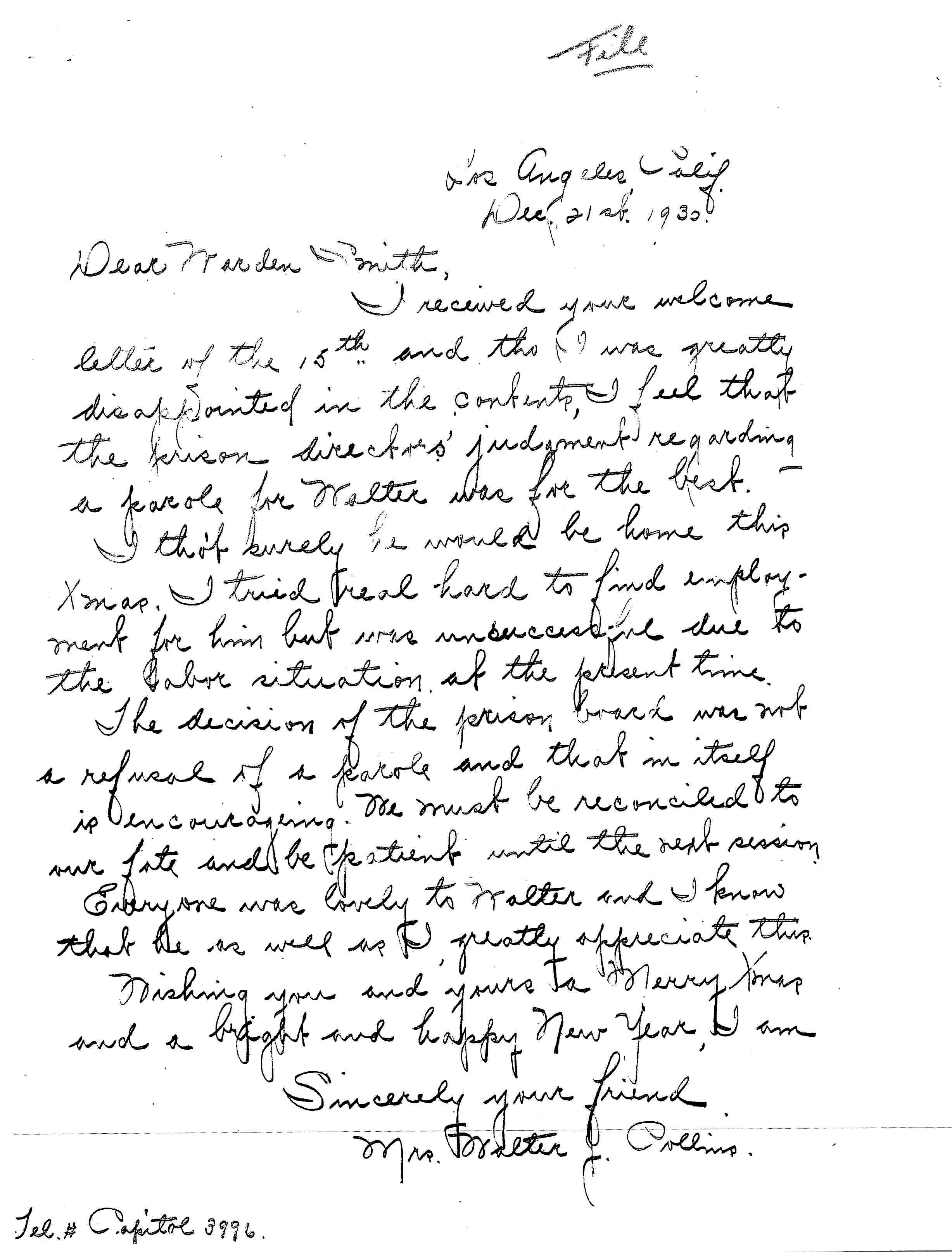
December 21, 1930: Voices — Christine Collins

December 21, 1930: Christine Collins writes to the warden regarding the denial of parole for Walter Collins

Posted in #courts, Changeling, Film, Hollywood, LAPD | Comments Off on December 21, 1930: Voices — Christine Collins

Errol Flynn wounded in Cuba; Gehrig’s widow praises Ted Williams, January 6, 1959


1959_0106_cover

California gets its second Democratic governor since 1900, Pat Brown. Errol Flynn
is wounded in Cuba. He says he was hit by a bullet or a piece of masonry that ricocheted but Cuban officials are a bit skeptical.

[Look what’s on the sports page: A Glen Binford byline! Binford predates me at The Times, but as a line editor in the 1970s, back in the days of Bob "The Basher" Harlow, he figured prominently in something known within the paper as the Metro Desk Diaries. –lrh].


1959_0106_sports
Ted Williams received high praise from the widow of baseball’s tragic star, Lou Gehrig.

Eleanor Gehrig talked with The Times’ Jeane Hoffman while in Los
Angeles as part of her work with the Muscular Dystrophy Assn. She
recalled asking Williams for permission to use his name in their
campaign.

"He wired back both his permission and a large financial donation.
People can say what they want about his personality, I have found him a
great gentleman and I consider him one of baseball’s two or three
all-time greats," she said. "He is poetry in motion."

It had been only 20 years since Gehrig’s illness forced him to retire in 1939. He died in 1941.

–Keith Thursby

Posted in Film, Front Pages, Hollywood, Politics, Sports | 1 Comment

Matt Weinstock — January 5, 1959


Men of Good Will

Matt_weinstockd
As the chill of dusk settled over 2nd and Spring streets Newsboy Bill Franklin noticed his helper, Juan Jiminez, 10, was shivering. Juan sells papers for him after school.

"You’ll freeze in that T-shirt," Bill said. "Why didn’t you bring a sweater or jacket?"

Juan said he didn’t have one.

As
if a good fairy had been listening, one of Bill’s customers, a real
estate appraiser in the Wilcox Building named Sparks, a few minutes
later handed him a $5 bill as a belated Christmas gift.  "Sorry I
didn’t get it to you sooner," he apologized.

BILL WENT to
the Bargain Store at 210 S. Hill St., a little place, and asked for a
jacket that would fit a 10-year-old boy — cheap. The owner, who
handles mostly used adult stuff, managed to find one. When Bill
explained the circumstances he refused to take any money.

1959_0105_wife
As Bill passed the Civic Cleaning shop at 318 W. 2nd
St., Milt, the owner said, "Let me have it; and I’ll make it look like
new." He cleaned and blocked it and put it on a hanger. No charge.

Things get a little sordid sometimes around 2nd and Spring but Bill and Juan think people are pretty wonderful.

* *

A COPY OF Think,
the IBM magazine, has come my way and I’ve been reading it with
interest. So far I have detected no noticeable result. To put it
another way, it is too soon to decide whether it’s true that you can
lead a man to a magazine but you cannot make him think. But watch out!
I’ve got a year’s subscription.

* *

HANDYMAN
Nothing can fill the bill
For a typical Jill
When her car’s out of whack
Like a typical jack

— Joseph P. Krengel

1959_0105_flag_3

"One
of my big resolves for the new year," a man named Everett writes, "is
to make better use of my time and get some reading done. This means
throwing off the hypnotic spell of the cyclops in the living room, no
easy task. Nevertheless, I can report progress. The first night I was
able by sheer grim will power to deny myself the late late show, which,
by pure chance, I’d already seen.

"My hopes are high."

Strictly from Pixieville, that Everett.

* *

IT ISN’T
generally known that Joe Hernandez, who has called every race at Santa
Anita — more than 8,700 — since the track opened in 1934, also owns
some horses.

They race in his name and their silks are scarlet
and silver, his old junior high school’s colors. One is named Lock Out,
another Lahore, which Joe pronounces La-hor-ray.

Joe never falters at a pronunciation. However, there’s a horse named Damat on the grounds and the betting is that when it runs Joe will accent the second syllable.

* *

A BEVERLY GLEN
resident asks a typographical posy in behalf of himself and his
evacuated neighbors for the unknown firemen who saved their homes. "It
was like a dream to come back the next morning and find it still
there," he said. He was particularly touched to discover that a fireman
had helped himself to a can of beer, nothing else, from his
refrigerator — and left a quarter.

Posted in Columnists, Downtown, Matt Weinstock | 2 Comments

Paul Coates — Confidential File, January 5, 1959

CONFIDENTIAL FILE

Cheer Up; Desmond Is Home, Vaguely

Desmond Slattery has returned.

Paul_coatesHe’s back. Here in Hollywood.

And I’ll bet you didn’t even know he was gone.

Well, he was. Obviously. And the reason I happened to know he’s back is because he hustled straight for my office.

Right off, he told me, "I’ve got another exclusive for you, Coates."

It has been Desmond’s custom for the past half-dozen years to bring me one story a year. He’s trustworthy. He never leaks them out to Hedda Hopper or Louella.

And he’s consistent, too. In the past, his stories have always pertained to the activities of the same Desmond Slattery.

One year, it was his scheme to promote a safe and sane Fourth of July celebration by importing 10,000 fireflies from Texas to replace firecrackers.

1959_0105_radio_free_europeAnother year, it was about his organizing a "Cricket on Every Hearth" campaign after he had cornered the cricket market.

Always, Desmond made pretty exciting copy.

Except last year, when he tipped me off about his impending safari to Central America on what he described as "monkey business."

He promised me that he was going to round up dozens of midget Central American Monkeys, bring them to my office on his return and — in front of my very eyes — stuff them all into a big barrel.

"We’ll prove," he promised, "once and for all, just how much fun are a barrelful of monkeys."

Desmond did make the trip, but he came back without even one monkey.

Thus, my cautious greeting to the man when he showed up in my office again a few days ago.

"Slattery," I said coldly, "if this year’s story concerns you, leave."

Slattery shook his head slowly.

"This story," he answers, "concerns anteaters.

"And," he added, "ants."

Opening his briefcase, he extracted a pair of warn copies of True and Life magazines and spread them out before me. He showed me articles in each that warned of the fire-ant menace in the South.

"These little insects have already done 20 billion dollars in damage to agriculture," he said. "They’re natives of South America but somehow found their way to Alabama. Now they’ve spread through the South and are taking dead aim on the wheat fields of Kansas.

1959_0105_smog "Last year Congress allocated $2.5 million to invent an insecticide that’ll wipe those devils out," Slattery went on. "But there’s a patriotic private enterprise organization which plans to do the same thing — destroy the ants — at a fraction of the cost."

"What organization, Slattery?"

"This organization," he explained, "will go to South America next April and stage ‘The First Annual Pan-American Anteater Round-Up.’ It will return with anteaters who specialize in eating fire ants, and then rent the animals out to distressed farmers."

Slattery Reveals Identity

"This organization, Slattery?" I questioned, "Are you a member?"

"The man who heads this humanitarian group could well go down as one of modern America’s great heroes," he replied.

"Desmond," I pressed, "is that man you?"

Slattery leaned across my typewriter. "I’ll level with you, Coates," he whispered. "The whole dedicated, loyal outfit is me.

"But please — it’s the least I can do for this," he added softly. "So keep my name out of it."

And believe me, if I could figure out how to, I would.

Posted in @news, broadcasting, Columnists, Environment, Paul Coates | 1 Comment

Voices — Christine Collins, November 1, 1930

1930_1101_christine_collins01_01
Los Angeles, Calif.
November 1, 1930

Dear Mr. Neumiller

1930_1101_christine_collins02_01 I am taking the liberty of writing you a personal letter which I sincerely hope you will give consideration.

I am again pleading for a parole for my husband, Walter J. Collins, imprisoned at Reprisa, Calif. I understand that he is eligible for parole very soon and I hope you and the other members of the prison board will grant him a release.

Mr. Collins is a good man as you know by his good record and behavior while imprisoned. I am not at all well and as yet not able to take a position. If Mr. Collins were paroled he would certainly take care of me.

We are trying to get a position for him so as he may have employment in the event you see fit to grant him a parole.

I wanted to see you personally while staying in San Francisco after my visit to San Quentin where I went to question Gordon Northcott regarding my little son. I was a guest at Warden Holohan’s home for three days. He is a lovely man and both he and his lovely daughter, Josephine, treated me wonderfully. I never shall forget their hospitality.

While there, the warden informed me that you were ill with a heavy cold and I was very sorry to hear it. I felt that I didn’t want to intrude at this time so consequently returned to Los Angeles without seeing you. I trust that you’re over that cold and well on the road to recovery.

I attended an entertainment given by the Knights of Pythias last Wednesday evening in honor of their annual role call. I met some very nice people, who, of course, were brother knights and when I informed them that my father had been a K.P. for 35 years they became interested. I learned thru the committee chairman that Warden Holohan also was a member of the Knights of Pythias. My father went thru every branch of his (my father) lodge and was a grand chancellor in his last days.

If Mr. Collins is permitted I want him to join that order and make something out of himself.

I felt that I wanted to write to you Mr. Neumiller so please do not regard this an imposition.

Hoping this finds you well and in the best of health, I am,

Very sincerely,

Mrs. Walter J. Collins
2614 N. Griffin Ave.,
Los Angeles, Calif.

Posted in #courts, Changeling, Film, Hollywood, LAPD | Comments Off on Voices — Christine Collins, November 1, 1930

Parolee sought in killing of studio executive, January 1959

1959_0101_savoy_2

1959_0121_lichtenwalter George Albert Scott and Curtis C. Lichtenwalter were leaving the In Between Cafe, 5414 Melrose, with $400 and a sawed-off shotgun about midnight Dec. 30, 1958, when they encountered Kenneth S. Savoy, 35, on his way into the bar.

"Just a minute, mister," Scott said. "Give me your wallet."

Savoy, an executive at Samuel Goldwyn Studios, said: "I’m single and have no responsibilities — no one will miss me. If you want my wallet, you will have to shoot me first."

In reply, Scott pulled the trigger.

Scott and his partner ran for the car, where Jessie Mae Noah, 27, of Long Beach was waiting. "I just went along for kicks," she told homicide detectives.

Lichtenwalter took the wheel as Scott jumped into the car, saying: "Take off. I had to use this. I shot a man in the stomach." The three of them went bar-hopping in Long Beach before splitting up.

It was supposed to have been easy money, Lichtenwalter said. Lichtenwalter, who had no police record, told investigators he had come to Los Angeles from Chicago in 1958 and met Scott, a 36-year-old parolee, through a co-worker. When Lichtenwalter got laid off, Scott suggested they pull some robberies.

"I don’t know why I did such a crazy thing but after I once started, the die was cast," Lichtenwalter, 41, said. 

The partners robbed six Los Angeles bars between Dec. 16 and Dec. 30, 1958, according to court records. After the killing, Lichtenwalter told Scott he was through, so Scott went by himself to rob two more bars on Jan. 7, 1959, before leaving town.

Scott was identified through a police sketch. After his photo was published in newspapers, Noah surrendered to Long Beach police and investigators arrested Lichtenwalter at a Compton hotel.

1959_0126_scott State police, sheriff’s deputies and FBI agents cornered Scott at a tourist court in Texarkana, Ark., where he had registered with Barbara White, a former women’s wrestling champion. Authorities cleared the rest of the guests, then called Scott’s room and ordered him to surrender.

When he hung up on police, officers fired 12 tear-gas shells into the cabin, along with 10 rounds of buckshot and "numerous bursts of machine gun fire," The Times said. Although neither Scott nor White was injured, "gunfire literally blew apart the front of the cabin," The Times said.

Scott and Lichtenwalter were tried on six counts of robbery and one count of first-degree murder. Lichtenwalter was found not guilty of murder but convicted on the robbery charges and sentenced to prison.

Scott was convicted of first-degree murder and sentenced to the gas chamber. During a sanity hearing after his sentencing, Scott slashed his throat with a double-edged razor he had hidden in his mouth. It took 16 stitches to close the wounds.

In the summer of 1960, he staged a hunger strike because his wife hadn’t written to him, and his attorney filed an appeal with the California Supreme Court because Scott’s mother had been hospitalized for drug addiction and emaciation.

The state high court rejected Scott’s plea, and he was executed in the California gas chamber on Sept. 7, 1960. No further record can be found of Curtis C. Lichtenwalter.  Update: Regular Daily Mirror reader Dick Morris tells me that a man named Curtis C. Lichtenwalter died July 13, 1993, in Dade County, Fla., at the age of 74. 

Posted in #courts, Film, Hollywood, Homicide, LAPD, Robberies | 2 Comments

Our new favorite thing

Double_indemnity_script
Black_dahlia_script Here’s one of our new favorite things: The Daily Script. Above, a page from "Double Indemnity" and — for contrast — the opening of Josh Friedman’s "The Black Dahlia."

Note that "Double Indemnity" has been retyped and put into modern script format, although the wording appears to be unchanged. The actual script is formatted this way:

PHYLLIS: I love you, Walter.

NEFF: I love you, baby.

Posted in books, Film, Hollywood, Homicide, LAPD | 1 Comment

Voices — Christine Collins, November 24, 1930


1930_1124_christine_collins01_01

Los Angeles, Calif.
Nov. 24th, 1930

Dear Mr. Smith,

1930_1124_christine_collins02_01
I
wanted to write to you sooner and thank you for your kindness toward
both Walter and myself but I have been very busy so please excuse the
delay this time. I have not been very well lately, which I guess is
another excuse for not writing. I am in bed several days at a time due
to my wrecked nerves.

I wanted to see you when I visited the
prison recently but I realized you were very busy at the time so did
not want to disturb you. Beside, I was very tired and nervous from my
trip to San Quentin, where I interviewed that awful person who was
hanged while I was there.

The warden there was lovely to me
too and extended such wonderful hospitality while a guest at his home.
I have met two lovely wardens and was wondering if they all were as
kind.

I had occasion to be at the Knights of Pythias hall after
a lodge meeting one evening in regard to the members considering their
signatures to a parole for Walter. I was informed beforehand that I
probably would be asked to speak in his behalf [illegible] members of
the lodge but when I arrived it seemed all the knights were present.

I
asked the chancellor commander to speak for me which he very kindly
did. He stated that as an appeal from a daughter of a knight (now
deceased) I asked that they consider a parole for my husband so as he
(Mr. Collins) may support and take care of me. I just couldn’t talk, it
seems, before a large body of strange me; some were acquaintances.

As
I was leaving I turned around and said, "I want to thank you all for
your kind attention." They all applauded. I am still wondering if it
were for the "speech" I made or for the recovery of my tongue.

Mr. Borton
told me that you wrote him a very nice letter which he will present at
the next lodge meeting. I want to thank you for this and also for your
answer to the K.P. members’ letter which Walter said you answered.

I
have tried real hard to secure employment for Walter but due to the
distressed conditions of the employment situation it seems impossible.
I am worrying what to do next.

Mr. Smith, if possible, in the
event Walter is given a parole I wish this would not be made public as
I believe Walter would stand a better chance for a new start. As a
favor will you please have his parole kept from the press?

Thanking you for your consideration and time and kindness toward us, I remain,

Sincerely your friend,

Mrs. Walter J. Collins
2416 N. Griffin Ave.


Posted in #courts, Changeling, Film, Hollywood, LAPD | Comments Off on Voices — Christine Collins, November 24, 1930

Grocery store of tomorrow, January 4, 1959

1959_0104_grocermat
Hey, look! It's the 7-Eleven from "The Jetsons!" Actually, it's not. Instead,
The Times published an artist's concept of grocery shopping in the years ahead. The "futurism" of the past always fascinates me. Notice that cars will still have tail fins.   
1959_0104_ads
In the 1950s, Westerns such as "Gunsmoke," above, filled the airwaves and men like Bob Bowman, below, brought quick-draw contests to real life.

1959_0104_bowman


You won't see stories about African Americans in The Times or the other mainstream newspapers of the 1950s, but you can find them and other minorities in the classified ads.

1959_0104_sfv
A typical San Fernando Valley page: One feature with lots of art, surrounded by government stories.
1959_0104_sports
Football coach Earl "Curly" Lambeau says the split-T offense is dead. He also thinks college ball should put the goal posts back on the goal line!   
Posted in 1959, @news, broadcasting, Film, Food and Drink, Front Pages, Hollywood, Politics, San Fernando Valley, Sports, Television | 1 Comment

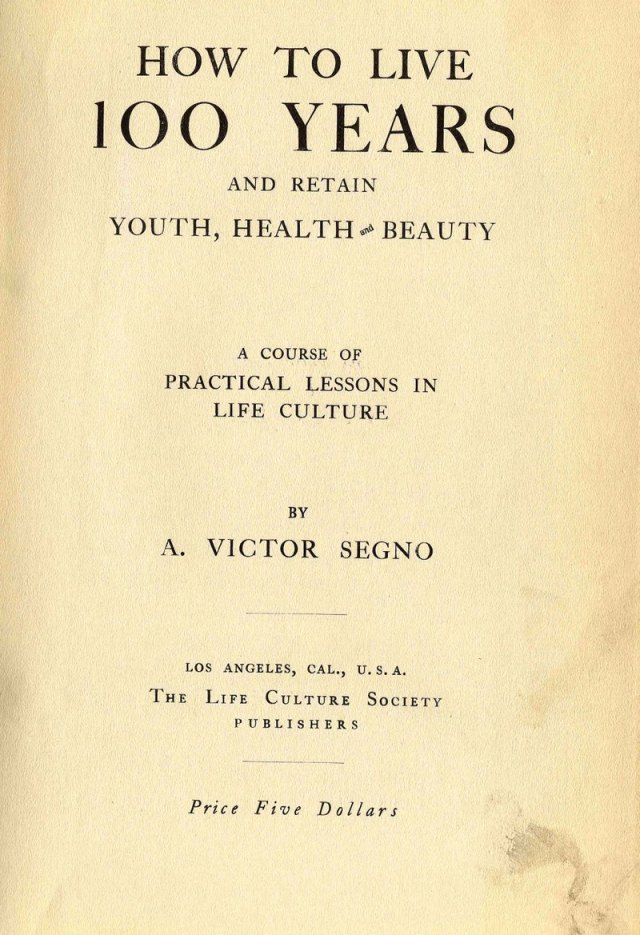
A. Victor Segno — “How to Live 100 Years”

“This lesson is written especially for people who have passed the age of 35 and have begun to show signs of approaching age; people who have begun to lose strength and vigor and those who feel that they have lost their grasp on youth.”

–A. Victor Segno,
“How to Live 100 Years,”
Los Angeles, 1903
Posted in books, health | Comments Off on A. Victor Segno — “How to Live 100 Years”

‘Pretty Woman’ car for sale

Pretty_lotus


  The 1989 Lotus Esprit driven by Richard Gere in "Pretty Woman" is being offered in Hemmings Motor News for $54,998.

Posted in Film, Freeways, Hollywood, Transportation | 1 Comment

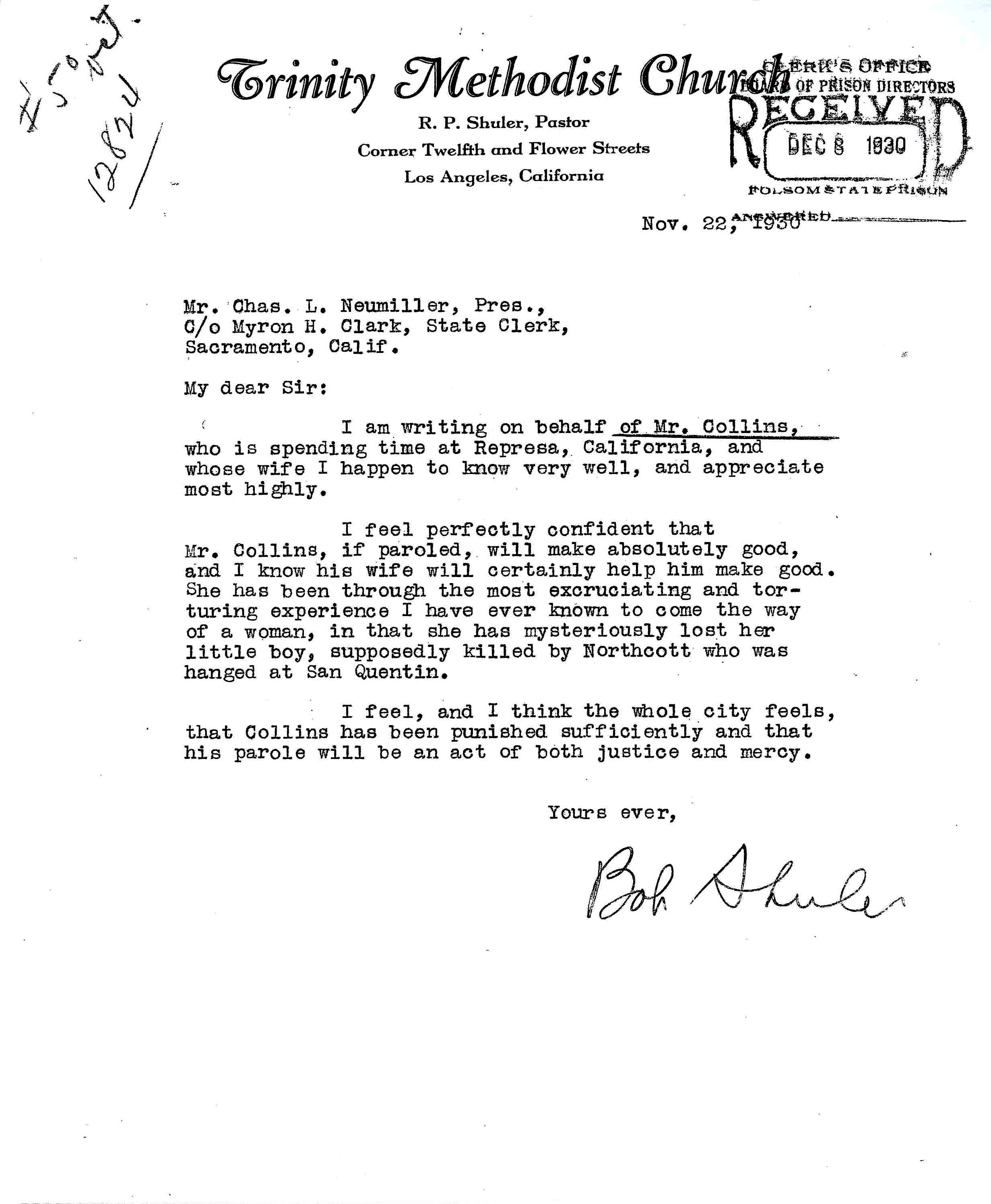
November 22, 1930: Voices — Christine Collins

November 22, 1930: The Rev. R.P. "Fighting Bob" Shuler urges parole for Walter Collins.
The Rev. R.P. “Fighting Bob” Shuler urges the parole of Walter J. Collins.

Posted in #courts, Changeling, Film, Hollywood, LAPD | Comments Off on November 22, 1930: Voices — Christine Collins

Fierce fighting in Cuba, Los Angeles Open begins, January 3, 1959

1959_0103_cover
 
The Soviets are winning the space race and communism establishes a foothold at America’s doorstep. These were worrisome times for the nation.

1959_0103_metro

Cheryl Crane visits Lana Turner.

1959_0103_comics

"Li’l Abner," "Rick O’Shay"
and "Moon Mullins."

1959_0103_mra

Moral Re-Armament and the Young Americans for Freedom were two
major institutions for conservative Baby Boomers. (In college, many YAFers discovered they liked to smoke dope and became Libertarians).

1959_0103_sports
Johnny Bulla of Phoenix leads
the L.A. Open.

Now playing: "Some Came Running."


America in the days before the Gun Control Act of 1968—although you can still go into Big 5 and buy antique military rifles. ($9.98 in 1959 is $70.26 USD 2007 vs. $89 today for a M91/30 Russian Mosin Nagant in 7.62 millimeter).

1959_0103_rifles_2

Posted in @news, art and artists, broadcasting, Current Affairs, Fashion, Film, Front Pages, Hollywood, LAPD, Sports, Television | Comments Off on Fierce fighting in Cuba, Los Angeles Open begins, January 3, 1959

Broadcaster looks at the future of TV sports

1949_0103_harmon_pix

1949_0103_harmon01 The story posed a simple question: Would television hurt or help sports attendance?


‘Television is only a very good substitute for the actual game. The camera cannot cover all of the interesting factors. And to the real sports addict, yelling "Kill the umpire!" at the television tube is small satisfaction for his feelings.’


The Times published a piece by former college football star Tom Harmon, who in 1949 was the sports director of KFI-TV (an early version of Channel 9 in Los Angeles).

He believed television would introduce people to new sports and draw them to the games.

1949_0103_harmon02"Television is only a very good substitute for the actual game," Harmon wrote. "The camera cannot cover all of the interesting factors. And to the real sports addict, yelling ‘Kill the umpire!’ at the television tube is small satisfaction for his feelings."

Harmon also discussed how television would change the announcer’s role: "The announcer must have the memory of an elephant and know what he’s talking about. … The announcer cannot make a mistake."

Wonder what Harmon would think if he spent a day in 2009 watching sports from local to cable.

–Keith Thursby

Posted in broadcasting, Downtown, Sports | Comments Off on Broadcaster looks at the future of TV sports