'Lie down and pray'
Gunshots on a Santa Monica tennis court reverberated across legal landscape.
Note: Edward J. Boyer, now retired, covered the Elmer Gerard "Geronimo" Pratt case for The Times.
By Edward J. Boyer
 On a clear, chilly December evening 40 years ago, Kenneth Olsen, head of the English department at Belmont High School, and his wife, Caroline, drove to Santa Monica's Lincoln Park tennis courts to meet another couple for a friendly doubles match. On a clear, chilly December evening 40 years ago, Kenneth Olsen, head of the English department at Belmont High School, and his wife, Caroline, drove to Santa Monica's Lincoln Park tennis courts to meet another couple for a friendly doubles match.
The courts on Wilshire Boulevard at 7th Street were dark when the Olsens arrived about 8 p.m. Caroline went to the light meter to deposit a quarter. When she had trouble getting the meter to work, Kenneth went to help.
Just as the lights came on, the Olsens noticed two men walking toward them. As the pair drew closer, Kenneth Olsen realized both men were carrying pistols.
The men ordered the Olsens to put their hands up.
"We want your bread, man," Kenneth Olsen remembered one saying. "Give us your money. Where is it?"
He directed the robbers to his tennis bag and his wife's purse. They ordered the couple to the ground and started to leave.
Suddenly, they turned and opened fire.
Kenneth Olsen survived the fusillade; his wife did not. And those shots fired on Dec. 18, 1968, reverberated across Los Angeles' legal landscape for nearly three decades.
Just over three years later, former Black Panther Party leader Elmer Gerard "Geronimo" Pratt was sent to prison for the robbery and murder. Pratt had maintained at his trial that he was in Oakland, 341 miles away, attending Black Panther Party meetings when Caroline Olsen was killed.
Even by the standards of those turbulent times, it was a crime remarkable for its chillingly random and wanton character.
Describing the shooting at Pratt's trial, Kenneth Olsen said: "It came as a complete surprise to me that they actually fired. I didn't think they would."
He was hit five times–in the forehead and right hand, little finger, forearm and hip. Caroline Olsen was struck in the back and hip.
Olsen, then 31, checked on his wife as blood poured out of the wound in his forehead.
"Are you OK? Can you move?" he asked his wife.
She could not. And there was no one else around.
"I realized I had to get help for her and that I wouldn't last too long the way blood was flowing," Olsen testified.
He stumbled across Wilshire, barely avoiding an oncoming car, and made his way into the Broken Drum restaurant, where a waitress called for help.
Caroline Olsen, 27, a teacher at Stoner Avenue Elementary School, died later from her wounds.
The thugs who murdered her netted about $18.
Santa Monica police made little headway in their investigation of the coldblooded assault on the Olsens. But events within the Black Panther Party and efforts by a secret FBI counterintelligence program called COINTELPRO intersected in 1969 to change that. Pratt was convicted in what his defenders still call one of the most overtly political trials in Los Angeles' history.
A month after Caroline Olsen's murder, Panthers in Los Angeles themselves were left reeling by violence. Their charismatic leader, Alprentice "Bunchy" Carter, and his close aide, John Huggins, were killed Jan. 17, 1969 in a shootout on the UCLA campus.
Carter's death left a void, and Julius C. "Julio" Butler, a 35-year-old former Los Angeles County sheriff's deputy turned Panther, saw himself as Carter's logical successor. But party leaders in Oakland tapped Pratt, 20, a decorated Vietnam veteran, who had been a Panther for only about four months.
A bitter rivalry developed between Pratt and Butler. Pratt and other Panthers accused Butler of being a police informant, while Butler accused them of threatening his life.
By May 1969, Butler had begun talking to the FBI. On Aug. 5, he was expelled from the party, according to former Panthers and FBI documents obtained after Pratt’s conviction. He says he quit.
Five days later, he gave a letter to Los Angeles Police Sgt. DuWayne Rice, naming Pratt as Caroline Olsen's killer.
Butler had written on the outside of the sealed envelope that it should only be opened in the event of his death. He called it his "insurance letter," and prosecutors at Pratt's trial argued that Butler never intended for it to be made public, likening the envelope's contents to a deathbed declaration.
Information disclosed after Pratt's conviction, however, revealed that Butler's insurance letter was anything but a secret. FBI agents approached Rice on the street immediately after Butler gave him the sealed envelope. They demanded that the sergeant turn it over and referred to it as "evidence."
Rice refused, but later recalled that he wondered how the agents knew the envelope contained a letter since it was sealed, and how could they have known it was evidence.
More than a year later, in October 1970, Butler gave Rice permission to give the letter to his LAPD superiors. Butler explained to Rice that the FBI was "jamming" him and that he had told agents about the letter.
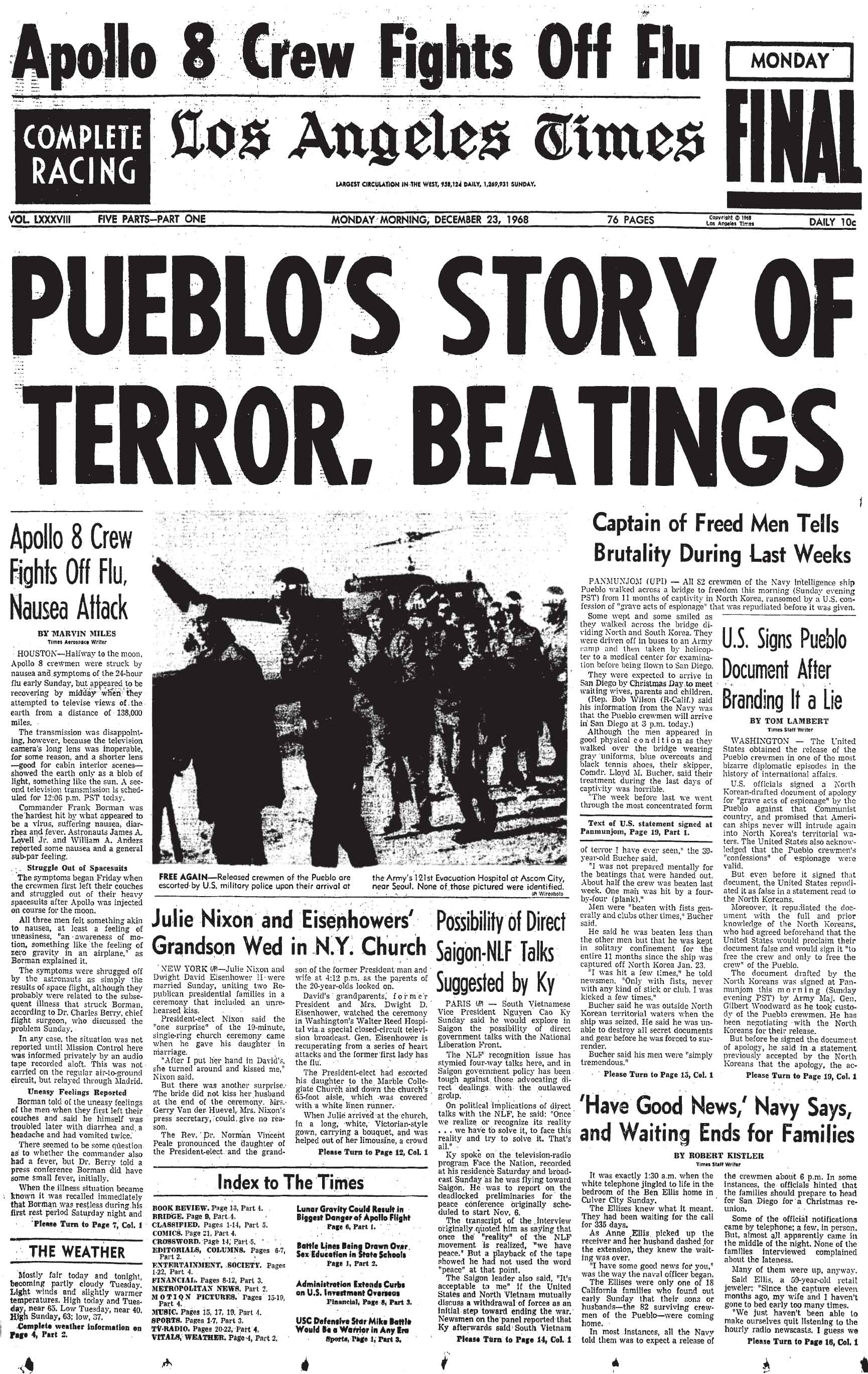
Butler's letter said Pratt had told him of a "mission" he was about to undertake on the night the Olsens were shot. The next day, Butler said, he pointed to a front-page story in The Times about the robbery and shooting. Pratt, Butler said, indicated that was the mission he had spoken of. Pratt’s defenders have always dismissed as ludicrous Butler’s contention that Pratt, who was extremely suspicious of Butler, would have confessed to him.
Butler's letter became the tool prosecutors needed in December 1970 to convince a grand jury to indict Pratt for Caroline Olsen's murder. The LAPD's Criminal Conspiracy Section had taken over the investigation from Santa Monica police. Pratt, who was being held on other charges, would be tried in June 1972.
Butler's letter also implicated a "Tyrone," and police arrested William Tyrone Hutchinson in 1970. In a sworn statement given in 1991 to investigators working on Pratt's behalf, Hutchinson said he told police in 1970 that two men, Larry Hatter and Herbert Swilley, had bragged at a Panther office about being present at the tennis court when the Olsens were attacked.
Hutchinson said he had known Swilley and Hatter since childhood and knew them to be Butler's friends. Officers told him not to discuss what he heard Swilley and Hatter say, if he knew what was good for him, Hutchinson said.
Explaining why he had not come forward with the information earlier, Hutchinson said he took the officers' comments "to be a threat on my life, and I still do."
Pratt's defenders maintain that LAPD investigators did not pursue evidence pointing to other suspects because their primary objective was to "neutralize" Pratt and cripple the Panthers.
Friends of Swilley and Hatter have described both as heroin addicts who committed robberies to pay for drugs. Swilley was also known as a particularly violent killer. He was shot to death in 1972 during an argument.
Hatter was found dead in 1978 on the Pacific Tennis Court grounds in Santa Monica. He apparently fell while attempting to enter or leave a building during a burglary, impaling his skull on a fence.
The key evidence against Pratt consisted of Butler's testimony that he had obliquely confessed the crime, Kenneth O
lsen's eyewitness testimony, ballistics tests from a .45-caliber pistol and the car allegedly used in the robbery/murder.
Although Butler denied on the witness stand that he had ever been a police informant, FBI files released after Pratt's conviction showed that Butler had been providing information on the Panthers to the bureau for three years before the trial.
Kenneth Olsen identified Pratt as one of the men who committed the murder. He told the Pratt jury that "one of the most distinguishing things about Mr. Pratt is his intensive eyes," calling them "very piercing and very penetrating."
Neither the jury nor Pratt's lawyers knew at the time that Olsen earlier had identified another suspect as his wife's killer. The public defender who had represented that suspect recalled after Pratt's conviction that Olsen had said after that earlier identification: "The voice did it."
In fact, the first man Olsen identified as the assailant had been in jail the night the couple was attacked.
Had the jury known about Olsen's earlier identification, "I think that alone would have changed our mind," said Jeanne Hamilton, a juror at Pratt’s 1972 trial.
LAPD criminalist DeWayne Wolfer testified at Pratt's trial that firing pin marks on shell casings found on the tennis court matched those on shells fired from a .45-caliber pistol seized from a Panther house. In an earlier trial, a California appellate court ruled that Wolfer had "negligently presented false demonstrative evidence in support of his ballistics testimony." Another forensic scientist has characterized Wolfer's testimony as lacking "credibility in the minds of most forensic scientists."
The only other person to tie Pratt to the .45 was Butler.
The presence of Pratt's car at the murder scene is a point even some of his defenders acknowledge. A witness saw the gunmen flee in a red and white Pontiac GTO convertible with out-of-state plates–a description matching Pratt's 1967 car.
Several witnesses, however, testified that Pratt's car was used not only by other Panthers, but by any number of people associated with the party–including Butler on several occasions. Pratt, his defenders said, had no idea who used his car on the day of the murder because he was in Oakland, where he had gone earlier in the week.
Pratt always has insisted that he was in Oakland attending Black Panther Party meetings when the Olsens were attacked. Years later, retired FBI agent M. Wesley Swearingen said the bureau knew Pratt was in the Bay Area then because the Panthers were under surveillance and phones at their party headquarters were tapped.
Pratt's defense presented several witnesses who placed him in Oakland during the party meetings. But they could not–3 1/2 years later–specifically place Pratt in the Bay Area on Dec. 18, the day of the crime.
What turned out to be one of the most damaging pieces of evidence against Pratt was introduced by the defense. Olsen had described his assailants as clean shaven, but several other witnesses–including Butler–said they always had seen Pratt with facial hair.
Pratt's lawyers introduced a Polaroid photograph, supposedly taken around Christmas 1968, showing Pratt with a goatee, which they argued he could not have grown in the week after the murder.
"We took the word of Pratt's brother, Chuck Pratt, about this picture," Johnnie L. Cochran Jr., one of Pratt's attorneys at his original trial, said. "We didn't consider it really important. We thought it was clear to everybody that Pratt had a goatee, that he was not clean shaven as Mr. Olsen said."
But that photo was more important than Pratt's defense team could have imagined. Prosecutors called a Polaroid representative who testified that the picture could not have been taken in December 1968, because the film used in the photo was not manufactured until May 1969.
That testimony was devastating. One juror said it made him begin to question other parts of the defense case. Another said jurors argued during deliberations that if Pratt had lied about the photo, he could have lied about other events.
The jury deliberated for 10 days before it returned its guilty verdict.
Pratt, who now uses the name Geronimo ji Jaga, served two years in Los Angeles County Jail and 25 years in prison–the first eight in solitary confinement–before Orange County Superior Court Judge Everett W. Dickey overturned his conviction in 1997 and released him on bail.
The case was moved to Orange County after the entire Los Angeles Superior Court bench was recused because one of its members, Judge Richard P. Kalustian, who as a deputy district attorney prosecuted Pratt, was to be called as a witness.
Dickey, by all accounts a conservative, law enforcement-oriented judge, publicly branded Butler, the prosecution's key witness, a liar and ruled that Los Angeles County prosecutors had suppressed evidence favorable to Pratt's defense.
"The importance of Butler to the prosecution cannot be denied," Dickey later wrote in his decision. He noted that Pratt was never a suspect until police learned the content of Butler's letter, and that Kalustian "emphasized Butler's importance in argument both to the trial judge and to the jury."
At Pratt's trial in 1972, Kalustian had summed up just how important a witness Butler was: "Julio Butler has testified in this court under oath and to the jury to a confession that Mr. Pratt made to him that admits all of the elements of the offense. If the jury believes Julio Butler, Mr. Pratt is guilty. The case is over if they believe that."
Butler had denied under oath that he had ever been an informant for law enforcement, saying "the connotation (of) informant means a snitch, and I have never been in the world a snitch."
But in the hearing before Dickey, prosecutors revealed that Butler’s name had turned up in a confidential informant file kept by the Los Angeles County district attorney's office.
San Francisco attorney Stuart Hanlon, one of Pratt's lawyers, called the informant card on Butler a "smoking gun," saying the district attorney's office knew during Pratt's trial that Butler was an informant.
"The fact is that he was an actual informant, and no one said anything about it in court," Hanlon said. "The informant status of a main prosecution witness is always reversible error."
Three jurors, including Hamilton, told Jim McCloskey, whose Centurion Ministries independently investigated Pratt’s case, they would never have convicted Pratt had they known Butler—who went on to become a lawyer and chairman of the board at Los Angeles' First African Methodist Episcopal Church–was an informant.
In overturning Pratt's conviction, Dickey ruled that despite Butler's denials, he had been an FBI informant for at least three years before the trial. Dickey also ruled that Butler had been an informant for the LAPD and for the very agency that prosecuted Pratt–the Los Angeles County district attorney's office.
A detective in the district attorney’s office gave Butler $200 to buy a gun several months before Pratt's trial, Dickey noted, even though Butler was a convicted felon who could not legally possess a firearm.
Several law enforcement officers knew Butler carried the gun, even though doing so was a felony punishable by up to 15 years in prison, Dickey said.
Pratt's defense lawyers, Dickey said, were not given information needed to show Butler's motive for naming Pratt as Caroline Olsen's killer. Had Pratt's lawyers known of Butler's activities, they could have devastated his credibility o
n cross-examination, the judge said.
After Pratt’s release, then-Los Angeles Dist. Atty. Gil Garcetti appealed Dickey’s decision. But one veteran prosecutor said parts of Garcetti's appeal were difficult for experienced trial attorneys to fathom.
"There appears to be a whole bunch of stuff out there that was not turned over to the defense that should have been–like guys buying a guy a gun," he said. "Had this been turned over, would it have affected the outcome? That question doesn't pass the straight-face test."

Photograph by Gina Ferazzi / Los Angeles Times
DROPPING CASE: Dist. Atty. Gil Garcetti said that he will accept an appellate court decision upholding the reversal of the murder conviction of ex-Black Panther Elmer Gerard "Geronimo" Pratt.
Garcetti lost his appeal and Pratt settled a false imprisonment and civil rights lawsuit against the city of Los Angeles and the FBI for $4.5 million. Pratt now splits his time between Morgan City, La., his home town, and east Africa. He has used part of his settlement to support projects for young people in Morgan City and a community founded by former Panthers in Tanzania. |





 ladailymirror.com