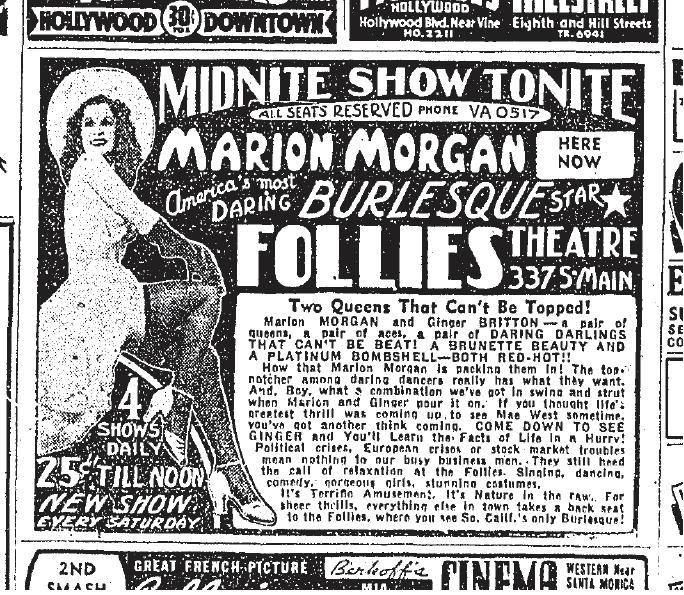
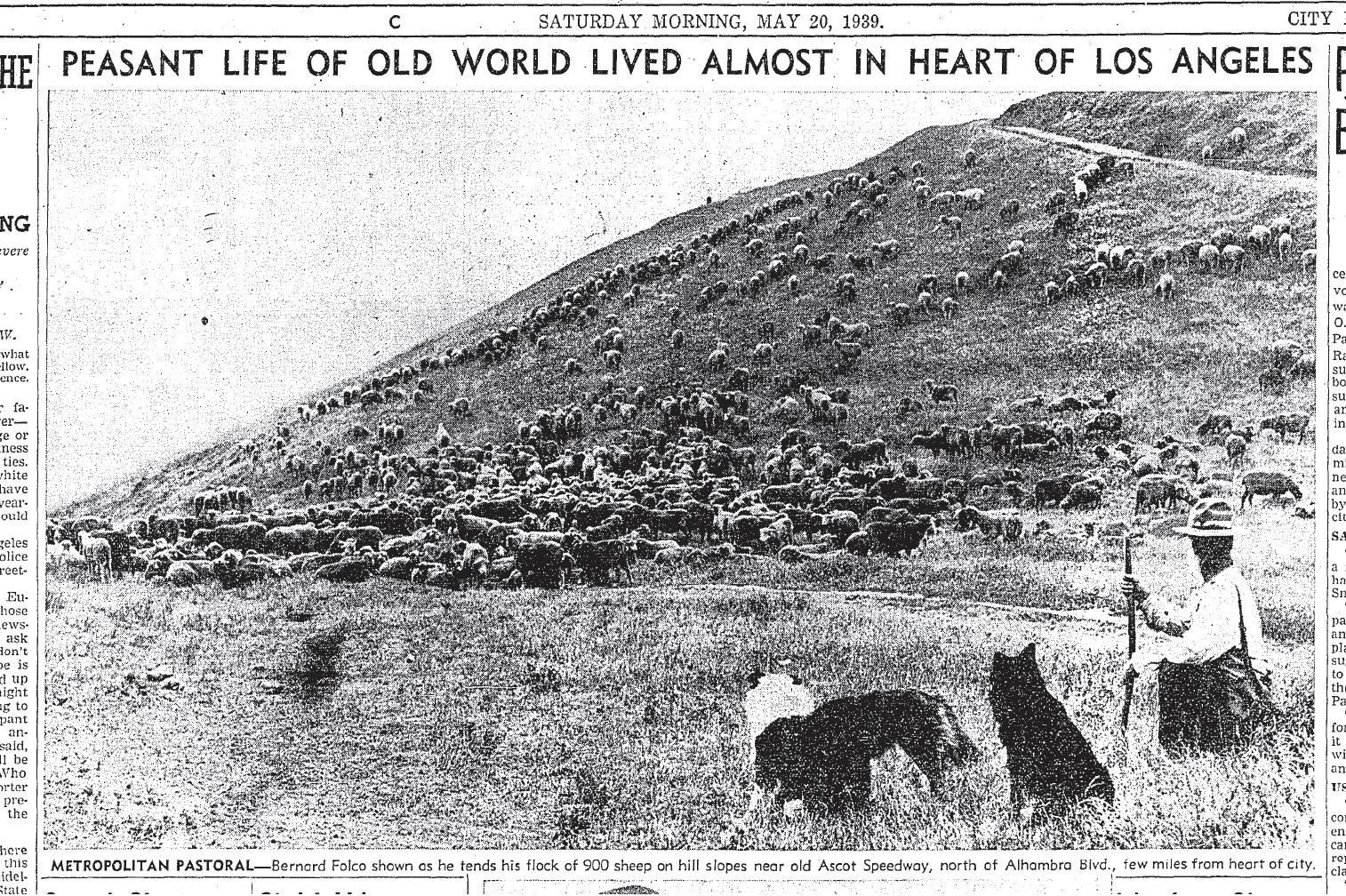
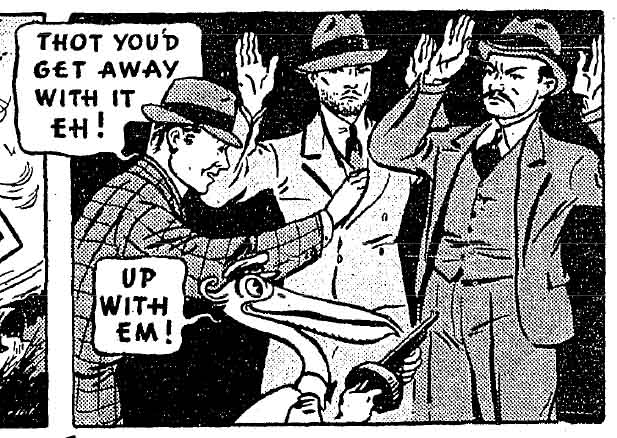
Nuestro Pueblo

April 28, 1939, Nuestro Pueblo
Posted in Architecture, art and artists, Nuestro Pueblo | 1 Comment

Found on EBay — 1958 Dodger Tickets

1958 Dodger Tickets These 1958 Dodger tickets have been listed on EBay. Bidding starts at 99 cents.
Posted in Uncategorized | Comments Off on Found on EBay — 1958 Dodger Tickets

Matt Weinstock — April 27, 1959

Goleta's Great Day

Matt_weinstockdIn the
twilight of Monday, Feb. 23, 1942, a Japanese submarine a mile offshore
fired 25 shells from its 5-in. deck guns at the Elwood oil field inGoleta, a few miles north of Santa Barbara.

The
attack, which lasted 20 minutes, was reported in an atmosphere of
hysteria. There was wild, panicky talk that the firing was the prelude
to an invasion attempt.

A coast alert was sounded and the air-raid sirens didn't give the all clear until 12:20 a.m. Tuesday.

At
the time, it must be remembered, the Japanese had overrun the Pacific
islands. It was only a little more than two months after the holocaust
at Pearl Harbor.

HOWEVER, THE SHELLS did little damage.
Only one oil derrick was struck, causing about $500 damage. A refinery
was missed and most of the shells merely dug up sand or fell into the
sea. One whistled three miles inland and exploded harmlessly on theTecolete ranch. Another gouged a 5-foot. crater on the Staniff ranch. Some were duds.

April 27, 1959, Bestsellers Several
persons saw the submarine through binoculars. An oil-field worker said
it looked so big he thought it was a destroyer or cruiser.

That was 17 years ago but when I visited Joe Cavaletto, a family relative, in Goleta
a few days ago and strolled through his lush avocado and citrus groves,
the conversation naturally turned to the historic event.

One of
Joe's neighbors saw the Japanese sailors on the deck of the sub and to
this day swears he could have picked them off with a rifle. But hardly
anyone realized what was happening until they started shooting.

Joe
and his husky son, Mike, grow avocados and grapefruit as big as
cantaloupes on a farm that has been in the family for 150 years and
goes back to mission and land grant days.

April 27, 1959, Comics On his property there
is an old adobe barn that would make antiquarians drool. And like all
farmers he is concerned about rising taxes and encroaching subdivisions.

But Goleta
is submerged in the expanse of Santa Barbara. Not much happens and the
submarine incident of 17 years ago is cherished as if it had happened
17 months ago. It was the only timeGoleta ever got into the headlines importantly.

::

NOT LONG AGO it was mentioned here that writer Charlotte Armstrong started a novel while down with the flu. D. McAllister of KRCA-TV
apparently was subconsciously impressed. On his bedside writing pad
after a six-day siege with the bug he found the following:

"I am the Loch Ness monster, you think I don't exist. I don't think you do either, isn't that a twist?"

"Had Genghis Khan gone on and on, the end result is clear. He would have marched around the world and pounced upon his rear."

"In Xanadu did Kubla
Khan a stately Disneyland decree. They built to scale in great detail,
a lovely sight to see. And when in place were all the things, the
ducks, the mice, the crickets, there came, alas, a great impasse, no
one could print the tickets."

Concludes Mac: "Guess I had the wrong kind of flu."

::

April 27, 1959, Abby WHILE WE'RE in the nonsense league, this "Open letter to taxpayers" is circulating among city employees:

 "Occasionally
a friend asks what I do all day at City Hall. I reply that my work
frequently takes me to poorer sections. One day I rang the bell at an
old shack. A woman's voice answered and I told her the reason for my
call. 'Wait a minute,' she said, 'I want to slip on something cool.'
There was a loud crash. 'What happened?' I cried. 'I just slipped on
something cool, she said, 'an ice cube.' When she came to the door I
said, "This is certainly a tough neighborhood." I nodded toward the
pack of vicious dogs, cats and children waiting for me to come out into
the open. 'You said it,' she said, 'even our assessments are
delinquent.'"

::

LOOSE ENDS — That poisonous cliche, "But darling, I did it for you!" was on TV again the other night for the 372nd time …The Italian grocery store at Sepulveda Blvd. and Lassen has a sign, "If you can't smell it we haven't got it."

Posted in Columnists, Matt Weinstock | Comments Off on Matt Weinstock — April 27, 1959

Paul Coates — Confidential File, April 27, 1959

Confidential File

American Friends Service Committee

Paul_coatesYou just never know where you'll find a bunch of pioneers.

On wind-swept sand hills at Kitty Hawk, under the polar ice cap or in a quiet Los Angeles residential district.

I visited a rather remarkable "we're doing it first" group in the latter locale yesterday.

Its
members are former California prison inmates. Ex-cons, if you will. And
all are on parole. But unlike others of their number, they're living an
experiment conducted by the American Friends Service Committee.

Their
pioneering venture is built around a boarding house whose only
residents outside of the director, his wife and 16-year-old son — are
men who've made a mistake or more, paid behind bars and now want a
chance to prove they're fully capable of taking a productive place in
our society.

April 27, 1959, Mirror Cover And every man pays his own way. Eighteen bucks a
week for room and two home-cooked meals a day. If a man falls behind in
his rent, he's asked to move.

"We feel a man is more likely to
find himself when he assumes responsibility," explained Tom Nelson,
who, with his wife, runs the boarding house.

 "How many former convicts live here?" I asked him.

"We have six now," he replied. "We have another due tomorrow and one on the 30th. Our total capacity is nine.

"But since the project began a year ago, we've had about 25 guests," he added.

"And how many," I wanted to know, "have failed you?"

"Well," he began, "we've only had one man go back to prison in the year."

"That seems to be a pretty substantial statistic," I suggested.

"Oh, it's much too early to tell yet," Mr. Nelson said. "But we are certainly encouraged."

April 27, 1959, Beaches It
would be difficult to say just now many paroled convicts across the
nation return to prison during their first year of freedom, but some
penologists and law enforcement officers place the estimate as high as
70%.

But even if it's half that number, it seems clear that the Friends have made a good beginning.

 "Do you exclude men from the program because of any particular offense?" I asked Tom Nelson.

"No"
he said. "The Friends make no distinction in men. Whatever a man has
done — murder, narcotics, armed robbery — he's still a man. We don't
pin any labels on those who come here."

"How did your neighbors
react to the boarding home?" I wanted to know. "I mean, did they object
to the fact that they'd be living next door to ex-convicts?"

"Not
at all," he told me. "That was one of the big worries int he beginning
though. Members of the Friends Committee went to every house around
here before we got started.

Just to Break the News

April 27, 1959, Beaches "Not
to ask permission, you understand. Just to break the news. Instead of
objections, we found that people wanted to make us feel at home.

 "The
fellow next door, for instance. He's a former Army cook and mighty
proud of some of his menus. Came over one night and fixed spaghetti for
the boys. His wife played the piano."

"And do you consider that sort of help important?" I asked.

"We
certainly do. We are trying to provide a homelike atmosphere. If
there's one thing all of these men have in common, it's the lack of a
background which included a loving home."

The Friends are the first to point out that what they've done so far proves little.

Unless, that is, that you've got to start somewhere.

Posted in Columnists, Paul Coates | Comments Off on Paul Coates — Confidential File, April 27, 1959

Los Angeles Fights the Flu, October 13, 1918


Oct. 13, 1918, Flu Cartoon

The Times takes a lighthearted look at the flu.

Oct. 13, 1918, Flu

Schools, movie theaters and churches are closed to avoid spreading the flu.

Oct. 13, 1918, Flu

The only crowds in Los Angeles are at the drugstores.

Posted in Front Pages, health | 1 Comment

In the Theaters — April 27, 1978

April 27, 1978, In the Theaters
Posted in Film, Hollywood | 1 Comment

Death by the Numbers, 1948

1948_methods_of_homicide  

1948: Knives are almost as popular as guns as a murder weapon.

On Sunday, I was part of a Festival of Books panel on California crime, and the final question dealt with gun control. I said I was surprised that weapons other than guns figured so prominently in the historical record. Here's a breakdown from the 1948 LAPD statistical report. The LAPD has kept extensive crime statistics for decades. There's an untold story in all those numbers for whoever transfers the data to spreadsheets and analyses it. 

Homicide Statistics, 1948

Posted in Homicide, LAPD | Comments Off on Death by the Numbers, 1948

British Plane Missing Over Turkey, Dodgers vs. Camping, April 27, 1959

April 27, 1959, Cadillac

The debut of the majestic new Cadillac.

April 27, 1959, Cover A small civilian plane crashes into the mountains near Pasadena, touching off fears that an airliner had gone down.  

A British cargo plane with a crew of 12 disappears over eastern Turkey. A team was sent to examine the wreckage, look for the crews' remains and the secret equipment the plane was carrying. Read more here>>>

The Times writes a banner headline from an Associated Press story that makes it sound as if Mao Tse-tung is on his way out in favor of Liu Shao-chi. Not quite. Liu was purged in 1968 during the Cultural Revolution. A magazine reported in in 1979 that he died in 1971. 

April 27, 1959, Lynching

The jump of a follow-up story on Mack Charles Parker, minus the beginning.

April 27, 1959, Editorial Cartoon

A typical editorial cartoon of the era–this grim bit of artwork evidently has something to do with driving safely on freeways. 

April 27, 1959, KTLA
April 27, 1959, Teacher

Miss Los Angeles Teacher gets a modest kiss from actor Jon Hall. Joyce Matsukas was chosen "on the basis of teacher experience, community and professional service as well as beauty and poise."

April 27, 1959, Metro Cover

Jack Smith writes about an opera singer who wants to do comedy.

April 27, 1959, Singer

Dina Caesar "runs the scales and vocalizes to keep her voice fit, but it doesn't bother the other tenants," Smith says. 

"The neighbors are wonderful!" she exclaimed. "The men are always beating their wives. They don't hear a thing. I'm telling you, they kill each other in this building. It's fantastic!"

April 27, 1959, Mary Martin

"If there's anyone slim, sleek and 'Mainbocher,' it is Mary Martin."

April 27, 1959, Mary Martin

"Veronica Lake was a girl who actually wore tweeds, flat heels, bulky sweaters, her hair pulled back into a hairnet."
April 27, 1959, Mary Martin

How Ginger Rogers transformed her outfit in "The Major and the Minor."

April 27, 1959, KNX

5 p.m., "Amos 'n' Andy."

April 27, 1959, Computers

The library of the future, as envisioned in 1959.

April 27, 1959, Sports The Los Angeles Dodgers were no match for the Angeles National Forest.

More than 3 million people visited the forest in 1958. That was far more than the Dodgers' attendance of 1,845,556 or the Rams' 1,053,798.

Forest Service officials said the statistic didn't include people who drove through the forest, probably because they were late for a Dodger or Ram  game.

I've done my share of camping and been to more than my share of baseball and football games. They all certainly have their strong points, but especially in 1958, I would have preferred baseball. The Coliseum might not have been perfect, but you didn't have to stay overnight there. Or worry about bears.

— Keith Thursby

Posted in broadcasting, Dodgers, Film, Freeways, Front Pages, Hollywood, Sports, Television, Transportation | 1 Comment

Nuestro Pueblo

April 26, 1939, Nuestro Pueblo

Posted in Architecture, Downtown, Nuestro Pueblo | 1 Comment

James Ellroy at the Festival of Books

http://latimesblogs.latimes.com/.a/6a00d8341c630a53ef01156f5e4264970c-pi

Photograph by Leslie Anne Wiggins / Los Angeles Times

Leslie Anne Wiggins writes: The L.A. Times’ Patt Morrison gave the audience appropriate warning
before James Ellroy’s loud and expletive-filled speech at the Book
Festival Sunday: “Seat belts fastened low and tight? All right, you’re
gonna need 'em.”

Ellroy didn't disappoint. The crime writer, whom Morrison called a
“snazzy and dapper fellow,” thanked the audience for coming out, rather
than staying home to tend to their “sex lives and drug habits.” He
opened with his trademark crowd welcome to the “peepers, prowlers,
pederasts, panty-sniffers, punks and pimps.” 

And then he exploded with a rather hard-to-follow speech, calling
his forthcoming book "Blood's a Rover"  “the greatest novel since the
Holy Bible.”

Read more >>>

Posted in books, Homicide | 1 Comment

In the Theaters — April 26, 1976

April 26, 1976, In the Theaters
Posted in Film, Hollywood | Comments Off on In the Theaters — April 26, 1976

Lakers Lead 2-0 Against Celtics in Championships, April 26, 1969

April 26, 1969, Sports

April 26, 1969, Lakers What's Jerry West have to do to be noticed in this town? He scored
41 points in the Lakers' 118-112 Game 2 victory over the Celtics, but
the headlines went to Elgin Baylor.

Granted, Baylor scored 32, including the team's final 12 points. And
West didn't do as well as in Game 1, when he scored 53 to lead L.A.

The Celtics had never trailed 2-0 in a playoff series — EVER — but
The Times' coverage wasn't guaranteeing a Lakers title just yet.

"It isn't over and it's too premature to order the champagne but the
Celtics, who have won 10 championships in the last 12 years, are in
trouble," Mal Florence wrote. The series headed from the Forum to
Boston, where "Bill Russell and his gallant old men will make their
next stand."

It was a physical game, typical of the era and the Lakers-Celtics
rivalry. "The Celtics' Don Nelson had six stitches taken in his head
after colliding with [Wilt] Chamberlain's jaw in the second half,"
Florence wrote. "Five stitches were required to close a wound on Bill
Hewitt's jaw."

 "It's too bad my head didn't hit Wilt's chin. Then he would have to shave off that beard,"  Nelson said, laughing.

— Keith Thursby

Posted in Dodgers, Sports | 1 Comment

Masked Mob Seizes Black Rape Suspect From Mississippi Jail, April 26, 1959

April 26, 1959, Dominguez Hills Aviation Festival, 1910

The Times takes a look at the 1910 Aviation Week at Dominguez Hills. Here's a post from last year about J.S. Zerbe.  

April 26, 1959, Cover

Gunmen wearing masks and gloves raided the jail in Poplarville, Miss., and seized Mack Charles Parker, 23, who was accused of raping a white woman.

"The raiders dragged Parker from the building by his heels, his head bumping from steel tread to steel tread of the stairs. Blood flicked about marked progress of the party, a bloody handprint on the doorstep giving the last trace of Parker, who screamed and struggled as the getaway cars sped away," the Associated Press said. 

1959 Mack Charles Parker

FBI file on Mack Charles Parker: Part 1, Part 2, Part 3, Part 4.

April 26, 1959, Paper Mill

The Times bought Hawley Pulp and Paper of Oregon in 1948 and renamed it Publishers' Paper Co. We sold it in 1986 to Jefferson Smurfit Corp.  At the time, analysts said the newsprint dvision was a drag on operations and held down the price of Times Mirror stock. In 1985, we reported that the newsprint and forest products, the second-largest source of revenue for The Times after newspapers, had sustained losses for the previous four years.

April 26, 1959, Bulls

A visit to the ranch in Newhall that provides rodeo bulls.

April 26, 1959, Lynching

Lynching story, cont'd.

April 26, 1959, Darwin

April 26, 1959, Telegraph

Fifty years ago, America celebrated the birthday of Samuel F.B. Morse, inventor of the telegraph.

April 26, 1959, Cartoon

In the future, doctors will use miracle plastic cement to bond broken bones.

April 26, 1959, Mel Torme

Mel Torme says he hates being called "the Velvet Fog."

April 26, 1959, Books

The Times' Robert Kirsch gives a scathing review to Ben Hecht's latest book. Grove Press says it will ship copies of "Lady Chatterley's Lover" to Los Angeles after all.

April 26, 1959, Sports

Cardinal pitcher Jim Brosnan is injured when he crashes into catcher John Roseboro at the plate.
Posted in #courts, art and artists, books, Comics, Countdown to Watts, Dodgers, Film, health, Hollywood, Homicide, Music, Politics, Richard Nixon, Science, Stage, Transportation | Comments Off on Masked Mob Seizes Black Rape Suspect From Mississippi Jail, April 26, 1959

Matt Weinstock — April 25, 1959

Taken for a Ride

Matt_weinstockdThe question before the house today is, "Does the MTA hold secret meetings?"

Ralph P. Merritt, MTA executive director, says no. Carter Barber of this newspaper says yes.

"What's the difference?" you may ask. The answer is that the MTA,
a legislatively constituted body, handles matters vital to the public
interest. Bus passengers particularly are entitled to know what's in
store for them.

It is reporter Barber's contention that the MTA
meetings held on the second and fourth Tuesdays of each month since
last October have been secret and that in them the board formulated
agenda for the public meetings held on the first and third Tuesdays.

THE MTA'S REASON for excluding reporters was that confidential personnel matters were discussed.

April 25, 1959, Prayer On April 14 MTA's
policy board met from 9 until 10:20 a.m. Reporter Barber, denied
admission, crashed the meeting at 9:35 and, during the 20 minutes he
was permitted to remain, only his presence was discussed. What the
board discussed during the other 60 minutes was later disclosed by
individuals.

Time and again, Barber charges, the MTA has
secretly discussed travel patterns, labor, legislation, policies,
purchases and construction work — all of public interest. These have
been reported by the press only after the public meetings when they
werefait accompli.

"So what?" you may ask again. Possibly you
read that a major concern of the American Newspaper Publishers Assn. in
New York this week was the increasing trend of government officials to
deny newsmen access to public information.

If reporters can't cover meetings, the public can't know what's going on.

::

TOMORROW the
choir of the First Presbyterian Church of Sherman Oaks will sing "As
Torrents in Summer" — from the poem by H.W Longfellow, music by Edward
Elgar.

Aprl 25, 1959, Comics Jack Halloran, the director, makes no claim to being a
rain maker, but the choir rehearsed "Torrents" April 16 and the first
sprinkle in 55 days fell April 17.

He recalls that for four straight years on the spring Sunday his choir in Evanston, Ill., sang the song it rained.

It's worth a try. Besides, it's a nice song.

::

ON ONE OF his Treasure series on TV recently, Bill Burrud
presented a visual report on buried gold in Haiti. In it was a genial
beachcomber named Charlie, who said he hoped to come home to the United
States but didn't have the money.

Since then, dollar bills have been trickling in to Burrud to bring Charlie home.

Burrud has sent Charlie the first remittance, but has asked him to reconsider.

"As
a symbol of man's dream to get away from it all," he wrote, "you have
an obligation. Besides, maybe you don't know when you're well off."

::

April 25, 1959, Abby ONLY IN Eagle
Rock — Rob Brooks believes he has discovered the secret of the
Occidental College track team's success. Two girls, students or wives,
were jogging around the track the other day with the athletes —
jackrabbits, so to speak, pacing the greyhounds.

::

The Shady Years
Reduced to lesser living.
Restrained from earning more.
Existing on fixed income.
You're a year past sixty-four.
You find your forced retirement seems a somewhat sinful plot –
Despite how far you may have climbed, you must backslide a lot.
– MATTIE RAE

::

FOOTNOTES —
A postal card water bill returned to the Dept. of Water and Power mail
room had "Deceased" written on it. Also, ironically, the stamp
cancellation imprint, "Live Better. Go all Electric" … Joe Weston
believes he encountered the so-called living end. A couple were riding
a mechanized golf cart on a Palm Springs pitch-and-putt course … No
matter what anyone says, that is not me playing bass in the Doris Van
trio at Harris' in Garden Grove. Fellow named Frank Wylie, apparently a
near double … In the event the S.F Giants run short of gimmicks to
lure the customers into Candlestick Park. JackBalley suggests they hire Liberace to bat for Willie Mays.

Posted in Columnists, Matt Weinstock | Comments Off on Matt Weinstock — April 25, 1959

Paul Coates — Confidential File, April 25, 1959

CONFIDENTIAL FILE

Mash Notes and Comments

Paul_coates"Dear Mr. Coates,

"I am against smog and I understand a lot of other people, including Mayor Poulson, are against it too.

"Now you're for a lot of things and against a lot of things. And I've got to admit you aren't a bit bashful about saying so.

"But I've never heard you say anything pro or con about smog. Are you against it?" (signed) Rengam Blanco, El Monte.

No, I believe what's good for General Motors is good for the country.

::

(Press release)

"Let's find a new star!

 "Put
away the binoculars, stop gazing skyward and relax. It's not that kind
of star. We're going to discover a new motion picture and television
star, and we're leaving it all up to you. Isn't that an exciting
thought?

April 25, 1959, Cover "All right now, Paul, feet up on the desk. Close your
eyes because we're going star hunting in a very unconventional way.
We've polled producers and directors on what qualifications they are
looking for in a newcomer.

"We've put all these qualifications
in a great big barrel which, with your imaginative permission, you'll
let us bring into your office. With the use of more imagination on your
part a tall, statuesque blond in an abbreviated spangled costume (like
those 'Girl Fridays' on TV quiz shows wear) stands beside it.

"Now, with a long, graceful, swan-like arm she begins spinning the container.

"Now
that our qualifications are mixed up really something good, let's begin
the drawing. It's time for you to go to work, Mr. Coates.

"Stick your hand in the barrel and pull out a slip. Okay, what's it say?

"Height 5 feet, 4 1/2 inches, you reply, trying to figure what vision of loveliness you are about to assemble.

"Draw again.

 "And you do.

"What does this slip reveal about our mysterious star? 'Eyes hazel green.'

April 25, 1959, Lynching "So
now our new star is really beginning to take shape. Do you want to stop
or go on? Of course, you'll continue. Your imagination has been
stimulated.

"Another fateful draw and we now know our gal is 113
pounds of sheer delight. And last, but not least, you rummage around to
the bottom of the barrel and select a notation, which reads 38-22-36.

"How about those dimensions????

"Put
them all together, Paul, and what do they spell? Marlene Willis, of
course. Who, quite coincidentally, is a client we're pushing for
stardom.

"This has been a real fun game, hasn't it?

"I
hope you'll let us bring our barrel around again real soon for another
session of star hunting." (signed) Dodge-Heigh Public Relations.

Why don't you take your barrel and go over Niagara Falls in it?

::

"Dear Paul,

"Two weeks ago I wrote you a letter explaining the plot of a Don Ameche soap opera. And you printed my letter.

"Now this week I can't find Don anywhere on the air.

"Paul, what have we done?" Mickee, P.O. Box 724, Sunland.

-I know how you feel, but someone had to do it.

Posted in Columnists, Countdown to Watts, Paul Coates | Comments Off on Paul Coates — Confidential File, April 25, 1959

Voices — David Duke, 1989

David_duke_AP
Photograph by Bill Haber/Associated Press

Dec. 18, 2002: David Duke leaves the federal courthouse in New Orleans after
pleading guilty to mail fraud and tax charges.

David Duke: Dixie Divider

The Ex-Klansman Taps Well of Discontent to Win a Louisiana House Seat, and a Constituency

March 21, 1989

By JOANNE HARRISON, Harrison is a Houston-based free-lance writer

METAIRIE,
La. — Inside the towering State Capitol building at Baton Rouge, the
Louisiana legislature had gotten down to the business of raising taxes.

In
the House chamber, more than 100 members, plus assorted staff and
lobbyists, milled around noisily as speech-making continued from the
podium. Huddling in the aisles between their crowded two-by-two desks,
legislators clad in Sears and Sans-a-belt slapped backs, slurped colas
and munched on peanuts.

Off in the far right corner of the
chamber, assigned to one of only two single desks, sat Republican David
Duke, newly arrived after a special election in the New Orleans suburb
of Metairie. Virtually hidden behind a wall of letters from
constituents and others as far away as Australia and South Africa, Duke
sat quietly, listening intently to the proceedings. From time to time
he got up to check a point with the Republican floor leader.

Finally,
he rose to speak. The chair acknowledged him with sardonic inflection.
Activity in the chamber ceased. Legislators turned their attention to
the rostrum. Dozens of reporters from all over the country flipped open
their notebooks. TV cameras, silent until now, came to life en masse.

Center of Attention

Duke
took the podium and in a light but not unpleasant voice demanded that
the proposed tax increase be labeled as such when it goes on the ballot
in April. He sat down. Normal activity resumed.

Meet David
Ernest Duke. He's thirtysomething, tall and gray-eyed handsome, a
university graduate and a church-going Methodist. He cares passionately
about the environment, drives a silver sports car, plays golf and
piano, skis, and loves homemade mashed potatoes.

So why is David
Duke the most notorious freshman legislator in America? Why is everyone
from George Bush to the Jewish Defense Organization up in arms about a
38-year-old yuppie?

Because this is no ordinary young
professional. Although Duke's charismatic personality helped elect him
in February to the District 81 seat in the Louisiana State House of
Representatives–and there is already talk of a run for Congress in
1990–he carries some of the most amazing political baggage in American
history.

Until 10 years ago, he was Grand Wizard and most
visible spokesman for the Louisiana-based Knights of the Ku Klux Klan.
In 1979 he left the Klan to found the National Assn. for the
Advancement of White People (NAAWP), an avowedly "racialist"
organization that he still heads.

The way Duke sees it, "race is
the most critical factor in the well-being of America" and maintaining
the white majority is essential. As he wrote recently in NAAWP News, "
. . . the racial makeup of America is vital to her well-being; our
genetic and cultural heritage must be preserved . . ." Duke founded the
NAAWP, he says, to advance these views.

Promoting such views is
nothing new for David Duke. In 1970, during his student days at
Louisiana State University, he came to national attention for picketing
a New Orleans appearance of radical lawyer William Kunstler while
wearing a Nazi uniform and carrying a sign that said: "Kunstler is a
Communist Jew."

(Duke, who now calls that incident "youthful
folly" and "a spoof" of Kunstler, says he is not now and has never been
a member of the Nazi party.)

On campus he regularly appeared at
Free Speech Alley, an area reserved for impromptu advocacy, and passed
out pro-white and pro-Nazi literature. "But," says James Reddoch, LSU
Vice Chancellor for Administrative Services, who was then Vice
President for Student Affairs, "even when his statements about the
Germans and Hitler and the Nazis didn't set too well on this campus, he
persisted. Hecklers are part of the Free Speech Alley tradition and he
handled them well. He was always well-spoken and polite."

Like
Julius Caesar's Gaul, Metairie–where David Duke grew up–is divided
into three parts: Old Metairie, an enclave of gracious old homes, huge
trees, doctors and lawyers; a middle, transitional zone that includes
some light industry; and Bucktown, a neighborhood of small middle-class
homes, working-class apartments and families going back generations.
District 81 encompasses chunks of all three. According to election
statistics, Metairie is 99.6% white.

It used to be a minor
suburb. But it "is now the largest incorporated municipality in the New
Orleans area," according to Mark T. Carleton, who teaches state history
at LSU and attributes Metairie's swell to "white flight." Before the
Civil Rights movement, many of the residents used to live in New
Orleans, he says, "but when their blocks were busted (black families
moved in), they moved across the line into Metairie."

Then in
the '80s a second wave of immigrants, this time affluent yuppies bent
on gentrification, pushed the area's working-class whites even further
into a psychic corner. One particularly heated issue is a proposed
marina that would displace local fishermen.

'Mad as Hell'

Says
Ronnie Blanchard, a retired Duke supporter from Bucktown, "We were mad
as hell and we didn't want to take it anymore. Some of our families
have been living here for 145 years, ever since this was a fishing
village, and now the politicians want to run 'em out to make marina
slips for the rich. David went to meetings of the fishermen's
organizations. We finally got somebody to speak up for us."

Duke
was elected by a slim majority of Metairie's voters, many of whom kept
their intentions quiet. Not Blanchard; he spent the weeks leading up to
the election putting up blue-and-white, 4×8 "Duke Country" signs around
the neighborhood. "Along come Tulane University 'volunteers' and spray
painted every one of 'em out," he recalls. "If they didn't get 'em,
then the garbage men took 'em every Monday and Thursday.

"But," chuckles Blanchard, "next day I'd just put up more."

Duke
signs appeared next to statues of the Virgin in Metairie's neat little
front yards and were propped against the bass boats on trailers in the
driveways. They decorated the cash registers at Martine's restaurant
and Fulco's bar.

Noteworthy Opposition

Not many materialized on the rolling
green lawns of Old Metairie. But, despite personal messages from
ex-President Reagan and President Bush and campaign help from the
President's son, Texan George W. Bush, Duke's opponent John Treen,
brother of a former Louisiana governor, mustered only 8,232 votes in
the runoff election; not enough to beat Duke's 8,456.

As
expected, Bucktown went solidly for Duke. In a poll conducted for the
New Orleans Times-Picayune just after the election, Duke voters said
they saw his candidacy "as a rare opportunity to help their own social
class." According to the poll, the big issues in District 81 included
opposition to increased taxes, fear of crime and a distaste for
"affirmative-action programs, minority set-asides, racial quotas and
other efforts on behalf of blacks" that many of the voters polled said
"have tilted the system against" the white majority.

"This issue
more than any other elected me," Duke says of the set-asides that were
originally designed to reserve one-quarter of all state contracts for
black-owned firms. "I believe in equal rights for whites," Duke says.
"Contract letting should be color blind. They should be given out on
the basis of merit."

Meritocracy and Honor

Meritocracy is a major theme with Duke. That and honor. He talks about them constantly.

"We
were good kids in grade school but with a high code of honor," Duke
says. To get a few minutes of quiet during a recent interview, he is
sitting in a cluttered storage room adjoining the offices of the NAAWP,
which are located in what seems once to have been the garage of a
two-story white frame house at 3603 Cypress St. in Metairie. According
to the Registrar of Voters records, until just before the District 81
election, this address was Duke's official domicile. But it's just over
the district line. In his filing papers, Duke listed his official
residence as an apartment a few blocks away.

The NAAWP office,
now also Duke's district headquarters, is paneled in knotty pine and
chock-a-block with battered metal desks. The phones ring constantly. A
steady parade of people adds to the noise level. On one wall is a
bookcase piled with the NAAWP hats and T-shirts which are offered for
sale through the NAAWP News.

Clearing a seat for his visitor,
Duke leans back in a battered office chair and reminisces. "We were
like Tom Sawyer and Huck Finn," he says of his childhood. "We built
rafts and dug tunnels near the drainage canal; we played war and
cowboys and Indians. My friend . . . and I played chicken on our
bicycles in 4th grade. Neither one of us wanted to back off. We had so
much sense of honor. It was in our blood."

Duke pushes his
slipping sunglasses back up on top of his head. He wears a white polo
shirt, gray slacks, and a vintage brown leather bomber jacket. He
speaks quietly, rarely gesturing.

Environmental Concerns

"I love to fish and hunt," he says.
"That's one of the reasons I'm so concerned about the wetlands. I can
see what industrialization and pollution are doing to them. I write a
lot about ecology and the environment–but because of my situation, I
have to do it under a pseudonym."

Duke's situation is at least
in part a result of his previous writings. These have included
everything from "The Racialist," a 1971 publication in which he wrote
that "terror has become the stark reality of the integrated school," to
a 1989 issue of the NAAWP News in which he wrote that "There are plenty
of ways to intelligently slow down the non-white birth rate (by
stopping the welfare subsidization of it, for instance)."

Over
and over Duke states his position. It begins to sound like a mantra. "I
am working for the civil rights of white people. I am not anti-black. I
am pro-white."

In 1979, when he officially broke with the Klan,
turning over leadership of his faction to Don Black, who is now married
to Duke's ex-wife Chloe, Duke said in his letter of resignation: "I
came to the belief that the Klan wasn't the best path to victory. Under
those circumstances, the only honorable course of action I can take is
to step aside in my leadership role. On a personal level I remain
committed as ever to the white cause, and I will continue fighting with
what I believe to be the best approach."

Duke's best approach
has varied somewhat since his Klan days. He ran unsuccessfully as a
Democrat for the Louisiana State Senate in 1975 and 1979, in a district
that included a good chunk of District 81, and ran for President in
1988 as a member of the Populist Party–a party whose ranks include
founder Willis A. Carto, the man whose Institute for Historical Review
once offered a $50,000 reward for proof that the Holocaust actually
happened. In fact, Duke spoke this month at the Populist Party's
national committee meeting in Chicago–after he was elected to the
Louisiana State House as a Republican.

"The speaking engagement was a commitment I'd made before the election," Duke says now. "I had to honor it."

On
the surface, David Hedger Duke and his wife, the former Maxine Crick,
with their two children Dotti and David Ernest, looked like a Norman
Rockwell painting come to life.

As the younger David now
remembers it, he had " . . . a Beaver Cleaver childhood. We rode
bicycles," he says, "and we played baseball on the grounds of the
Baptist Seminary near my house. I even chipped my front tooth playing
football in the street."

David had a number of pets including
several snakes, 100 white rats he kept in the garage, and a favorite
dog named Frisky. He talks about how much he enjoyed his chemistry set,
his World War II model kits and listening to the Beatles.

Some
who knew the family remember that Maxine Duke was often absent from
school and church activities. "I don't ever remember seeing her," says
Wayne Arnold, who attended church with the Duke family and was one of
David's teachers at Clifton Ganus, the private Christian school David
attended in 8th and 9th grades.

Dotti Duke Wilkerson, David's
sister who was five years older than her brother, left home for college
when David was 12, and married in 1962. After she left, says Wilkerson,
44, her brother and mother were often alone.

Era of Vietnam

It
was the height of the Vietnam War and her father, a civil engineer by
trade, was working for the U.S. Agency for International Development in
Southeast Asia.

Her father lived in Cambodia for 11 years,
Wilkerson says, starting when David was 14 or 15. "His job was to
rebuild the bridges the Viet Cong knocked out.

"My father was
conservative to the max," says Wilkerson, who lives in Sherwood, Ore.,
and is a regional coordinator for the Pacific-American Institute, which
brings Japanese students to the U.S. on exchange programs. "Much, much
more conservative than what you would now call a Reagan Republican. He
had served with Eisenhower and was very close to him. He was very much
into studying. If we had no homework, he'd give us three hours' worth
of reading to do. We had to read summers and before we could watch TV
on Saturdays. My brother David was very intense, very studious, a
bookworm. He took after my dad in that he was very politically minded.

"Our
father was very patriotic. He was never a member of the Klan. He never
expressed racist views, quite the opposite in fact. My father and
mother insisted that our black nannie, Pinkie, eat her meals at the
table with us. This was highly unusual in those days but my brother and
I both loved her. When she died, David and my mother were the only
white people at her funeral.

"When David got mixed up with the Klan my father was in Cambodia," says Wilkerson.

David's
version of how he came to his "racialist" views begins as a freshman in
high school. "In those days I held liberal views because that's the
pabulum that's fed to you," he says now. "Then one day a teacher
assigned me to take the anti-integration argument in a report because
she knew I was for it, and I finally found books like 'Race and Reason'
by Carlton Putnam, and that book had a big influence on me.

'Searching and Looking'

"I was serious and at that age you
want something to believe in and you want purpose and reason in life. I
was in the process of searching and looking."

The staff at
Clifton Ganus School, where Duke was given the assignment he now sees
as an epiphany, has been doing a lot of soul searching ever since Duke
began to tell this story. They seem bewildered by the possibility that
he could have acquired his views while under their care. Ganus was not
one of the white flight academies that sprang up after desegregation.
It has always encouraged minority enrollment.

"He was a good
student," says Wayne Arnold. "He never expressed racist views here at
Ganus. He was a normal kid. I coached him when he played basketball for
the Eagles."

But Arnold remembers something else. At Sunday
School when he was about 13, normally quiet David Duke unexpectedly and
forcefully argued that the Nazis had been right about the Jews, a stand
that stunned his teacher. "And he would not be swayed," says Arnold.

Clearly,
David's path seemed to be diverging from the mainstream. After
attending Ganus, he transferred to hulking, red brick Warren Easton
senior high in New Orleans. He spent only one year at this, the same
school attended by presidential assassin Lee Harvey Oswald.

For
his junior year, David was sent to Riverside Military Academy in
Gainesville, Ga. In the foothills of the Blue Ridge Mountains,
Riverside is, in the words of present principal Col. Jack Hall,
"designed for kids who're not achieving what their parents think they
could."

Hall says that interest in either Nazi or Klan beliefs
is rare among Riverside students. "The vast majority of them would find
the idea of running around in a sheet ridiculous and there are no
jackboots allowed."

Already in Klan

Nevertheless, by the time David finished his
senior year at John F. Kennedy, an academically high-powered integrated
public high school in New Orleans, he was already a member of the Klan.
"I joined the Klan at 17," Duke says.

In an era of political
theater, did Duke, anxious to oppose the hippies and anti-war activists
he saw as a threat to his own father, find an outlet in the precepts of
the Nazis and the Klan?

Says Duke's sister, "I suppose David saw
the Klan as the only vehicle he had to oppose all the people who were
opposed to the war. I know he didn't believe all the media coverage of
the KKK.

"When he found out, my father and the rest of us
opposed David's involvement with the Klan. We all knew that he had an
incredibly high IQ and we were afraid that he would wreck his life."

LSU
Prof. Carleton–in whose state history class Duke was "a good
student"–simply believes Duke had found his first leadership role. "In
the land of the blind," says Carleton, "the one-eyed man is king. And
David was much, much brighter than the average rural kid who becomes a
Klansman.

"I believe that there is a growing constituency
nationally among lower-income groups who believe that the unemployed or
the marginally employed are the enemy," says Carleton. "They believe
that expensive government is taking their money and giving it to
(those) who don't work. I believe Duke senses that groundswell and that
he's found a home in the Republican party because, by courting the
bigots in the last few elections, the Republicans have brought this
thing on themselves."

A Louisiana Republican Central Committee
member, who asked not to be identified, and who campaigned for Duke's
opponent John Treen, angrily concurs. "I think it's a disgrace to the
Republican party that there were such appeals to bigotry. There should
be no place for that in this party. We've been set back years in our
hope to appeal to minorities. Duke is taking advantage."

At
Tulane University, Duke's campaign literature has been added to the
school's impressive collection of "political ephemera." There it is
filed along with various Nazi and Klan publications–some so vicious,
violent and racist, says the committee member, as to qualify as
pornography. Some, she says, contain articles praising David Duke and
boasting that his is only the first of their causes' many coming
electoral victories.

And those electoral victories seem
increasingly less improbable. Listen to one of Duke's supporters, a
hard-working middle-aged white man. Angry, he emphasizes that he's been
paying taxes all his life.

"The Democrats got the (blacks) and
the poor. The Republicans got the rich. The middle-class, we got
nobody. That's why David got elected. Finally there's somebody for us."

Posted in Politics | 1 Comment

In the Theaters — April 25, 1973

April 25, 1973, In the Theaters
Posted in Film, Hollywood | Comments Off on In the Theaters — April 25, 1973

Minister, Wife Charged With Sex Crimes, April 1939

April 19, 1939, The Rev. Joseph Jeffers and his wife, Zella Joy

April 9, 1939, The Rev. Joseph Jeffers Charged With Sex Crime  

I came across several 1939 stories about the Rev. Joseph Jeffers and his wife, Zella, who were charged with committing an "unnatural act" that was so scandalous The Times couldn't even describe it. In fact, this act was so horrifying that prosecutors said they were looking for a "shock-proof" jury consisting exclusively of married people. During the trial, The Times reported that spectators fled the courtroom in horror at what was described.

At left, the actual charges filed against the Jefferses. Realize that the district attorney brought two felony sex charges against a married couple who were in their own home. The extortion charge was dismissed for lack of evidence.


Posted in #courts, Religion | 1 Comment

Honor Farm Opens to Ease Jail Crowding, April 25, 1939

April 25, 1939, Los Angeles County Honor Farm

Corrections and rehabilitation as practiced in 1939.

April 25, 1939, Honor Farm

The honor farm will house 600 men who would otherwise be held in jail.

April 25, 1939, Artist

 Philipp_portrait At left,
Werner Philipp's portrait of Katherine Dunham, which was found in a Ventura antique store.

Read more here >>>

April 25, 1939, The Lady and the Mob

April 25, 1939, Fairbanks Films

Douglas Fairbanks Sr. gives the Museum of Modern Art his film collection, weighing 13 tons. That's 2.7 million feet of film.


April 25, 1939, Dick Tracy

Above, shot in the base of the skull — but still breathing. At right, a monarch tells his subjects he wants to marry a commoner — from Dogpatch!

April 25, 1939, Comics
Posted in #courts, art and artists, Comics, Film, Food and Drink, Hollywood, Religion | Comments Off on Honor Farm Opens to Ease Jail Crowding, April 25, 1939

Matt Weinstock — April 24, 1959

Summit of Babel

Matt_weinstockdNight is a
time for deep, probing thoughts, and a couple of midnights ago the
semanticists on the copy desk lobster trick* turned up a disturbing
little fantasy. It all started when slotman Robert Smith viewed with
alarm certain trends in the language.

"Suppose at a summit
conference," he brooded, "one of our lads who had been brainwashed by
Madison Avenue lingo became carried away with his own oratory and said
something like, "Togethernesswise, we should strive for common aims."

TOGETHERNESSWISE,
obviously, would throw the translator into a tailspin. Can't you
visualize him, clutching desperately at verbal straws, trying to
interpret it? It is conceivable that whatever came through would be the
opposite of togetherness to the point that Nikita would rush to the
phone to alert his bombers.

April 24, 1959, Teller Togethernesswise might also curdle
our British friends, who have a paternal feeling toward the language,
to the extent that they might seriously consider climbing down off the
summit.

Where would we all be then? Brinkwise.

::

WHEN THE CASE of
Love vs. Love (Vera Mac and Charles) was called in divorce court
Wednesday, Atty. Eve M. Mack announced, "We are ready, your honor. We
thought the case would be settled and had hoped love would prevail but
–" Amid laughter, the case was postponed.

::

ABSOLUTE
Be active; keep busy
Whatever you do
For time is a thief!
It steals from you.
— G.C. McHose

::

STRANGE TALES about the jet transport keep filtering through, indicating there's nothing the jet age can do about the weather, either.

After
several hours' wait here because of fog in the East, Bob Graydon took
off on a night flight to New York, intending to return by way of
Cleveland, where he also had business.

In the morning the pilot
announced the N.Y. weather was still bad and they were landing in
Detroit until it cleared. After a four-hour wait there Bob decided to
skip Gotham and go on to Cleveland and asked that his luggage be
removed from the parked plane. Impossible, he was told, only L.A. and
N.Y. have the special equipment to unload the 707. So his captive bags
went to Idlewild** and caught up with him the next day in Cleveland.

::

A BIRD WATCHING
reader who found the remains, mostly feathers, of a bird in his yard is
indignant and wants a campaign to keep cats on leashes during the bird
mating season. That's crazy talk, friend; the cat lobby would tear you
to pieces.

::

CORONET'S***
article on baseball club owners spying on players to make certain they
don't misbehave relates an incident about a National League first
baseman. He was suspected of knowing too many bookies, and a pretty
girl operative was put on his trail. Although warned about her by
fellow players, he began dating her and in her next report to the front
office she wrote: "Have kept in close contact with subject. He's no
longer interested in horses."

::

April 24, 1959, Abby AT RANDOM — A
TV drama the other night, reports Viola Swisher, had this disclaimer:
"The characters, events and facts in this play are fictitious."
Fictitious facts? … Traffic stopped in both directions on 6th Street
near Alvarado at 7:15 a.m. yesterday as one staggering drunk led
another staggering drunk slowly across the lined crosswalk. The blind
leading the blind, mused David Gottlieb, one of the motorists … How
married can you get? A husband confides that shortly after retiring at
11 p.m. his wife poked him in the back and asked, "Is your stomach
growling or is that the back doorbell?"

* This satirizes a 1950s
fad — spurred by Madison Avenue — of adding the suffix "-wise" to
words. The lobster trick probably refers to the "lobster shift," which
was the overnight shift.

** Idlewild airport was renamed for John F. Kennedy after the president was assassinated in 1963.

*** Coronet was a popular, small-format magazine that competed with Reader's Digest and ceased publication in 1971.

Posted in Columnists, Matt Weinstock | Comments Off on Matt Weinstock — April 24, 1959