A Kinder, Simpler Time Dept.: Your Mideast Terrorist Bombing

July 24, 1946, Bombing

July 24, 1946: Wreckage of the King David Hotel in Jerusalem.

July 24, 1946, Bombing

Posted in @news, Religion | Comments Off on A Kinder, Simpler Time Dept.: Your Mideast Terrorist Bombing

Nixon – Khrushchev Kitchen Debate

July 25, 1959, Cover

July 25, 1959: WHAT?? Miss JAPAN?!!! NO!!!!!!! The Times leads with a beauty pageant over the Nixon-Khrushchev "kitchen debate?" What were they thinking!? In the 1950s The Times loved Richard Nixon and the paper took every opportunity to promote him. Please tell me we didn't do this in the home edition, just the final, which was for street sales. Please.


'It Is Beautiful That It Has Concluded This Way'

* History: In library meeting, Nikita Khrushchev's granddaughter and Richard Nixon's grandson reflect on the Cold War's end.

July 29, 1996

July 24, 1959, Nixon-Khrushchev Kitchen Debate By DAVID HALDANE,
TIMES STAFF WRITER

YORBA LINDA — Their grandfathers' argument in a mock-up of an American kitchen made Cold War history.

Now
the grandson of President Richard Nixon and a granddaughter of Soviet
Premier Nikita Khrushchev sat side-by-side Sunday, 36 years to the day
after Nixon had predicted in a speech that Khrushchev's grandchildren
would live in freedom.

"Nixon was right and Khrushchev was
wrong," Nina Khrushcheva told the crowd gathered at the Richard Nixon
Library & Birthplace on Sunday.

"When I think about it now,"
she said, "it doesn't surprise me. Mr. Nixon and Mr. Khrushchev were
required by history to do what they did to make history move."

Smiling
broadly, Christopher Cox, 17, generously agreed. "I'm sure the spirit
of this moment would have meant a lot to both our grandfathers," he
said.

The moment was a far cry from the one in 1960 when
then-Vice President Nixon made his famous prediction in a speech
accepting the presidential nomination of the Republican Party.
Responding to a statement the Russian leader had made during the
well-known kitchen debate the year before, Nixon said, "When Mr.
Khrushchev says our grandchildren will live under communism, let us say
his grandchildren will live in freedom."

The two men's verbal
duel in 1959 in Moscow, in what became known as the "kitchen debate,"
had taken place in a model American kitchen. Nixon poked Khrushchev's
chest for emphasis as he lauded the merits of U.S. products and the
system that produces them.

Both incidents highlighted the nature
of the Cold War, when the United States and the former Soviet Union
competed bitterly on the world stage–militarily, politically and
economically.

In 1960, Khrushchev sent shock waves by angrily
banging his shoe on a table during a meeting of the United Nations
General Assembly. And two years later during the Cuban missile crisis,
he brought the world to the brink of war by installing nuclear weapons
90 miles from the United States.

Currently, Khrushchev's
granddaughter, 32, is studying comparative literature at Princeton
University. The former Soviet Union recently held its first democratic
elections.

Library Director John H. Taylor thought it fortuitous
to bring the two grandchildren together to kick off the library's
newest exhibit, " '46/'96 The Politics of Peace: The Uncertain Legacy
of Victory in World War II and the Cold War."

"I don't believe
that any president had a more intuitive grasp of the dynamics of the
East/West struggles," Taylor said of Nixon's Cold War policies. "It was
the central issue of his life."

*

The issue certainly was
in evidence as Taylor guided Cox and Khrushcheva–smiling and sharing
stories–on a tour of the Nixon library prior to Khrushcheva's lecture
on Soviet history and politics.

"I thought he was taller,"
Khrushcheva said, posing next to a statue of the famous grandfather who
died when she was 8. She paused thoughtfully before continuing. "But
then," she said, placing her hand about waist high on the statue, "I
was only this high."

Cox, one of four Nixon grandchildren,
looking at an exhibit depicting Nixon's post-presidency living room,
recalled how he and his grandfather used to watch baseball games there.

"This
was one of my favorite rooms," said Cox, who will work as a page at the
Republican National Convention in San Diego. "We were big baseball
fans."

Both described their grandfathers as kind, sensitive and attentive.

"He
was a wonderful grandfather," Khrushcheva said of the former premier.
"He was very warm and a true Communist right to the end."

Later, during a reflective moment, she described the emotion of Sunday's meeting.

"I
believe in circles," she said. "We have made a circle, and we are done.
It is beautiful that it has concluded this way and here we are, two
grandchildren talking together."

The significance of the moment
wasn't lost on members of the audience, many of whom lined up after
Khrushcheva's speech to get autographs on copies of Nixon's 1960 speech.

"This
was very inspirational for me," said Julie Gray, 61, of La Habra. "It
symbolizes that a new generation is coming up, and we have to depend on
them to pursue peace in new ways. It gives me a lot of hope."

Posted in @news, Front Pages, Politics, Richard Nixon | Comments Off on Nixon – Khrushchev Kitchen Debate

A Kinder, Simpler Time Dept: Your Officer-Involved Shooting of a Teenager

July 24, 1946, Shooting

July 24, 1946: Anthonette Montenegro swings her purse at officers during a corner's inquest that determined that Deputy H.H. Hodges was justified in killing her 13-year-old son, Eugene, a burglary suspect.

July 24, 1946, Shooting

Posted in #courts, Homicide | Comments Off on A Kinder, Simpler Time Dept: Your Officer-Involved Shooting of a Teenager

Director Refuses to Censor ‘In Cold Blood’; NL Wins All-Star Game

July 24, 1969, In Cold Blood

July 24, 1969: Richard Brooks turns down $1 million from CBS for TV broadcast of three films, including "In Cold Blood"  because the network wanted to cut the final hanging sequence of the film. 

July 24, 1969, Sports Blame it all on the weather. The all-star game in Washington was
postponed a day by rain, sending President Nixon out of town and
forcing the American League to change pitchers because its starter was
in the dentist's chair.

Nixon missed the game to greet the Apollo 11 astronauts splashing
down in the Pacific. The Tigers' Denny McLain missed the start of the
game after flying back to Detroit for a dental appointment.

The National League won, 9-3 for its seventh consecutive victory.

"McLain set an all-star record. He had nine teeth capped,"  The Times'  Ross Newhan wrote.

AL Manager Mayo Smith, McLain's boss in Detroit, defended the dental adventure because an infection had developed.

It should be noted that even in 1969, baseball players were very
different from us regular folks. Newhan reported that once McLain got
the OK to return to Detroit, his private pilot flew them home. Then
when McLain was delayed the next day, his private secretary phoned
Smith to tell him the pitcher was airborne.

He was in uniform 15 minutes after the game started.

–Keith Thursby

Posted in #courts, books, Film, Hollywood | 1 Comment

Nuestro Pueblo — Gage Mansion

July 24, 1939, Nuestro Pueblo

July 24, 1939: Gov. Henry T. Gage's home was such a well-known landmark that The Times rarely said where it was in writing about it during his term in office, from 1899 to 1903. The answer is yes, the Gage Mansion is still standing at 7000 E. Gage Ave. in Bell Gardens — in a mobile home park. 

July 24, 1939, Mikado

"The Mikado in Swing." Wonder what that was like. Fortunately, we can look it up in The Times' archives:

July 9, 1939, Mikado

Hm. "Elliot Carpenter, brilliant young Negro composer-arranger and a graduate of the Paris Conservatory of Music." Wonder what his story is. Stay tuned and maybe I'll dig something up.

Posted in Architecture, art and artists, Music, Nuestro Pueblo, Politics, Stage | Comments Off on Nuestro Pueblo — Gage Mansion

Passengers Hurt in Streetcar Crash

July 24, 1899, Streetcar Crash

July 24, 1899: Two streetcars collide on a single track and the crews argue over who is to blame. Most of the injuries are relatively minor. There were no broken bones, The Times says, but people were bruised and cut by glass from the broken windows. Notice that there's no emergency treatment for the injured, who were taken to a drugstore or helped by people living near the tracks.

"Even the Chinaman was invited to come into a house nearby and have his head washed up and tied up," The Times says.
 

Posted in Transportation | Comments Off on Passengers Hurt in Streetcar Crash

Man Killed in San Pedro Over Woman

July 24, 1889, Killing

July 24, 1889: Coroner Meredith yesterday went down to San Pedro, where he held an inquest on the body of Martin Winter, the mate of the schooner Jessie Minor, who was killed in a stabbing affray at that place Monday night.

Posted in Homicide | Comments Off on Man Killed in San Pedro Over Woman

Matt Weinstock — July 23, 1959

Song of the Islands

Matt Weinstock Don't get him wrong, writer Don Quinn loves the Hawaiian Islands. But during his latest visit — his 17th,
by the way, from which he has just returned — be became painfully
aware of the natives' passionate regard for "The Wedding Song" or "Ke Kali Ne Au."

It
is played a dozen times an evening in some Honolulu night clubs and
barroom jukeboxes, and has achieved the status of sacred music as if it
were comparable to "Rock of Ages" or "Abide With Me." Anyone who dares
talk while it is played is glared at or shushed. 

It isn't a bad tune as such tunes go, but Don, an individualist, resents being brainwashed. And this is to alert our 50th state that he is working on a companion piece. Soon, when anyone gets weary of hearing "Ke Kali Ne Au" he will be able to put another dime in the slot and hear Don's tune, "The Divorce Song" or "Pei Ali Mo Ni Nau."

::
ON THE LANGUAGE-MANGLING front, this is to report that Ivan Nemo's
young nephew solemnly advised him the other day that the longest word
in English now has 32 letters instead of the former 28. A crazy,
familiar trend is responsible. The word isantidisestablishmentarianismwise.
Let us all hold hands and jump off some convenient pier together.
::
A FRIEND
phoned a lady named Viola, who has been down with bronchitis, and asked
if there were anything she could do to help. Could she bring anything
over or do the cooking or the cleaning? No, Viola said, everything was
taken care of.
In a kind of frustrated afterthought the well-wisher asked, "Who's taking out your garbage?"
::
NOSTALGIC NOTE
Remember the good old days
When odds were more than even
That what went up would come down
And not be a-leavin'?
     — BERTHA GRAY
::
A PANEL OF jurors was summoned for duty for a civil case in federal court Tuesday, and Judge William M. Bryne questioned them as to their eligibility. 
Had they heard or read about the case? Did they know any of the attorneys?
A woman in the jury box raised her hand and said excitedly she believed the defense attorney was a long-lost cousin.
Judge Byrne excused her and ordered a minute's recess while they embraced. And thus, reports Joe Drogichen, an alternate juror, Eloise Pattiz and Robert Sykes — who hadn't seen each other for nearly 35 years — were reunited.
::
ON ANOTHER legal level, Russell S. Kolemaine the same day was in traffic court, charged with cutting too sharply in making a left turn at Vermont and Melrose Aves.
Nothing unusual about that except that Kolemaine's
job is making traffic exhibits for the LAPD for use in court cases and
he'd prepared a graphic diagram of the factors involved in his own case.
It purported to show that the motorcycle officer was too far away to see the white lines at the intersection. Kolemaine
had gotten a youngster to stand where the officer had been and measured
his eyeball level. The judge, unimpressed, found him guilty and fined
him $10.
::
AT RANDOM —
The business directory at Pacific Ocean Park reveals the following
incorporated names: Up & Down Inc., which operates the roller
coaster;Saltair Inc., which operates the Sea Tub; Deepest Deep, which
plunges its customers into the depths; Hi-Lo Amusement, a diving bell
outfit, and Up 'n Atom, Inc., which runs the PA system . . . With so
many courtroom dramas showing up on TV, J. Robert Irons figures it's
only a matter of time until one of them is titled, "Have Court, Will
Gavel" . . . Frank Laro, who covers the beatnik beat, reports a new beachfront coffeehouse in Venice is named The Gas Chamber.

Posted in Columnists, Matt Weinstock | Comments Off on Matt Weinstock — July 23, 1959

Paul V. Coates — Confidential File, July 23, 1959

Confidential File

All About Dedicated Citizen Sam

Paul CoatesOn the final day of May, 1954, I had an appointment to meet a wiry little Italian immigrant by the name of Simon Rodia.

Rodia,
then 76 years old, was to appear on my television program, to explain
why he had devoted 33 years of his life to the construction of some
fantastic towers on a small piece of property he owned in the Watts
section of Los Angeles.

The reason he gave, on the rare occasions when he chose to speak, was:

"All my life, I had in my mind to do something big. That's why I did it."

He
never, to my knowledge, elaborated very much on that statement. And I
guess that — except to a nosy reporter or a probing psychiatrist — it
was an adequate answer.

For a few days preceding my scheduled KTTV interview with Rodia, camera crews from the studio went down to the old man's towers, at 1765 E 107th St.

They
shot pictures of the retired stone mason at work on his monument. They
filmed him as he walked along a railroad track collecting bits of trash
— broken bottles, a chunk of tile, discarded wire and pieces of pipe.

Rodia didn't particularly welcome the intrusion. Nor did he necessarily resent it. He just accepted it.

When a cameraman asked him to climb his towers, the 76-year-old man complied, both willingly and agilely.

Gradually, we — the intruders — seemed to win his confidence.

He began talking about his project with a little more freedom.

At
one point he said his handwork — the towers that stretched 100 feet
into the sky, the arbors and fountains and bird baths — were his
tribute to the United States of America, his adopted home.

He described the forepart of his bizarre compound as "Marco Polo's ship."

He complained, without bitterness, that the city's Health Department had made him take the water out of the bird baths.

And
he bragged, with genuine pride, that every turret, every dome, every
broken Seven-Up bottle and doll's arm, was cemented into place by him
alone.

Nobody helped Simon. Or Sam, as we called him then.

"I wouldn't know how to tell them to help me," he would say. "What to tell them to do.

"Sometimes," he would admit with a sigh, "I don't know what to do myself."

On the night of the telecast, my assistant drove down to Rodia's towers to pick him up and bring him to the studio.

Sam was ready, right on time.

I met the pair at the studio gate. It was 10, maybe 15 minutes before air-time.

I
told Sam that the questions would be simple for him, that appearing on
television was a lot easier work than climbing 100 feet into the air,
balancing wet cement and pieces of tile.

He seemed satisfied. Then, as we started into the studio, he fell a few paces behind.

The next thing I knew, he was half a block away, running like a high school sprinter.

We took off in pursuit, down Sunset Blvd.

But Sam was too fast. We never found out why he ran. Or the complete story behind his inspiration to erect a fantasyland in his front yard.

It was some time later that I tried to contact Sam again.

Through
a neighbor of his, I learned that he had given away his property — his
towers. He had "disowned" them — refused even to talk about them.

"Where is he now?" I asked.

Sam, We Salute You

"I guess he's dead," said the neighbor. "That's what he said he was going to do — go off and die."

That
was the last I heard of him until this month, when the furor over
whether Sam's towers were art, over whether they should be destroyed,
began raging in City Hall.

Sam's
still alive. He's living in Martinez, Cal. But the strange little old
man won't take any part in the controversy his art has caused. He
doesn't care what they do with his life's work.

Apparently, the only thing important to Sam Rodia is that he set out to build a bizarre shrine. And he did.

Posted in Columnists, Paul Coates | Comments Off on Paul V. Coates — Confidential File, July 23, 1959

A Kinder, Simpler Time Dept.: Your Theatre

July 23, 1945, Motel Wives

July 23, 1945: Gee, what do you suppose happens in "Motel Wives?"

July 26, 1945, Motel Wives

July 26, 1945: Luckily, we don't have to guess. We can look it up. 

Posted in Stage | Comments Off on A Kinder, Simpler Time Dept.: Your Theatre

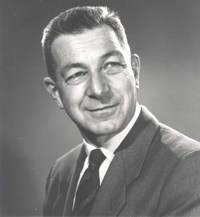
July 23, 2009: Darryl Thomas Kemp, Paroled Sex Killer Strikes Again, Gets Death Penalty for the Third Time

July 17, 1959: L.A. Carpenter Linked to Los Feliz Nurse MurderJuly 17, 1959: Darryl Thomas Kemp is linked to the killing of Marjorie Hipperson. He killed again a few months after being paroled in 1978.
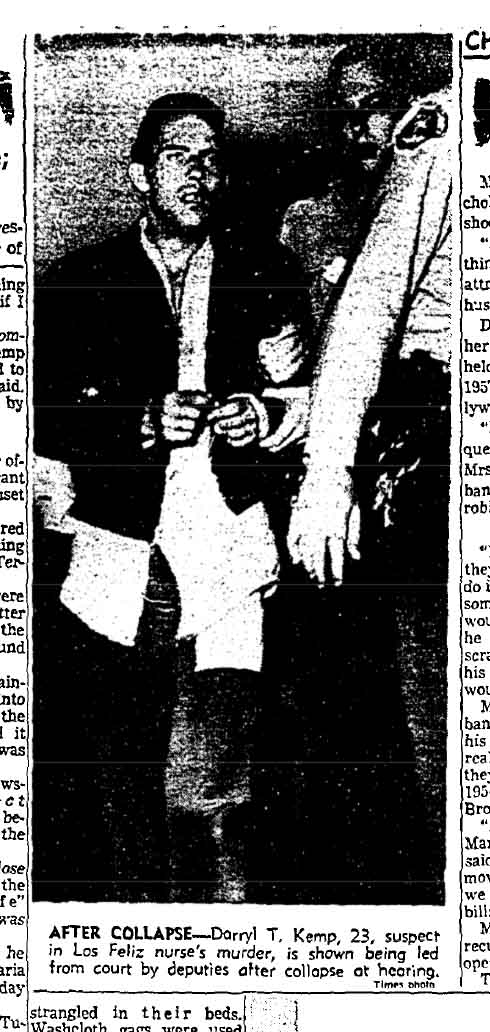
July 18, 1959: Darryl Kemp in handcuffs.
The nylon stocking murder of nurse Marjorie Hipperson, one of the most sensational Los Angeles crimes of the 1950s, was taken out of its musty files and brought back to life last year for the prosecution of her slayer, an odd little man named Darryl Thomas Kemp who was paroled by the state of California in 1978 only to rape and kill again.

The man sentenced to death last month in the 1978 killing of Armida Wiltsey bears little resemblance to the “pint-sized Canoga Park carpenter” of 23 who was arrested in 1959 on charges of kidnapping and raping a woman in Griffith Park while posing as a ranger. At 73,
according to news reports, Kemp often dozes behind dark glasses and uses a wheelchair although some doctors say he is faking his mental and physical illnesses and is perfectly capable of walking.

Kemp’s story is a triumph of criminal forensics in which investigators working nearly 50 years apart used crime scene evidence to link him to two notorious unsolved killings. And for supporters of capital punishment, his life highlights the tragedy of failing to enforce the death penalty.
Continue reading →

Posted in #courts, Homicide, LAPD | 3 Comments

Photo Helps Catch Horse Thief

July 23, 1899, Horse Thieft
July 23, 1899: A horse thief is caught by deputies using a photograph showing him and the victim, a former friend. 

Posted in Animals | Comments Off on Photo Helps Catch Horse Thief

Rape, Molestation Case Reveals ‘Depths of Depravity’

July 23, 1889, Flannel Shirts

July 23, 1889: Siegel the Hatter has flannel shirts!

July 23, 1889, Married

July 23, 1889: The marriage of James Edgecomb and the ensuing trial, below.

July 25, 1889, Edgecomb

But the story gets better… 

ug. 3, 1889, Depravity

Aug. 3, 1889: "Depths of Depravity" — now there's a headline that says: "Read me."

Posted in #courts | Comments Off on Rape, Molestation Case Reveals ‘Depths of Depravity’

July 22, 1959: Matt Weinstock

Enforcing the Law

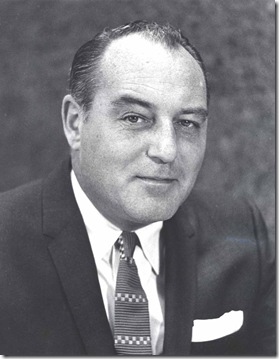
Matt WeinstockLet us re-examine the premise, frequently developed here, that many mounted policemen seem to have been trained to the principle that the most important phase of traffic enforcement is writing the citation rather than guiding erring motorists in the path of righteousness.
A man was nudged to the side in the southwest section by an officer who said he’d gone through a red light. The driver said he was certain he’d made it on the yellow. Everyone knows who wins that one.

Continue reading →

Posted in 1959, Columnists, Matt Weinstock | Comments Off on July 22, 1959: Matt Weinstock

July 22, 1959: Paul V. Coates — Confidential File

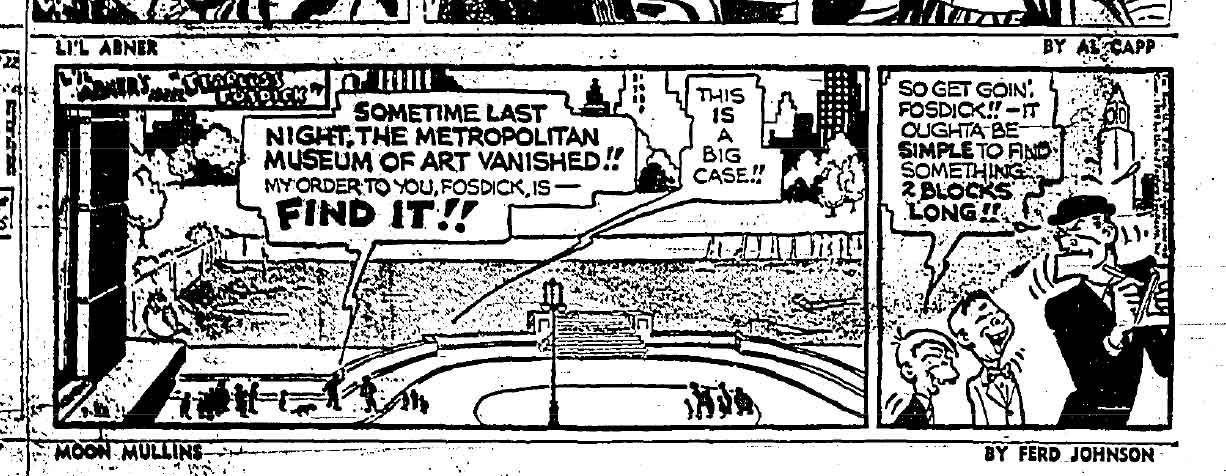
July 22, 1959: Fearless Fosdick must find the Metropolitan Museum of Art, which has been stolen!

Confidential File

Cops Troubled With Delusions

Paul Coates, in coat and tieA policeman’s lot, I’ve heard it sung, is not a happy one.

And I’m inclined to agree.

He’s an underpaid, overinsulted public servant who even has to make good on the bullets he uses protecting the proverbial life and limb.

He’s the guy who finds himself pounding a lonely beat in Staten Island for giving a friend of a friend of the mayor a bad time about a traffic ticket.

While the top brass works in air-conditioned offices, he patrols the streets in 90-deg. weather wearing a heavy wool uniform shirt. And they tell him he is to conduct himself in “a manner becoming an officer” even under conditions when human nature makes it just about impossible. Continue reading →

Posted in 1959, Columnists, Paul Coates | Comments Off on July 22, 1959: Paul V. Coates — Confidential File

A Kinder, Simpler Time Dept.: Educational Comics

July 22, 1944, Steichen

July 22, 1944: Edward Steichen throws out his paintbrushes and takes up photography. It's not clear if the above story is entirely true — but it is entertaining.
Posted in art and artists, books | Comments Off on A Kinder, Simpler Time Dept.: Educational Comics

5 Lynched in Louisiana

July 22, 1899, Lynching
July 22, 1899, Tallulah, La.: "When he got to the courthouse square, a crowd of about two hundred and fifty citizens overpowered the sheriff and, after a severe struggle, took Joe and Charles Defatta down to the slaughter pen and hanged them to the gallows used for slaughtering beeves."

Read more here>>>

Posted in Homicide | Comments Off on 5 Lynched in Louisiana

Man Thrown Off Yacht for Singing


  July 22, 1889, Man Overboard

July 22, 1889: A man nearly drowns after being thrown off a yacht returning from Santa Catalina Island because he insisted on singing the tune "White Wings," which was evidently considered bad luck.

Note: If you search on the Internet you'll find that nearly everyone says "White Wings" was written in 1912. This is absurd, of course, if people were singing the song in 1889. Below, a 1926 Times story says it was written in 1882.

June 6, 1926, Banks Winter

June 6, 1926, White Wings

June 6, 1926: The Times profiles Banks Winter, composer of "White Wings."


Posted in Film, Hollywood, Music, Stage | Comments Off on Man Thrown Off Yacht for Singing

Found on EBay — Myer Siegel

Myer Siegel EBay

This silk dress from Myer Siegel has been listed on EBay. It's unclear from The Times' clips exactly what became of Myer Siegel, but it disappears in the early 1950s. Myer Siegel items are fairly unusual on EBay, compared with those from Bullock's or even Oviatt's. Bidding starts at $34.99.
Posted in Fashion | 1 Comment

Matt Weinstock — July 21, 1959

McCarthy Ghost Still Haunts

Matt Weinstock Two teachers who have been subpoenaed to appear before the House Un-American Activities Committee here Sept. 15 called on a staff member the other day to tell their stories and ask a favor.

One
is a middle-aged, married, soft-spoken woman who teaches kindergarten
in a nearby city. She has never been associated with any Communist
activity, she said, and has no idea why she has received the summons.

She
had talked to her principal after it was served and told him that the
only reason she could remotely give for the subpoena was that she had
expressed disapproval of some of the material used in the early grades,
notably the book "Little Black Sambo," which she felt was racially discriminatory.

DESPITE THIS,
the principal suggested she resign to protect her record as a teacher
and to prevent a furor in the community, which is notably sensitive to
the slightest taint of subversion, even if unproved. And so she has
resigned.

July 21, 1959, Runaway The other is a philosophy professor at a college in
the community. His record is also clean and he has no idea why he was
subpoenaed. Like the kindergarten teacher, he has also signed a
teacher's loyalty oath.

He told the head of the college that he
had searched his memory for a possible reason for the summons and the
only thing he could think of was that he had signed a petition, as
others have, urging that the House Un -American Activities Committee he
abolished. The college had expressed understanding and there has been
no suggestion of resignation.

Why did they come into the main
office to talk to a newsman? To ask that, although innocent, their
names not be printed when the list of persons subpoenaed is released to
the press. In the subversion league, they know, public accusation is
tantamount to conviction and the smear is permanent.

The ghost of Joe McCarthy continues to hover.

::

AN EXECUTIVE of Beckman
Instruments in Fullerton invited a friend to his home and at the time
he was due to arrive the phone rang. It was the friend, who said, "I'm
at 1st and Palm — what should I do now?" He was talking from his
cruising car. The host stayed on the phone and talked him in, just like
at the airport with a plane lost in the fog. Paul Chase, who was there,
is working on a new system to be called GCA — Guest Controlled Approach.

::

THE PET
female rabbit belonging to Kathy Mellon, 8, has become a nuisance, and
the other day her father, who prides himself on his selling ability,
saw a chance to get rid of it. He asked a neighbor boy, 10, who has a
male rabbit, "How would you like to get in the rabbit-raising
business?" He painted a glorious picture of the immense profits of such
an enterprise. The boy thought that it would be fine but he said he'd
have to ask his mother.

The response came cold and sharp
directly from the boy's mother. "We have guinea hens," she said. "How
would you like to get into the guinea-hen business?"

::

July 21, 1959, Abby TOM CASSIDY of KFAC
took his son Johnny, 4 1/2, to Family Night at the Hollywood Bowl and
was pleased at the boy's seeming absorption in the program — until an
announcement during a cowboy interlude. At which Johnny commented,
"Boy, he sure goofed! He said Annie Oakley was on Channel 7 — she's on
Channel 11."

::

AT RANDOM — En route to Peoria, Ill., where he'd served 27 years with the fire department, Aylesworth R. Place of L.A. died in a heart attack. For his funeral in Van Nuys a few days ago his widow called the LAFD
and asked if three pallbearers might be furnished as a tribute to a
fellow fireman. Nine volunteers responded . . . One of the luxurious,
modern living room displays at the Home Show is titled "Penthouse on
Bunker Hill, 1960" — premature perhaps but prophetic.

Posted in Columnists, Matt Weinstock | Comments Off on Matt Weinstock — July 21, 1959