Rain Floods Downtown Streets

 Dec. 10, 1909, Flooded Street
A young woman gets carried across a flooded street at Jefferson and Grand.

Dec. 10, 1909, Flooded Streets


Dec. 10, 1909: “There are few sights funnier than a large crowd on the streets during a heavy downpour. Such was the case yesterday. During the early morning a patrolman had been stationed at Temple and Broadway to assist women across the waters. But the whole police force could not have given the needed assistance to the throngs that tried wading across Broadway and 2nd, Main and 4th, 7th and Broadway and other besieged watering places.”

Posted in Downtown, Fashion, Transportation | Comments Off on Rain Floods Downtown Streets

December 9, 1959: Matt Weinstock

Dialing Chessman

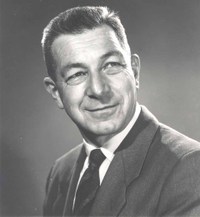
Matt WeinstockFrancois de Montfort, correspondent for Ici Paris, is in Hollywood having a look at the movie making.  As he arrived on the set of “Strangers When We Meet” to interview Kim Novak the other day, he told publicist Paul Price he’d received a message from his paper suggesting he interview Caryl Chessman, who has become a international cause celebre.  He wondered how to go about it.
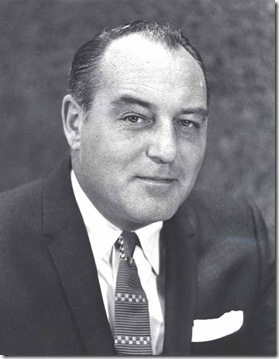
It was suggested that he get clearance in Sacramento and he called the state Capitol.  There he was instructed to call San Quentin direct.

He got Asst. Warden Achuff on the line, identified himself and said he’d like to interview Chessman. Continue reading →

Posted in #courts, 1959, art and artists, broadcasting, Caryl Chessman, Columnists, Comics, Matt Weinstock, Television | Comments Off on December 9, 1959: Matt Weinstock

December 9, 1959: Paul V. Coates – Confidential File

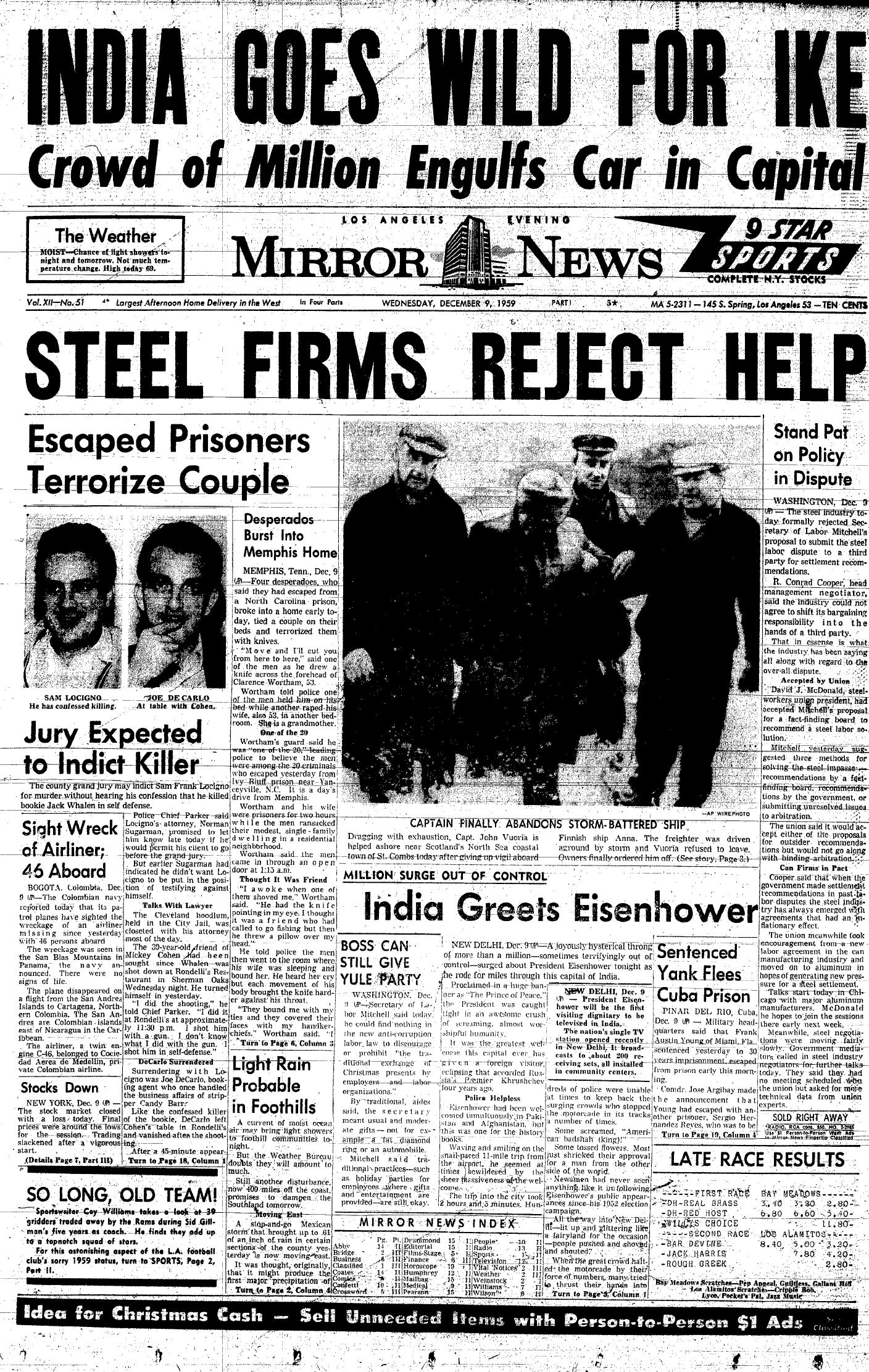
December 9, 1959: Mirror Cover

Wacky Tony’s Story: ‘I Killed Jack Whalen’

Paul Coates, in coat and tieI take stories as they come.  And yesterday’s came by phone.

“My name is Tony,” the caller told me.  “I’m going to give you a story and you’re going to give me protection.”

“What kind of protection?” I asked.
“Not for me,” he snapped.  “I’m big enough to take care of myself.  It’s for my family.  I don’t want anything to happen to them.

“Anyway, when I finish spilling to you I’m dead,” he added.

Then, to the accompaniment of a blaring juke box in the background, Tony whispered hoarsely into the mouthpiece that he was the man who shot Jack Whalen in Rondelli’s last week.

Continue reading →

Posted in Columnists, Mickey Cohen, Paul Coates | Comments Off on December 9, 1959: Paul V. Coates – Confidential File

A Kinder, Simpler Time Dept.: Your Movie Columnist

Dec. 9, 1946, Hedda Hopper 
Dec. 9, 1946: “The Edgar Bergens poured last night after christening their daughter, Candy. They not only served cocktails, but also dinner. The Bergens don't give many parties, but when they do, they're good.”

ps. Macdonald Carey is “hubba-hubba with preview crowds” in “Suddenly It’s Spring.” 

Posted in Columnists, Film, Hollywood | Comments Off on A Kinder, Simpler Time Dept.: Your Movie Columnist

President’s Pilot Worries About Trip to Afghanistan

Dec. 9, 1959, Traffic Safety

“Remember, leave your blood at the Red Cross, not on the highway,” says Capt. Dan Mathews of "Highway Patrol."

Dec. 9, 1959, Cover

Air pollution is linked to lung ailments.

Dec. 9, 1959, Take a Giant Step

“Take a Giant Step” opens. And I’ve added to my Netflix queue.

Dec. 9, 1959, Sports

Dec. 9, 1959: If there's a constant to The Times' coverage of Dodger Stadium's construction, it's the feeling of optimism even at the expense of common sense.

Walter O'Malley told The Times' Frank Finch that not only would the Dodgers "definitely" open the 1961 season at their yet to be built ballpark in Chavez Ravine, there was a "quite remote" chance that they would play a few games there in 1960.

Just a few days earlier, Finch wrote about the Dodgers trying to trade for Washington Senators slugger Roy Sievers. "The husky right-hand hitter could make a lot of hay in the Coliseum," Finch wrote.

But why all the fuss if the Dodgers weren't even going to last the 1960 season in the Coliseum? On second thought, maybe that's why the trade talks for Sievers went nowhere.

–Keith Thursby

Posted in #courts, Dodgers, Downtown, Politics, Transportation | 3 Comments

Nuestro Pueblo

 
Sept. 14, 1938, Nuestro Pueblo


Broadway between 1st and Temple, looking toward Hill Street.

Oct. 20, 1943, Court Flight

Oct. 20, 1943: A fire destroys Court Flight.
 

Sept. 14, 1938: Joe Seewerker and Charles Owens visit Court Flight, another long-vanished downtown landmark. Today, the Hall of Records is also gone, as is the "slope across Broadway," where Court Flight once operated. 

Note: The original run of Nuestro Pueblo concluded in 1939. I’m going back and picking up the entries that I missed the first time.

Posted in #courts, Architecture, Downtown, Nuestro Pueblo | Comments Off on Nuestro Pueblo

Judge Clears Way for Deportation of Revolutionaries

Dec. 9, 1919, Emma Goldman 

Dec. 9, 1919: A judge dismisses writs of habeas corpus for Emma Goldman and Alexander Berkman, clearing the way for them to be deported to the Soviet Union as undesirable revolutionaries. The judge grants a temporary delay so that Goldman and Berkman can appeal to the Supreme Court.

Berkman, Goldman and other deportees arrived at the Soviet border Jan. 19, 1920. Goldman called it, “The greatest moment of my life.” She added: “"After 35 years of absence I am returning to Russia with a feeling of awe. I am glad to leave America but I love the American people and expect to return some day.”

Posted in #courts, Politics | Comments Off on Judge Clears Way for Deportation of Revolutionaries

Mules for Sale

Dec. 9, 1909, Mules 

Dec. 9, 1909: Mules are for sale at 1782 E. Main Street, autos at 747-749 S. Spring. Los Angeles traffic in this era consisted of streetcars, horse-drawn vehicles, automobiles, motorcycles, bicycles and pedestrians. It was an interesting time. My suspicion is that what we now call North Main Street was once considered “East Main Street” because it runs east-west at that point.

Posted in Animals, Transportation | Comments Off on Mules for Sale

Matt Weinstock, Dec. 8, 1959


    Dec. 8, 1959, Abby

Crankcase Breather

Matt Weinstock     As you may have read, the Automobile Manufacturers Assn. a few days ago announces the development of a device which would eliminate "substantial" amounts of smog-causing auto exhaust.

    The fumes, it stated, would be fed back to the engine through a tube and re-burned.

    Furthermore, the AMA boys stated, the device would be offered on 1961 cars as an accessory or as optional equipment.  No estimate was given as to its cost but they said it would be inexpensive compared with previously announced exhaust control mechanisms, such as after-burners, still unperfected.

    Reporter Les Wagner, this paper's smog specialist, read it too and something went "ping" in his memory.  After considerable research, he turned up an interesting bit of lore- in a 1954 Sears Roebuck catalogue.
image
    UNDER THE
heading "Oil jars and cans," which included several types of fuel containers and flexible pouring spouts, there is listing P, as follows:  "Crankcase Breathers.  Carry away oil fumes.  Shipping weight 14 ounces.  69 cents."  Another listing states, "Same as above except it transfers fumes to air cleaner, 69 cents."

    Floyd Clymer, automotive historian, recalled that returning crankcase vapors to the intake manifold, the air cleaner or the carburetor, had been done for years.

    Smith Griswold, smog director, discounted the effectiveness of such a device. 

    "We are still counting on something that will eliminate 80% of the unburned hydrocarbons and 60% of the carbon monoxide," he said, "not 2%, as this one would."

    By the way, the experts say that anyone who thinks he's going to get off with an exhaust gadget that costs less than $25 or $50, when one is perfected, is just a dreamer.

::


    A WOMAN
in The Harem, Robertson Blvd. beauty shop, was uncertain how she wanted her hair done so hairdresser Vera Roberts suggested, "Let me do it darker — you'll look 10 years younger."

    The woman said despairingly, "Who wants to look 62?"

::


    LA PAYOLA
, a lady named Carol whispers, doesn't flourish only in the entertainment business.

    She phoned an outfit about reconditioning her furniture. Two men showed up and went through the house making an estimate.  As one of them finished the first page he said, "That's $144 so far."

    "Don't bother turning the page," Carol said, "that's too much — I can't afford it."
  
"Wait a minute," he said, "I haven't put down everything.  We can have  a private arrangement.  That way the company makes a profit, you get a good deal, I make something and nobody gets hurt."

    Carol was suddenly positive she couldn't afford it and ushered them out.

::


    SINCE THE
rubout of Jack Whalen, people are asking how come suddenly there is evidence of large-scale bookmaking.  Hasn't our great leader repeatedly assured us the town is clean? Oh, maybe a little fun and frivolity here and there but nothing as bad as J. Edgar hinted recently.  And never mind those snickers from horse players who never seem to have trouble getting a bet down away from the track.  

    Perhaps the grand jury will find the answer to this aggravating riddle.

Dec. 8. 1959, Killing     Meanwhile, it is well to keep in mind the statement once made by writer Courtney Riley Cooper.  It went something like this: Whenever you see rackets flourishing openly in your community you can be sure that someone in law enforcement responsible for their suppression is permitting them to operate.

::

    ONLY IN L.A. — Neatly stenciled in black letters on a rock on Beverly Glen Blvd. near Mulholland Dr. is the message, "Help Stamp Out Reality."  Joe Weston figures some UCLA philosophy student is responsible.

::


    MISCELLANY —
The return envelopes L.V. McCardle, city treasurer, enclosed with bills reminding people their sewer assessments are due have "Thank you" printed on the flap.  The ones from H.L. Byram, county tax collector, don't . . . And a lot of people who used to do their Christmas shopping early now merely do their credit union shopping early.


Posted in Columnists, Homicide, Matt Weinstock | Comments Off on Matt Weinstock, Dec. 8, 1959

Paul V. Coates – Confidential File, Dec. 8, 1959

 
Dec. 8, 1959, Mirror

A Civic Confessional on Sin and Stupidity

Paul Coates    A few miles north of Charleston, South Carolina, on Highway 52, there's a brand new billboard welcoming travelers to the gracious, growing Dixie city.
 
  It reads:

The Association of
South Carolina Klans
Knights of the
KU KLUX KLAN
Welcome You to
CHARLESTON

 
  It's a lousy sign.  From a grammarian's point of view, it is.

    You don't go around saying, "The association . . . welcome you."  You say, if you've got any class at all, "The association . . . welcomes you."

    At least I do, and I don't even belong.

    But a mistake in English grammar can be forgiven, even if it's on a billboard eight feet high.  After all, in the South, some of the schools have been closed lately.

    What should be weighed with care, however, is the social significance of the sign.  The thought behind it. 

    A printed highway greeting by the Ku Klux Klan is a strange expression of sociability, even in the murky regions of the Deep South.
Dec. 8, 1959, Banned Books

    The Klan has always been — in varying degrees according to the temper of the times — a mark of Southern shame.  But in the past, at least, a small effort was made to keep the white-sheeted skeleton in the closet.
   
Now, apparently, they're showing it off in front of company.

    This startling business of a town's advertising its least desirable trail may be the beginning of a new trend in Chamber of Commerce thinking.

    Friendly signs of greeting posted on the outskirts of every city and hamlet have been a part of the peculiar geography of our country since long before Henry Ford invented the wheel.

    The weary traveling salesman was always reassured that he was welcome by the Rotary Club and that it met on Tuesdays and Fridays at Ida's Hideaway Cafe. 

    Now, with the KKK usurping the service clubs' traditional right, a minor revolution in the business of community advertising could be in the making.

    Our quiet locale of Sun Valley, for example, might do well to forget the health benefits of its climate.  In view of recent news events, it has a perfect right to represent itself as "Sun Valley — Home of the Biggest Bank Embezzlement Scandal in the History of California."
  
image And I'm sure that between them, the San Fernando Valley Chamber of Commerce and the Mafia could raise enough funds to erect a rather attractive neon sign at the outer reaches of the Cahuenga Pass, with the message: "Welcome to San Fernando Valley — the Little Sicily of Southern California."

    The possibilities, as you can see, are endless.  Toss out the tiered lines about "America's vacationland," and "playground in the sun," and "the film capital of the world," and turn your imagination loose.

    Dig out your community's dirty secrets.  Play up your faults.

    In its tourist brochures, Beverly Hills might tantalize the farmers from Iowa by offering them a first-hand view of "a city with more intrigue than your old copies of Confidential magazine."

    "Residents of Beverly Hills," it could state with candor, "actually supplied 50% of the dramas which you read in the magazine."

What's With Houses?

    Hollywood real estate promoters certainly could invest in a billboard stating, "Brenda Allen Built Her House Here — Why Don't You?"
   
Last, but not to be overlooked, is the Los Angeles Coliseum, which currently represents itself as "Home of the Word Champion Dodgers."

    I mean, they've got other tenants, too.  If they're looking for  a way to play up their weaknesses, how about a pennant across the entranceway:

    "Home of the Celebrated Last-Place Rams."

    Frankly, the whole thing doesn't zing me.  But maybe it's inevitable.  Maybe it's all part of the great master plan that's going around these days, for us to search our souls and bare the worst of ourselves.


Posted in Columnists, Paul Coates | Comments Off on Paul V. Coates – Confidential File, Dec. 8, 1959

A Kinder, Simpler Time Dept.: Your Movie Columnist

Dec. 8, 1945, Hedda Hopper

Dec. 8, 1945: Larry Storch, 22,  gets a lucky break.

Posted in Columnists, Film, Hollywood, Nightclubs, Television | Comments Off on A Kinder, Simpler Time Dept.: Your Movie Columnist

Boy Kills Mother, Wounds Stepfather in ‘Dream’

Dec. 8, 1959, Times Cover

Dec. 8, 1959: A teenager kills his mother and wounds his stepfather during what he calls a bad dream.

Dec. 9, 1959, Victims  

Edna Fisher, 38, was killed and Donald Fisher, 28, was injured.

Dec. 9, 1959, Killing

Dec. 9, 1959: Edgar Lee Cox was suspended from school for ditching, so his parents made him sit in his room and do homework.

Dec. 8, 1959, Whalen 

About 300 people attend the funeral of Jack “the Enforcer” Whalen. "There is no cause for bitterness. No place for hopelessness. We should ask God in his eternal power for forgiveness. We cannot ask why things are," says the Rev. Alex K. Campbell of St. David's Episcopal Church in North Hollywood.

… and tooth decay may be contagious. 

Dec. 8, 1959, Stompanato

Mickey Cohen is shocked … SHOCKED that the late Johnny Stompanato carried a gun.

Dec. 8, 1959, Middle East

"If the Arab refugee problem can be solved, most of the tension between Israel and the Arab world will dissolve…."

Dec. 8, 1959, TVs

There was a time when TV sets weren’t huge, black plastic cubes but masqueraded as other pieces of furniture. As if Betsy Ross had a Colonial GE television set – with remote.


Dec. 8, 1959, 4D Man

“4D Man” with Robert Lansing, Lee Meriwether … and a pre-“Miracle Worker” Patty Duke.

Dec. 8, 1959, Comics 

It’s for you ….

Dec. 8, 1959, Sports

A riot by drunk fans at Yankee Stadium stops a game between the Giants and the Browns for 20 minutes … And who will be the Dodgers’ starting pitcher?

Posted in Comics, Dodgers, Film, Front Pages, Hollywood, Sports, Television | Comments Off on Boy Kills Mother, Wounds Stepfather in ‘Dream’

The Complicated Geometry of the Eternal Triangle

Dec. 8, 1919, Briggs

“When a Feller Needs a Friend” by Clare Briggs

Dec. 8, 1919, Wedding

Dec. 8, 1919: To help raise money for Liberty Loans during World War I, a fundraising campaign was begun in which an engaged couple would win furniture, linens and other items they would need in their life together, including a flight in an airplane. The winning submission apparently came from Milton C. Walters and Ophelia Butler, who said their Liberty Loan work had brought them together. And perhaps it did …

Posted in #courts, art and artists, Comics | Comments Off on The Complicated Geometry of the Eternal Triangle

Drunk Man Kills Food Wagon Vendor


Dec. 8, 1909, Christmas

What women want for Christmas: a desk.

Dec. 8, 1909, Killing

Dec. 8, 1909: The operator of a food wagon at 9th and Main streets is shot to death after refusing to give some food to a drunk man. The killer escapes through a “marble yard” and either went to Broadway or 8th Street. A police officer tried to take the victim to the hospital via streetcar, but the man died en route.

Posted in #courts, Downtown, Food and Drink, LAPD | Comments Off on Drunk Man Kills Food Wagon Vendor

Found on EBay: Silverwood’s

Stetson Ebay  
This Royal Stetson DeLuxe from Silverwood’s has been listed on EBay – with what the vendor says is the original box. Bidding starts at $49.
Posted in Fashion | Comments Off on Found on EBay: Silverwood’s

Matt Weinstock, Dec. 7, 1959

 
Dec. 7, 1959, Murder-Suicide

The Rainbow's End

Matt Weinstock     One by one the old landmarks are disappearing.  Last week the Rainbow, with its old-fashioned mahogany bar, folded.

    The shabby Rainbow was known in bat cave circles as the saloon that cared.  Great men drank there, or at least they thought they were great while drinking there.

    Now the plaintive cry is heard around 2nd and Hill Sts., "Where will we cash our checks?  Where else can we run up a tab?  Where can we find bartenders who will find a clean shirt for a patron so he may go to work looking presentable, or raise the bail money when a customer makes the jailhouse?"

    Of course, there's another side to the passing of the Rainbow.  Dapper Abe Stein, the owner, puts it simply, "Too many headaches."

::

Dec. 7, 1959, Murder-Suicide     "ONE PICTURE is worth 10,000 words," some obscure Chinese philosopher is supposed to have once stated.  Ever since there has been sharp disagreement as to the relative impact of the written word, the spoken word and the picture.

    I happen to be partial to the written word although the emphasis these days seems to be on the spoken word and the picture.  The written word requires thought, as does reading.  This is not always true of the other two. 

    Anyway, it's always nice to hear one's feelings echoed.  In the quarterly journal, Arizona and the West, editor John Alexander Carroll offers this perhaps prophetic "dash of candor":

    "First and last, it is a journal for readers; the mere lookers will do better to look elsewhere.  We realize that mere looking has been in vogue in the United States for  a generation and more, that the Pulitzer Prize for the best photograph of the year is twice as much in cash as the award for the winning book in history.  Nonetheless we are convinced that ultimately the law of supply and demand will right the scales.  A good paragraph today is worth a hundred ordinary pictures.  Ten years from now, if American cameras are still clicking so much faster than the typewriters of talented authors, a good sentence may be worth a thousand of them."

::

    SHORTLY AFTER noon the other day newsman Joe Laitin, in pursuit of a story, phoned Mt. Wilson observatory.  The man who answered said he was sorry but he'd have to call back after 1 p.m.  "Nobody's ever here during the lunar hour," he explained.   Twitching slightly from the "lunar hour" bit, Joe asked, "Who's this?"

    "The janitor," was the reply.

::

Dec. 7, 1959, Murder-Suicide     BRACE yourselves, we seem to have another plateau.  The woman next door came to the home of a Beverly Hills matron and said, "My husband just called and said he'd invited a Russian engineer for dinner and I wondered if you had any caviar I could borrow."

::

    IT'S ONLY natural that the crew at Lou MacKenzie's electronics firm in Inglewood should be closely following television's agonizing self-scrutiny, particularly of synthetic and rehearsed phases of its output.  Their work is creating automatic audio systems.  For one thing, they create applause and laugh tracks for TV programs.  They also did the jungle and cave noises for some of the Disneyland rides.
   
Out of curiosity, Phil Worth, shop foreman, looked up the word "quiz" in the dictionary.  You, too, may be surprised to learn that in addition to the definition, "to examine or instruct by close questioning," it can mean "hoax."

::


    ONLY IN PASADENA —
The topic for debate in a Muir High School speech class was whether this country should provide birth control information to foreign nations — until a mother objected.  The new topic:  The Mike McKeever incident.

::


    AROUND TOWN —
On the main floor of the County Museum there is a marble statue of Hercules resting his arm on a club.  A small boy studied it a moment as Russell J. Smith, chief of the education division, happened by, then asked his dad, "Is he the father of baseball?"  At that, old Herc looks as if he had the "take" sign . . . A lady named Mary Louise heard a newscaster say, "Widespread to moderate eye irritation is expected tomorrow" and asks, "What's that?"  It means you cry bitter tears.


Posted in Columnists, Homicide, LAPD, Matt Weinstock, Suicide | 2 Comments

Paul V. Coates – Confidential File, Dec. 7, 1959

 
Dec. 7, 1959, Mirror Cover

Is This Really Tokyo Rose?

 Paul Coates  
    Her name is Iva Toguri d'Aquino, but you know her as Tokyo Rose.
    And that's why she hides.
    She's 43 now.  She has a small business and a smaller circle of acquaintances.
    This is deliberate.  This is her shield against the humiliation which results when somebody finds out and whispers, "That's Tokyo Rose."
    Strangers frighten her.  So do crowds.
    "They shouldn't," she says, "but they do.  I still live in terror of being recognized by someone."
 
Reluctant to Talk
    It was just a few days before today's anniversary of Pearl Harbor that I talked with Mrs. D'Aquino.  It wasn't easy to find her, and when I did, she was reticent at first.
   
"What's the use? she said.  "What good is it to talk to the press?  Everybody's mind is made up about me."
    The woman known to the world as Tokyo Rose continued:  "Nobody will believe me, but I'm not Tokyo Rose.
    "Maybe," she added, "before I leave this earth, I'll find out if such a person really existed."

Dec. 7, 1959, Jack the Enforcer Whalen
 

    There are people in the United States today who do believe her.  In February, 1957, the St. Louis Post Dispatch carried a story by one of them, Maj. William A. Reuben, a former U.S. Army combat officer.  After investigating her case, Reuben indicated that there was more than reasonable doubt of her guilt.

 
Evidence for Her
    There has been a lot of evidence to give some credence to the theory.  Among the facts brought out, and not disputed, at her 1949 trial for treason were the following:
Dec. 7, 1959, Vietnam     -No Radio Tokyo announcer ever identified herself as Tokyo Rose. There were 18 English-speaking women announcers employed by Radio Tokyo during the war.
    -Mrs. D'Aquino, born in Los Angeles and educated at UCLA, was stranded in Japan at the outbreak of World War II, and made repeated efforts to get back to the United States.
    -Her becoming a Radio Tokyo announcer was the result of a request by Allied officers, who — as Japanese prisoners of war — were writing the programs.  (One of the officers, an Australian major, testified at her trial that he and an American captain wrote all of her 12-minute, five-times-a-week segments, and that it was a straight disc jockey tape entertainment program.)
    -None of the officers were punished for their participation.  One, in fact, was promoted to major immediately after the war.
    -In both 1945 and 1946, Mrs. D'Aquino's activities were investigated by the Army, and then the FBI.  Each time, she was cleared.
 
Refused at First
    "The first time I was asked to do the programs, I refused," Mrs. D'Aquino told me.  "Then I was told it was orders of the Army and I learned that the prisoners of war wanted me to do it.
    "I was told that we would send messages to the families of prisoners of war.  We did this, and we played music.  On my segment, there was no propaganda."
    Mrs. D'Aquino added that she could have avoided the eventual treason trial if she had been willing to give up her U.S. citizenship.
    "Between those investigations after the war and 1948, when I was brought back to the United States for the trial, I had opportunities to become either a Japanese or a Portuguese citizen," she said.  "I was offered transportation to any Portuguese possession because my husband was Portuguese."
    (By Japanese law, she –as a descendant of a Japanese national — could have become a citizen of Japan in a procedure which requires about 20 minutes.)

 
Convicted on One Count
    "But I didn't give up my U.S. citizenship," she told me, almost casually.  "The jury was out four days before they came back with a 'guilty' verdict."
    The jury — which twice reported that it couldn't reach a decision- finally acquitted her on seven counts and convicted her on one, which charged specifically that she had broadcast the following words in 1944 after the Battle of Leyte Gulf:
   
"Now you fellows have lost all your ships.  You really are orphans of the Pacific.  Now, how do you think you will ever get home?"
    After serving 6 1/2 years of a 10-year sentence in the federal women's reformatory in West Virginia, Mrs. D'Aquino walked back into the world again in January of 1956. 
    "I'm lucky to have  a family like I've got," she continued.  "They have stood by me all the way."
    It was at her parents' request that Mrs. D'Aquino made her first and only trip to Japan in the summer of 1941 — to visit her mother's only sister, who was near death. 
   
Dec. 7, 1959, Abby

"Before that," I asked her, "did you ever belong to any Japanese organizations here in the States?"

    "The only organization I ever belonged to, in my whole life, was the Girl Scouts," she said.
 
'They Had to Find Somebody'
 
    "If you feel you're innocent, why do you think you were convicted?"
    Mrs. D'Aquino shrugged.  "I guess they had to find somebody who was Tokyo Rose, and I was as close as they could get."
    After a moment, she went on: "I'm not bitter about what's happened.  I'm not cynical.  What good would it do?"
    "Then," I said, "you have no intention of leaving the United States — giving up your citizenship?"

    The smile disappeared.  "No," Iva Toguri d'Aquino said.  "Everybody thinks I'm a traitor.  But I fought too long to keep my citizenship.  I'll never give it up."


Posted in #courts, broadcasting, Columnists, Front Pages, Mickey Cohen, Obituaries, Paul Coates | Comments Off on Paul V. Coates – Confidential File, Dec. 7, 1959

John Birch Society Official to Speak in L.A.

Dec. 7, 1959, Robert Welch 

535 S. Hoover via Google maps’ street view.

Dec. 9, 1959, Robert Welch

Dec. 7, 1959: Robert Welch is speaking in Los Angeles on the first anniversary of the John Birch Society. The Freedom Club was founded in 1952 by Dr. James W. Fifield Jr., pastor of First Congregational Church, 535 S. Hoover St. 

Posted in Politics | 1 Comment

Christmas Snapshots


Dec. 7, 1919, Electric Car

Dec. 7, 1919: Continuing our exploration of Christmas ads in The Times,
we find an electric car “for her” …

Dec. 7, 1919, Beer 
… home-brewed beer …

Dec. 7, 1919, Tetrazzini
… Tetrazzini records …

Dec. 7, 1919, Piano Rolls
… QRS piano rolls …

[I think "All the Quakers are Shoulder Shakers" has dropped out of the repertoire.]

Dec. 7, 1919, False Teeth

… maybe some new false teeth …

Dec. 7, 1919, Toys   … toys …   Dec. 7, 1919, Clothes
… clothes for women …   Dec. 7, 1919, Clothes

… and men …

Dec. 7, 1919, Furniture

… or bedroom furniture … (“it’s one of the first rules of femininity to thrill at the sight of a beautiful bedroom or boudoir – no matter whose it is.”) …

Dec. 7, 1919, Record Player 

… the happiest times of your life …

Dec. 7, 1919, Washing Machine

… or mother’s first washing machine.

Posted in Fashion | Comments Off on Christmas Snapshots

Predictions for Aviation Week

Dec. 7, 1909, Aviation Meet 

Dec. 7, 1909: How would you describe flying in an airplane to someone who’s never done it in a time when all but a few people are earthbound? 

"By climbing to the top of a tall tree in a heavy wind," said Mr. Willard in the interesting description of the sensations experienced in an aeroplane flight with which he began his talk, "you can get very much the same feeling that you have during the flight of an aeroplane. I know of no way of describing the sensation more closely."

Posted in Science, Transportation | Comments Off on Predictions for Aviation Week