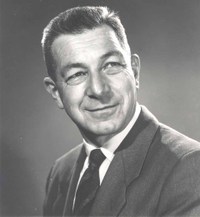
Thanksgiving, 1908

1908_1122_thanksgiving

Above, Thanksgiving, 1908

"Did the Pilgrim Fathers have salads at their Thanksgiving feasts? Nay, verily!"

How Did Thanksgiving Get to Be Turkey Day?


History: The All-American feast took its time becoming the holiday we all celebrate today.

Thursday November 15, 1990

By CHARLES PERRY,
TIMES STAFF WRITER

1908_1120_harris
Thanksgiving didn't come into the world fully formed. We don't even know when the first Thanksgiving Day took place, only that it was sometime between Sept. 21 and Nov. 9, 1621.

The Pilgrims certainly had no idea of founding an annual holiday, either. The first Thanksgiving was strictly a one-shot event. Similar ad hoc days of thanksgiving were proclaimed from time to time in Massachusetts over the next 50 years–usually by the churches, rather than by the civil authorities–but it was Connecticut that made Thanksgiving an annual event, starting around 1647.

The custom of having an annual Thanksgiving Day spread throughout New England in the 17th Century, but as yet it did not include any idea of commemorating the First Thanksgiving. If anything was commemorated, it was a later Thanksgiving when the crops had failed and the Massachusetts Bay Colony came very close to starvation.

In 1631, everybody was down to a daily ration of just five grains of corn when a day of fasting and prayer was proclaimed for Feb. 22. Miraculously, on that day a ship returned from England with food supplies, the colony was saved and the fast day turned into a feast. There is a very old New England custom, now mostly forgotten, of serving every diner five grains of corn before the meal in memory of the hardship and the deliverance of that year.

The holiday actually met a certain amount of resistance as it spread. Since the "pagan" holiday of Christmas was not celebrated in Massachusetts until the 19th Century, Thanksgiving was often thought of as essentially a Puritan substitute for Christmas.

Thanksgiving made no headway in the South, for instance, and probably it was only because the Dutch colonists had celebrated what they called Thankday that it was accepted in New York. When the British governor of Rhode Island proclaimed Thanksgiving in 1687–doubtless thinking he was doing his subjects a big favor–Puritan-hating religious dissidents celebrated the holiday so contemptuously he threw some of them in jail. Rhode Island didn't start celebrating Thanksgiving until 1776.

In 1776, of course, Thanksgiving was not a Puritan but a Patriot holiday. That year and every year throughout the Revolutionary War, the Continental Congress declared a national Thanksgiving to boost morale. George Washington also declared Thanksgivings as President in 1789 and 1795, as did the following Presidents occasionally until about 1815.

Still, the holiday did not catch on. That took two things: the migration of New Englanders throughout the Northern states, enthusiastically taking their holiday with them, and one very determined lady, Sarah Josepha Hale.

Sarah Hale was born in Maine in 1788 and had powerful childhood memories of Thanksgiving. In 1826 she published a novel containing a plea for a national Thanksgiving holiday. In 1846, as editor of the influential Godey's Lady's Book, a combination fashion and literary magazine, she began her campaign in earnest. From then on, she wrote at least two editorials a year on the subject and deluged public figures with correspondence about the need for Thanksgiving. She even included a chapter on the campaign for a national Thanksgiving in her book on etiquette.

The South dragged its heels for a while–when the governor of Virginia considered the idea in 1855, it was denounced as a relic of Puritan bigotry (probably a code word for Northern abolitionism), but the next year his successor just proclaimed the holiday without soliciting advice, and it was a success.

In 1859, Thanksgiving was celebrated in every state of the Union except Delaware, Missouri and recently admitted Oregon, and Sarah Hale expressed the hope that the holiday could unify the country against the gathering clouds of the Civil War.

That didn't happen, of course, but during that war she persuaded Abraham Lincoln to declare a national Thanksgiving Day, intended to be celebrated annually. He established the date we follow now, the fourth Thursday in November. After the Civil War, Thanksgiving was encouraged as a way of healing the wounds of the struggle.

The menu at the first Thanksgiving in 1621 was simply whatever the Pilgrims, with the help of the friendly Wampanoag Indians, could put together: venison, wildfowl (mostly turkeys and ducks), fish and cornmeal. Even today, the Thanksgiving table is supposed to groan with abundance, but in the 19th Century it really groaned. Sarah Hale–whose vision obviously influenced how we celebrate Thanksgiving–described one table loaded with chicken pies, goose, ducklings and three kinds of red meat as well as turkey, and another crowded with plum puddings, custards and pies of all sorts.

She was emphatic, however, that turkey held pride of place among the meats and pumpkin among the pies, and these are still the essential Thanksgiving dishes for most people. How did they get this status?

It's a little hard to say. As the largest bird available, turkey is certainly a prime candidate for a feast. In the course of the 19th Century, it became the absolute essence of what we call "Turkey Day," partly because it was a time of culinary nationalism when Americans boasted that they had the best ingredients in the world and therefore the best food; the native bird was obviously the right one for the native feast. In his 1878 book "A Tramp Abroad," Mark Twain describes getting homesick for American food in Europe and lists about 75 American specialties. Prominent among them are "Roast turkey, Thanksgiving style. Cranberries, celery."

Cranberry sauce was already strongly associated with turkey. As early as 1663 a visitor to New England had written, "The Indians and English use them (cranberries) much, boyling them with Sugar for Sauce with their meat, and it is a delicate Sauce." Nineteenth-century cookbooks throughout the country recommend serving turkey with cranberry sauce (sometimes cranberry jelly or, as in the original Fanny Farmer cookbook, cranberry punch), even in non- holiday contexts. It must have been the universal American taste, helped by the fact that cranberries keep well and could be shipped easily.

The necessity of pumpkin pie is a little harder to explain. In the 1650s, a visitor to New England noted that the colonists were eating apple, pear and quince pies like Englishmen, and had largely given up pumpkin pie. Maybe the homely pumpkin pie made a comeback in the late 18th Century when New England developed a taste for "plain fare," rather than fashionable European dishes. They kept their English plum puddings and apple and mince pies, but elevated the homespun pumpkin over them.

The New England menu was profoundly influential, but of course it had to be adapted to local circumstances. It was hard to start a meal with oysters in the Midwest. Certain new food habits might invade the menu, too. Olives and gelatin salads were gourmet novelties in late 19th-Century America. On the whole, though, our Thanksgiving dinners are simpler than our ancestors'. The effect has been to reinforce the special status of turkey with cranberry sauce and pumpkin pie.

At the same time every group in the country has tended to add its own traditional feast day specialties to the menu, perhaps gumbo crowding out New England's creamed onions and chocolate cake the non-pumpkin parts of the dessert. The process continues today; in many households, turkey is accompanied by pasta or enchiladas.

It has often been pointed out that the First Thanksgiving was not the first thanksgiving in this country. There had been thanksgiving feasts in Virginia and the short-lived Popham Colony in Maine, years before the Pilgrims came.

We celebrate what is basically a New England Thanksgiving because New England made the festival its own. Its people had not come here as Englishmen and agents of the king, but to found a new society. In 1896 Edward Everett Hale, au
thor of "The Man Without a Country," wrote of the first Thanksgiving: "The Festival itself was a reminder that they had turned over a new leaf. It was a thick leaf, too, and nothing could be read which had been written on the other side."

Posted in Food and Drink, Front Pages | Comments Off on Thanksgiving, 1908

Times Opposes Picture Brides

Nov. 26, 1919, Cartoons  

Edmund Waller “Ted” Gale on a Thanksgiving theme – a union turkey.

Nov. 26, 1919, Picture Brides

Nov. 26, 1919: The Times editorializes against picture brides, charging that they are just a maneuver around a California law that prevents Japanese immigrants from owning land.

Posted in #courts, Comics, Immigration | Comments Off on Times Opposes Picture Brides

Five Killed, Three Injured as Trolley Hits Car

Nov. 26, 1909, Crash

One of the victims is removed from a streetcar at the Pacific Electric Building.

Nov. 26, 1909, Crash

Nov. 26, 1909: The Santa Ana Flyer hits a  car carrying 10 members of the Jacobs family on their way home from a Thanksgiving party. The crash kills the driver, Nicholas Jacobs, and four of his eight children and injures his wife, daughter and his son John’s fiance. Three of the sons, Peter, John and Franklin, jumped from the car before the collision.

The streetcar carrying the victims to the Pacific Electric Building collided with a streetcar at Central Avenue and 7th Street, injuring seven people on the  Central car.

I’m unable to determine the exact location of the Latin Station. The 1945 Thomas Bros. guide shows the Pacific Electric tracks on Garfield crossing Shorb Street in Alhambra. 

Posted in Transportation | 1 Comment

November 25, 1959: Matt Weinstock

Fresh but Polluted

Matt WeinstockIn the broad scheme of things, the Fern Dell water hole isn’t very important.  But people who knew about it and went there to fill their jugs with cool, fresh spring water are disquieted since the Health Department declared it unfit to drink because of pollution.
The spring represented to people a renewed contact with nature and, symbolically perhaps, purity in a poisoned and synthetic world.  Also, as one man commented, “It was the last thing around here that was free.”

The word from the Recreation and Parks Department is that the Health Department is working on the job but the contamination is difficult to trace.  It’s not a simple matter of replacing the old, possibly rusted outlet pipe.  First, the source of the spring, somewhat high in the hills, must be traced.  Then the possibility of seepage into it from a sewer must be checked.

Continue reading

Posted in Columnists, Comics, Environment, Matt Weinstock | Comments Off on November 25, 1959: Matt Weinstock

November 25, 1959: Paul V. Coates – Confidential File

November 25, 1959: Mirror Cover
Vice President Richard Nixon will be grand marshal of the Rose Parade!


There Must Be Some Kind Answer to This

Paul Coates, in coat and tie(News item) Mrs. Carol Carpenter, 19, was arraigned in Los Angeles Municipal Court yesterday on felony child-desertion charges . . .

Today, I took a one-lesson course on How to Turn a Law-Abiding Citizen Into a Criminal.

I talked with Mrs. Carpenter.  What I learned, I’ll pass on to you.

Then, if you will, judge the woman.  Judge the law.  And judge the morality of the society which has branded her a criminal.

As background to the case, I’ll tell you that Carol Carpenter and her husband, Daniel, were married four years ago, while he was in the Army.  She was a month short of 16 at the time.  He was 18. Continue reading

Posted in #courts, Columnists, Paul Coates, Richard Nixon | Comments Off on November 25, 1959: Paul V. Coates – Confidential File

A Kinder, Simpler Time Dept.: Your Movie Columnist

Nov. 25, 1962, Hedda Hopper 
Nov. 25, 1962: "At Actors Studio, Julie [Newmar] says she used to watch Marilyn Monroe. 'She attended spasmodically and there was no particular fuss made over her — she was just another member of the class. But for two years I knew she was destined for a tragic end. She had no security and couldn't relate to other people. You'd say hello to her and it was a tremendous effort for her to reply. She'd come into class an hour and a half late, wearing a black mink coat, a transparent blouse and plaid slacks. And her hair would be uncombed. She'd put on her glasses and sit there and she'd be so hesitant in answering. Six months ago I noticed a deterioration in this hesitancy and when I heard she was constantly absent I knew it was a downslide for her. The higher you climb on the mountain of success the colder it becomes; a weak person can't hold on." 

Posted in Columnists, Film, Hollywood | 1 Comment

‘Ben-Hur’ Premieres in Benefit for USC


Nov. 25, 1959, Times Cover

Nov. 25, 1959: Los Angeles' population reaches 2.4 million.
 
Nov. 25, 1959, Adopted

Parents pose with newly adopted children in a program of the Adoption Institute.

Nov. 25, 1959, Adopted

Nov. 25, 1959, Ben-Hur

“Ben-Hur” premieres as a benefit for USC.

Nov. 25, 1959, Ben-Hur

Gore Vidal worked on the script for “Ben-Hur?”

Nov. 25, 1959, Ben-Hur

William Wyler, "whose extremes are as often matched by subtleties, has more nearly bridged the centuries between Christ's and ours than any other moviemaker. 'You are there,' " The Times' Philip K. Scheuer says.

Nov. 25, 1959, Sports  
Hey, Keith! Is this the “Home Run Derby” with Mickey Mantle and Willie Mays? 
Posted in Film, Front Pages, Hollywood, Sports, Television | Comments Off on ‘Ben-Hur’ Premieres in Benefit for USC

Nuestro Pueblo

Aug. 29, 1938, View of the Lancer 

Aug. 29, 1938: Joe Seewerker and Charles Owens visit the home of the late Times columnist Harry Carr, showing his view of Griffith Park.

Note: The original run of Nuestro Pueblo concluded in 1939. I’m going back and picking up the entries that I missed the first time


Posted in art and artists, Nuestro Pueblo, Parks and Recreation | Comments Off on Nuestro Pueblo

Thanksgiving Fireworks

Nov. 25, 1919, Thanksgiving 

Fireworks for Thanksgiving – in Venice.

Nov. 25, 1919, Fight

Nov. 25, 1919: Officer O.P. Torres arrests E.F. Keele after fighting on a hotel fire escape about 100 feet above the sidewalk at 4th Street and Main.

Posted in LAPD | Comments Off on Thanksgiving Fireworks

Women Postpone Thanksgiving Dinner to Meet Militant Feminist!

Nov. 25, 1909, Women

Portraits of Chicago women who deserted their families on Thanksgiving.  Oh, the scandal!!

Nov. 25, 1909, Women

"We will not stone our legislators. We will not horsewhip them in the streets. We will not break up their homes, nor drop stones through their roof to interrupt their banquets. We will do something more effective than that. We will see that they are defeated for renomination."

Nov. 25, 1909, Thanksgiving 

Agriculture, President Taft and the American eagle – all big! 

Nov. 25, 1909: I don’t imagine many people will get all the way through The Times’ jingoistic editorial on Thanksgiving. Here are some nuggets:

“The house of a thrifty artisan in Los Angeles has more luxuries than the palaces of kings had even less than 300 years ago. There are thousands of residences of wealthy people of Los Angeles today in every way superior to Kensington Palace in London, in which Queen Victoria was born less than a century ago.”  [By the way, Marie Antoinette’s bedroom at Versailles  is dinky—lrh].

Uh-oh:

"Torture was restored to freely in order to wrench confessions from those charged with guilt, and these confessions were often the result of delirium or despair and did not state the truth."

Nov. 25, 1909, Thanksgiving
Nov. 25, 1909, Thanksgiving 

Posted in art and artists, Food and Drink, Politics | 1 Comment

Found on EBay – Olga Nethersole

Olga Nethersole 

Olga Nethersole in an undated postcard for sale on EBay.

Jan. 1, 1907, Olga Nethersole

Olga Nethersole in “Sapho,” Jan. 1, 1907.

image

“Nethersole has the most seductive of voices” … Notice the ad for a Times brochure about its fight against unions, “revised, clarified, strengthened and improved” by Gen. Otis since his return from the Far East.

Jan. 11, 1951, Olga Nethersole 

Nethersole dies Jan. 10, 1951 at the age of 80.

A postcard promoting the appearance of Olga Nethersole at the Mason Opera House has been listed on EBay. Although she was quite prominent at the time, Nethersole is fairly obscure today. She’s not listed on imdb, so it seems likely she never appeared in films.  Bidding on the postcard starts at $5.

Posted in Obituaries, Stage | Comments Off on Found on EBay – Olga Nethersole

Matt Weinstock, Nov. 24, 1959


Nov. 24, 1959, Las Vegas

Hey, it’s our old pal T.C. Jones!     

He's a Go Boy

Matt Weinstock     For reasons which are inscrutable, the gentlemen in charge of traffic lights are tilting and putting blinders on them so that motorists cannot see the ones to their left and right while stopped at intersections.

    This is an unhappy turn of events for motorists who habitually look sideways while waiting for the signal to change.  Puts them on the qui vive.

    The blinders also put into sharp focus the two schools of driving. First, those who start the moment the light turns to green.  Second, the dawdlers.

    I HAPPEN
to be with the go boys and against the dawdlers. In fact, I will go so far as to state that there is no place in rush hour traffic for the laggards, who don't seem to give a darn if they ever get going.

    O gentlemen of the traffic lights, it could be that you've erred.  We need to see those lights to the right and left to see when and if we're going to make those signals.

::


Nov. 24, 1959, Beatniks     A SUNDAY SCHOOL
class got into a discussion of "The Nun's Story" the other day when it was found that several students as well as the teacher, Carl Monsen , had seen it.  They were talking about Audrey Hepburn's ordeal as a novice when one teenage girl remarked, "Wasn't it awful the way they whacked off her hair and then when she left they didn't even give her a permanent!"

::


THANKSGIVING THONG
Back east, thick shoes they
    hear the squeak of-
But shoes out here aren't
    much to speak of.
    –CLIFF MACKAY

::


    THE CURSE
has been taken off cranberries, but the gags remain.  La Vaughn Kirk reports a West L.A. camera store has a sign, "Bravest man in town is one who smokes a cranberry cigarette" . . . Harry M. Cress spotted this one in a  North Hollywood laboratory:  "Cranberry Decontamination a Specialty" . . . And a Sunset Blvd. shop has this one:  "Cranberries imported from Germany, Switzerland and Sweden."

::

    ALMOST every week the post office announces new stamps and there are those who think it's time to hold everything and go back to George, Ben and Abe.
 
  Kenny Isbell bought a dollar's worth of four-centers — drably white, inscribed: "Champion of Liberty" with a picture of Ernest Reuter, mayor of Berlin 1948-53.  He has nothing against Mr. Reuter, he wonders only if he belongs on a U.S. stamp.  Also how commemorative Mr. Summerfield can get.

::


    THE DEFENDANT
in a misdemeanor case phoned the city attorney's office the morning his hearing was scheduled and said he'd be unable to appear because of a broken leg.

    "That's too bad," the deputy prosecutor said.  "Are you in the hospital?"

    "You don't understand," was the reply.  "I've got a wooden leg.  I lost the bolt out of it and can't find it."

::

    A PUBLICIST who will be kept anonymous to spare him further embarrassment returned to his parked and locked car and saw, in dismay, that he'd left the key in the ignition slot.  There was nothing else to do as he got a big rock and smashed a window and unlocked the door from the inside.  He was about to get in when, out of habit, he reached in his pocket and found his key.  Then he realized he'd broken into someone else's car, identical with his.  Yes, he left his name and paid for the broken window.

::


    AT RANDOM —
Anybody know how to say "Merry Christmas" or "Season's Greetings," in Eskimo?  Photog Emil Cuhel took a picture of a pretty Eskimo gal in a parka for a Christmas card and nobody seems to know . . . A boy, 12, who did a minor chore for the lady next door was rewarded with a nickel.  He stared at it and remarked, with feigned incredulity, "Are they still making these?" 

Nov. 24, 1959, Abby


Posted in Columnists, Matt Weinstock | 1 Comment

Paul V. Coates – Confidential File, Nov. 24, 1959


Nov. 24, 1959, Mirror Cover

Face It; Aren't You Just a Mite Rigged?

   
Paul CoatesSit down.

    No.  Better yet, lie down.  Or is it lay down?

    Anyway, get prone.  Tuck a pillow under your head if it'll help relieve that nervous tension which undoubtedly has been building up within you all day.

    All set?  Nice and comfy?  You've got my column in front of you, extended at arm's length?

    Good.  Now I can tell you.

    Today, I'm going to discuss the TV quiz scandals.

    You undoubtedly thought that they were passe by now.  That, of course, is part of your trouble.  Too flighty.

    Along comes payola and your attention is diverted.

    All you're interested in now is if your favorite disc jockey was getting a few bucks under the turntable for trying to make a roll and rock hit out of that old ditty, "Ah, Sweet Mystery of Life."

    I could write a story.  I could tell you that Madame Curie was rigged, and you wouldn't care.  If Van Doren can be rigged, why couldn't Madame Curie?  That's what you'd answer me.
   
And now we're getting close to my point. 

Nov. 24, 1959, Otash     My point is that you've pushed this whole messy affair back deep, deep into your subconscious before you've had a chance to carefully analyze (which is, I grant you, a split infinitive) its implications.

    In other words, what I'm probing into is: "The TV quiz show scandals and YOU!"

    Do you know exactly where you stand now that we've all been told by the TV quiz show moguls that the riggings were a natural byproduct of the decadent, deceptive day in which we live?

    If you don't, be thankful you're here.

    I have with me a test which will show to what degree you have decayed morally.

    Please –not for my sake, but for your own — answer the questions truthfully.  If you don't you'll just rot a little more.

    1- When you do crossword puzzles while driving home on the Hollywood Freeway in the evening, do you turn to Page 8, Part III, for the answer to "Tibetan oxen," and then write it in, giving yourself full credit?

    2- On departing from a cocktail party, do you tell the hostess that you had a wonderful time, even though you know, down deep, that the Martinis were watered?

    3- If you give a seven-year-old newsboy a dollar for a newspaper and he gives you $1.10 in change, do you pocket the profit, pat him on the head, and walk away with a feeling of accomplishment?

    4- Do you save last year's Christmas gift boxes with Bullock's labels on them to package gifts which you bought at the 5-and-10 this year?

So, You Got Defects

    Now, tally up your answers.

    If you have one "yes" answer, you're morally defective.  But only a little bit.  Don't let it worry you.  Cut the test out. Try it again six months from now.

    If you have more than one "yes" answer, you're a moral thief.

    You know it.  I know it.

    And that's what I like about you.  You're not afraid to own up to it.

    Now, if you'll excuse me, get off the couch.  My head hurts and I want to lie down myself.


Posted in broadcasting, Columnists, Paul Coates, Television | 2 Comments

A Kinder, Simpler Time Dept.: Your Movie Columnist

Nov. 24, 1961, Hedda Hopper 

Nov. 24, 1961: “After the picture, we stepped into Jackie Gleason's Rolls-Royce, which he'd loaned us for the occasion, and drove to El Morocco for a bite to eat. There Hollywood producer Cubby Broccoli told me he will start the film ‘Doctor No,’ by President Kennedy's favorite mystery writer Ian Fleming, in Jamaica come January.”

Posted in books, Columnists, Film, Hollywood | 1 Comment

L.A. Disc Jockeys Turn Down Payola


Nov. 24, 1959, Payola

Nov. 24, 1959: KMPC’s Dick Whittinghill turned down $25, but says “I can’t sit in front of the chimney on Christmas Eve with a shotgun.”

Nov. 24, 1959, Payola

Bachelor Johnny Grant says he was offered “favorable attention from a young woman.”

Nov. 24, 1959, Born to Lose

Robert Lee Ramsey – Born to Lose.

Nov. 24, 1959, Rescue

Two officers from the Van Nuys Division save the life of traffic accident victim Phyllis  Burrows.

Nov. 24, 1959, Angry Red Planet

“Angry Red Planet”  “Jarringly amateurish!” “Cheap, clearly unreal backdrops!” “Unbelievably stilted.” “Many in the audience finished the final 10 minutes of gripping drama in near-hysterics!” IMDB gives it nearly 5 stars!

Cinemagic!
Nov. 24, 1959, Sports

Don Meredith of SMU is drafted by Dallas, Billy Cannon of Louisiana State is drafted by Houston.   and Bob Jeter of Iowa is drafted by the Chargers. Jeter turned down the Chargers to play Canadian football for two seasons, then joined the Packers.
Posted in broadcasting, LAPD, Sports | Comments Off on L.A. Disc Jockeys Turn Down Payola

Synagogues Plan Fundraising Campaign to Aid Needy

Nov. 24, 1919, Desmonds

Thanksgiving marks the opening of the social season and men may need a new dress suit.

Nov. 24, 1919: Jewish Fundraising

Nov. 24, 1919: Three synagogues plan a fundraising campaign to help victims of war and pogroms. It’s interesting to note that there was a synagogue at Central Avenue and 21st Street.

Posted in Fashion, Religion | Comments Off on Synagogues Plan Fundraising Campaign to Aid Needy

An Expensive Thanksgiving Turkey

image 

Adjusted for inflation, these turkeys cost $5.92 a pound, USD 2008.

Nov. 24, 1909, Razor

Nov. 24, 1909: Pompey Smith,  identified as an African American, refuses to leave jail when his term is up because he wants to be exonerated. A judge tells him to get going while he can. Once Smith returns home, he finds his former roommate, J.C. Carr, has disappeared with many of Smith’s belongings – including his razor.  "If he hadn't took my razor, I wouldn't appeal to no police,” Smith says. “If I had that razor I'd get him myself but I ain't got the money to get another.”


Posted in #courts, Food and Drink | 1 Comment

Matt Weinstock, Nov. 23, 1959


Nov. 23, 1959, Peanuts

Adrift in the City

 
Matt Weinstock     A bellboy, 25, was in municipal court a few days ago charged with impersonating an officer.  His arrest grew out of an argument in a saloon when the bartender refused to sell him a drink.
   
When he went into an irrelevant outburst in which he threatened to "pull the switch on this whole town!"
    "I've been sent down here from the moon to straighten things out," he went on, "but after looking around I'm not sure I can get the job done."
    There was laughter, of course, and many persons reading this may also be amused.
    But judges and court attaches no longer smile at such outbursts.  They know they have before them a disturbed person, one of many cast adrift in the city. They also know the inadequacy of the facilities to provide desperately needed psychiatric care for such persons.
 
::
 
image     A WOMAN CAME to a well-known artist and asked if he would paint her portrait.  She wanted to give it to her husband for Christmas, she said.  Then she added, with studied gaiety. "I'll pay you a handsome fee if you'll make me look 10 years younger."
    The artist, whose fees are high enough so that he can be independent, replied, "I'll tell you what we can do.  I'll paint you as you are today and you can give it to your husband 10 years from now."
 
::
 
    LIFE
Steak and violins, crystal
    chandeliers-
Corned beef hash in tins,
    followed by two beers.
    –JOSEPH P. KRENGEL
 
::
 
    A WOMAN PHONED the Health Department the other day and said urgently, "I ate some cranberries yesterday — what do I do now?"
   
The health officer patiently assured her she was in no danger.  When he hung up the receiver he shook his head sadly and remarked to a man visiting him, "I wish we could get through to people how ridiculous this cranberry scare is.  On the basis of the amount of poison required to induce cancer in rats, a person would have to eat 15,000 pounds of cranberries.  That's 100 pounds a year for 150 years.  I don't think anybody is going to make it."
 
::
 
    CONTINUING discussions, sometimes reaching the feud stage, are being held by northern and southern groups to settle on an agreement on water rights.  Unless surplus Northern California water can be delivered here, this area, with its exploding population, some distant day could virtually revert to desert.

    After a frustrating session Assemblyman Tom Rees, who represents the Brentwood Section, remarked wryly, "Well, at least I've got the riparian rights to the water in 13,000 swimming pools!"
 
::
 
    ON HIS RETURN from his first Boy Scout camp out Mike Allison, 11, reported, "The food was terrible.  The steak was raw, the bacon was black and I never want to thing about scrambled eggs again."  Who, his father asked, did the cooking?
    "I did, to earn points on my badge," the boy said, then added brightly, "but I sure had some good hamburgers on the way back!"
 
::
 
 
Nov. 23, 1959, Abby
   ONLY IN L.A. —
So that there will be  a fair distribution of funerals of unidentified and unclaimed dead, who are buried at county expense, undertakers designate  a Coroner of the Month, who gets the business for that period.
 
::
 
    AT RANDOM — The TV scene that bugs the boys in the City Council pressroom is the one in which the gal collapses when told a loved one is dead and the hero mushes up and says, "Can I get a glass of water,ma'm?"  Why water?  the pressroom boys ask.  At a time like that any doctor would prescribe wheesky . . . Did you hear about the householder, doing some weekend carpenter work in the garage, who called to his boy, "Son, get me a screwdriver, will you?"  The boy returned in a moment with a glass of orange juice and said, "Pop, I can't find the vodka!" . . . Several employees in a downtown office received credit cards they hadn't applied for.  They're angry, feeling someone was presuming.


Posted in Columnists, Comics, Matt Weinstock, Transportation | Comments Off on Matt Weinstock, Nov. 23, 1959

Paul V. Coates – Confidential File, Nov. 23, 1959

 
Nov. 23, 1959, Paul Coates

Note: Standards have changed since Paul Coates used "wetback" in this
column 50 years ago. Today, words like this are acceptable in The Times only if they appear in
a quote and then, only after consultation with top editors. Although such words are sometimes
appropriate, if Coates were writing this column for us today, we would ask him
to change it.

But Coates, who died in 1968 at the age of 47, wasn't
writing for us but for the readers of another generation. And so we're left with the
choice of making the changes ourselves or killing the column, both of which are
greater offenses. I should also note that I deleted the headline that originally appeared with the column because it
struck me as being needlessly inflammatory and wasn't written by Coates but by
someone on the copy desk.

Paul Coates    Ricardo Sarate Perez's story differs from that of the average wetback in two major regards.

    First, in purpose.  Ricardo didn't come to the United States in search of the American dollar.  He came in quest of something we take for granted here: an education. 

    Secondly, when Ricardo began his several-hundred-mile journey to Mexico's northern frontier, he was only 11 years old. 

    One of several children of a  railroad worker, Ricardo left his family's three room dwelling in San Luis Potosi at 8 a.m. on a  chilly winter morning in 1955.  He carried a  paper bag with two extra shirts and an extra pair of pants, plus the 25 pesos (two American dollars) which he had secretly saved for the trip.

    He had earned the money working with his father on the railroad.

    With three years of schooling behind him, his aim was to get more — to learn English like the tourists spoke it, then return to get a "good" job in a hotel.

Nov. 23, 1959, Retirees

   
This goal has been altered somewhat by the passing of time.

    The trip from San Luis Potosi, to Guadalajara, north through Mazatlan and Culiacan, and finally west to Tijuana, took 21 days.

    A boy on the highway in Mexico — even a small one — generally can keep moving by exchanging his services, loading and unloading trucks, for free transportation and, occasionally, a meal.

    In Tijuana, the 11-year-old spent two days learning about the border — where it was, how to cross it — and hearing stories about American jails before working up courage to sneak across.
   
image His was an ingenious plan.  And it worked.  Waiting for the late afternoon influx of Mexican workers to cross from the U.S. side back into their country, he slipped among them.  Then, walking backward as they walked forward, he passed unnoticed into the United States.
   
His success, however, was short lived.  Border patrolmen caught him in San Diego and returned him to Tijuana.  He tried once more.  Again, he was caught and sent back.

    For his third attempt, the successful one, he traveled east, all the way to Nogales.  He crossed ankle-deep in mud through a storm drain.

    And with the kind of luck that sometimes accompanies determination, he began his move northward and westward.

    Walking, stowing away on trucks and freight trains, sometimes boldly hitchhiking or going by bus, he kept on the move because he didn't know what else to do.  He kept from going hungry by catching a day's work  where he could — generally washing dishes in a Mexican restaurant.
   
He reached L.A., took one look and decided there were too many policemen.  So he caught the next freight north, where — a week later — he hit the jackpot.  In Sacramento he found a family which took him in, fed him and sent him to school.
   
Again, luck was his shadow.  Although he spoke no English, school authorities accepted the family's claim that Ricardo was born in Texas.  The family was poor and Ricardo helped out, spending weekends and summer vacations in the fields or slaughtering poultry.
   
Two months ago, however, the family told the boy he'd have to leave.  Because of illness, they would be forced to go on welfare and they were afraid of what might happen if he were discovered.

Found by Church Worker

    He left and came to L.A.  Sitting in a pew, praying, at Plaza Methodist Church, he was found by a church worker.  The boy told his story, illustrating it with a few tears and a few laughs.

    Then some other people heard the story of the little wetback.  Dr. Richard Brooks, president of Gardena's Spanish American Institute heard it.  He said he'd accept Ricardo in the home-school for boys if immigration problems could be worked out and the $75-a-month minimum tuition could be met.

    The Ladies' Plaza Club came up with $10 a month.  Arnold Rodriguez, a Plaza playground director, and his wife, a schoolteacher, volunteered another $5 and supplied the necessary affidavit of support.

    Dr. Brooks and Rodriguez took the boy's story to immigration officials here.  Rodriguez said that if the additional $60 a month for tuition wasn't volunteered, he'd pay it.  Then Dr. Brooks took a frightened Ricardo to the U.S. Consulate in Mexicali.

    This weekend, passport and student visa in hand, Ricardo Sarate Perez came back to town, a very happy and grateful young man.   
   

Posted in Columnists, Education, Front Pages | Comments Off on Paul V. Coates – Confidential File, Nov. 23, 1959

A Kinder, Simpler Time Dept.: Your Movie Columnist

Nov. 23, 1960, Hedda Hopper 

Nov. 23, 1960:  “Had a few days in New York while homebound from Europe so took in Lucille Ball's show 'Wildcat' in Philadelphia. It makes you laugh and cry and when it reaches Broadway it'll take this old town like she took the nation with 'I Love Lucy.' “

Posted in broadcasting, Columnists, Film, Hollywood, Stage, Television | Comments Off on A Kinder, Simpler Time Dept.: Your Movie Columnist