Ladies in Black, you know what to do….

Ladies in Black, you know what to do….

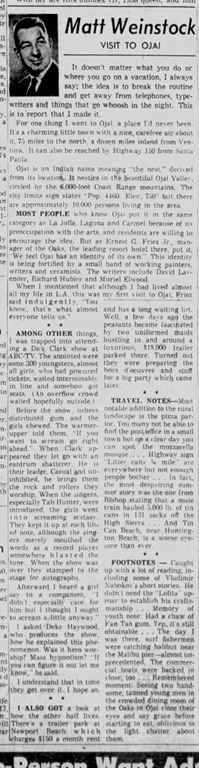
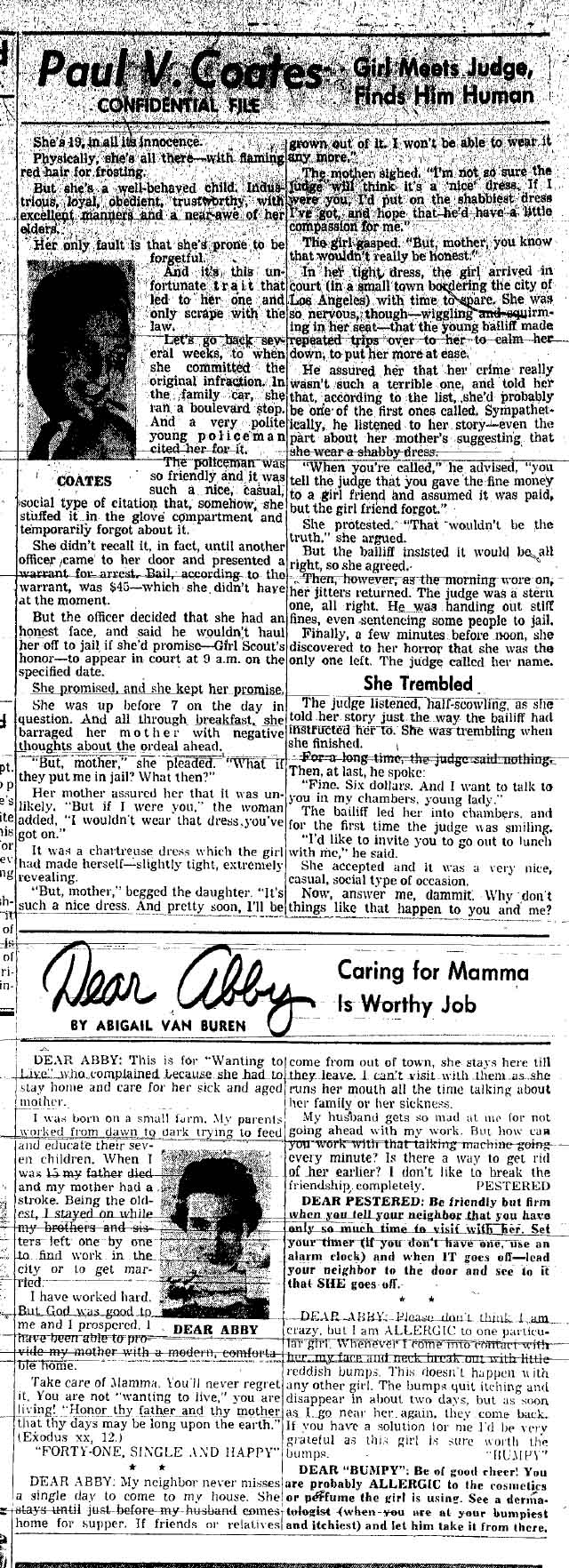
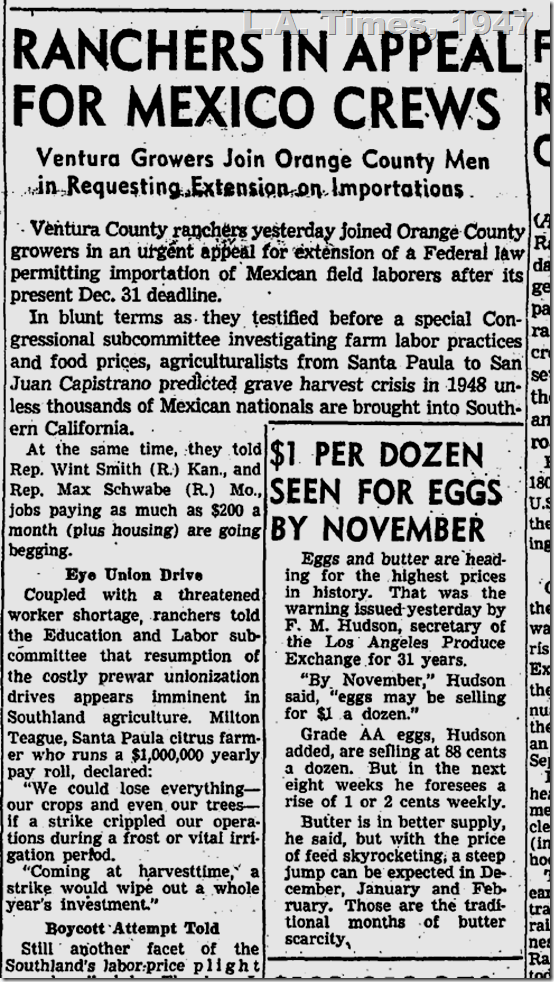
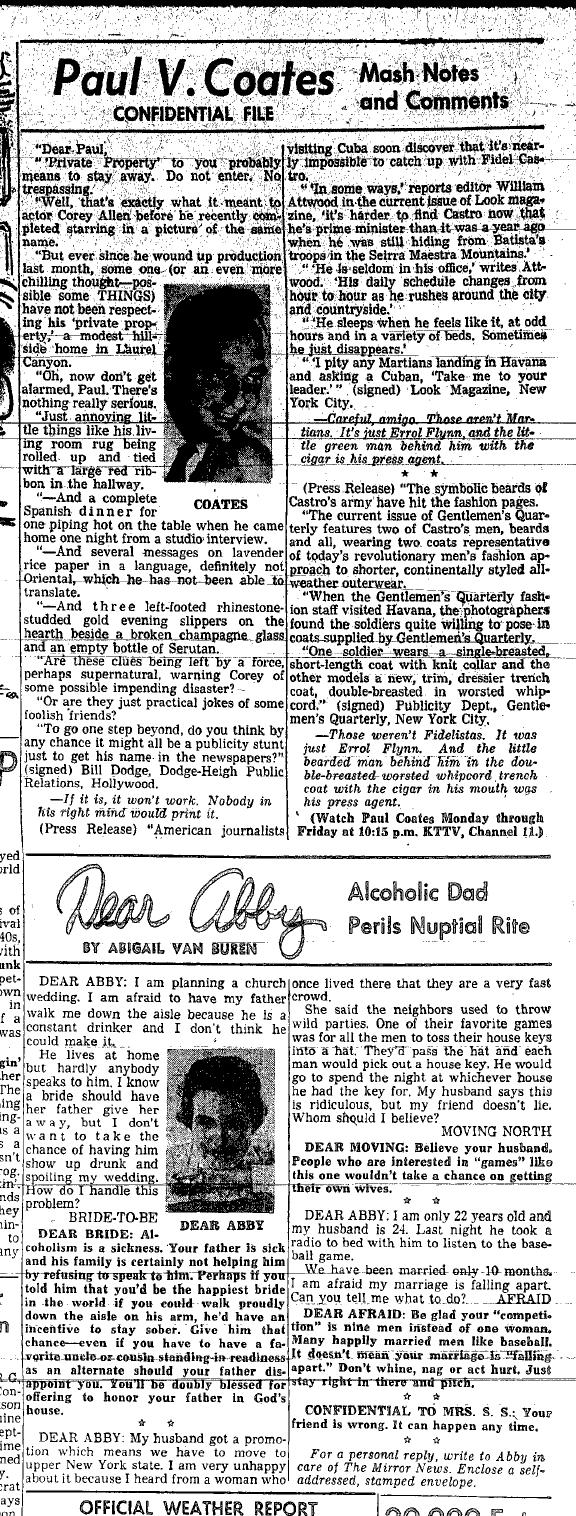
Note from 2009: Devon McReynolds, the Daily Mirror’s UCLA intern, is off to
Paris. Until our next intern starts in September, the Daily Mirror
won’t be able to transcribe Paul Coates or Matt Weinstock. Rather than
discontinue the columns, we’ll be posting them as image files. Because
of the way Typepad handles images, the thumbnails are murky, but the
full-size images are readable.

Note: This is an encore post from 2005 and originally appeared on the 1947project.
Girls aspiring to careers should follow women physicians’ example—many have both satisfactory home and professional lives, Dr. E. Mae McCarroll of Newark, N.J., told National Medical Association delegates and women’s auxiliary members last night.
The evening session at Second Baptist Church, Griffith Avenue at East 24th Street, concluded the 52nd annual convention’s third-day sessions devoted to a public health program, particularly as it applies to medical and hospital facilities for Negroes.

Aug. 22, 1944
Danton Walker writes: High on a hilltop in Beverly Hills at the end of the Tower Road, a tortuous lane overlooking Benedict Canyon, is a hobgoblin castle straight out of a Walt Disney film; an edifice of scrambled architecture, so rambling and complex that it would take a full day to explore it, if one had the heart to do so. It is the home of the late John Barrymore, on which the Great Profile spent close onto a million dollars; unoccupied since his death and unoccupiable except by someone who does not object to living with a frozen nightmare.
Louella Parsons says: “Citizen Tom Paine” was bought by Frank Tuttle a long time ago, but he left his option lapse and it goes to Walter Wanger. Walter has bought it from the author, Howard Fast, and plans to make a story of the Revolution with all the famous characters.
But he will not go into Paine’s religious beliefs nor his tendency toward atheism. Rather, will he make a real saga of the Revolutionary period with four principal characters, Washington, Jefferson, Franklin and Paine. Well-known actors will be chosen to play these four men. We haven’t had a good story of the American Revolution in a long time and Walter plans to spend a considerable amount in making an authentic story.
LEO: The sort of day on which your talents should shine. Clean up odd little tasks, pay bills, make plans for future events. Study standard problems. Aim at completion.
From the Philadelphia Inquirer via Fultonhistory.org.


August 22, 1944
The Times encourages readers to save copies of the paper for reuse in the war effort. Let’s hear it for recycling!
Keith Hallock gets a kiss from Warner Bros.’ Joyce Reynolds for being the first to volunteer for a job making tires at one of the plants in Los Angeles.
Discussions are underway to avoid a streetcar strike over higher wages.
And no. It would be unconstitutional to keep Japanese Americans from returning to the West Coast after the war is over, says Atty. Gen. Francis Biddle.

A photo of the City of Chester, courtesy of the National Oceanographic and Atmospheric Administration.
![]() |
![]() Headlines in the Sacramento Daily Record-Union, left, and the Daily Alta California, above. |
The rediscovery of the City of Chester, which sank in 1888 after a collision with the Oceanic, prompted me to go into the California Digital Newspaper Collection to dig up the original stories. The Daily Alta California devoted an enormous amount of coverage to this incident, as you will see on the jump.
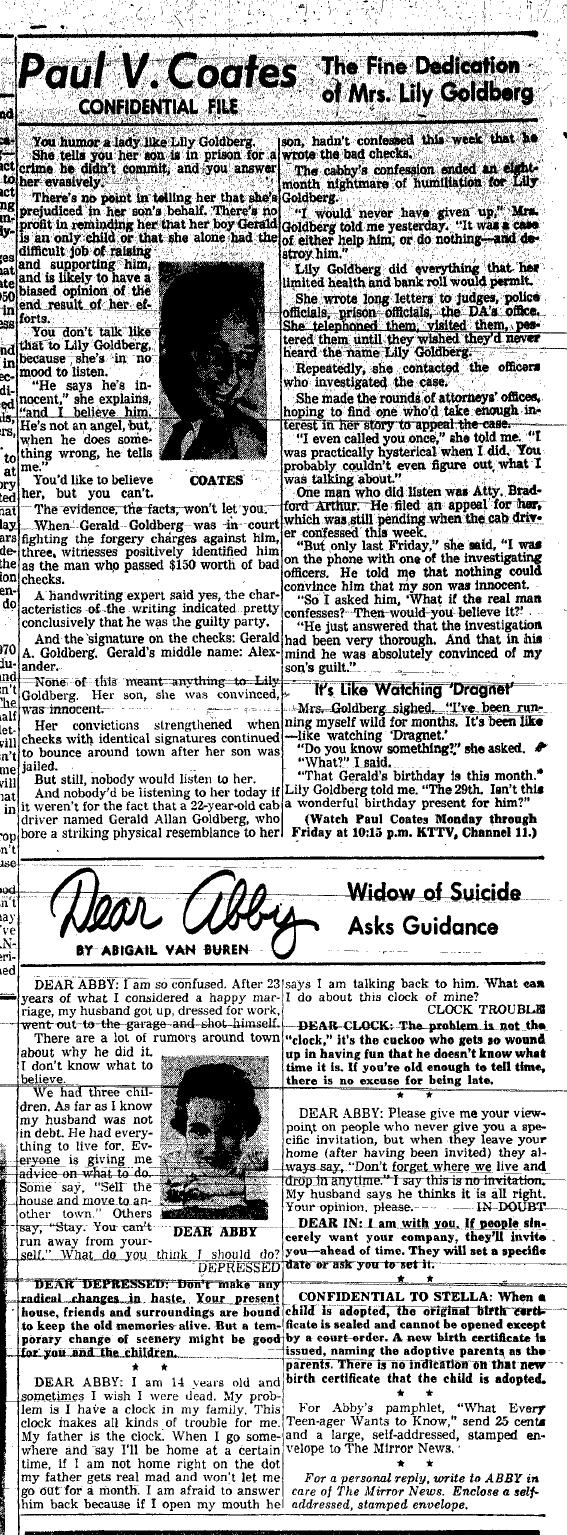
Note from 2009: Devon McReynolds, the Daily Mirror’s UCLA intern, is off to
Paris. Until our next intern starts in September, the Daily Mirror
won’t be able to transcribe Paul Coates or Matt Weinstock. Rather than
discontinue the columns, we’ll be posting them as image files. Because
of the way Typepad handles images, the thumbnails are murky, but the
full-size images are readable.


August 21, 1947: In the newspapers, he was “The Black Shadow of Leiperville,” “The Black Baron of Leiperville,” “The Black Giant of Leiperville,” “The Black Shadow of Los Angeles,” or just “Giant Negro.”
Born in Mobile, Ala., Jan. 25, 1897, as Feab S. Williams, he fought under the name George Godfrey after a black heavyweight fighter of the 19th century.

Note: This is a post from 2005 that originally appeared on the 1947project.
Timothy G. Turner was a prolific, long-established writer for The Times, beginning with a feature on Anna May Wong in 1921. While he retired from the paper in 1954 (having taken a few years off to work in public relations), he continued contributing articles until his death—in fact he wrote a cover letter on a submission to The Times a few hours before he died in 1961 at the age of 75.
He was a bald, lanky man with glasses, and the unsmiling mug shot with his obituary makes him look serious, cold and, in his signature bowtie, a bit eccentric. However, the story says he took delight in poking fun at all pretensions, lived downtown and refused to learn how to drive a car.

August 21, 1944
Today, we stumbled across a columnist named Danton Walker (d. 1960). We don’t know his name, but his prose is so familiar that we can recite by heart the stale, snide New Yorker’s boilerplate on Los Angeles. It’s the sort of thing still being circulated, scarcely unchanged, by some of today’s smartest East Coast writers whose sum of experience consists of a stay in West Hollywood or Beverly Hills and a jaunt to Farmers Market.
Walker writes:
Hollywood, like Broadway, is largely a state of mind. Originally an exclusive residential section of that vast, sprawling, unwieldy community called Los Angeles (“six suburbs in search of a city”), it has become the capital of filmdom and a symbol for all that goes with it. But Hollywood has now moved from Hollywood, and though four major producers — Sam Goldwyn, RKO, Paramount and Columbia — still maintain their centers in Hollywood proper, the rest of the industry has spread and is still spreading, mushroom fashion, over the hills and canyons of Beverly Hills, Holmby Hills, West Wood, Belair, San Fernando Valley and Ensino Valley [sic], and the homes of movie stars cling precariously, like the nests of birds, to the slopes of the Sierra foothills, miles and miles away from the famed corner of Hollywood and Vine. Miami Beach is positively cozy by comparison; Hollywood lives on wheels, and deprived of motor transportation, it would vanish from this earth as surely as Tyre and Sidon, the biblical cities of the plain.
Etc.
Louella Parsons says: A deal is hot on the griddle for 20th Century-Fox to borrow Kathryn Grayson from MGM to star in “State Fair,” one of their important musicals. If “State Fair” slips your mind, let me remind you it was made years ago with Janet Gaynor and Will Rogers in the top roles. Now it’s being converted into a musical by Dick Rodgers and Oscar Hammerstein II. There’s a great chance here for 20th to capitalize on the same hay-foot, straw-foot appeal that has made “Oklahoma!” such a smash.
LEO: Make an effort to “Hi Neighbor” associates. It’ll put your mind in cheery attitude, your daily good deed donation and you’ll function better. Cheery news.
From the Philadelphia Inquirer via Fultonhistory.com.

The churning craft on the cover are amphibious tractors, sometimes called “alligators.” The alligator, armed with machine guns, is designed to carry small loads of troops through the water to an enemy beach and, if possible, to carry them through the beach defenses. Together with approximately 1,100 warships, 37,000 naval aircraft and 48,000 landing boats, the alligator has made possible the U.S. formula of amphibious attack.
August 21, 1944
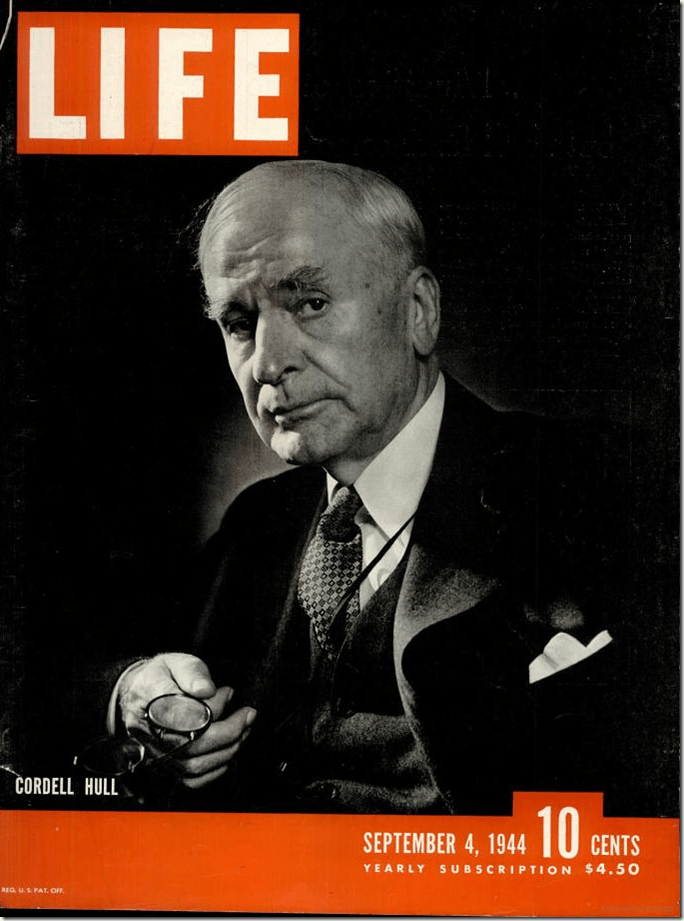
This week’s photo essay is by Alfred Eisenstaedt of European refugees arriving in America.
The featured movie is “Janie,” featuring Joyce Reynolds, who you may remember was supposedly up for a part in “Mildred Pierce.”
Other articles include a profile of vice presidential candidate Harry Truman; John Foster Dulles, likely to be secretary of State under the Republican administration of Thomas E. Dewey (oops); the ruins of St. Lo, destroyed in heavy fighting; preparations for the liberation of Paris; and George Ray Tweed, a U.S. Navy radioman who eluded the Japanese on Guam for 31 months.
Note from 2009: Devon McReynolds, the Daily Mirror’s UCLA intern, is off to
Paris. Until our next intern starts in September, the Daily Mirror
won’t be able to transcribe Paul Coates or Matt Weinstock. Rather than
discontinue the columns, we’ll be posting them as image files. Because
of the way Typepad handles images, the thumbnails are murky, but the
full-size images are readable.


August 20, 1944
To tell a woman she is beautiful is the most acceptable compliment any daughter of Eve can receive. It’s the most exciting praise every girl, whether she resides in Hollywood or lives on an isolated farm, enjoys hearing, and it’s the one thing she waits to hear from the lips of her lover or her husband.
Yet Hedy Lamarr, conceded to be Hollywood’s greatest beauty and mentioned as the most glamorous motion picture star, hates the very word “beautiful.”
Bestsellers this week: “History of Rome Hanks” and “I Never Left Home.”
From the Philadelphia Inquirer via Fultonhistory.com

Note: This is an encore post from 2006.
Casa Blanca, Morocco
Aug. 20, 1907
The Times carries a vivid description of a battle between Moorish tribesmen, French sharpshooters and spahis (Arabs in the French service), and though the story is extremely detailed about the fighting, there isn’t a word of background as to the cause.
The unrest dates to March 1907, when a mob in Marrakesh killed Dr. Emile Mauchamp, a member of the geodetic survey. Further inquiry shows that there was a general attack on Europeans in which a British official killed two people.
Note from 2009: Devon McReynolds, the Daily Mirror’s UCLA intern, is off to
Paris. Until our next intern starts in September, the Daily Mirror
won’t be able to transcribe Paul Coates or Matt Weinstock. Rather than
discontinue the columns, we’ll be posting them as image files. Because
of the way Typepad handles images, the thumbnails are murky, but the
full-size images are readable.

Here’s Boxie and I with this month’s “Ask Me Anything” on George Hodel.
In this session, I discussed:
–The dismal quality of the “true” crime genre.
–The origins of “Black Dahlia Avenger.” Continue reading
August 19, 1944
Really interesting news that Freddie March is ready to sign a contract to play Major Joppolo in “A Bell for Adano.” I don’t mean the movie, either. He is being signed by Leland Hayward for the stage play, which will reach New York before the movie is finished.
Little Joyce Reynolds has certainly won a place for herself on the Warner lot since “Janie.” Interesting that she will play the shrewish daughter in “Mildred Pearce,” a real departure from the wholesome schoolgirl in “Janie.”* Joan Crawford, who plays Mildred Pearce, is, I am told, negotiating with Edward Small for the lead in “Bella Donna.” That would give her one of the really dramatic parts of her career.
LEO: Stars offer fine scope for your talents and ability. Responsibility needed to fathom pitfalls and be able to combat same properly.
From the Philadelphia Inquirer via Fultonhistory.com.
Note from 2009: Devon McReynolds, the Daily Mirror’s UCLA intern, is off to Paris. Until our next intern starts in September, the Daily Mirror won’t be able to transcribe Paul Coates or Matt Weinstock. Rather than discontinue the columns, we’ll be posting them as image files. Because of the way Typepad handles images, the thumbnails are murky, but the full-size images are readable.


Note: This is an encore post from 2005 and originally appeared on the 1947project.
His favorite verses and anecdotes of his life were recited yesterday as old friends and admirers made their third annual pilgrimage to the grave of John Steven McGroarty, late poet laureate, playwright and Times columnist, at Calvary Cemetery.
The program, held before the poet’s simple headstone beneath the largest oak in the cemetery, was sponsored by the Eire Four Province Club with Thomas R. Lynch, club president, acting as chairman.
Through most of World War II, Tom Treanor provided Times readers with firsthand accounts of the battle against the Axis as his travels took him to such places as China, South America and Europe.
This is the last story he wrote before being killed Aug. 18, 1944, when a tank made a turn and struck his jeep on a dusty road outside a French village that had just been liberated from the Nazis. He lived long enough to learn that the doctor attending his wounds was from Los Angeles: Capt. William Werner, 1402 Crenshaw Blvd. Treanor told Werner that
he was sorry he wouldn’t be able to cover the liberation of Paris. Continue reading