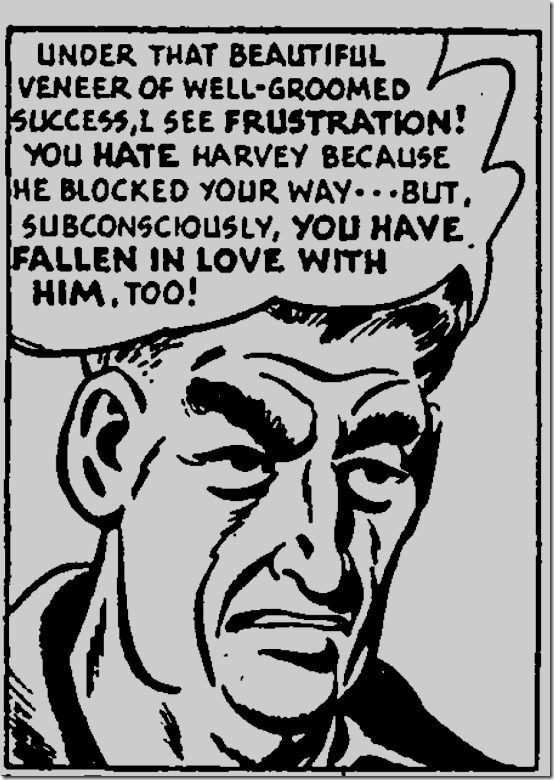
1944 in Print — Hollywood News and Gossip by Louella Parsons, October 10, 1944

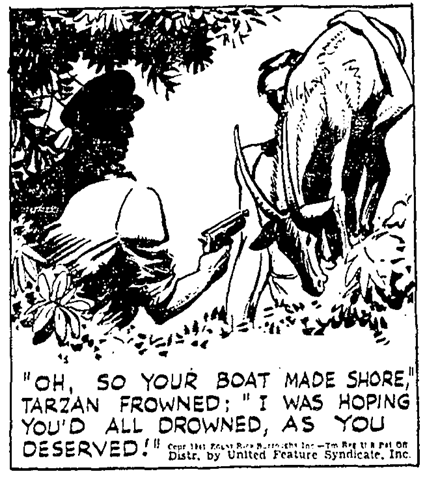
Oct. 10, 1944, Comics

October 10, 1944

Walter Winchell: All Around the Town

The Waldorf’s special entrance for private railroad cars … Ramshackle Lower East Side apartments without any bathing facilities – in the world’s most modern city .. The 22 reservoirs that supply the town with aqua … Sidewalk tie salesmen now hawking campaign buttons as a sideline … Debutantes perched on a limb of their family tree – looking down on the peasants … Greenwich Village trees that live without sun and water … Bowling Green, the burg’s oldest park, where the Injuns sold Manhattan … West Street, the most expensive waterfront property in the world: $470,000 an acre. At one time it was covered with water … Card sharps who sit in cheap hotel lobbies and practice shuffling cards … Grimy houses near Washington Market that were swanky mansions a century ago. Time rubs the glamour off everything.

Louella Parsons says: The news was hardly out that “Jubal Troop” had been postponed than Claudette Colbert was knee deep in scripts. The story that caught her attention, and the one she has accepted is “Guest Wife,” which she will do for Bruce Manning and Jack Skirball. But hold everything — that isn’t all! Don Ameche co-stars with Claudette. This means Don’s first independent fling, “What Manners of Love,” will wait.

Now it is Carole Landis wealthy Al Vanderbilt is beauing to the nightspots. Apparently he and K.T. Stevens are no longer romancing, for he is seeing the ex-Mrs. Wallace every eve.

From the Philadelphia Inquirer via Fultonhistory.com.

Continue reading

Posted in 1944, Columnists, Comics, Film, Hollywood | Tagged , , , , , , | Comments Off on 1944 in Print — Hollywood News and Gossip by Louella Parsons, October 10, 1944

Oct. 10, 1907: The Want Ads

This is an encore post from 2006.

Posted in 1907, Asians, Labor | Tagged , , | Comments Off on Oct. 10, 1907: The Want Ads

October 9, 1994: Julius Shulman Q & A

Los Angeles Times Interview

Julius Shulman

Capturing the Essence of California Architecture

October 9, 1994

By Steve Proffitt, Steve Proffitt is a producer for Fox News and a contributor to National Public Radio’s “All Things Considered” and “Morning Edition.” He spoke with Julius Shulman at the photographer’s home in the Hollywood Hills

In 1960, Julius Shulman took a photograph that, perhaps more than any other single image, conveys the style, grace and allure of postwar Los Angeles. Inside a steel-topped glass box balanced lightly on a hilltop, two young women in white cotton chat, while the City of Angels sparkles below. It is a picture both nostalgic and modern, the work of a self-taught photographer who truly invented himself.

In 1936, Shulman used a vest-pocket Kodak to snap a shot of a Hollywood home designed by architect Richard Neutra. A brash 26-year-old, he showed the picture to Neutra, and a career was born. Neutra hired him to photograph some of his other projects, and introduced the young photographer to such other leading West Coast architects as R.M. Schindler, Raphael Soriano and Gregory Ain. Shulman’s dramatic prints played an important role in establishing an international reputation for these and other Southern California architects, especially during the ’50s, a period many consider the golden age of Modernism. More than any architect of that era, he created a public image of the California style of design.

Perhaps because he never had formal training, Shulman worked intuitively, eschewing light meters and fancy light-reflecting umbrellas, and relying on nature. Yet, he was a master manipulator, often working at twilight, creating long exposures, opening and closing the lens, while turning lights on and off, to create texture and contrast. His clients often expressed surprise when seeing his images, for Shulman created a vision even they, as the creating architects, had never seen.

Shulman, who turns 84 tomorrow, lives with his wife, Olga, in a steel-frame house designed, in 1949, for them by Soriano. Long walls of glass contrast with corrugated sheet-steel siding. The house is hidden within two heavily wooded acres in the Hollywood Hills.

In 1986, Shulman announced his retirement, in part as a way of expressing his distaste for post-modernist design. But the lure of the lens was too strong, and now, back at work, he’s busier than ever. A retrospective of his early photographs is currently on view at the Craig Krull gallery in Santa Monica, and a biography, “A Constructed View: The Architectural Photographs of Julius Shulman,” by Joseph Rosa, has been published by Rizzoli. Inside his studio-office, Shulman shows off prints and publications, bouncing around the room with the energy of a teen-ager, promising not to retire until he hits 120.

*

Question: What were the elements that came together to make the 1950s so robust in terms of architecture in the Los Angeles area?

Answer: I’d say, first, the economy. The ’50s were glorious years . . . . The population was booming–people were coming to Los Angeles from all over the world. And architects were given free rein. They were allowed to experiment, not in the way that is being done today–these horrible monstrosities being made in the name of post-modernism–but with integrity. The architects of this period, people like Richard Neutra, Pierre Koenig, Gregory Ain–they respected the client. Every line they drew was drawn with the client in mind.

Those were the great years and the result was that, throughout the world, there was a recognition of these architects’ work. I was lucky to be doing the right thing at the right place at the right time. So anytime, anybody wanted a photograph of a modern house, Uncle Julius provided the picture.

Q: Can you describe the essence of the design philosophy of these ’50s Californian architects?

A: I have to backtrack a little to answer that. In the 1930s, it was the heyday of what we call the International style. Architects like Richard Neutra, Raphael Soriano–these men were following a very austere, Bauhaus kind of practice. The result was that many architects who followed people like Neutra began to edit that style of architecture, by doing things like literally raising the roof. They said, “We don’t have to have just a box, let’s add a little character to the design.”

And that was one of the things that happened during the ’50s, and right up to the ’60s. Soriano, for example, who did my house, used an all-steel framework. During the earthquake–it was a shattering, powerful quake–we had not a crack. I am indebted to Soriano for his discipline in using those steel frames. The earthquake has proven this type of architecture is completely successful.

Yet, Soriano didn’t have a client for 25 years. The public didn’t recognize his work; they didn’t buy it. But other architects modified the austerity, began to create more space with higher ceilings, sloping roof lines, and created some character.

Q: So would you say that, in the 1950s, California architects held on to the framework of the Bauhaus, and humanized it?

A: Yes. The dominant feature of contemporary architecture in the ’50s was glass. My house has two window walls, which are 30 feet long. That’s great for us, because we are on a large piece of property, surrounded by a jungle. But, as my wife has always said, put this house on a 50-foot lot on a city street, and it would be a disaster.

Soriano once built a house in Long Beach on a normal, city-street lot. The bathroom faced the street, and he walled it with obscure glass–textured glass. He told the owner she didn’t need draperies because of the obscure glass.

She moved in, had a open house to meet her neighbors, and one of them said to her, “I hope we can be friendly and tell you this. We admire your figure when you take a shower.” The obscure glass provided a perfect view of her silhouette. The next day she got draperies.

So the architects who came down the line refined the architecture. They designed with less glass, more solid walls, more space. And the result was an architecture that became popular throughout the world. You could almost say it was an evolution in design, to fit the needs of more and more people.

Q: What happened in the ’60s and ’70s? Why did modernism in architecture fall into disfavor and disuse?

A: One of the reasons was that the public-at-large still didn’t buy the work of contemporary architects. And by the ’70s, a new breed of architect came on the scene–represented by men like Frank Gehry and Michael Graves and even Charles Moore–who introduced a sloping, high-cathedral-ceiling kind of design. People began to say, “Hey, this is good,” because these designs didn’t have the walls of glass like the ’40s and ’50s designs did. The result was that they began to accept what I call “weird architecture.”

And, right now, we are in still another transition. Even architects like Gehry are beginning to reform their designs. He admits that he is an experimenter, and his work is often not well-received by the public. Nowadays, the elite–the people who can afford it–they want something “different.” They are getting it. And they are paying for it.

Q: Let’s turn back to your career, and the way you use the camera. You’ve said the camera is not important when it comes to taking a picture. What do you mean?

A: The camera is the least important element in our work. Photography is dependent on the eye, the mind, the heart and the soul of the photographer. Many
times, even architects aren’t aware of the presence of their structures, and they will ask, “How did you get this picture?”

In 1937, the architect Stile Clements, one of the old-timers, had done the Coulters Department Store on Wilshire (razed in 1980). The building faced north. He called me–it was late in June–and asked me to photograph it. But he said there was a problem: Because it faced north, he thought I wouldn’t get any sunlight on the face of the building. I didn’t say anything other than that I could photograph it.

Well, being a good Boy Scout, I knew that the sun rises in the summertime in the northeast and sets in the northwest. Architects often don’t know these things. And so I went down early one Sunday morning–I do most of my public buildings on Sunday when there is less traffic, especially in those days. I set up my camera across the street, the sun was beaming across the north face of the building, and I made an 8×10 photograph. I gave it to Clements the next week and he said, “How did you do this, I thought the sun didn’t hit the north side of the building?” And I said, “Oh, it was easy Mr. Clements, I just turned the building to face the sun.”

The point is that I have always tried to be conscious of the site, the direction of the sun–by the minute. I learned to look at a building and know exactly what time of day to photograph, to best reflect and define the quality of the architecture. It has nothing to do with snapping a shutter. My photography is based on the quality of my vision, my feeling for nature, the site and location of a building and what was around the building.

Q: You almost always include people in your photographs, something fairly unique to you in architectural photography. Why people in a picture of a building?

A: For scale, and also to create a feeling of occupancy. When I photograph, for instance, a university building, I will round up some young people and put them in places where they fill in voids in the space. Without the people, you would get a flat, vacant, austere photograph. Sometimes, I will tell people, “OK, that’s it, we’re all through”–and just as they start to move and walk away, that’s when I actually take the picture.

Q: Your photograph of the Pierre Koenig house is, to me, an almost perfect expression of the optimism of the 1950s–the house cantilevered over the city below, and the two women so breezy and sleek and sophisticated. Did you know how dramatic this photograph would be when you took it then?

A: Well, people just love to see that picture. It represents a quality of architecture and photography that is not very well-observed. But the ironic thing is that when I took the exposure in my 4×5 camera, I honestly didn’t know what I had. I saw something–a mood and a scene. But I didn’t realize I had made what would literally be one of my masterpieces.

Q: It seems silly to ask, but who are those two women?

A: Pierre Koenig, the architect, told me he wanted to bring some of his students when I photographed the house, and I told him to have them bring their girlfriends; I’ll use them as models. I never imagined this picture, though–we were doing photographs of the interior of the house. Then I happened to step outside, and I saw the view, and the girls in the house, chatting. I thought, “Wow, this might make a fine picture!” So I set my camera up outside, turned the lights off in the house, and exposed the film for about seven minutes, to capture the lights of the city below. Then we set off a flash inside the house to get the girls on film, and that was it.

Q: So it’s a composite–an image the human eye itself could never experience in reality?

A: Exactly. And can you believe that until I read the title of the new book about me by Joseph Rosa–“A Constructed View”–did I understand that is exactly what I was doing for these 59 years: I construct my view of a building. My wife has always said that I capture a moment which can never be reproduced. No photographer could go back to that Koenig house and reconstruct that photograph–no matter how hard he tried. It was a secret, wonderful moment in my life. It almost makes you feel religious–thank God, I’m an atheist!

You know, I’ve never used an exposure meter. I often use natural, reflected light. I rely on nature, and the picture comes out because I know the value and quality of the film I’m using. I feel blessed that I’ve been ordained, if you will, to do this kind of photography and not only make a success out of it, but to create a success for the architects as well.*

Posted in 1960, Architecture, art and artists, books, Photography | Comments Off on October 9, 1994: Julius Shulman Q & A

October 9, 1959: Matt Weinstock

Refreshing View

Matt WeinstockPeople who were reared in small towns and now live in big, busy cities are inclined to forget the life they knew unless, as in the case of Mrs. Pat Bernesser of Inglewood, they get a look at the hometown paper.  Then it all comes back, the calm, sane pace, the wonderfully trivial things that acquired importance in the telling.

Her sister in Kennewick, Wash., has sent her some clippings from the Tri-City Herald which include these police briefs:

“Walter Matson, 10, was treated for a finger injury at Kadlec Methodist Hospital.  A cow stepped on it.” Continue reading

Posted in Columnists, Matt Weinstock | Comments Off on October 9, 1959: Matt Weinstock

Black L.A., 1947: Sentinel Reports on City’s Segregated Fire Department

L.A. Sentinel, 1947, Engine Co. 30.
Oct. 9, 1947, L.A. Sentinel
Google Street View

Engine Co. 30 in 1947, top, and via Google Street View.


October 9, 1947: The Sentinel reports on segregation in the Los Angeles Fire Department. Sentinel Publisher Leon H. Washington Jr. said that because of segregation, “there are a number of qualified Negro firemen on the list who must wait until one of the present firemen dies or retires before they will be appointed to jobs.”

Washington said the black community was mainly served by two “colored companies” at 14th and Central — now the African American Firefighter Museum — and at 34th and Central.

Continue reading

Posted in 1947, African Americans, Fires, Museums | Tagged , , , , , , | Comments Off on Black L.A., 1947: Sentinel Reports on City’s Segregated Fire Department

1944 in Print — Hollywood News and Gossip by Louella Parsons, October 9, 1944

Oct. 8, 1944, Comics

October 9, 1944

Walter Winchell says: Wendell Willkie* didn’t know the real reason for his hospitalization. Intimates persuaded news and air reporters to “play it down.” … When the flash of his passing reached midtown spots at 2:30 Sunday ayem — it sent many people home depressed … Beatrice Lillie was welcomed back to the U.S. with a barrage of legal entanglements, aimed at the contract she has with Billy Rose.

*Willkie died Oct. 8, 1944.

Louella Parsons says: Overheard two party guests recently discussing which is the more enthusiastic new father — Ronald Colman or Charles Boyer.

Danton Walker says: Luise Rainer, recovered from malaria contracted during her tour of the African war zone, returns to show business via radio’s “Here’s to Romance” Oct. 26, about the same time confirming her engagement to the heir of a major aviation firm.

From the Philadelphia Inquirer via Fultonhistory.com.
Continue reading

Posted in 1944, Columnists, Comics, Film, Hollywood | Tagged , , , , , , | Comments Off on 1944 in Print — Hollywood News and Gossip by Louella Parsons, October 9, 1944

October 9. 1907: Trellis, The Confidence Woman

Note: This is an encore post from 2006.

October 9, 1907
Los Angeles

She was known as Trellis C. Harris or Trellis Blessing—or Edna Hall. But her method was always the same. She would commit some theft, then fake an epileptic fit, spitting up blood from a capsule hidden in her mouth.

Continue reading

Posted in 1907, Black Dahlia, Crime and Courts, LAPD, Pasadena | Tagged , , , | Comments Off on October 9. 1907: Trellis, The Confidence Woman

October 8, 1959: Matt Weinstock

Hollywood Intellectual

Matt WeinstockEugene Vale, author of “The Thirteenth Apostle,” lives and works a few blocks from Sunset and Laurel Canyon Blvds., rendezvous of actors, entertainers, agents and horse players, and fountainhead of glib, superficial wisecracks about Hollywood.

Yet out of this setting has come a book which critics are comparing with “The Magic Mountain,” “Pilgrim’s Progress” and “Green Mansions.”

Vale, born in Switzerland, has been writing all his life, books, plays, short stories, poems.  He came to Los Angeles in 1946.  The idea for “The Thirteenth Apostle” began germinating 20 years ago, and three years ago Vale isolated himself and began writing.  He spent two and a half years at it and his first completed draft was 20,000 pages, which he cut to 515 for the finished manuscript. Continue reading

Posted in art and artists, books, Columnists, Comics, Matt Weinstock | Comments Off on October 8, 1959: Matt Weinstock

1944 in Print — Hollywood News and Gossip by Louella Parsons, October 8, 1944

image
Reginald de Koven’s “Robin Hood” will be performed in Philadelphia.


October 8, 1944: Louella Parsons says: The first official visit Effie Klinker, Edgar Bergen’s new wooden spinster, made was at my house. The old gal, who Edgar says was a teacher before she joined Charlie McCarthy and Mortimer Snerd, was dressed to the teeth for the occasion. She wore a shirtwaist of purple taffeta, a John Frederics hat in green, and gaiters – of all things – to say nothing of a watch on her bosom.

From the Philadelphia Inquirer via Fultonhistory.com.
Continue reading

Posted in 1944, Columnists, Film, Hollywood | Tagged , , , | Comments Off on 1944 in Print — Hollywood News and Gossip by Louella Parsons, October 8, 1944

October 8, 1907: Sewage-Eating Fish Spread Disease at Local Markets, Health Officials Say


Note: This is an encore post from 2006.

October 8, 1907
Los Angeles

Health officials and a deputy district attorney have joined to urge the Board of Supervisors to ban fishing within a half-mile of the city’s Hyperion line that pours sewage into Santa Monica Bay.

Continue reading

Posted in 1907, Environment, Food and Drink | Tagged , , , | Comments Off on October 8, 1907: Sewage-Eating Fish Spread Disease at Local Markets, Health Officials Say

Mary Mallory / Hollywood Heights; ‘America Tropical’ at 93

America Tropical mural with men posing on scaffolding.
America Tropical, Los Angeles Times, October 9, 1932.


F. K. Ferenz of the Plaza Art Gallery at Los Angeles’ El Pueblo looked to make a statement in 1932, showing that the city celebrated world class artists and Olvera Street was the place to visit, when he commissioned world renowned Mexican muralist David Alfaro Siqueiros to create a mural on the upper wall of his gallery. Audacious and bold, the work of art called out the American government at a time when the country sunk deeper into the Great Depression. Its story of censorship and retribution speaks out even today.

Virtually forgotten by the city, Olvera Street and El Pueblo saw rebirth thanks to the efforts of Northern California native Christine Sterling. Dismayed that city officials ignored the care and upkeep of the very place where the city of Los Angeles was founded, she led a crusade in the late 1920s to save it and the area’s first home, the Avila Adobe. Organizing a letter writing campaign and winning donations to restore the Adobe, she finally convinced the city to restore and update the street into a romanticized “Spanish atmosphere” and marketplace. Continue reading

Posted in Art & Artists, Hollywood, Hollywood Heights, Mary Mallory | Tagged , , , , , | Comments Off on Mary Mallory / Hollywood Heights; ‘America Tropical’ at 93

October 7, 1959: Matt Weinstock

Ledge to Remember

Matt WeinstockAs anyone who was around then will recall, things were mighty tough in 1936.  The Depression was on and jobs were scarce and, while hardly anyone went hungry, many persons weren’t eating too well.

In this prevailing condition a young newspaperman named Hal set out from New England to find a place for himself.  He got to Detroit in winter, found nothing, and decided to head for California, where at least it was warmer.  He lined up a ride with an auto caravan and in a few days found himself marooned in Wyoming with $3.

He hitchhiked to Los Angeles, registered at a cheap downtown hotel and tried unsuccessfully to get a job on the papers.  When his money was gone he sneaked out of the hotel, leaving a note that he’d return for his bag and pay his bill. Continue reading

Posted in Columnists, Matt Weinstock | Comments Off on October 7, 1959: Matt Weinstock

October 7, 1949: Actress Jean Spangler vanishes

Jean Spangler in showgirl outfit with large hat and strapless gownNote: This is an encore post from 2008.

Denise Hamilton writes:

It was 59 years ago today that brunette starlet Jean Spangler vanished, leaving behind a young daughter, gangster pals, movie star connections and a mystery that remains unsolved more than a half-century later.

On October 7, 1949, the beautiful 27-year-old divorcee, who lived in an apartment near Park La Brea, told her mother she was meeting her ex-husband, then heading off for a night movie shoot. Jean kissed her 5-year-old daughter Christina, waved goodbye to her mother and clip-clopped off in her high heels. She was never seen again.

Read more….

Posted in books, Film, Hollywood | Comments Off on October 7, 1949: Actress Jean Spangler vanishes

Black Dahlia: Ask Me Anything, October 2025

In the October 2025 Ask Me Anything on the Black Dahlia case, I talk about my work in progress, Heaven Is HERE!

I discussed the books that contributed to “The Black Dahlia Mystique.” Continue reading

Posted in 1947, Black Dahlia, Cold Cases, Homicide, LAPD | Tagged , , , , , | Comments Off on Black Dahlia: Ask Me Anything, October 2025

1944 in Print — Hollywood News and Gossip by Louella Parsons, October 7, 1944

Oct. 7, 1944, Comics

October 7, 1944

Danton Walker says: Agnes De Mille is the unseen star of “Bloomer Girl,” as she is the star of almost any show for which she is choreographer. This much-touted extravaganza, though gorgeously costumed, sumptuously set and brimming over with talent, is too heavily fraught with all this new world a-coming stuff for a lighthearted operetta. Though laid in 1861, its topics are all pointed up to apply to 1944, probably because Hollywood had a hand in it.

Louella Parsons says: One thing about Preston Sturges, he doesn’t underrate his own talents. He was approached recently to act as commentator on a radio show. “Yes I am interested,” drawled Sturges, “providing you give me a two-hour show and build a theater for me.” Which shows how interested Pres really was in the idea. He has just signed Ray Steele, of “Hail the Conquering Hero,” to a long-term contract. Steele, incidentally, is the first actor signed by the satirical Mr. Sturges.*

*Apparently she means Freddie Steele.

LIBRA: Not especially auspicious but with your help, the intelligence you can give undertakings, you need not slip behind in any worthy endeavor. Hard work will advance you.

From the Philadelphia Inquirer via Fultonhistory.com
Continue reading

Posted in 1944, Columnists, Comics, Film, Hollywood, Horoscope | Tagged , , , , , , | Comments Off on 1944 in Print — Hollywood News and Gossip by Louella Parsons, October 7, 1944

October 7, 1938: Star pitcher Dizzy Dean walks his last mile

October 7, 1938: Los Angeles Times sports coverBy Keith Thursby
Times staff writer

They don’t write exits like this anymore.

Dizzy Dean and the Cubs lost to the Yankees, 6-3, in the second game of the 1938 World Series. But it was more than a loss–it might have been the last chapter of a great career.

Consider Henry McLemore’s story which focused on Dean’s shuffle down “baseball’s last mile” after the Yankees knocked him out of the game. Continue reading

Posted in Front Pages, Sports | Comments Off on October 7, 1938: Star pitcher Dizzy Dean walks his last mile

October 7, 1909: Jurors Convict Man, Take Up a Collection for Him

October 7, 1909; Ad for the New York Cloak and Suit House, an elegantly dressed woman with a huge hat decorated with ostrich feathers
October 7, 1909: Pedro Vasquez was arrested by Detective Talamantes for stealing two pairs of trousers. After the jurors convicted Vasquez,  they took up a collection so he could buy a shirt since he didn’t have one.  Continue reading

Posted in #courts, Fashion, LAPD, Obituaries | Comments Off on October 7, 1909: Jurors Convict Man, Take Up a Collection for Him

October 6, 1959: Matt Weinstock

Irony Backfires

Matt WeinstockA great despair has settled on Jeffrey Rimmer of Garden Grove.

Not long ago he became outraged at what seemed a miscarriage of justice and wrote this letter, which a paper printed: “By suspending the wealthy attorney’s jail sentence  for killing two old people in a drunk-driving and hit-and-run case, and fining him $5,000, the community benefits in three ways: The people will be saved the expense of keeping one more inmate in prison; two senior citizens have been eliminated from possible public aid; the $5,000 will aid the redistribution of wealth, contributing materially to our prosperity.” Continue reading

Posted in Columnists, Matt Weinstock | Comments Off on October 6, 1959: Matt Weinstock

October 6, 1949: LAPD Gangster Squad Abolished

20140310_121829

October 6, 1949

Here’s another item from the LAPD scrapbooks at the city archives: The police chief is William A. Worton (are you paying attention, everybody who thinks William Parker was chief in 1949? especially you, Will Beall, writer of “Gangster Squad?”) and he disbands the gangster squad.

Posted in 1949, Film, Hollywood, LAPD | Tagged , , , | Comments Off on October 6, 1949: LAPD Gangster Squad Abolished

October 6, 1965: Koufax chooses faith over Dodgers

Note: This is an encore post from 2008.October 7,1965: Sandy Koufax pitches against the Minnesota Twins

By Gary Rubin
Times Staff Writer

Would he pitch?

That was the question Dodger fans were asking themselves 43 years ago on the eve of their World Series opener against the Minnesota Twins.

The “he” in this case was Sandy Koufax, who not only won 26 games for the team in 1965, but won the pennant-clinching game against the Milwaukee Braves and finished the season with a record 382 strikeouts.

There was just one problem:

Game 1 was scheduled to be played on Yom Kippur, the Jewish Day of Atonement, considered the most important holiday among Jews.

Continue reading

Posted in Dodgers, Front Pages, Religion | Comments Off on October 6, 1965: Koufax chooses faith over Dodgers