

Nov. 22, 1963: The Times publishes an extra.
Note: In case you are wondering, this is a repost from 2013.
I recently attended graduation exercises for a local college and the commencement speaker spent quite a while talking about how the 1963 assassination of President John F. Kennedy was a watershed moment in her life.
As she was speaking, I studied the faces in the audience — the family and friends of people in their early 20s who were graduating from college — and wondered: “What on Earth do these kids make of this? Does it resonate at all?” Actually, no. Not in the least. And why should it?

 Two years ago, Bob Joseph bought a two-cylinder French Panhard, which has positively no area in front for a license plate. He has been driving it with only the rear plate.
 “Mr. Paul Coates, dear friend:
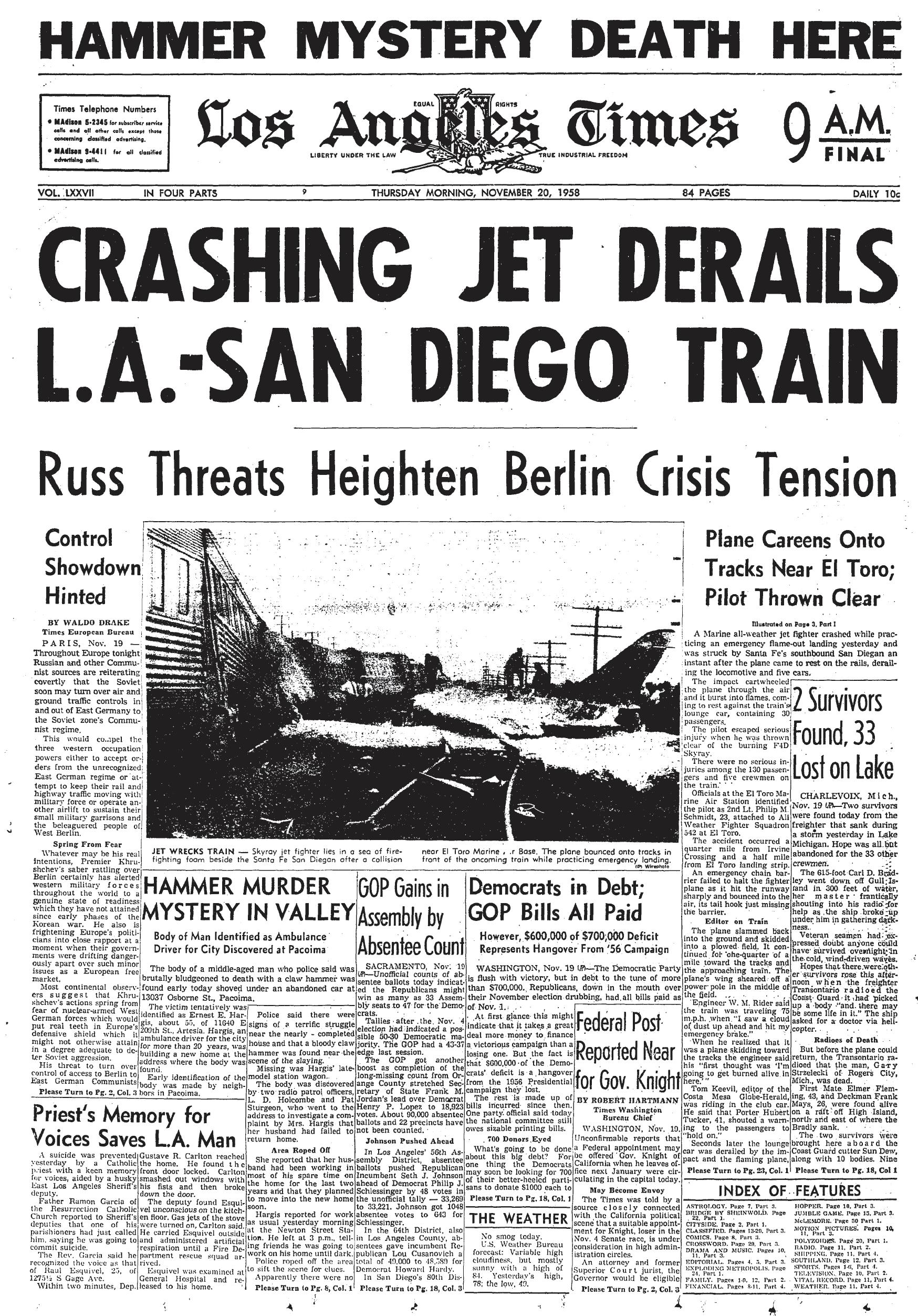 The crash of a Marine plane near El Toro derails the Santa Fe’s San Diegan, but no serious injuries are reported.



 ladailymirror.com