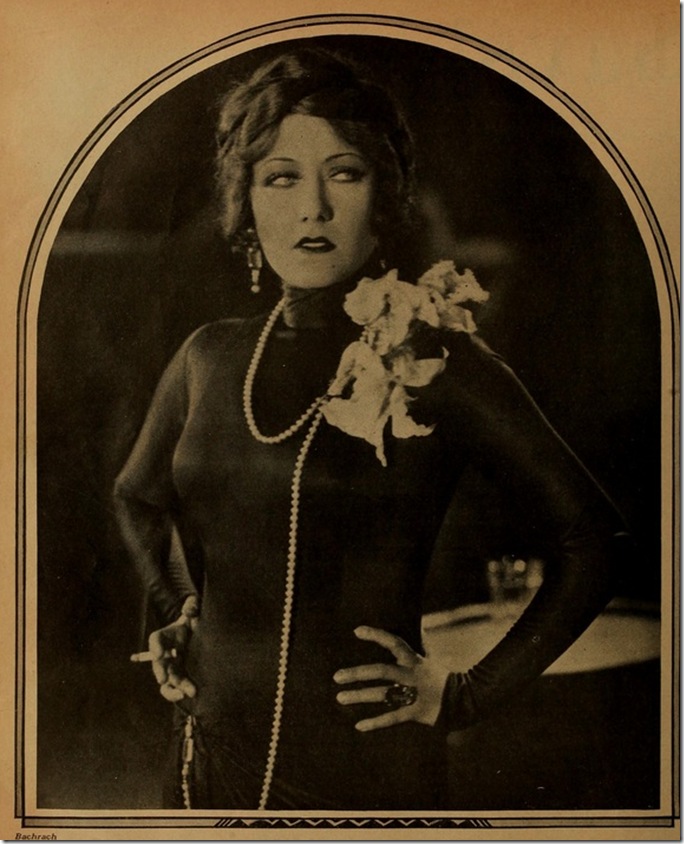
Gloria Swanson in Queen Kelly.
Milestone Entertainment’s newly restored “Queen Kelly” is touring the United States as a loving tribute to its incredible backstory and the work of the ambitious and incredibly talented actress Gloria Swanson and “Man You Love to Hate” director Erich von Stroheim. A rich, operatic story, “Queen Kelly” demonstrates what a telling masterpiece the film might have been if completed as intended.
The story alone of the film’s making is wild enough. Star Swanson and her producer boyfriend Joseph Kennedy hire the profligate von Stroheim to shoot his barely finished script. The director goes overboard with sexual scenes and rough manners before getting fired from a half-finished film bankrupting the company. A few years later, editor Viola Lawrence would attempt to stitch together what little survived of part two of the film with first half shenanigans in order to play it in theatres, only to see it disappear from sight until appearing in short glimpses during the 1950 film “Sunset Boulevard.”
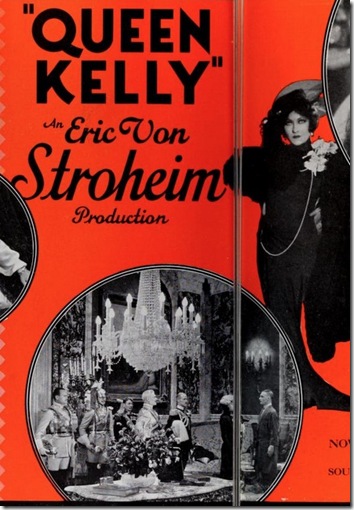 Director von Stroheim appears at the top of his powers in creating compelling, visually revealing cinema uniting all the various crafts into a glorious luxurious whole. He demonstrates complete mastery of the arts of filmmaking, revealing the depths of the story through stunning visuals and elegant design. Everything works as one to bring the telling background details to life.
Cinematography is luminous, softly romantic in the first meeting along bare country paths to darkly perverse in the kidnapping of Kelly from a smoking fire in the convent. Swanson glows in soft candelight in a prayer scene, while key lighting highlights the Prince’s flirtation/seduction of the innocent girl.
Design details highlight character as well, often in ironic and perverse ways. while cherubs decorate the Queen’s bathtub and appear throughout Wolf’s chambers, they stand in for cutting, vicious foreplay, not actual romance. Castle interiors are lavishly decadent and overflowing, shallow and superficial all at once. the chamber of the dying aunt offers both haunting and gorgeous elements; mosquito curtains around her offer first generous beauty, but then fill the space with ominous shadow and entrapment.
Costuming reveals so much of character, even with use of color. Seena Owen’s vicious Queen Regina and the partying Prince Wolfram wear costumes that switch from white to black in contrasting scenes, implying the changing moral attitudes and “rightness” of the characters. Owen’s slinky, form fitting gowns reveal her sexual desire for the two-timing Prince. In the first half, Kelly appears in innocent novitate robes, while wearing loud, cheap outfits when queen of her aunt’s slimy African brothel.
While the film litself is visually ravishing, its sordid underbelly strains believability in its grooming and attempted assault of an underage convent girl, unfortunately mimicking tawdry aspects of contemporary life, circa 1900. von Stroheim often just stayed on the right side of prurience in the portrayal of potential romantic relationships onscreen, boldly focusing on such topics as fetishes, obsessions, affairs, and orgies. This story goes even further for the seductive director: the two male leads (Walter Bryon and the grossly savage Tully Marshall lasciviously leer and salivate at the thought of deflowering the teenage Swanson (as Patricia Kelly).
In his first major role onscreen, Byron appears mainly as slick opportunist, more physically attractive but less sexually arousing than the typically louche royal heirs and military officials usually portrayed by von Stroheim onscreen. Byron’s cavorting Prince “wild” Wolfram von Hohenberg Falsenstein (a false wolf) openly flaunts his visits to the local brothel, arriving home from an evening in an open air carriage overflowing with scantily clad prostitutes, while flagrantly displaying photos of his many conquests on his apartment walls.
Upon meeting the charming Kelly, he immediately lusts after her, kidnapping the girl and attempting to groom and then seduce her for his pleasure. In fact, the story itself could be described as a visit to Epstein Island, high and low versions, as both powerful men in the story, existing in different classes, sordidly plot to sleep with an underage teenager all for their petty amusement.
Unlike other von Stroheim films, the “romantic” relationship displayed fails to ignite due to its dirty underdealings as well as unbelievability. The two potential lovebirds first meet on a beautiful counry road as the Prince’s troop overtakes the novitates on a walk, and he first laughs and then swoons when Kelly’s lace panties slide down her legs before she tosses them to him. This intoxicates Wolf enough to break into the convent to kidnap her for his planned seduction. After the attempted rape, Kelly jumps over the castle parapet but finds herself saved from drowning. Separated by years and dirty relationships, one look upon first meeting again turns into true love and a happy ending, rare for a von Stroheim film, and totally incongruous with the beginnings of the story.
von Stroheim echoes his usual thematic elements – Catholicism, Prussian military, failing monarchy, and decadent and sexually perverse military man – while attempting to shape a grand love story. He even features elements that hearken back to previous films. Gnarled, gross, and physically crippled Jan, Tully Marshall’s character in “Queen Kelly” somewhat echoes the morally depraved royal with a foot fetish he portrayed in “The Merry Widow.” “Queen Kelly’s happy ending mirrors that of “The Merry Widow,” where royal John Gilbert and commoner Mae Murray experience romantic highs and tragic lows before reuniting.
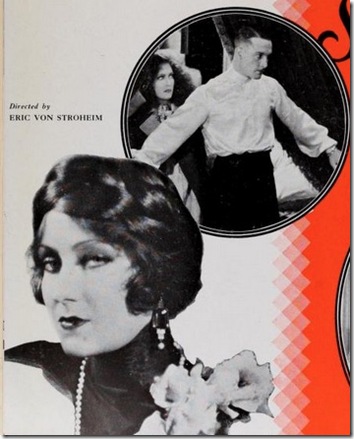 The film displays a blooming cherry tree underneath the Prince’s wide balcony, the symbol of the growing love between the romancing but broke von Stroheim and the Fay Wray character in his previous film, “The Wedding March,” along with dark and foreboding elements that occur in religious settings like the convent and in front of St. Stephen’s Cathedral in the same film.
Location stands out as well, with the lush valley in which the military troop and convent grils meet the wide open San Fernando Valley in what is now Forest Lawn Hollywood and Griffith Park. One can make out Cahuenga Peak and the far side of Griffith Park along the 5 freeway in shots, along with a bucolic farm strewn early Burbank when the shot looks north.
Director von Stroheim creates the best role Owen ever played, a rich cacophony of threatening shrew and Machiavellian powerplayer. She overflows with intense anger and pain. Marshall’s Jan is the physical representation of filth, a pure demonstration of the sordidness of sin, while Bryon’s Prince is the visually attractive but morally dubious playboy. Sidney Bracey plays a sneering underling, while Madame Sul-Te-Wan gets her moments as a conniving, confident brothel cook. Swanson displays enormous charm and spunk in what we see onscreen, but appears almost as supporting player in what is to be her story. An African American plays the upright, respected Catholic priest in the East African brothel. bringing dignity and strength to his part.
The newly created score, though described as anachronistic blends melancholic classic notes with a hint of dark contemporary perversity, with cellos provided a rich, dark tone. Digital cleanup and fine restoration work lead to a pristine viewing experience.
Long considered impossible to restore or to develop coherent story line, the newly released “Queen Kelly” offers a visual feast and tantalizing look at what could have been for this long maligned film.

 ladailymirror.com
Mary – What a wonderful in-depth review of this newly restored film. You even managed to work in several contemporary events to emphasis that it is still timely.
LikeLike
Great review, Mary!
LikeLike