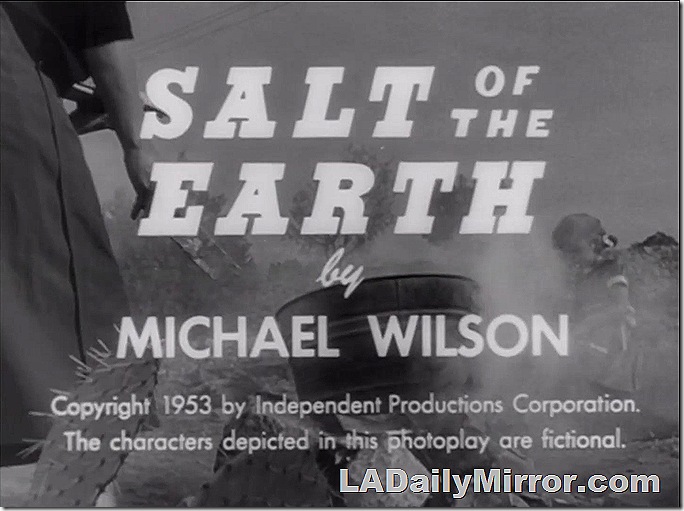
Director Herbert Biberman set out to right wrongs when he directed “Salt of the Earth,” Michael Wilson’s moving script of poor Hispanic miners in New Mexico overcoming their goliath mining owners. As timely now as then, it’s a difficult story of ever making it to theatres through censorship, threats, and bullying by powerful business interests and the government reverberates today.
Biberman, active in liberal politics and supportive of human rights, freedom of speech, and democratic causes, refused to testify in front of the demagogic House Un-American Activities Committee whether he was a member of the Communist party, thus joining the group that came to be known as the Hollywood Ten. While most received one year prison terms on contempt charges for refusing to testify to Congress, the writer/director saw his reduced to a six month term along with director Edward Dmytryk.
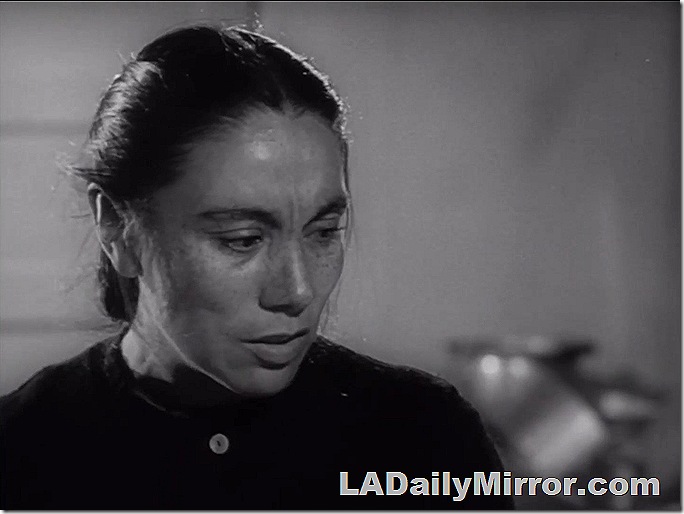
Rosaura Revueltas in Salt of the Earth.
A generous benefactor paid property taxes on his and wife Gail Sondergaard’s Hollywoodland Deronda Drive home while he was in prison to ensure they did not lose it to foreclosure. Once released, however, not only did the artist find it difficult to find work, so did his Oscar-winning actress wife, Sondergaard, who found herself blacklisted as well.
While eating up savings and looking for employment in this stressful time, the Hollywood Ten did earn a little respite after they all sued their respective studios for damages and lost wages. Dalton Trumbo and Lester Cole saw suits against their studios reach courts first. Biberman joined with Albert Maltz, John Howard Lawson, Alvah Bessie, and Samuel Ornitz to file a suit “alleging they were ‘blackballed’ and deprived of a livelihood” in conspiracy by all the Hollywood studios as the Daily News reported in early 1952. The men sought damages individually as well as a combined $47 million in punitive damages.
One by one, the studios settled with the writers and directors, especially after the first Los Angeles County trial ruled that Lester Cole refusing to testify in front of Congress “did not bring him into public scorn and hatred” and “did not shock or offend the public.” The studios first settled the conspiracy suit with Cole and Trumbo. On January 5, 1952 the studios settled with the other men, with Metro-Goldwyn-Mayer paying $65,000, Columbia Pictures $13,750, Universal Pictures $13,750, and Producers Settlement Corp. representing Warner Bros. for $15,000. Twentieth Century-Fox, RKO, and Paramount Pictures would be paying settlements soon as well.
Once he received his money, Biberman began planning a return to production. He joined forces with Simon Lazarus and Paul Jarrico, also one who refused to testify in front of HUAC, to form Independent Productions Corp. to employ blacklisted filmmakers and help them survive financially. As Jarrico told Cine Technician after completion, they felt “the best guarantee of artful realism lay not in fictions invented by us but in stories drawn from the living experience of people long ignored by Hollywood – the working men and women of America.” They particularly searched for material detailing the struggles of women and minorities long oppressed, and hopefully inspire like minded organizations and unions to band together to tell similar stories of oppression, injustice, and racism.
Looking to comment on censorship and political interference in America in defiance of HUAC, Biberman and Jarrico joined forces with screenwriter Michael Wilson to put together the film “Salt of the Earth.” Based specifically on a strike by miners against the Empire Zinc Mine in New Mexico, the film would demonstrate big business and wealthy elites conspiring against their poor workers and denying them their First Amendment rights to free speech when attempting to silence their strikes.
The workers endured not just denial of Constitutional rights, but also racism. Chacon described uneven living and working conditions for HIspanics in a labor article, noting, “The companies built houses for the Anglos while we were given shacks…the miners who spoke Spanish would be put to work as ‘helpers’ to the “skilled” Anglos – doing the same work for which the Anglo was paid twice as much…separate pay windows, separate washrooms, the separation even in the movies.”
Biberman applied to Screen Directors Guild in October 1952 for reinstatement of his membership in order to direct the film under a signatory contract. After the SDG demanded he sign a loyalty oath denouncing Communism, the iconoclast decided to direct the film totally non-union and independent. The production hired formerly blacklisted talent and African Americans in jobs for which Hollywood had never employed them. All were actual union members
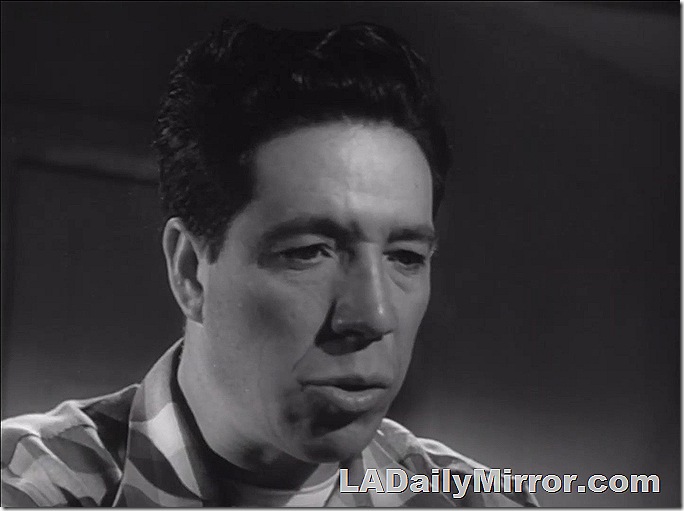
Juan Chacon in Salt of the Earth.
The team moved ahead with their film in February 1953, deciding to shoot semi-documentary style on location in New Mexico using mostly the actual miners, members of the International Union of Mine, Mill, and Smelter Workers, Local 890. Juan Chacon, Union Local President who actually participated in the strike, played lead character Ramon Quintero, and respected Mexican actress Rosaura Revueltas portrayed his wife, after the filmmakers mistakenly believed Hispanics lacked the capabilities to portray leads. Blacklisted actor Will Geer also played a small role in the film.
“Salt of the Earth” revealed the inspirational story of ordinary working people trying to survive while enduring all manner of hardships from the rich and powerful before actually triumphing. Righteous miners struck for better wages, safety, and living conditions before mine owners employed political muscle to ensure judges banned them from picketing. Their wives and sisters bravely stepped forward, replacing them on the picket lines demanding justice. David actually triumphed over Goliath in a story of worker, Hispanic, and women’s rights.
Once underway, the production endured verbal and physical interference and denunication by anti-communists, thugs, and uneducated locals in Central, New Mexico, the original film location. The Citizens’ Committee of the town confronted cast and crew, demanding they leave town. Some threats included notes saying cast and crew would be carried out of town in boxes or even caskets, union halls were set aflame, and union leader Floyd Bostock’s home was destroyed by fire with his children narrowly escaping.
Filmmakers moved shooting to nearby Silver City the next day, once again facing threats of violence and disapproval at the hands of panicked and misguided zealots, but deciding to continue filming any way. Fearing sabotage and possible film destruction, brave and defiant filmmakers developed their film at night with sympathetic lab technicians, who delivered processed films in unmarked containers.
The AFL sued, trying to get the federal government to investigate and possibly shut down production. A righteous and furious Chacon, labor leader and actor, shot down their bogus efforts to Variety. “We are making a movie about the lives of our members, most of whom are Mexican-American. A union has just as much right to make a movie as has RKO or M-G-M. If Hollywood tries to blacklist some of its finest workers, that is Hollywood’s loss. These workers help us tell our story. That is our gain. We are confident that our movie will serve the best interests of our union, our community and our nation.”
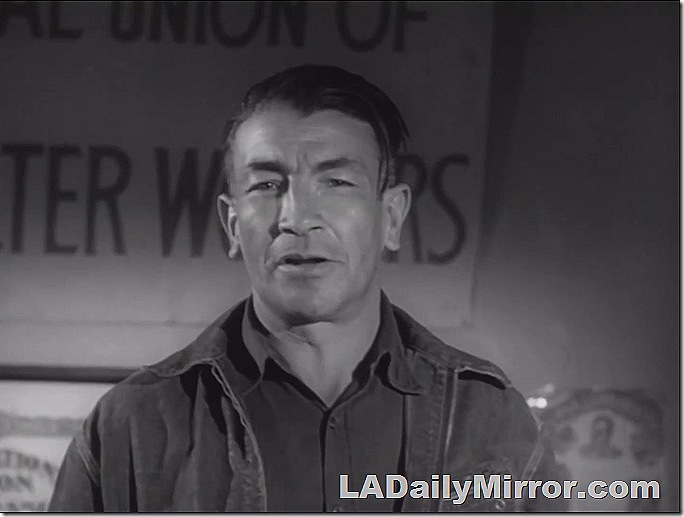
Joe T. Morales in Salt of the Earth.
The rich and powerful continued their despicable actions in trying to squash freedom of speech and justice just like mine owners to striking workers, trying to intimidate and silence their righteous voices. Roy Brewer, head of the AFL union, Un-American Activities Committee member Donald Jackson, and RKO owner Howard Hughes denounced and denigrated producers and the film, calling in “commy propaganda,” trying to shut it completely down, or destroy any box office chances, which even included using threats and intimidation against film labs and post production facilities.
Pathe Laboratories cancelled a signed agreement to process the film under the direction of these players. Brewer told trades, We hope all Hollywood organizations and corporations will cooperate with us in refusing to aid in completion of the film.” Jarrico announced plans to sue for damages, while selling film to distributors in small independent art circuits only to find political vigilantes attempting to keep it out of theatres and destroy any hope of success even there.
The powerful found other ways to delay production and release. as well. Jackson asked if films containing “red propaganda” could be denied export and actors be required to register under the Alien Agents Registration Act? Using this pressure, immigration officials would deport Revueltas claiming her papers “were not in order” not long after wrapping on bogus charges.
In late March 1953, HUAC subpoenaed the film’s producer Simon N. Lazarus to testify, attempting to smear his character and kill off any box office for the movie. They grilled him on any connection to liberal causes and communism, but like the Hollywood Ten, he refused to testify under Fifth Amendment principles. Jarrico himself faced questioning by HUAC, trying to shut down voices speaking out against injustice, freedom, and equality. Tired of the games, he sued Brewer, Jackson, and Hughes.
The Schoenstadt circuit’s Hyde Park Theatre outside Chicago broke the exhibition contract, telling Biberman that “owing to outside pressure, the theatre would not show the film,” as the Independent Film Journal reported. Intimidation from projectionists, the AFL, and propagandized groups led them to cancel. Jarrico sued for $25,000 damages, demanding screening or money. The AFL strong-armed theatres in their opposition to the film, with Brewer telling Motion Picture Daily, “We hope all Hollywood organizations and corporations will cooperate with us in refusing to aid in completion of the film.”
Producers booked the film at the CinemaAnnex, but projectionists failed to show up for screenings, leading to cancellation. The International Alliance of Theatrical and Stage Employees joined the scrum, attempting to block exhibition as well. The American Civil Liberties Union became interested in helping the filmmakers in Chicago, as other cities around the country began exhibiting the film, as did the Cannes Film Festival. Biberman told the press, “Hollywood never has forgiven us for not dying when they blacklisted us.”
Brewer called it “one of the most anti-American documents ever attempted. its aim is to discredit the U.S., not only in the eyes of some gullible Americans who might see it, but in the eyes of natives of every country in the world.” Besides strong arming projectionists, the IA and AFi joined forces with the strongly anti-communist American Legion to denounce any screenings, with the Legion even writing Chicago’s police commissioner to ask it be banned from even screening. Tired of the lies, Jarrico created 16mm prints to screen for critics.
Many reviewers fell victim to conspiracy and pressure, denigrating the film in print, afraid to fall out of step with McCarthyites. Harrison Reports critic thought releasing the film “the quicker it will die the death of a bad dog, for speaking in the vernacular, it is a bad dog, and if allowed to be shown without much fuss it will die. To begin with, no exhibitor in his right mind will book it. The picture might be shown to the lunatic fringe, but it will make no difference what this lunatic fringe will think.”
Motion Picture Herald called the film “an affecting one, reaching moods of deep poignancy and endowed with excellent photography and acting,” while at the same time calling “its propaganda is unfair and heavy-handed. Its story develops along lines of class warfare that are a discredited remnant of the proletarian literature of the 30s.” Some trade executives and critics felt the miners’ union would use it as “a new ‘Grapes of Wrath’ picturing life in capitalistic America as a tooth-and-fang struggle of oppressed poor people against monsters who own everything but hearts,” as Variety wrote.
Independent Film Journal stayed nonpolitical and unjudgmental in their review. While acknowledging its commercial success remained doubtful due to protests after being “tagged with the Communist label and consequently afforded highly unfavorable publicity long before its completion,” the trade praised the film. Calling it “skillfully directed,” they noted the moving story produces “hard-hitting dramatic results.” “Story situations are tightly knit and suspenseful. Characterizations are adroitly sketched, especially those of the Mexican-Americans depicted as prey of management’s color discrimination…There is certain to be disagreement over subject matter but there can be no doubt that this film has been expertly done.”
New York Times writer Gladwin Hills found no propaganda in the film, only a pro-union sentiment. “It amounted to a reiteration of the theme of class conflict between workers and management in the mining industry. Its principal message was that in a union – or as it was described in the script , “solidarity – there is strength.”
After months of harassment and intimidation, the film received screenings in small art theatres and university screenings across the country as well as worldwide. Though it never achieved huge box office revenue, it opened awareness into miners’ struggles in New Mexico and elsewhere through its simple but powerful performances from actual miners and their families attempting to find a way to survive. Still packing an emotional wallop more than 70 years after completion, “Salt of the Earth” speaks to issues of oppression, racism, and sexism that exist to this day, growing increasingly virulent and out of control. Then as now, the powerful attempt to silence or attack those attempting to practice their Constitutional rights and demand justic and equality for all.

 ladailymirror.com