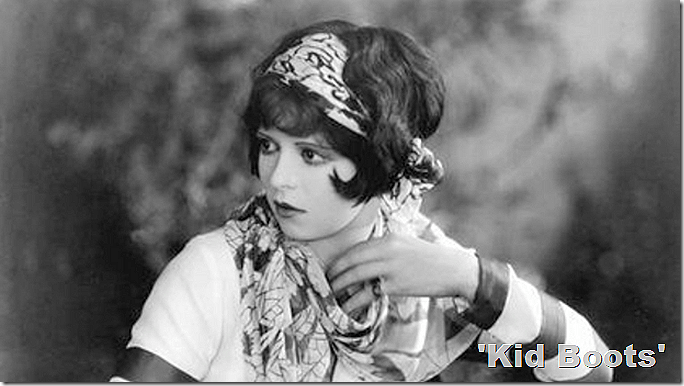
Clara Bow in Kid Boots (1926).
The Los Angeles Silent Film Festival achieved remarkable success for its debut the weekend of September 12-14, drawing large, young, and enthusiastic crowds eager for silent films. Organized as “a celebration devoted to the artistry, innovation, and enduring power of silent cinema,” the festival screened a combination of well known classics and recently restored films, offering a little something to please everyone. Produced in conjunction with the American Cinematheque and Mount St. Mary’s Department of Film, Media and Communication, organizers Thomas Barnes, founder of Retroformat Silent Films, Kelby Thwaits, Director of Graduate Programs in Film, Television, and New Media at Mount St. Mary’s, and filmmaker Brooke Dammkoehler, the LASFF revealed the power of silent films to still emotionally speak to us today.
Over the weekend, the Festival recognized two archivists for their contributions to the field. Renowned author and respected film historian Anthony Slide received the LASFF Award for Film Scholarship to recognize how his “research and writing have rescued films, artists, and stories from obscurity.” For more than 50 years, his erudite research, audio commentaries, essays, and writing of such books as Lois Weber: The director Who Lost Her Way in History and The Silent Feminists have educated cinemagoers and deepened their understanding of the workings of the silent film industry and its founding pioneers..
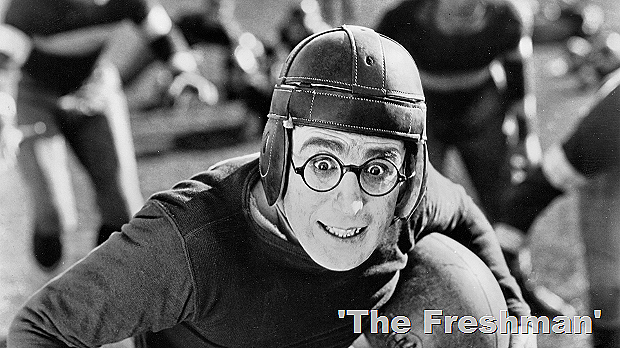
Harold Lloyd in The Freshman (1925).
Suzanne Lloyd, granddaughter of silent comedy legend Harold Lloyd, received the LASFF Award for Film Preservation. She has devoted herself to guarding the legacy of her pioneering grandfather; first, by restoring and preserving his films and then by screening them to the public all over the world. She maintains the library with dedication and timely tools.
Each feature was preceded by a film short curated by former Academy of Motion Picture Arts and Sciences Executive Vice President of the Library, Archive, and Sci-Tech Randy Haberkamp, all shot on location around Los Angeles. These included rare Harold Lloyd home movies, Buster Keaton’s landmark short Cops (1922), the Hal Roach short Liberty (1929) starring Slan Laurel and Oliver Hardy, and three wonderful new restorations of D. W. Griffith Biograph shorts produced between 1908 and 1913 by Tracey Goessel’s Film Preservation Society.
Music director Cliff Retallick and guest artist Andrew Earle Simpson, Library of Congress Resident Film Accompanist at the Packard Campus Theatre and prolific composer of DVD releases for multiple home entertainment companies, provided live accompaniment to all films, adding emotional voice to their storytelling.
Program Director Steven K. Hill, found newly restored titles to complement the vintage classics, offering something for silent film veterans, archivists, and newbies alike. The festival featured warhorses such as Harold Lloyd’s The Freshman (1925),” The Lon Chaney circus film “He Who Gets Slapped” (1925), the moving World War I film “The Big Parade” (1925), and the concluding Conrad Veidt-starrer “The Man Who Laughs” (1928), along with the recently restored “Kid Boots” starring Eddie Cantor and Clara Bow, available before but not in good condition.
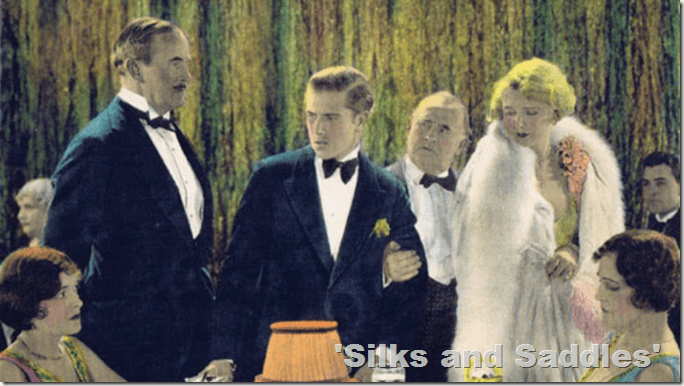
Silk and Saddles (1929).
I attended the more rare films, looking for vintage film locations, new stories, and studios proud to preserve and acknowledge long ago titles from their vaults. I enjoyed the world restoration premiere of the 1929 Universal film “Silks and Saddles” on Saturday, a sweet but slight tale. The story of a jockey looking for redemption after throwing a race, it featured young actors Richard Walling and Marion Nixon as innocent, sweet lovers separated but restored by an act of character. Veteran actors Sam de Grasse, Montagu Love, and Claire McDowell offered the best performances, the two men in some of their eternally slimy villain roles and she as a strong, determined mother. Otis Harlan added a nice touch of whimsy as the happy-go-lucky Irish trainer. Restoration work from a 16mm print brought back tints, missing titles, and cleaned up footage, bringing back to life an almost 100 year-old title.
Preceding the screening, the newly restored 1910 Biograph short “As It Is In Life” played, looking as fresh as it possibly did when it first screened 115 years ago. A tale of sacrifice and devotion from a widowed father towards his innocent daughter, the reel featured touching acting from George Nichols and rising star Mary Pickford, shot in and around the world’s largest pigeon farm located adjacent to the Los Angeles River in Elysian Park. Accompanist Andrew Earle Simpson added a sweet, melancholic underscoring to the short, and an understated, uptempo score to the feature, with light comic flair at appropriate moments.
Witty, energetic, and charming, the 1925 “Lovers in Quarantine” featured a frisky, fabulous Bebe Daniels and a sly, understated Harrison Ford flirting and chasing each other on board a cruise ship as a scene-stealing spinster chaperone Edna May Oliver looks on in comic frustration. Costume and production design bring high class sheen and camerawork is first rate, Great comic timing, reactions, and nice cutting make this a winning little picture. Paramount did a nice job matching tints and titles, making it fresh and clean.
The wonderful Buster Keaton short “Cops” preceded the feature, a total delight in every way, filled with inventive sight gags, excellent pacing and timing, and one of Keaton’s excellent understated performances. Film historian John Bengtson has tracked down every location of the film, shot everywhere from near the intersection of Cahuenga and Hollywood Boulevards as well as various downtown sites. Music director Cliff Retallick provided a frisky uptempo beat to both short and feature, keeping the action just flowing along.
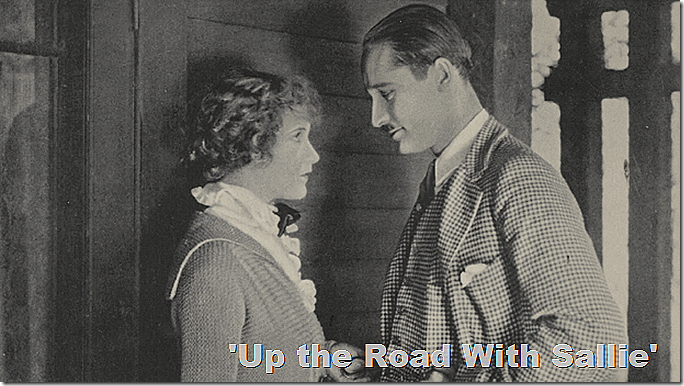
Norman Kerry and Constance Talmadge in Up the Road With Sallie (1918).
Effervescent Constance Talmadge stole the slow in Sunday morning’s world digital preservation premiere of the 1918 Selznick picture “Up the Road With Sallie.” Talmadge’s expert timing and understated flirting keep the charming little film floating on air, aided by sly ladykiler looks of male star Norman Kerry. Director William Desmond Taylor brought excellent pacing and timing to the film, along with some nice moving camerawork that captures real locations around Los Angeles like Laurel Canyon and the San Fernando Valley. Julia Crawford Iver’s titles bring a nice bit of wit and tongue in cheekness to proceedings as well. UCLA’s restoration of tints and print demonstrate fine professionalism. Retallick brings nice, bouncing underscoring to the pleasing little film.
The 1910 Biograph short “Love Among the Roses” offered a travelogue to Hollywood’s most popular tourist attraction, the Paul DeLongpre gardens at Cahuenga and Hollywood and Boulevards,as it preceded the feature. A vintage romantic fantasy of lords and their ladies fair and romance between couples of different classes, the short featured light romantic portrayals from the likes of Pickford, Henry B. Walthall, Arthur Johnson, and Marion Leonard.
Later that afternoon, historian Slide received his lifetime achievement award before the screening of the world restoration premiere of the 1924 Paramount film, “The Enemy Sex” starring Betty Compson. A tale of Manhattan showgirl “Dodo” Miller (Compson) and her attempted seduction by five wealthy community leaders, the film takes a little walk on the wild side for 1924, with reviewers at the time saying it featured plenty of “that wild women stuff.”
Compson gives a self-confident, playful performance, with supporting actresses Dot Farley and Pauline Bush as her roommates playing strong, confident women, likable and direct. Little is available for Compson, so glad another title can introduce silent filmgoers to her strong acting skills. Paramount did a wonderful job capturing the original tints and titles of the original, with their print looking as sharp as it probably did in 1924, showing off the original studio backlot off of Sunset Boulevard upon which the Palladium now stands as well as a nighttime shot of the Hotel Christie’s neon sign blazing into the night.
Before the screening, the simple but heartbreaking 1912 Biograph short “The Mender of Nets”reveaked early cinema’s dramatic power in its melancholic tale of thwarted love among residents of a simple fishing village. Shot on Santa Monica Beach and the bluffs overlooking it, the short’s fine acting gave it emotional heft. Mary Pickford and Mabel Normand say so much through just their eyes, revealing how Biograph dominated other companies through the use of understated acting techniques. Pickford’s eyes well with tears as her heart breaks after seeing her lover’s deception, and Normand brings a wild passion to the obsessed third member of the triangle, revealing a dramatic range little seen in her other films. Simpson brought a combination jauntiness and vulnerability to the feature, revealing the dramatic swings of the action, and provided a shimmering delicacy in her accompaniment for the short.
With its diverse lineup and excellent attendance, the Los Angeles Silent Film Festival seems destined to continue next year. It admirably captured the organizers’ goal of illuminating “the pivotal years when the process of making motion pictures matured rapidly, and Los Angeles became the place the world watched to see it happen.” Seeing “silent” films with live accompaniment demonstrates their power of illuminating art and life with emotion and strength. Festivals like this introduce new audiences to the wonder of silent film and thus keep the glorious art alive.

 ladailymirror.com