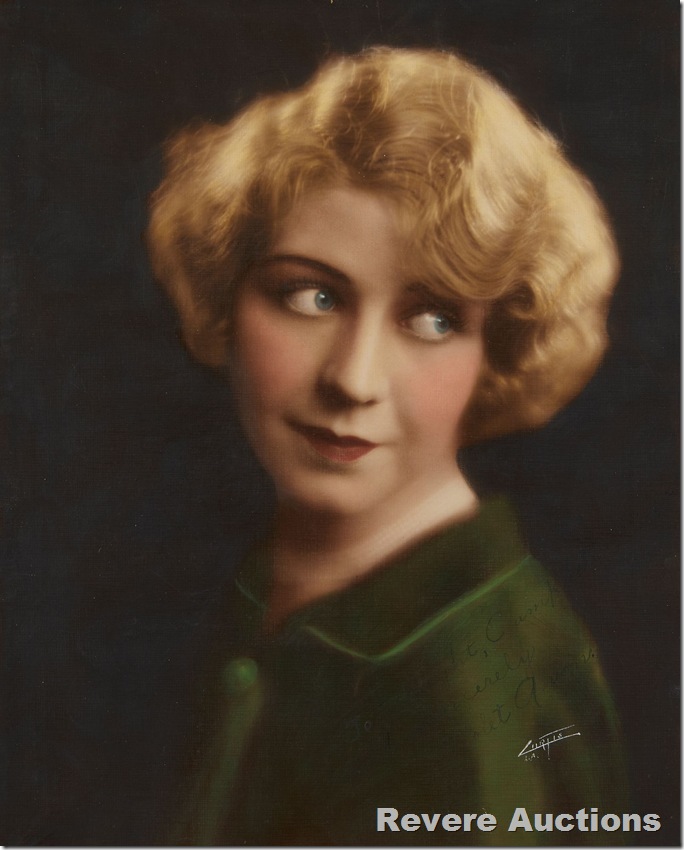
Violet La Plante / Edward Curtis, hand-colored by Emma G. Hoffman, courtesy of Revere Auctions.
While men dominated the still photography business in Los Angeles’ early film industry, forgotten women also participated in the field. From colorizing to servicing stills to developing negatives to even shooting images, females kept everything rolling along. Self effacing but determined, most served in anonymity, thrilled to work for booming film studios to better their skills or even support their families. Feeling inferior to fellow colleagues due to patriarchal culture and its resentments, they failed to promote themselves, just thankful for the opportunity to serve. The following women deserve praise and recognition for their work, enhancing the beauty and talents of others.
Early female commercial photographers existed in the 1800s, mostly working alongside family members like husbands, fathers, brothers, continuing businesses after the death of loved ones. They not only served as photographers, but also gallery owners, colorists, mounters, and studio managers throughout the United States, working all across the United States but failing to receive the respect and dignity they deserved, as pointed out in the book, “Women in the Dark.”
Mary Mallory’s First Women of Hollywood goes on sale March 25.
Available locally from Book Soup in West Hollywood; Skylight Books in Glendale; and from Vroman’s in Pasadena.
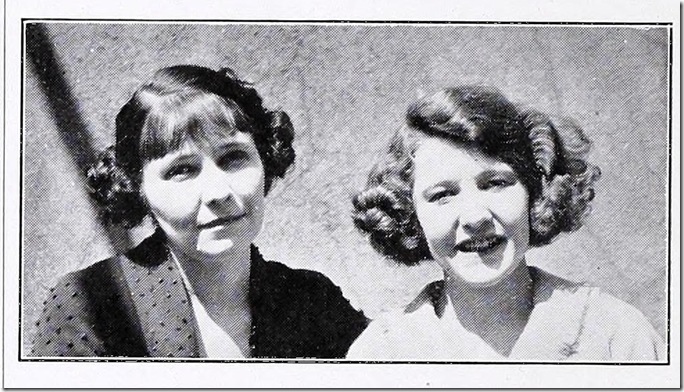
Helene Imlay, left, head of the Famous Players filing department, and sister Ruth, head of the stills department, Paramount Pep, April 10, 1922.
Women dominated the colorizing of glass slides and early films. In fact, Emma G. Hoffman’s eyecatching, dramatic work providing color to head shots outshines any of that of her contemporaries or even modern day colorizers, realistic, dramatic, beautiful. The colorist promoted herself in trade ads as providing “a beautiful, velvet-line tone,” an apt description of her dramatic art, virtually forgotten after she married and retired from the profession.
While some companies hired women because they could pay less, most employed these patient, professional ladies due to their attention to detail, professionalism, and preciseness, often noted in trade ads and newspaper stories. An entertainment trade story noted,“ Lantern slide coloring should offer special opportunities to women, ‘for it requires a delicacy of handling and a keenness for artistic perception which are more easily met with in women than in man… .”
Looking for organization and detail-oriented service, some companies also hired young women to manage the many orders for production stills and portraits by theatres, magazines, and newspapers. The Jesse L. Lasky Feature Play Company hired young Ruth Imlay in 1915 to ensure professional service in processing and distributing the thousands of stills required each year for publicizing and promoting their work. They acknowledged her professionalism and knowledge in a 1922 employee newsletter, noting how many thousands of dollars of stills she ordered every day. Unfortunately, not long after, Imlay married Famous Players-Lasky’s publicity manager A. M. Botsford, and retired to a life as a wife and mother.
Most of these driven and conscientious young women worked behind the scenes like Imlay, not only handling administrative duties like processing, handling, and mailing still orders, but also developing images in the dark room. They toiled for hours, patiently processing hundreds of stills a day in a blackened closet or studio. As early as 1919, Camera! magazine lists Mrs. Cotner as National Studio’s dark room supervisor. Elizabeth Cotner served only a short time, giving birth to a son Frank Jr. with cinematographer Frank Cotner in 1920, retiring from the screen. Cotner worked steadily throughout his life as a cinematographer of B westerns and other independent work and enhancing camera equipment, receiving no more mention in trades.
Like the women who colorized glass slides and early films, Nell Freeman enhanced the beauty of portraits and stills with her expert retouching. Goldwyn Studio’s employee newsletter Studio Skeleton in March 1920 praised her sharp eye. Like with today’s digital photoshop and cleanup, expert retouchers could overwhelm reality, shaping ordinary looking humans into godlike royalty. As Douglas Fairbanks’ photographer Charles Warrenton told the press in 1926, “A photographer has his retouchers who can make ugly men and women look beautiful.” Looking for more respect and recognition, Freeman worked as a photographer by 1926.
Women even served as stills photographers. Six years before Ruth Harriet Louise joined Metro Goldwyn Mayer as head of its portrait gallery, another woman actually led two stills departments. Listings for stills photographers at each Hollywood studio in 1919 list Dorothy Maehl as both studio stills department head and dark room head for both Christie Comedies and Strand Mutual. Beginning as a developer and retoucher herself, Maehl rose to power through hard work and necessity.
My upcoming book, “First Women of Hollywood: Female Pioneers in the Early Motion Picture Business,” includes essays on Maehl and other female firsts throughout the early film industry, demonstrating that motion pictures became popular in the 1910s through their talents and labor. Women like Maehl and the others above deserve praise and recognition for their talents, ingenuity, and contributions which shaped moving pictures into the United States’ most popular form of entertainment by the 1920s.

 ladailymirror.com