
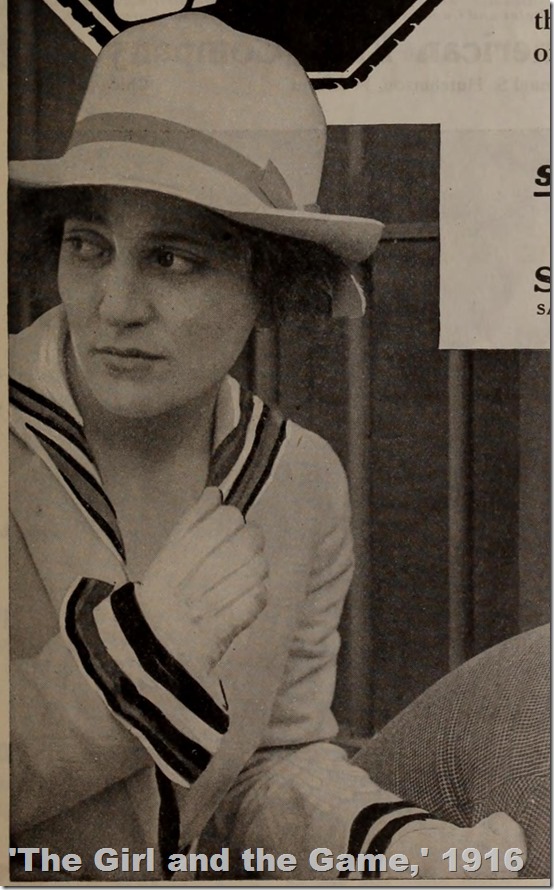
In the mid-1910s, action-packed serials starring adventurous heroines thrilled audiences of young women dreaming of independence and agency. At the same time, women in the United States campaigned for the right to vote, eager to shape public policy and take a little control of their lives. “Reel” life influenced real life; daring female stars like Pearl White, Ruth Roland, Kathlyn Williams and Helen Holmes skyrocketed to fame thanks to their death-defying stunts in these films, some of the first in which women drove the plot.
Unlike the other women, however, Helen Holmes starred in railroad-based stories, a headstrong, confident beauty stopping dastardly deeds and taming the belching beasts. Born in 1893, the strong-willed Holmes grew up the daughter of a railroad engineer, who moved to dry, warm California trying to provide better living conditions for her ill brother. After his unfortunate death, Holmes moved to New York to work as a model and actress trying to help provide for her family. There she befriended fellow fashion queen Mabel Normand before her fame as Keystone’s comedy queen. After Keystone’s successful move to California, the comic princess invited her friend west helping Holmes find acting roles.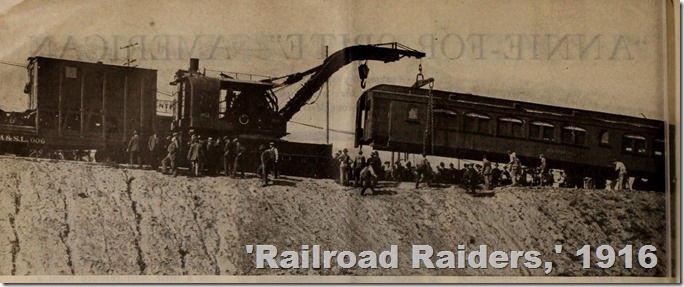
The brown-eyed beauty turned her visceral love of racing cars towards performing risktaking, dangerous stunts at Glendale’s Kalem Studios in 1913, beginning with the two-reeler “The Flying Switch,” blending petty crime and railroads. Joining forces with Kalem actor/director, Australian J. P. McGowan, the two created the widely popular “Hazards of Helen” serial in 1914, with Holmes occasionally devising the dangerous stunts herself. Featuring the plucky actress driving speeding cars, jumping to and from moving trains, and chasing villains atop lurching locomotives, her characters rescued endangered men while capturing slimy criminals. This derring-do earned her the nicknames “Venus of the Valve” and “the railroad girl.”
McGowan and Holmes grew close not only working together, but also nursing each other through illnesses. Early in 1915, McGowan broke his pelvis in an accident, requiring hospitalization, and Holmes brought food and watched over the director in the hospital. She suffered from pneumonia for a short time, and the time together nursing each other led to marriage.
The changing film landscape in the mid-teens sent them on their way to forming their own independent film company not long after. With the dissolving of the Motion Picture Patents Company, also known as the Edison Trust, in 1915 after losing an antitrust suit, independent film production skyrocketed. Popular actresses, who gained great renown as middle class women began flocking to movies in the early 1910s, determined to take advantage of their box office clout by forming their own production companies. Thanks to Holmes’ popularity, Mutual Film Corporation offered the actress and director McGowan financing and distribution to set up Signal Film Corporation in November 1915 to turn out the wildly popular iron horse pictures.
While the couple had produced their “The Hazard of Helen” films around both the Kalem Studios in the Santa Monica area and Glendale, they preferred the more wide open, country feel of the Elysian Valley/Highland Park community to establish their own base. They purchased the old Lubin western studio at 4560 Pasadena Ave. as Lubin headed to Corona, renaming it the Signal Film Corporation, a nod to their rails theme. Located adjacent to railroad tracks connecting Pasadena and Los Angeles near Figueroa Street, it offered plenty of open land on which to manufacture train adventures, especially their next series of films, called “The Girl and the Game.”
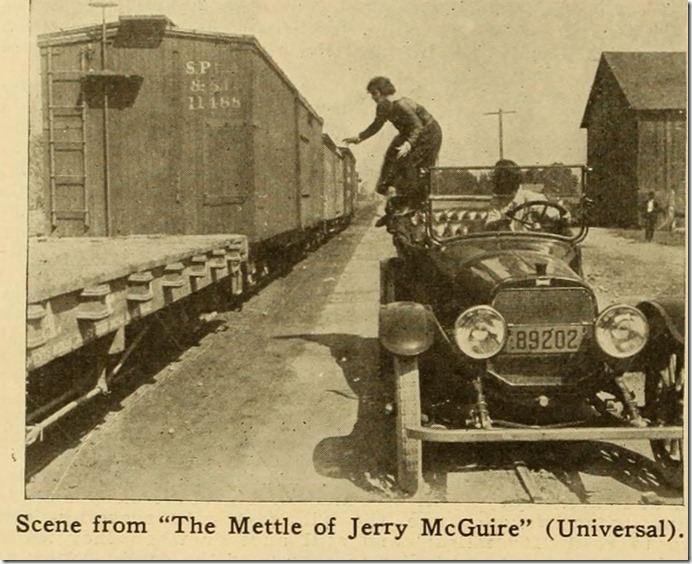
Proud of their elaborate facility, the company distributed press releases to all the major trade magazines, who ran stories and photos of the studio. Motography described the modern grounds for their “smoke-filled round-houses with their coal-eating guests of iron.” “A depot was built practicable in every way inside and outside, a switch tower was erected at a point on the trackage laid on the Signal grounds.
Switches, semaphores and all the mechanical safeguards and hazards of the rails have been installed. So complete is the equipment at this new studio that in the acting of he first chapter of the forthcoming novel, Director McGowan, thirty minutes after the author’s script was delivered to him, had a train, consisting of Pullmans, day coaches, parlor cars, diner, luggage car and engine, ready for the camera.” Enabling even easier filming, transportation officials constructed a spur off the main rail line into the studio.
The couple staged many train sequences here at their remote studio, colliding cars, smashing engines into siding, staging moving train chase sequences, and leaps to and from traveling railcars. Dangerous and often tense situations occurred just feet from an actual rail line, including for their second series, “The Lass of the Lumberlands.”
Not only did the land serve as a studio, but also as the McGowans’ residence. The couple lived next to steel rails where they crashed trains and cars, chased speeding engines, and raced to the rescue, threatening destruction of their home with all the action-packed sequences. They produced thrilling sequences for three years until Mutual dissolved in 1918, ultimately leading to their own divorce as well. McGowan returned to Universal Studios, while Holmes joined the S. L. K. Serial Corporation created by S. L. Krellberg to star in the mystery serial “The Fatal Fortune” in 1919. It sank at the box office, leading her to join Harry and Albert Warner before the brothers became famous and successful. Nothing went well with the partnership, which ended in lawsuits. McGowan and Holmes returned to making films together in the early-to-mid-1920s, but divorced as their struggled to make profit.
After Holmes moved out of the property in 1920, it went on to serve as the home for other families. As the spur and train lines were removed, Pasadena Avenue was extended into Figueroa Street, creating an intersection which failed to exist during Signal Film Corporation’s day.
Like many other independent producers, especially women at this time, Holmes failed to achieve huge profits or success as her films sold to small states’ rights distributors rather than being released through her own distribution network, and thus ended up losing money. She and many others found their careers nosediving and eventually forced to retreat from the industry which originally made them household names.
Holmes devised a field uniquely her own at a time when trains dominated travel across the United States and seemed to offer opportunity. The early part of the Twentieth Century beckoned women with a hint at independence and self-reliance as they gained the right to vote and work in more diverse fields. As times grew more conservative and high finance took control of the booming field industry, many of these self-starting females found themselves pushed out of the film business, and virtually erased from history. Studios like Holmes thus also were wiped away, leaving little trace of their importance to the development of film.

 ladailymirror.com
This was a fabulous article about a pioneer movie performer who deserves greater recognition!
LikeLike