
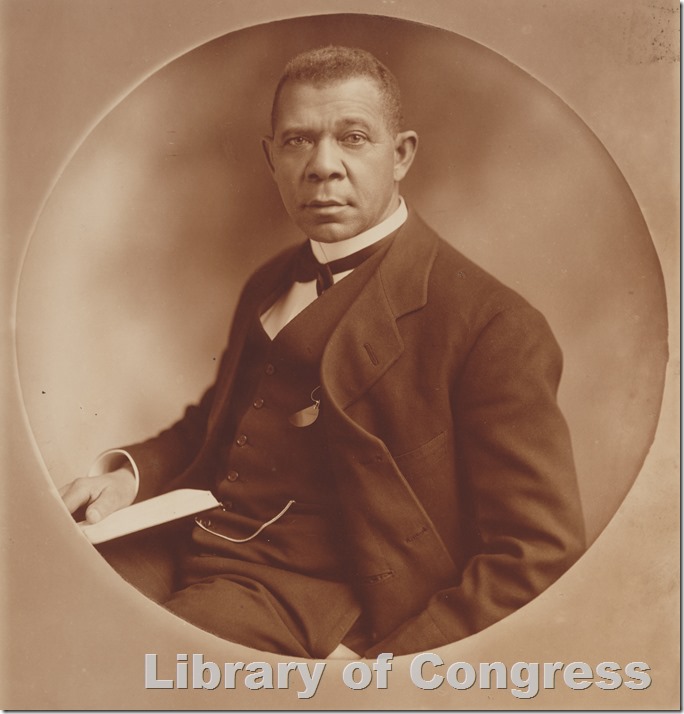
Booker T. Washington, photographed by Peter P. Jones, Chicago, about 1910, from the Library of Congress.
During the early decades of the 1900s, few African Americans participated or worked for major moving picture studios in leading positions in front or behind the camera. In order to participate or function creatively, they were mostly forced to form their own companies. Long forgotten pioneer Peter Platenberg Jones, however was the first African American film stills photographer and studio executive at a major production studio. Respected by several major players in the film industry, he would be the only African American to serve as head of a department during the first two decades of the American film industry.
Census records provide a cloudy portrait of Jones’ early days. While records do show his parents as Louis Jones and Matilda Platenberg Jones and born in 1877, some records list his birth in Alabama, some in Michigan, and records variously list him as white, mulatto, and black. Virtually nothing exists to show his life pre-marriage 1901 to Alice Jenkins. The marriage record lists him as photographer, his profession and passion throughout his life.
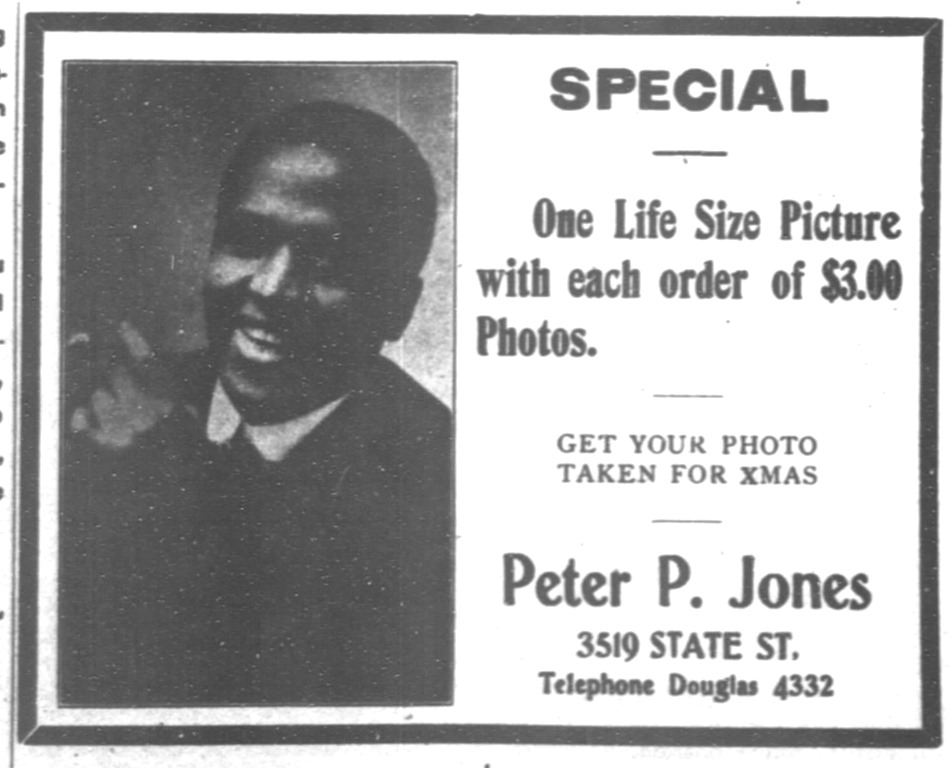
Peter P. Jones in The Broad Ax, Salt Lake City, Dec. 25, 1909.
In the early 1900s, the couple relocated to Chicago, Illinois, where Jones took over Harry Shepperd’s photographic studio at 3531 State Street in 1907, with the address later changing to 3519. HIs professional work impressed many, as African American newspapers report he had served as a portrait photographer for leading white studios, later identified as Matzene and Moffett, two of the major studios in the city in the early decades. They were renowned for their society and theatrical profession portraits, demonstrating Jones’ immense skill in capturing sitters’ likenesses and personalities, and impressing important players in Chicago society.
This artistic work led the North Fork Coal and Iron Company hiring Jones in 1909 to photograph their mining properties in Morehead, Kentucky, for which they paid him the enormous sum of $1,000. Thus he excelled at shooting both landscapes and portraits, creating works of art in the process. His talents and presence brought him respect and admiration. By this time, Jones worked for himself out of the State Street Studio, shooting portraits of leading African Americans of Chicago as well.
Around the mid-1910s, Jones focused his energies on motion pictures, shooting and processing film and working to advance new technology. His curious and thoughtful mind turned to color processes, which would consume his dreams and passions over the following decades.
In 1914, Jones turned to moving pictures, first unofficially and then officially. Watterson Rothacker’s Industrial Moving Picture Company produced a film highlighting the United States in battle with Cuba with over 1,500 participants and the entire Eighth Regiment of the Illinois National Guard that Jones released in major theatres in the area that fall. For the Golden Jubilee Celebration of Negro Freedom, Jones’ Company released the feature, along with a newsreel illustrating Chicago’s work in preparing for the 1915 Exposition, at a celebration January 1, 1915 at the State Armory in Springfield, Illinois. In 1917, Jones officially incorporated the Peter P. Jones Film Company through $2,500 from three prominent white Chicago attorneys, William H. Dillon, LeRoy Hackett, and John T. Evans, to create and release films of all types. As with most independent production, however, his company failed to cover costs, and closed.
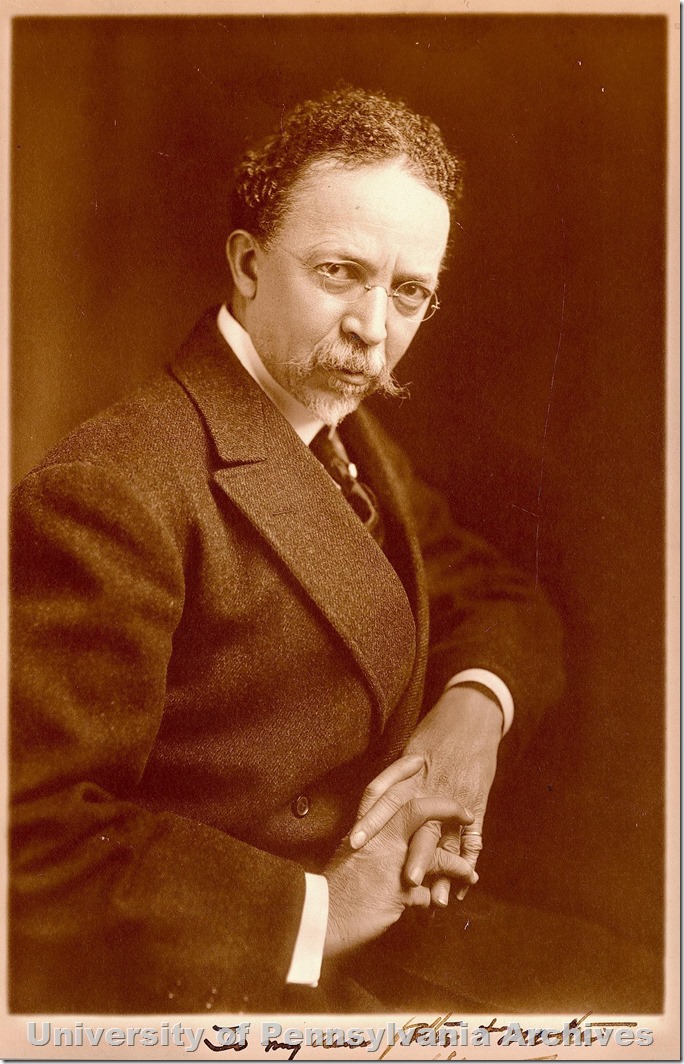
Artist Henry Ossawa Tanner, photographed by Peter P. Jones, courtesy of the University of Pennsylvania archives.
Not long after, Jones and his wife moved across country to join the thriving motion picture industry in Fort Lee, New Jersey, where few if any African Americans took part. He appears to have first worked shooting photographs for Paragon Pictures before joining Lewis J. Selznick’s Selznick Pictures. Not only did he shoot production stills, but Jones served as the studio’s photo department head, the first African American to lead a department of any major white studio, demonstrating the respect his work and knowledge engendered. In their newsletter “The Brain Exchange, the organization stated, “Jones not only turns out bulk work with speed and efficiency, but when it comes to quality and artistic results he is equal to any of the Fifth Avenue photographers.” Selznick promoted his studio, staff, and freelancers in major trades like Moving Picture World in June 1922, acknowledging Jones’ five years heading the department.
Later that summer after Selznick moved their operations to California, Jones decided to establish his own laboratory, the Service Film Laboratory in Fort Lee, with $150,000 once again from major white investors. The persistent and driven Jones, which the New York Age caused “a man of ideals and strength of character” intended to “chase the rainbow,” as newspapers reported, developing and experimenting with his color process work, unlike the leading processes which employed screens.
The New York Age described his process by which “photographing is done direct to the negative, reproducing natural colors without exaggeration, with finer gradation than is possible by the screen process, and with more detail.” Jones’ leased the Eclair Film Co. lab from Fox Film Laboratories to focus on printing and developing film for independent companies to help finance his experimentation. He intended the large plant to also employ African American women as well as white women to assist in the processing work.
Jones became President of the Seminole Film Producing Company in fall 1922. intending to produce the feature “Shadows and Sunshine” starring black aviatrix Bessie Coleman and other leading African American aviators like Edson O. McVey. Stories reported that Coleman came to New York City for filming but failed to show up for this and other projects she had agreed to, throwing them into the lurch.
After struggling for a few years, this company dissolved and Jones founded the Art Chrome Laboratories to continue his color process work. Investor/partner George Carmody sold his share to Eugene Thomas in 1929, and then nominated Alice Pratt and Rosalie Ashton to Board positions to overrule Jones’ decisions and plans, thus forcing the business into foreclosure. Jones sued to put the company into receivership. I find no information as to how the matter was resolved.
Jones’ doggedly pursued his color dreams into the 1930s, joining with former Chicago society couple Buell and Harriette McKeefer to invest $25,000 to form Perfecolor Film Laboratory in May 1933. The Studio included an office on Fifth Avenue and a Long Island studio, to focus on sound production as well as color work, owning the rights to a German color process. Over the next few years, Jones purchased ads in Film Year Book, Motion Picture Herald, and the like, expanding name recognition in hopes of gaining work. Unfortunately, by the late 1930s, Jones’ company was once again forced into bankruptcy.
At this point, much of Jones’ life goes cold. While the 1940 and 1950 census show Jones and his wife as renters in New York City, no business is listed. He did turn 63 in 1940 and 73 in 1950. I have discovered no obituary on either Jones or his wife, a childless couple, and therefore no information if papers on his work in color photography were passed on. With no tangible proof of his color processes and inventions and no one to publicize his work, Jones and all his important accomplishments disappeared from history. Hopefully papers and archives will turn up to further expand on Jones’ stupendous achievements in photography, color processes, and film production to establish his place as one of the most important early African American photography practitioners.


This was a fascinating read. Once again Mary, you’ve detailed part of the life of someone I’ve never heard of in Black history or motion picture history. Thank you so much for the introduction.
LikeLike
Thank you, Sylvia, I really appreciate your words. When I discovered his name in a book, I was fascinated myself, and wanted to know more of his life. Unfortunately, most of the film studios at the time did not allow stills photographers to take credit for their photos, so I don’t know if we’ll ever actually know what he shot for Selznick.
LikeLike