
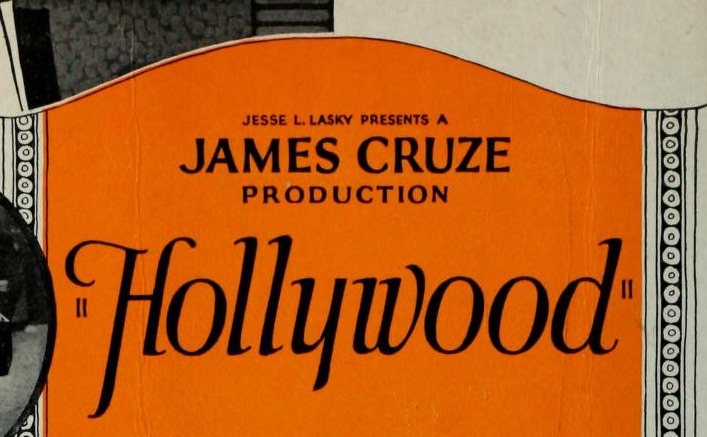
One of the most sought after “lost” films, Paramount’s “Hollywood” debuted 100 years ago, telling a film industry behind-the-scenes story through scenes set all through the self-named community populated with a bevy of stars. Unlike several other movie-themed pictures released that year, “Hollywood” moved beyond the now typical cliche for stories of its type, starring a real unknown as lead and employing a couple of ironic plot twists. In certain ways, it remained more true to life than most film tales, now or then.
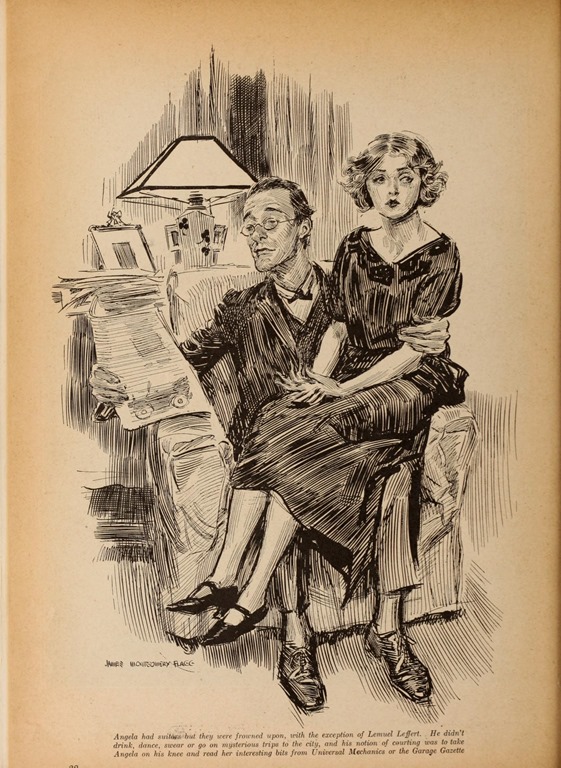
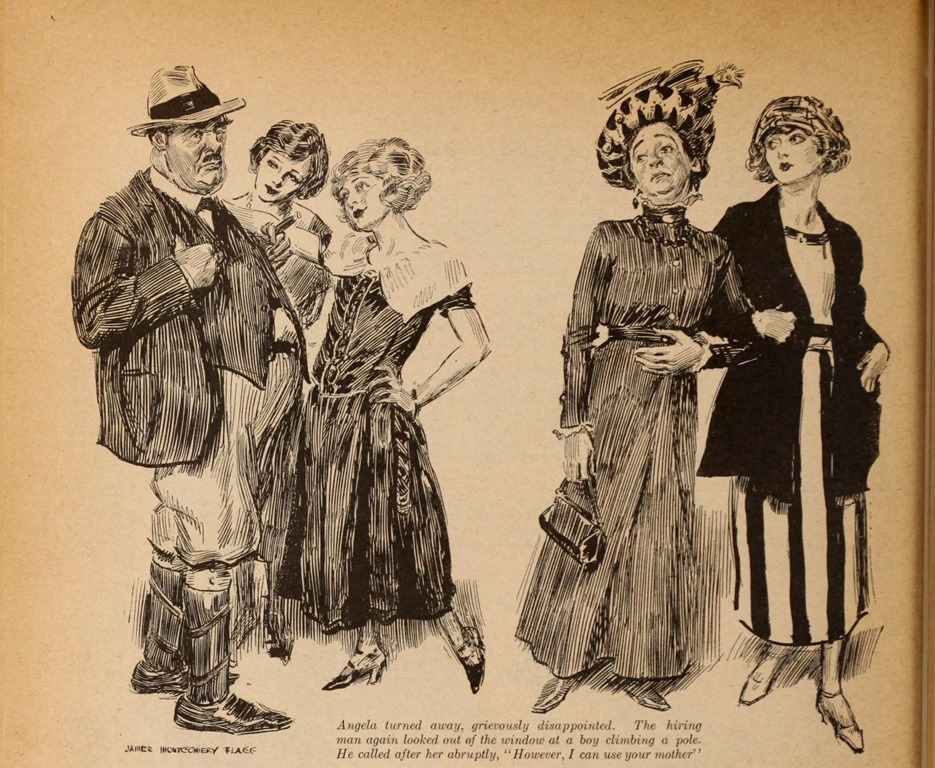
The film “Hollywood” grew out of a satirical, flippant short story composed by Lasky screenplay writer, author Frank Condon, for the January issue of Photoplay magazine illustrated by renowned James Montgomery Flagg. Pretty, innocent, overprotected Angela Whitaker of Auburndale, Ohio, rebels against her staid, upper middle class father Joel. President of the Men’s Welfare League, and his two uptight sisters, telling them she is traveling to Hollywood to break into the film industry, because “I want to be somebody and do something.” Sick of constant coddling, she’s ready to step out on her own.
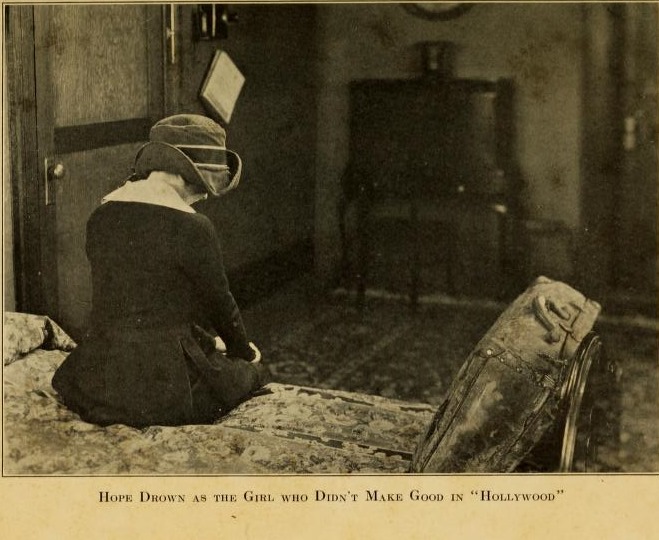
Unfulfilled in his own life, her father acccompanies her as chaperone to the “devliish” film town, which ends up as staid as any midwest burg. As Angela attempts to to gain entry into the entertainment industry, she casually meets stars wherever she goes. She spies stars on first registering at Hollywood’s best inn, seeing “a celebrated comedian enter and walk quietly across to the room clerk, without betraying the highest desire to leap over the leather divan in his usual exuberant way.” Over time, Angela struggles to gain any acting roles, while her father befriends actors and executives which leads to many small parts in films. When his rigid sisters come to rescue them from Hollywood’s wicked ways, they also find themselves regularly hired for extra and small parts. A frustrated Angela returns to bucolic Auburndale, leaving glamourous Hollywood behind.
 A popular hit with its humorous but tender take on the film industry, Paramount quickly purchased the tale, with trades announcing in early February the studio’s plans to immediately push it into production, helmed by James Cruze, one of the studio and industry’s major directors and coming off their blockbuster “The Covered Wagon.”. Adapted by studio scribe Tom Geraghty, the story would also highlight the local communiy, with Motion Picture News reporting early in March, “The picture will show the famous cafes, road houses and cheap resorts of Hollywood and Los Angeles.”
Director Cruze determined that casting unknowns in the lead roles made more sense for the film, since they would be playing civilians attempting to crash the industry. Cruze hired veteran 30-year Utah stock stage actor Luke Cosgrave as father Joel Whitaker.Young British film actor George K. Arthur, who received fine reviews for the Anthony Asquith-produced “Kipps” in 1921, would play the male love interest Lem for his first American film role.
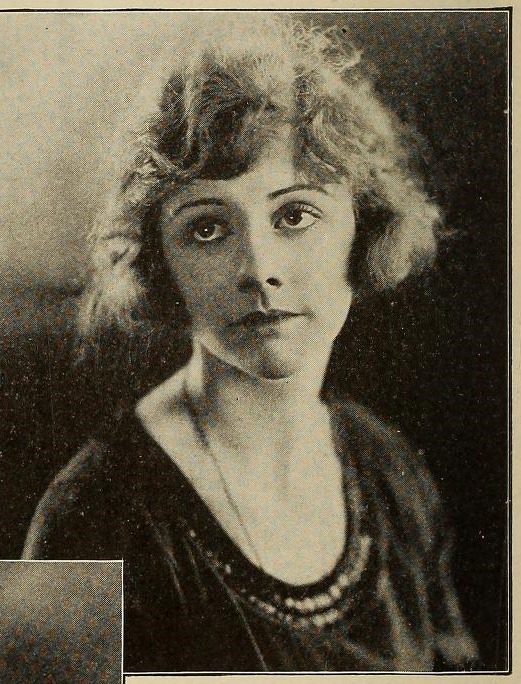
Cruze focused his main casting attention on the starring role, that of the young Angela. For a few weeks, Cruze conducted an exhausting search for the role, looking for authenticity in the part. Visiting theatres, clubs, and schools, the exacting director remembered an actress he had encountered at a San Diego theatrical presentation late in 1922. Though she had never performed in front of a motion picture camera, Hope Drown possessed fine stage presence. The daughter of former Orpheum Theatre manager Clarence Drown, young Hope joined San Diego’s Strand Players as an ingenue in early 1922 and swiftly earned acting laurels. By the end of the year, she was traveling the state performing in a variety of stage productions and earning fine reviews.
Thanks to scandals over the previous few years like the William Desmond Taylor murder, and the Fatty Arbuckle-Virginia Rappe trials, notorious Sodom and Gomorrah Hollywood actually became a tourist mecca, as many came to find scandal in the notorious city. The industry decided to cash in on all the publicity and churn out behind-the-scenes film stories to “draw aside the veil of secrecy surrounding themselves,” as the Best Moving Pictures of 1922-1923 stated. Most featured small town girls heading to Hollywood and becoming stars, unlike “Hollywood,” which turned the trope on its head. Other film-related stories made it to theatres ahead of “Hollywood” like the melodramatic “Souls for Sale,” but Cruze’s film took a cock-eyed look at the industry.
The director saw “Hollywood” “as a fantasy rather than as a grimly realistic drama” per “The Best Moving Pictures of 1922-1923”, making it almost an absurd burlesque of the film industry without defending or moralizing about the town. He even included dreamlike sequences shot in slow motion with reverse angles and double exposures. In one unexpected dramatic and symbolic sequence, Angela visits Christie Comedies to apply for work, where an overweight gentleman waves her ahead of him only to find her turned away. When he approached the window, it was slammed in his face with the word “Closed” displayed outside; as the camera moves in for a close-up, Roscoe “Fatty” Arbuckle is revealed as the gentleman.
“Hollywood’s film script also deviated in several ways from the short story. The lead family’s home town name changed, and instead of Angela’s father coming with her to the Mecca of the Movies, it was her grandfather instead. While Angela in the story failed to attend films, the film lead loved watching movies and dreamed of becoming a motion picture star. Upon arriving in the film city, she traveled from one studio to another seeking out work, returning to the hotel empty handed, only to discover that William de Mille discovered her grandfather and put him to work that day. While she continually met disappointment, her grandfather found success upon success, as did the rest of the family once they arrived in Hollywood.
Production began shooting on February 13. Cruze and crew filmed around the Lasky studio and Los Angeles locations over the next two months, including such locations as the Hollywood Bowl, Hollywood Hotel, Hollywood Boulevard, and local restaurants, with stars appearing in cameos at these locations. Director and major crew members even traveled to New York City to film actress Hope Hampton for her brief appearance.
While other films featured a few star cameos, “Hollywood”overflowed with them. Paramount directors and stars like Cecil B. DeMille, Nita Naldi, Thomas Meighan, Mary Astor,, Baby Peggy, Noah Beery, Agnes Ayres, William Boyd, Betty Compson, Ricardo Cortez, Viola Dana, Bebe Daniels, snitz Edwards, Julia Faye, James Finlayson, Sid Grauman, William S. Hart, Jack Holt, Leatrice Joy, J. Warren Kerrigan, Jacqueline Logan, Jeanie Macpherson, Hank Mann, Bull Montana, Pola Negri, Jack Pickford, Zasu Pitts, Will Rogers, Ford Sterling, Ben Turpin, Lois Wilson, and others appeared as themselves, and superstars Mary Pickford, Charlie Chaplin, and Douglas Fairbanks even made appearances, adding huge audience appeal.
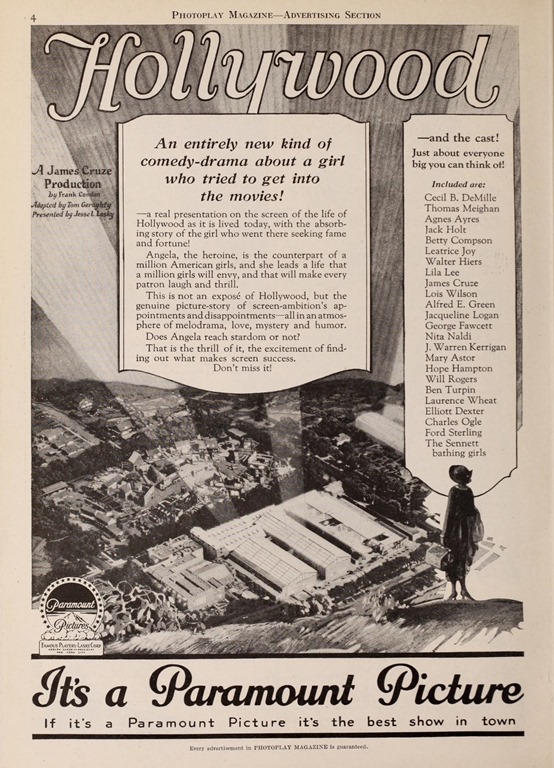
Newspapers praised the film upon release on August 11, 1923, with noting that it “shows the movie business in the humiliating but healthy state of making fun of itself,”especially Drown’s performance, called her a “a refreshing and natural young comedienne.” Robert Sherwood described her performance as “wistful, appealing and supremely pathetic,” finding her character terribly sad but well acted. Many hoped that this would lead to fine starring roles for her. Some fans, however, found the film hammy and her character “namby pamby.” Exhibitors Trade Review called it “a laughing success, with a parade of sreen stars to which movie fans of all degree in every section of the country, metropolitan and rustic, will swarm like flies around a honey pot.” They noted that at the New York preview, the audience constantly buzzed over all the cameos, and they erupted in cheers when Arbuckle was denied work. The film became one of the most popular hits of the year.
In an ironic twist, the star of the film in which her character failed to make it in pictures walked away from the moving picture industry just weeks after release, deciding to return to stage work. Drown traveled to New York to star with veteran actor Frank Keenan in “Peter West.” She revealed to Screenland, “I didn’t really want to act in pictures in the first place. My experience is really a case of having fame thrust upon one…I want to act – not pose…All through “Hollywood” I never once felt I was acting – I felt like a marionette, with the director pulling the strings.”
Her decision paid off. Over the next few years, she starred opposite Keenan in “The Showoff,” appeared with stars like Taylor Holmes and Pauline Frederick, and starred in four Broadway shows, including sophisticated comedy “Nice Women” in 1929. Other performers in the show included long time film/stage actor Robert Warwick, along with George Barbier, Verree Teasdale, and rising star Sylvia Sidney. In early 1930, Drown’s father passed away. The last surviving member of the family, Drown inherited his $150,000 estate. She appears to have retired from the stage at that point. In 1931, under the name Grace Hope Drown, she married stockbroker Robert Hodge, who she perhaps met when investing her money. They moved to the bay area and she became a housewife and mother, as he founded a stock brokerage in San Francisco. After Hodge died in 1960, she lived until 1990, happy away from the screen. While her character in the film failed in her ambitions, Drown herself found the happy home life she desired.
While “Hollywood” at the moment appears to be lost, one can hope it is found, bringing its satirical story to the screen and revealing the images of the city and industry as it became the filmmaking capitol of the world.

 ladailymirror.com