 By Gary Rubin
Times staff writer
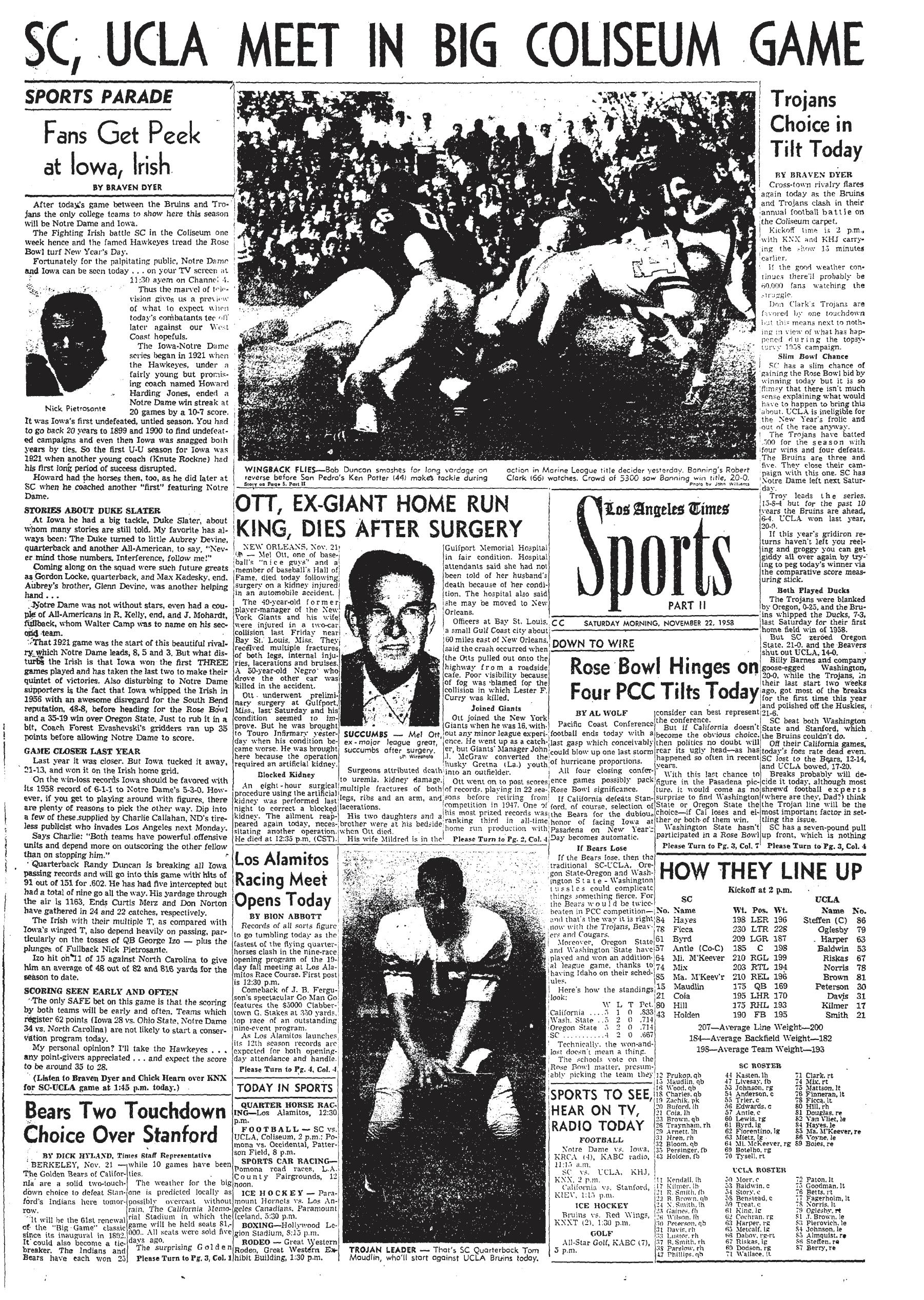
 Fifty years ago today, sports fans in general and baseball fans in particular woke up to read the startling news that Hall of Famer Mel Ott was dead after surgery for a kidney injury suffered in an automobile accident in New Orleans. He was just 49.
Baby boomers may not be all that familiar with Ott, but in a 21-year playing career, all spent with the New York Giants, Ott was one of great power hitters of all time, finishing with 511 home runs, a National League record that stood until broken by Willie Mays in 1965.
Though not particularly big, at 5-9, 170, Ott generated great power with a unique batting stance. As the pitch came in, the left-handed Ott would raise his right foot at least a foot.
| New York while still a teenager. McGraw gave specific instructions that no one on the Giants was to tinker with Ott’s batting stance, and, at the tender age of 17, Ott made his major league debut for the Giants in 1926 without playing a single day in the minors.
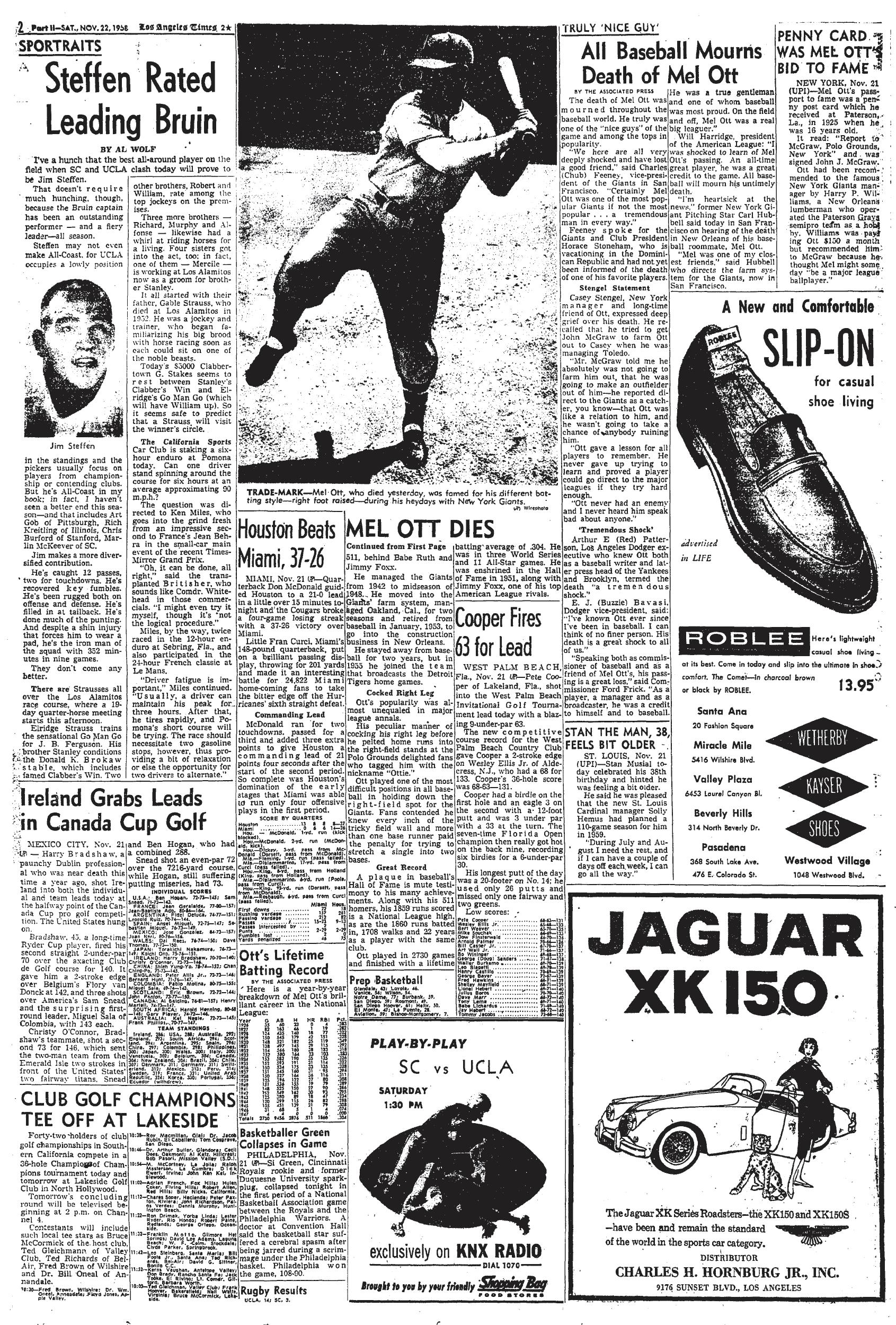 He quickly developed into the No. 1 power hitter in the National League, six times leading the league in homers. His best season was 1929, hitting .328 with 42 home runs and 151 RBIs. He quickly developed into the No. 1 power hitter in the National League, six times leading the league in homers. His best season was 1929, hitting .328 with 42 home runs and 151 RBIs.
Among Ott’s career highlights:
— Set a major league record for leading his team in home runs for 18 consecutive years, 1928-45.
— One of only six major leaguers to spend 20 or more years with the same team.
— Led the National League in home runs for three consecutive years, 1936-38.
— Was a 12-time National League All-Star.
Yet for all his accomplishments, Ott seemingly will be more remembered for a quote about him, coming from rival manager Leo Durocher: “Nice guys finish last.”
In a July 1946 interview with broadcaster Red Barber, Durocher noted that the Giants — who had reputations as good, likable people, especially Ott, then the Giants manager — were all “nice guys” but would nonetheless finish last. He summed up his argument with, “Nice guys; finish last.”
In a 1961 interview with The Times’ Frank Finch, Durocher noted that the remark was quoted accurately by New York sportswriter Frank Graham in a published interview. It came to take on a different meaning when some incorrectly thought he meant that such a team would finish last because it included “nice guys,” when in fact he had meant that there was no correlation.
|
About lmharnisch
I am retired from the Los Angeles Times


 ladailymirror.com

Ott was an excellent slugger, but I believe he was substantially aided by the dimensions of the Polo Grounds, which had extremely short porches down the lines (279 feet to left, 257 to right) but was cavernous to straightaway center. (Its dimensions probably made it a better football venue, and it indeed hosted many college games, as well as the NFL’s Giants before they moved to Yankee Stadium in 1956 and the first four years of the AFL’s Titans/Jets.)
LikeLike