

Los Angeles Times file photo
Charles Starkweather, shortly after his arrest, with blood on his ear and shirt from police gunfire.
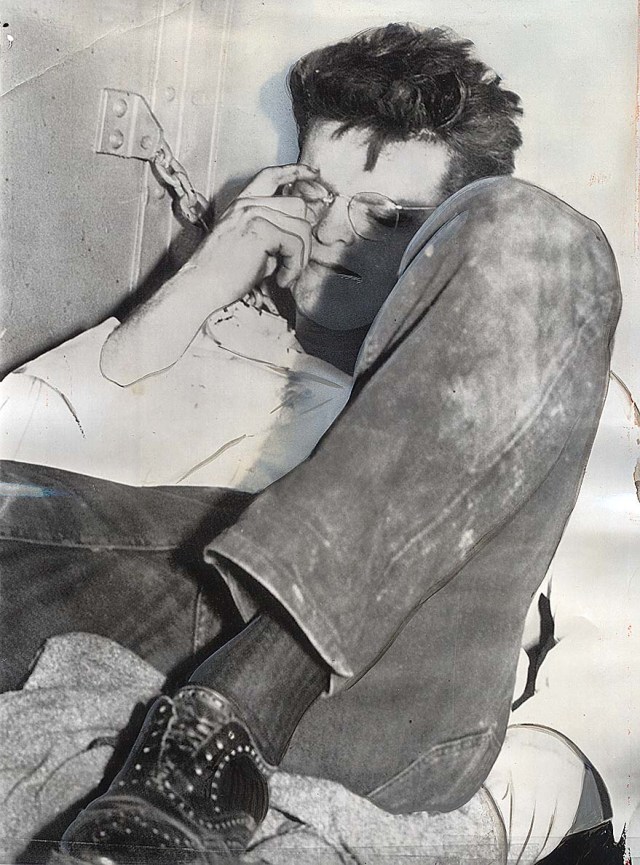 Los Angeles Times file photo
Charles Starkweather in a Douglas, Wyo., jail cell.
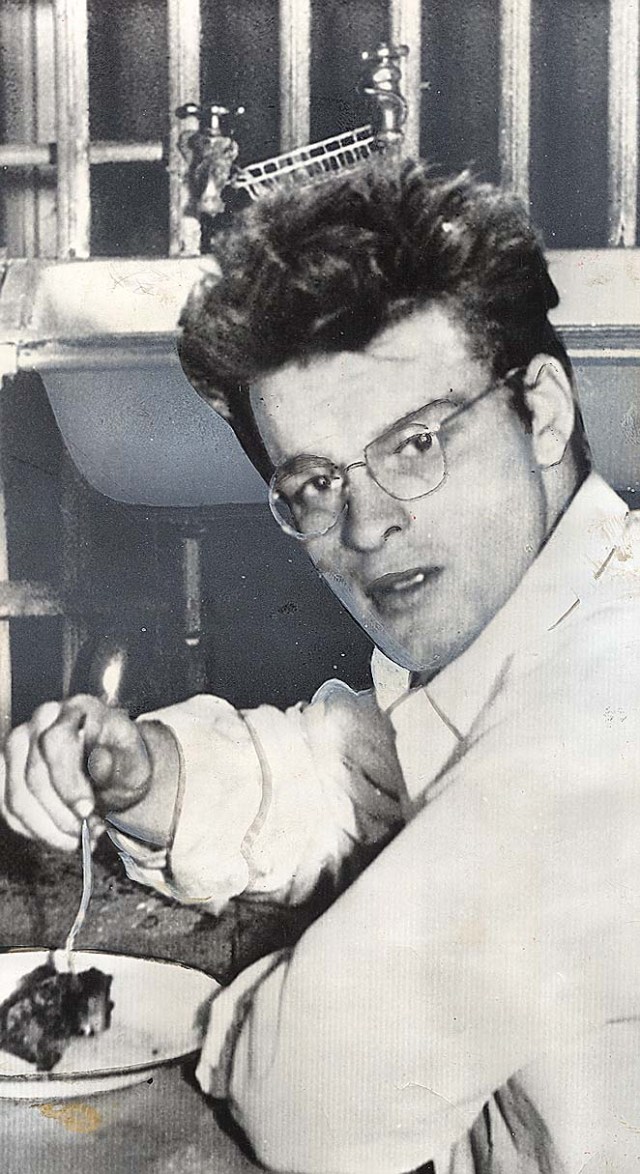 Los Angeles Times file photo
Charles Starkweather eats his first meal since being captured in the Wyoming Badlands.
 Los Angeles Times file photo
Police Officer Ora Landess, left, and Sheriff Merle Karnopp escort Charles Starkweather to the Lincoln, Neb., courthouse.
Charles Starkweather was executed in Nebraska’s electric chair June 25, 1959. In a grim twist of fate, prison physician Dr. B.A. Finkle, who was supposed to confirm Starkweather’s death, suffered a fatal heart attack minutes before the execution.
Starkweather’s 14-year-old girlfriend, Caril Ann Fugate, who accompanied him on his rampage, was paroled in 1976 and moved to Michigan. She said she wanted to be “an ordinary little dumpy housewife.”
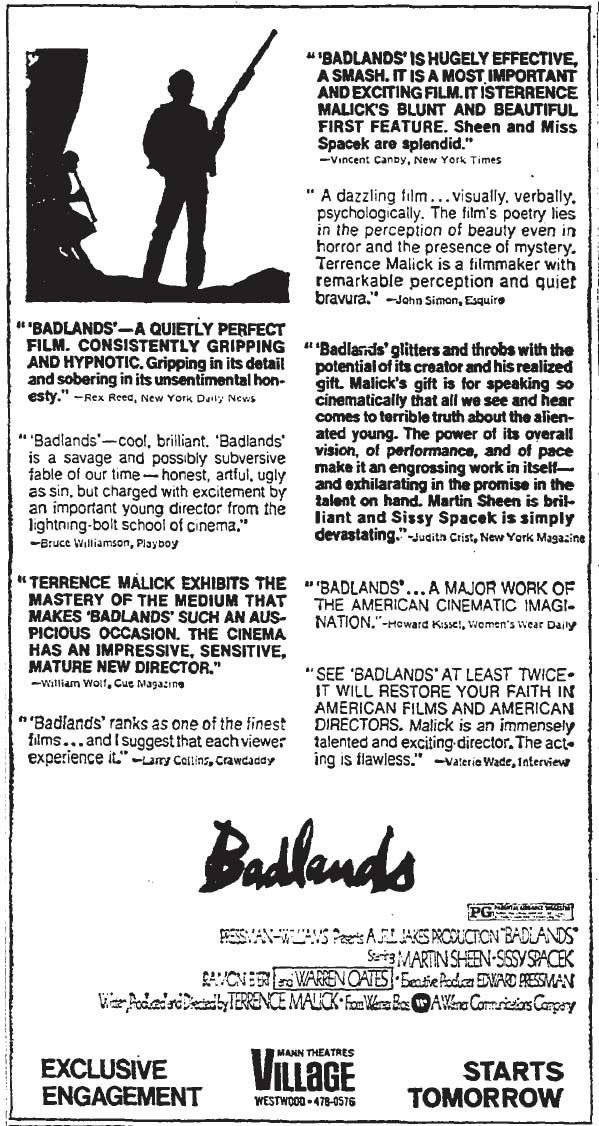
Their deadly exploits inspired the film “Badlands” with Martin Sheen and Cissy Spacek, which opened in Los Angeles on March 29, 1974.

 ladailymirror.com
This has always been an extremely fascinating story to me, the Charles Starkweather story. I just disagree with his execution. He had a very bad life. I mean, his family was fine, but even I know that it hurts to be a social outcast, which he was. After the rampage, they should have put Charles in prison for life, and then paroled him as they did with Caril. He would never have done anything like that again; he was just angry. As an adult, he would not have been an outcast. In fact, I read somewhere that very shortly before his execution, a doctor asked him if he would like to donate his corneas after his death for implant purposes, and he remarked, “No one ever helped me when I was alive. Why should I help anyone when I’m dead?” Charles did not deserve to die. What he did was very bad, but he did not deserve to die.
LikeLike